
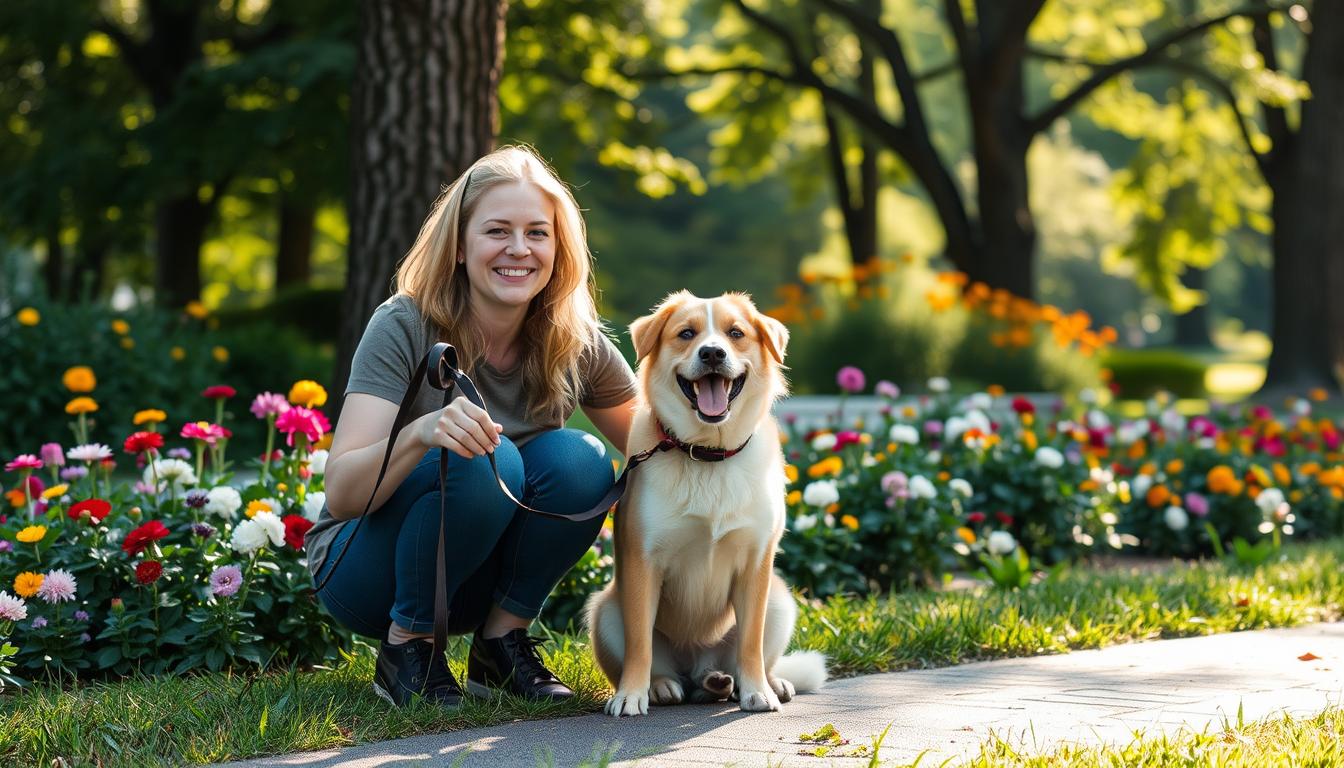
Training your dog makes home life happy for both of you. It’s vital to know what your dog needs. Good training also strengthens your bond by building trust.
This article shows you a complete way to train your dog. You’ll learn to make your pet happy and cooperative. We provide tips to benefit both you and your dog emotionally and behaviorally.
Quick Recommendation: Our blog is filled with tips and tricks for training your puppy or dog. If you are seeking a comprehensive training program, we recommend K9 Training Institute.
Understanding the Basics of Dog Training
Learning the dog training fundamentals is key to a happy life with your pet. To get good at canine obedience, knowing why dogs act as they do is vital.
Dogs don’t think like we do. They need clear and steady signals to know what we want. Behavior management is crucial. It’s about rewarding good actions and not allowing bad ones.
Start with easy goals and celebrate small wins. Being patient and consistent helps your dog learn. By slowly making tasks harder, your dog gets more confident and skilled.
Always cheer for every success your dog has. This makes them want to do more. Keeping these tips in mind sets the stage for a pet that’s both well-mannered and joyful.
Getting Started: Building a Strong Bond with Your Dog
Building a good relationship with your dog starts with trust. Playing with them and interacting often is key. You need to watch and learn from your dog’s body language.
To help your dog feel confident, introduce them to different places, pets, and people. Trust in training will make your relationship stronger. It lays a foundation of respect and understanding.
Spend time with your dog doing simple things like walking or training. Every moment together strengthens your bond. It makes your dog feel loved and secure.
Bonding with your dog is a journey that needs patience, consistency, and caring. By focusing on a trusting environment, you’re setting up for a happy life together.
The Power of Positive Reinforcement Techniques
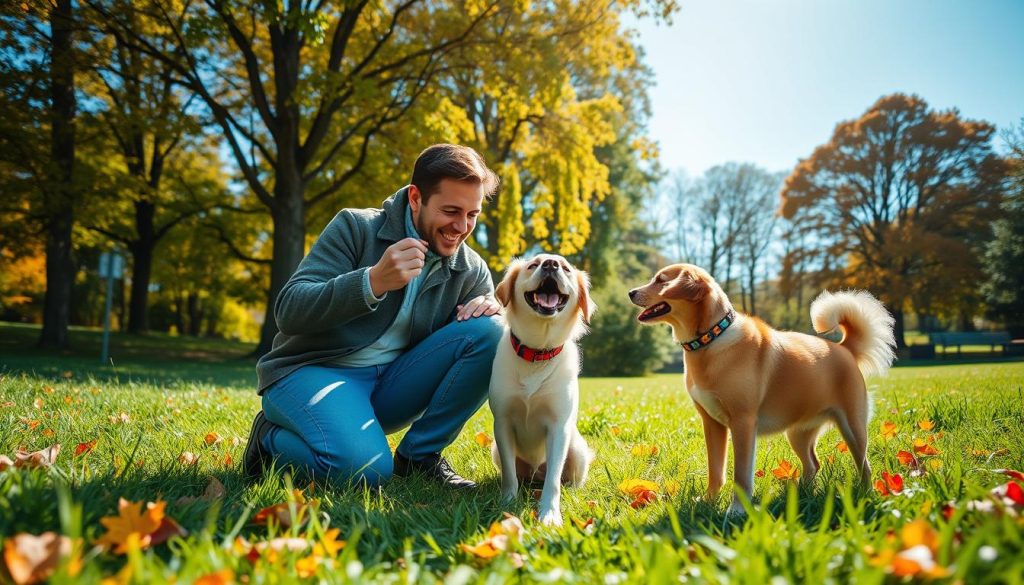
Using positive reinforcement techniques can change how your dog behaves. This method rewards your dog for good behavior. It’s better than punishing them for bad actions.
Rewards like treats, praise, or playtime are key to reward-based training. Reward your dog right after they do something good. This helps your dog connect the behavior with the reward.
Positive reinforcement makes training fun for your dog. It also makes your relationship stronger. This approach creates a happy environment. It helps your dog act better, making owning a dog more enjoyable.
Essential Obedience Training Commands
Learning obedience training commands is key for a good dog. These basic dog commands are the foundation of good canine communication. They make life better for you and your pet.
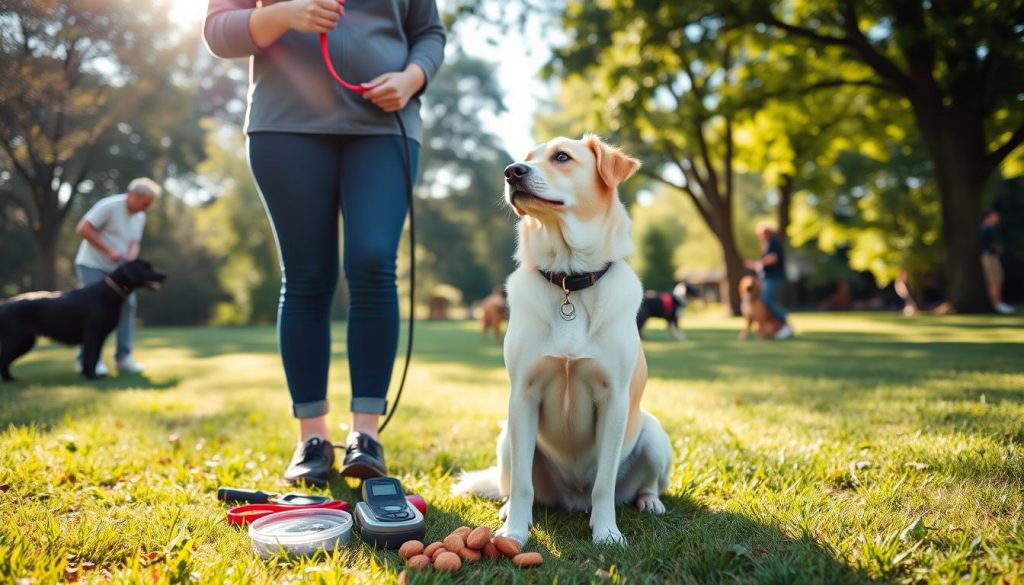
The “sit” command is a great first step. It shows you’re the boss and keeps your dog calm. Say it in a firm but kind voice. Give your dog a treat and praise when they do it right.
The “stay” command is very important. It keeps your dog safe and stops bad situations. First, make your dog sit. Then, with your palm out, say “stay” and step back. Slowly move further and give treats for following the command.
The “come” command is crucial, especially in emergencies. Use a cheerful voice and a treat to call your dog. This helps a lot in teaching them to come when called.
“Heel” helps your dog walk nicely next to you. Keep them on a short leash close to you, say “heel,” and walk. Give them a treat for walking well by your side.
Success with basic dog commands depends on how consistent you are. Dogs like positive vibes, so stay friendly and clear. This ensures your dog will follow these obedience training commands well.
Mastering the Art of Leash Training
Leash training is key for a well-behaved dog. It makes walks enjoyable and stress-free. It’s important to stop your dog from pulling. This involves certain techniques and the right gear.
Choosing the right equipment is the first step. Harnesses are great because they don’t hurt your dog like collars can. There are many leashes available. You can pick from retractable ones for freedom or fixed-length for more control.
Stopping your dog from pulling requires consistency. Start with short training sessions. Give treats or praise when your dog walks nicely. Soon, they’ll learn to walk calmly for rewards.
To sum up, regular training and suitable gear are essential. They make walks with your dog fun. And they teach your dog not to pull, ensuring a pleasant walk for both of you.
Quick Recommendation: Our blog is filled with tips and tricks for training your puppy or dog. If you are seeking a comprehensive training program, we recommend K9 Training Institute.
Addressing Common Behavioral Issues
Dogs show their feelings in many ways. Sometimes, this leads to behaviors like chewing, barking, and digging. It’s important to understand why they do these things. Only then can we address the behaviors effectively.
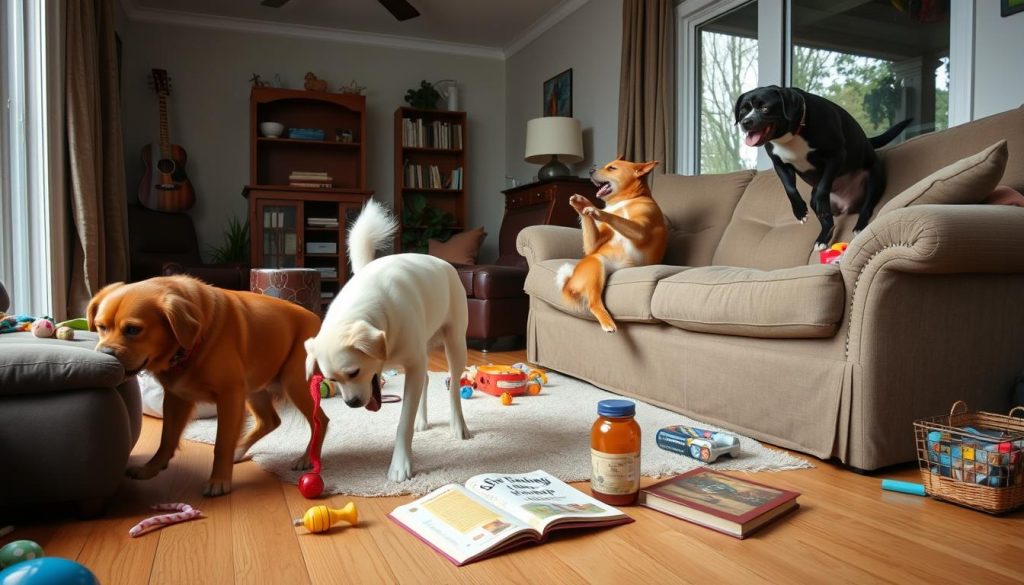
Chewing is natural for dogs, especially teething puppies. But too much chewing might mean they’re anxious, bored, or lack good chew toys. Giving your dog the right toys and keeping them busy can cut down on chewing.
Barking might happen for several reasons. They might be warning you, wanting attention, or just excited. Training them consistently and knowing what sets them off can help control barking. Rewarding them when they’re quiet works well, too.
Digging is another thing dogs do. It could be for comfort, out of boredom, or an instinct to hunt. To stop digging, give your dog a special place to dig. Make sure they get enough exercise and mental stimulation, too.
Dealing with these behaviors takes consistency. Reward good actions and be patient. This will help you and your dog live happily together.
Advanced Canine Behavior Modification
Understanding how to change challenging dog behaviors can greatly improve your life and your pet’s. If your dog shows aggression or fear, facing these issues is key.
Sometimes, your dog may get stuck in tough habits, especially as they get older. Training methods designed for senior dogs can really help. Keeping at it patiently will eventually bring out the best in your dog.
Using special strategies like counter-conditioning can greatly help. This means slowly helping your dog not to react badly to things that scare them. Also, making them less sensitive to fears can make every day better.
Remember, there’s no single way to fix all dog behavior problems. Each dog is different. At times, you might need a dog behavior expert. People like Cesar Millan and organizations like the American Kennel Club offer great advice for your dog’s specific needs.
Fun and Engaging Ways to Train Your Dog
Training your dog should be fun for you and your pet. Mix interactive games into your daily routine. This keeps your dog’s mind sharp and strengthens your bond.
Hide and seek is a great starter game. It works indoors or outdoors. It teaches your dog to come when called and stimulates their brain. Hide a treat, then tell your dog to find it. This activity blends fun with a learning challenge.
Puzzle toys are another awesome choice. They test your dog’s problem-solving abilities. Put treats inside the puzzle to motivate your dog to figure it out. These toys vary in difficulty to keep challenging your dog.
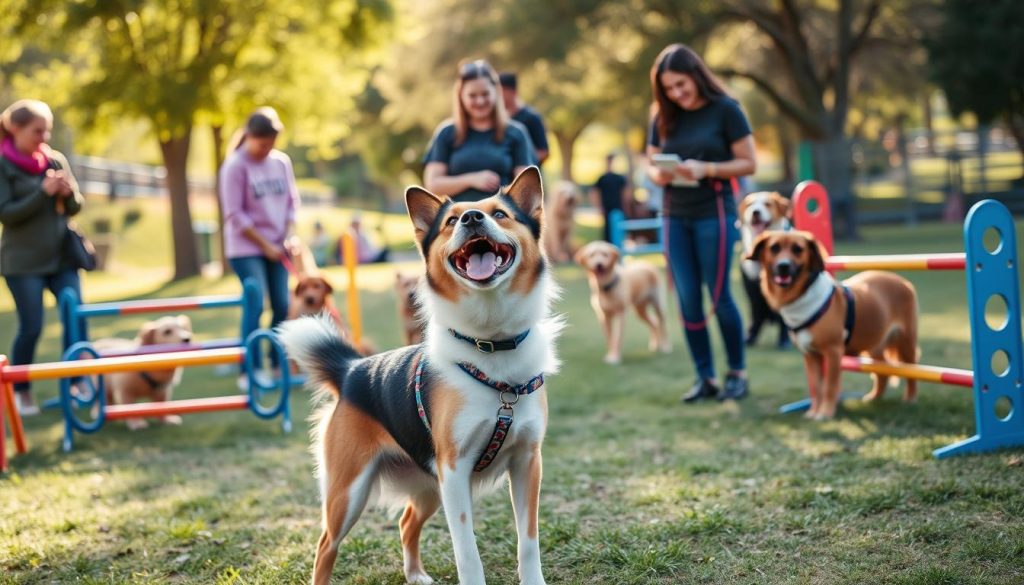
Try creating your own agility course. Use items you have at home for your backyard course. Direct your dog through obstacles like tunnels and jumps. This game boosts both their physical and mental health.
Upgrade your fetch game by using commands for specific toys. This adds excitement and reinforces obedience training. It’s a smart way to make training more engaging.
Adding these fun activities ensures your dog stays mentally stimulated. Training becomes something your dog looks forward to. The secret is to keep sessions exciting and diverse for a happy, well-trained dog.
Incorporating Training into Daily Life
Training your dog every day is key to good behavior and a happy home. Daily training fits easily into your normal activities. This makes teaching your dog a regular part of your day. Use walks or backyard play to work on commands and skills.
Having a regular routine makes training a part of everyday life, not just once in a while. This approach helps dogs remember what they learn without getting overwhelmed. For instance, practice “sit” and “stay” while making dinner. Or use playtime to teach fetching and returning.
Training can also be part of meeting new people. Have your dog sit or greet guests politely. Using training in social situations helps dogs behave better around others.
Including these methods in daily life keeps your dog learning and growing. Training your dog consistently doesn’t have to be hard. With creativity and effort, it becomes a rewarding part of your life together. It also strengthens your bond with your furry friend.
Conclusion: Embracing the Journey with Your Companion
Starting the journey of training your dog is full of rewards. At first, you’re building a bond. Then, you master advanced techniques. Each step makes your relationship stronger. Through consistent, loving training, you aren’t just teaching skills. You’re also creating a bond based on trust and respect.
Using positive reinforcement along with key commands builds a strong behavior foundation. This makes daily life more fun for you and your dog. When you work on leash training and fix behavioral issues with patience, your dog becomes well-behaved and happy. Your home turns into a calm place where you both enjoy spending time.
Dog training does more than teach obedience; it improves your life. With hard work and dedication, you create a joyful home. It’s filled with companionship and happy dog moments. Enjoy this journey. It’s during these times that the special bond between human and dog truly shines.
Quick Recommendation: Our blog is filled with tips and tricks for training your puppy or dog. If you are seeking a comprehensive training program, we recommend K9 Training Institute.
BTW: If you are interested in everything from nutritional advice and natural health solutions to stress-relief techniques and overall wellness tips, check out our friends at PawfectlyHealthyPets.com.