
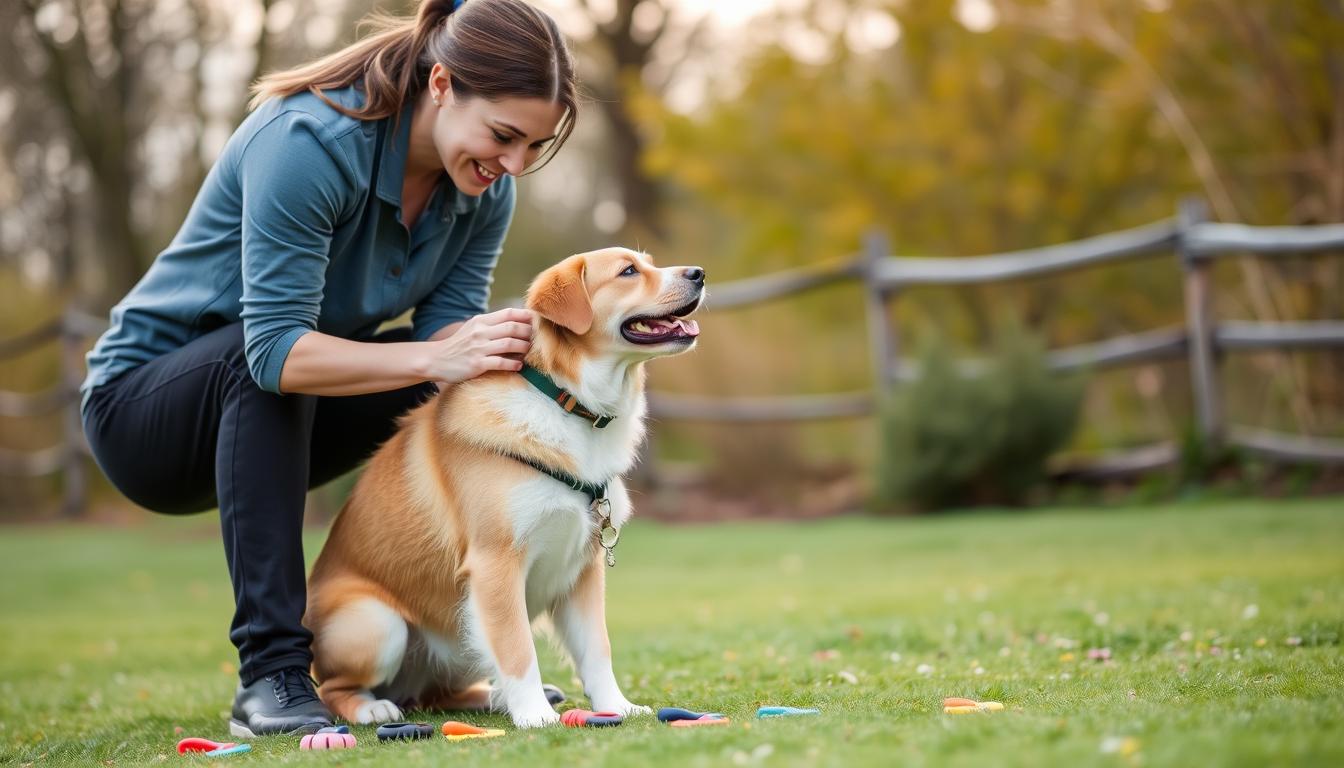
Training your dog does more than improve behavior; it’s critical for peace at home. It changes your pet’s obedience routine for the better. You and your pet will enjoy life more. No matter your experience level, knowing the basics is key. Experts say well-trained dogs are not just obedient. They’re also happier and healthier.
Now, let’s talk about enhancing your dog’s training journey. We’ll go from simple commands to more complex skills. This guide gives you everything you need to train your pet successfully.
Quick Recommendation: Our blog is filled with tips and tricks for training your puppy or dog. If you are seeking a comprehensive training program, we recommend K9 Training Institute.
Understanding Canine Communication
Understanding dogs means getting their communication. Watching their body language and signals makes your bond with them stronger. Dogs show their feelings and plans in special ways, like we do.

Body language is a key way dogs talk to us. A wagging tail usually means happiness. But if the tail is stiff and moving fast, your dog might be upset. Noticing how your dog stands, moves its tail, ears, and acts can tell you a lot about their feelings.
Dogs also make sounds like barking, whining, or growling to communicate. Different sounds mean different things. For example, barking can mean they’re happy or they’ve noticed something strange. Whining often shows they’re upset or uneasy.
Paying attention to small signs is also important. A dog that shows the whites of its eyes could be anxious. Avoiding eye contact or lip-licking also means they could be stressed. Understanding these signs helps you take care of your dog’s needs better.
Animal experts, like those from the American Kennel Club (AKC), stress knowing these cues. Getting better at reading your dog’s signs improves your relationship with them. It leads to a happier life together.
The Basics of Obedience Training
Obedience training is essential for a well-behaved and happy dog. By learning the basics, your dog can do well everywhere. Start teaching simple commands like “sit,” “stay,” “come,” and “heel” for better control and communication.
Always be consistent with your commands so your dog knows what you want. To teach “sit,” press gently on their back end while you say the command. With “stay,” use a hand signal along with the verbal cue. Regularly practicing “come” will improve your pet’s response when off-leash.
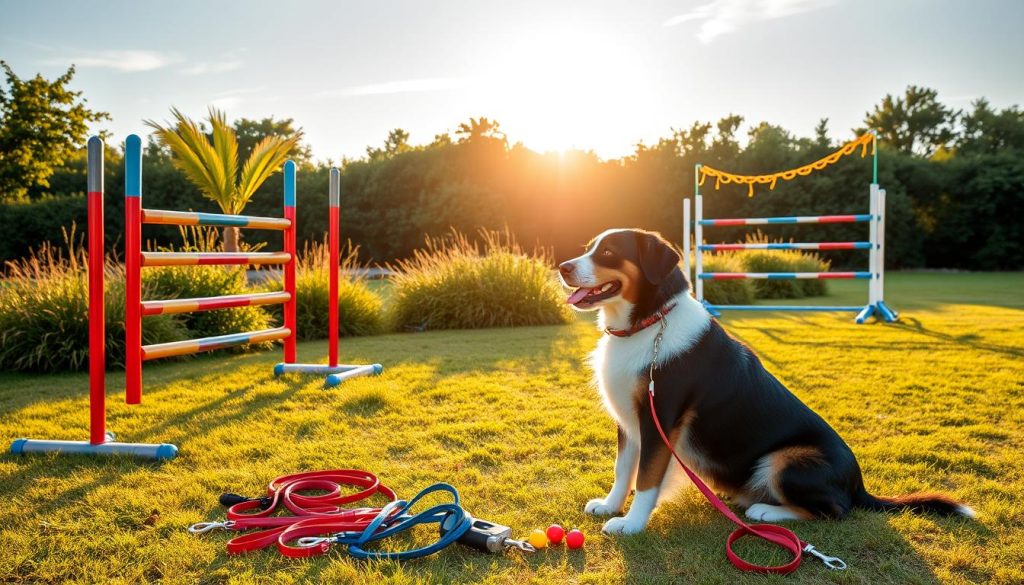
Leash training is also vital. First, let your dog get comfortable with a collar and leash inside. Then, use treats and praise to encourage calm walking outside. Be patient and start with short sessions, slowly extending them.
Managing distractions is key too. Train in different places with new distractions to keep your dog attentive. Making training a part of your daily life will soon show in your dog’s behavior and your relationship.
Positive Reinforcement Techniques
Positive reinforcement can change how your dog learns and acts. It rewards good behavior, making training fun for you and your dog. This approach is effective and promotes lasting change without punishment.
Rewards like treats, toys, or kind words strengthen desired behaviors in your dog. It’s important to give these rewards right after your dog does something good. Good timing helps your dog link the reward to the right action.
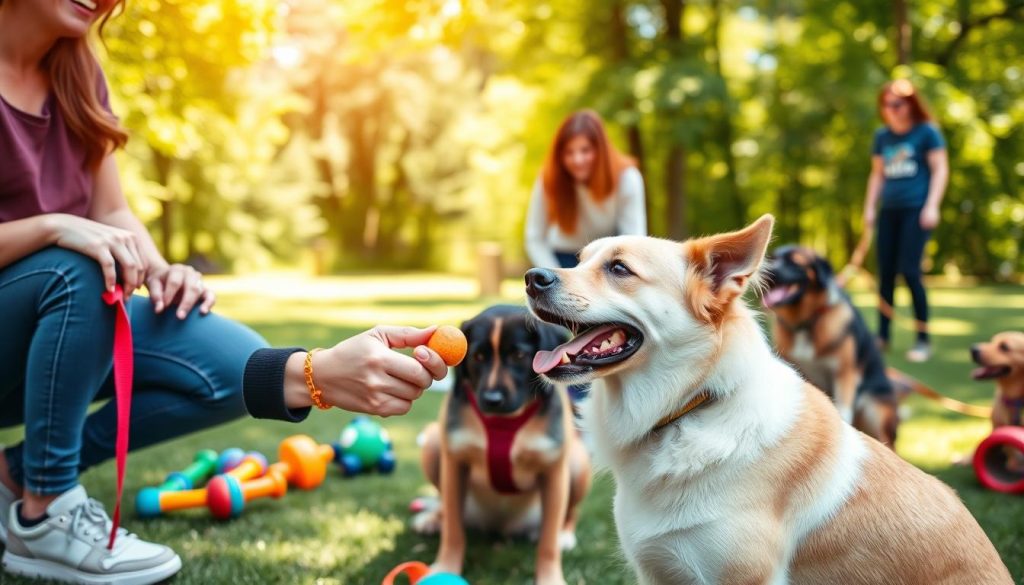
Encouraging behavior isn’t just about treats. Words of praise or showing love can be equally powerful. Experts say using a mix of rewards makes training more exciting and successful.
Experts like Cesar Millan and Victoria Stilwell support reward-based training. It stresses the importance of a positive, trusting bond between you and your dog. This method encourages your dog to keep learning and showing good behavior.
Common Dog Behavior Issues and Solutions
Every dog owner faces challenges with their pet’s behavior. Dog aggression is a common concern. It’s crucial to stay calm and show your dog that aggressive actions won’t be tolerated. Using positive reinforcement and regular training can reduce these issues significantly.
Excessive barking is another common problem. Dogs might bark out of boredom, fear, or excitement. The first step is to figure out why they’re barking. Giving them interactive toys, plenty of exercises, and getting them used to what triggers their barking can help quiet things down.
Many new dog owners struggle with housetraining. Setting a routine, praising good behavior, and considering crate training can help. Remember, being consistent and patient is crucial for teaching your dog where and when it’s okay to go.
Understanding these behavior issues is the first step towards a better life with your pet. Using these approaches can solve current issues and create a happy, well-behaved dog. It’s all about creating a better relationship with your furry friend.
Interactive Play to Reinforce Training
Interactive play is key in reinforcing your dog’s training. It makes learning fun and helps keep your dog mentally sharp. By mixing training with play, learning becomes an enjoyable experience for both of you.
Experts say dogs learn better when they’re having fun. Games like fetch or tug-of-war improve focus and obedience. These games make it easy to teach commands while playing.
Playing together also helps you and your dog get closer. It’s not just about commands; it’s about building trust too. Training becomes something you both look forward to.
Games that make your dog think are important. Hide-and-seek or scent games boost their problem-solving skills. They keep learning exciting, beyond just drills.
Remember, staying consistent with play-based learning is important. It helps your dog remember what they’ve learned. So, let’s make training fun with playful learning!
Quick Recommendation: Our blog is filled with tips and tricks for training your puppy or dog. If you are seeking a comprehensive training program, we recommend K9 Training Institute.
Training Gear Essentials
Having the right gear makes dog training much better. A good leash and collar are keys for safety and control. Choose materials like nylon or leather because they last long and feel comfortable.
A dog treat bag is also very important. It makes sure treats are always ready for rewards. Get one that clips to your belt for easy use. Look for one with many pockets to keep things organized.
Other useful items include clickers and training pads. Each tool helps with different parts of training. Having the best gear helps both you and your dog enjoy learning together.
Building a Strong Bond with Your Dog
Trust and respect are the base of a great dog-human bond. Creating this bond helps in training and companionship. To start building trust, try easy yet meaningful bonding exercises with your dog.
Spending quality time is essential. Take regular walks, have playtime, and groom your dog to strengthen your bond. Use bonding exercises that challenge their minds, like puzzle toys or agility training. These fun activities will create happy memories for both you and your dog.
Being consistent is crucial in building trust with your dog. Keep your commands, rewards, and routine the same. This creates a safe environment, making your bond stronger. Positive reinforcement, like treats or praise for good behavior, is also key.
Talking to pet relationship experts, like those from the American Kennel Club, can give you more insight. They support studies on animal behavior that show the importance of trust and regular bonding. By focusing on trust, you start a rewarding relationship that lasts a lifetime.
Advanced Training Techniques
Taking your dog’s training further can be very rewarding for both of you. Advanced methods like agility training, therapy dog courses, and specialized training take commitment and knowledge. But, the outcomes are definitely worth it.
Agility training is a fun advanced method that boosts your dog’s fitness, coordination, and mind. By working through obstacles, your dog learns new skills. This makes bonding with you even more exciting. Plus, agility competitions offer a great, fun goal to work towards.
If you’re interested in therapy dog training, it prepares your dog to be calm and friendly in different places. Therapy dogs visit hospitals, schools, and nursing homes, spreading joy. They need to pass tests from groups like Therapy Dogs International or Pet Partners.
Specialized training could mean teaching your dog to help in search and rescue, detect things, or assist people with disabilities. Expert trainers help give your dog the special skills for these tasks. The American Kennel Club has programs for these types of training.
Advanced training like this does more than just improve your dog’s skills. It also makes your bond stronger. Whether it’s agility, therapy training, or something else, it’s a journey worth taking. You both will find it enjoyable and rewarding.
Conclusion
Training your dog is a journey that needs patience, consistency, and understanding your dog’s needs. This article has shown the basics of dog training, including how to communicate with your dog and the first steps of obedience training. Positive reinforcement helps promote good behavior, making training fun for you and your dog.
The journey goes beyond fixing common behavior problems. Playing interactively also helps strengthen your training and bond with your dog. The right gear makes training easier and more comfortable for you both. It’s important to keep learning new things with your pet to build on what you’ve learned.
To wrap up, having a strong bond with your dog is key to successful training. Following expert advice sets you on the path to a well-trained dog and a stronger relationship. Keep practicing and be patient. Enjoy the journey of training your dog, remembering it’s a lifelong commitment for you both.
Quick Recommendation: Our blog is filled with tips and tricks for training your puppy or dog. If you are seeking a comprehensive training program, we recommend K9 Training Institute.
BTW: If you are interested in everything from nutritional advice and natural health solutions to stress-relief techniques and overall wellness tips, check out our friends at PawfectlyHealthyPets.com.