

Welcome to “Bark to Basics.” This guide will show you the dog training basics. These are key for effective obedience training. Understanding canine behavior is crucial. It helps build a positive relationship with your dog.
Training your dog is more than teaching commands. It’s about clear communication and trust. Successful training is based on consistency and positive methods. This guide is filled with tips and strategies for your journey.
If you’re a new pet owner or improving your training, this resource is for you. It provides the foundation to influence your dog’s behavior. Get ready for a rewarding experience with your well-trained, happy pup!
Quick Recommendation: Our blog is filled with tips and tricks for training your puppy or dog. If you are seeking a comprehensive training program, we recommend K9 Training Institute.
Understanding Your Dog’s Behavior
Learning how your dog communicates is key to a strong bond and good training. You start to understand what your dog feels and needs by studying their body language. Dogs tell us a lot through the way they move their ears, wag their tails, and look at us. So, it’s important to watch them closely.
To manage your dog’s behavior, you need to know what sets them off. A loud noise or a new person might make your dog anxious or excited. Knowing what bothers them can help you keep things calm.
Using the right behavior techniques can make your dog behave better and bring you closer. By understanding why they do certain things, you can train them in a way that works for them. If you notice your dog’s body language changing, you can act quickly to fix any problems. This makes living together easier and more peaceful.
Spotting what makes your dog act a certain way early on helps avoid problems. Say your dog often barks at people they don’t know. Figuring out if they’re scared or just being protective allows you to address the issue properly. Using these methods with patience and consistency leads to good behavior and trust.
Setting Expectations and Goals
Training your dog starts with clear and realistic goals. These might include teaching basic commands or changing specific behaviors. Make sure your goals are achievable, especially for puppies who learn slower.
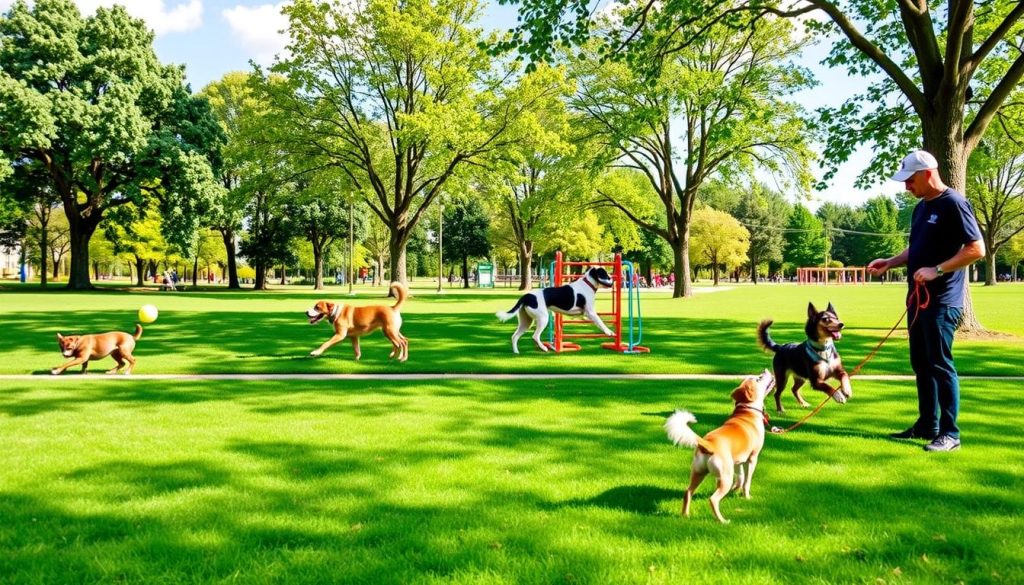
Setting up milestones is a smart way to track your dog’s learning. Start with easy tasks like teaching your dog to sit. Then, move to harder tasks. Celebrate all the small wins as they boost your dog’s confidence and see you as a leader.
Being patient and consistent is crucial. Dogs learn at different speeds, just like people. Having a structured plan helps all dogs know what to do. Following your plan leads to steady improvements.
Always review and tweak your goals to stay realistic. If your dog is having a hard time, make tasks simpler. This keeps training manageable for your dog and leads to lasting success.
Essentials of Positive Reinforcement Methods
Positive reinforcement training can greatly improve your dog’s learning. This method uses rewards to encourage good actions. If your dog does something good, you give them treats, toys, or kind words. This makes the good action stronger and more likely to happen again.
Being consistent is crucial in positive reinforcement. Always reward your dog right after they do what you want. This helps your dog know which action is right. Changing up the rewards keeps training fun and interesting for them.
The timing of rewards is very important. Give the reward right after the good behavior. This clear link helps in training. Using their favorite treats, toys, or praising with “good job” boosts your efforts.
Reward-based training does more than teach behaviors. It strengthens your bond with your dog. A loving approach builds trust. That trust makes your dog want to listen and please you more.
Positive reinforcement isn’t all about treats. It’s also about clear rules and patience. Dogs need to feel supported, just like people do. By using these methods, you create a great learning space for your dog.
Using Treats, Toys, and Praise
Treats, toys, and praise work wonders in rewarding your dog. They not only make good behavior more likely but also help you bond with your pet. Finding what your dog loves most makes training fun and effective.
What does your dog find irresistible? It could be a special treat, a beloved toy, or just your happy voice. Knowing this lets you encourage the behaviors you want. This approach makes learning fun for both of you.
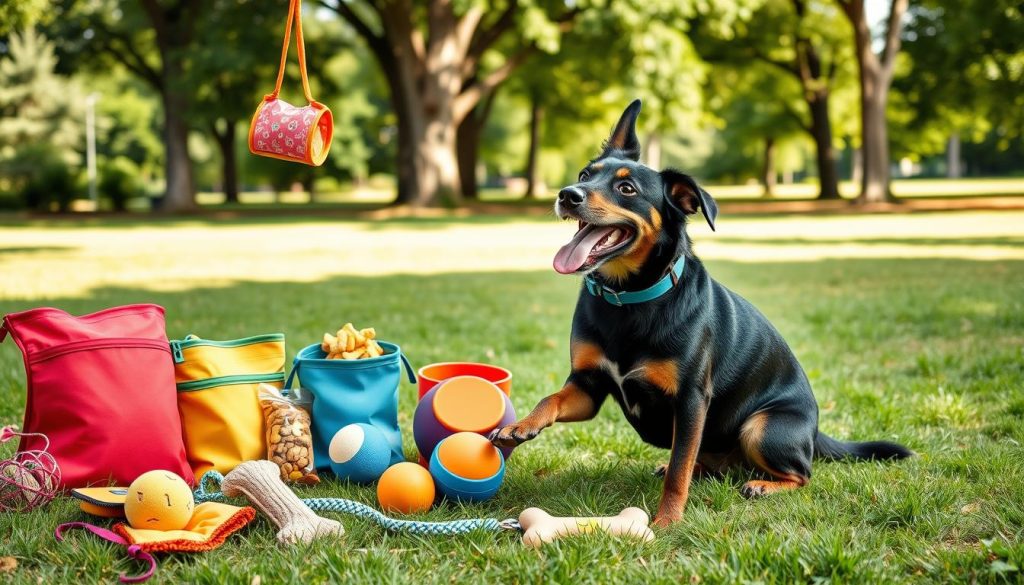
But, it’s crucial to use these rewards wisely. Relying too much on treats can cause problems like weight gain. Use toys and your praise to keep things balanced and healthy for your dog.
Toys aren’t just rewards; they’re also fun for your dog. And your praise makes your dog feel loved. This mix of rewards means your dog stays excited about learning. By using all three, you train a happy, well-behaved dog.
Basic Commands Every Dog Should Know
Teaching basic commands like sit, stay, come, and heel is crucial. These commands are the basics of good behavior. Start with “sit” by using a treat. Move your hand up, making your dog sit. Say “sit,” reward them with the treat, and praise them.
Next, teach “stay.” Have your dog sit and then say “stay” with an open palm. Step back and reward them if they stay. Keep practicing, making the distance longer as they learn.
The “come” command helps you control your dog in different situations. With a leash on, call them to you and say “come.” Give treats and praise when they come. This encourages them to keep coming when called.
To enjoy walks, teach “heel.” Keep treats by your side to make them follow. Say “heel” and reward them for staying close. Keep repeating to ensure they learn well. This makes your walks together better.
Be patient and consistent with your training. These tips will help you and your dog have a good relationship. It’s about mutual respect and understanding.
Quick Recommendation: Our blog is filled with tips and tricks for training your puppy or dog. If you are seeking a comprehensive training program, we recommend K9 Training Institute.
Effective Leash Training Advice
Leash training your dog can make outdoor walks more fun for both of you. To train effectively, always be consistent and patient. Start with short walks in a calm area so your dog gets used to the leash. Give treats and praise for calm behavior to encourage good actions.
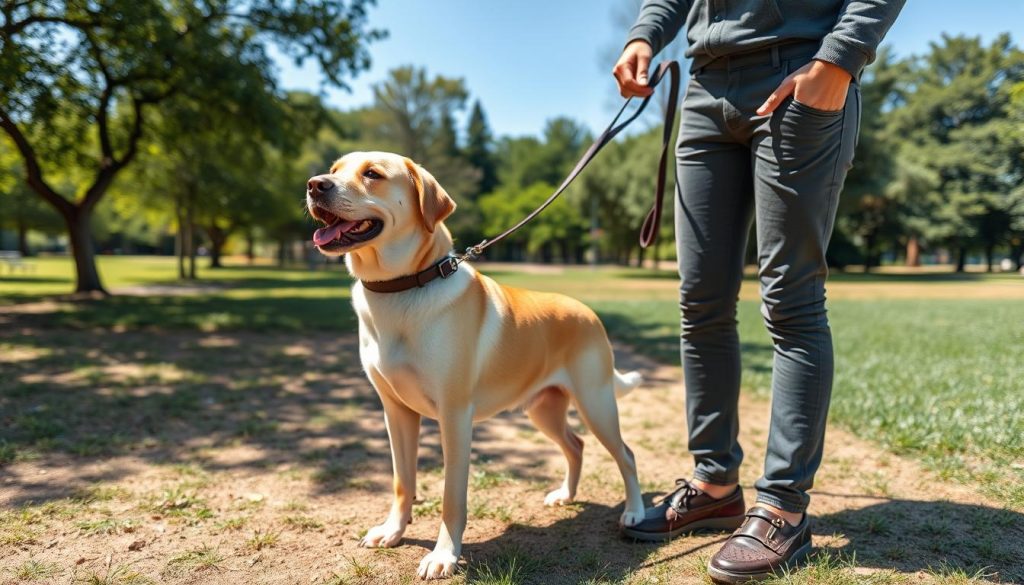
Stopping your dog from pulling can be tough. Use no-pull methods, like stopping or changing direction when they pull. This teaches them that pulling doesn’t work. Stay patient and avoid being too harsh, as it can scare or upset your dog.
To get the best results, stick to these tips without fail. Slowly make walks longer and more complex as your dog gets better at using a leash. Use no-pull methods when needed to keep up good behavior. With dedication, you and your dog will enjoy calm, enjoyable walks together.
Socialization Tips for Puppies and Adult Dogs
It’s key to socialize your dog well for their development and behavior. The best time to start is when puppies are 3 to 14 weeks old. During this period, introduce them to different places, people, and animals. It’s important to follow the right puppy training tips.
Socializing older dogs may take more time and effort. If they missed early socialization, introduce new things slowly to avoid fear. Start with new experiences in safe, positive places. This approach helps them adjust to new situations without stress or fear.
When teaching your dog to socialize, reward them for good behavior. Keep to a regular schedule and slowly expose them to more situations. Use treats and praise to make each new experience positive. Being consistent and patient is crucial in successful socialization.
Overcoming Common Training Challenges
Dealing with stubborn dogs needs patience and staying consistent. Often, their stubbornness comes from not understanding commands or lacking motivation. To tackle this, think about using more positive reinforcement. Rewarding good behavior often helps fix bad habits.
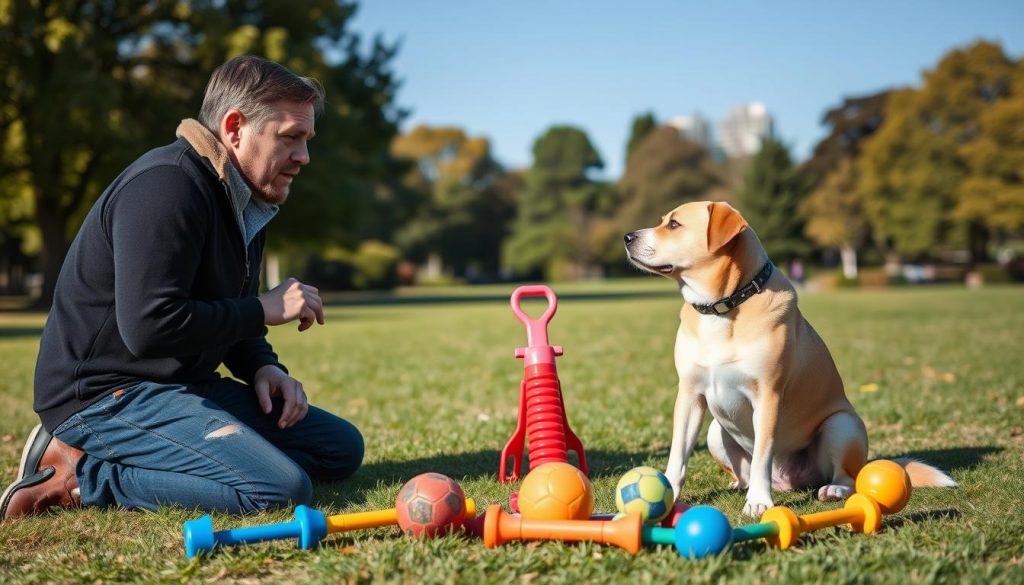
Correcting actions like too much barking or destructive chewing is another challenge. These behaviors may come from anxiety, boredom, or not enough exercise. Making sure your dog is active and mentally engaged can help stop these issues.
Staying consistent with training is crucial. Regularly practicing commands and rewarding good behavior will help enforce the right actions. Remember, you don’t need to be harsh with stubborn dogs. Just stay positive and patient for the best outcome. By using these methods, you can train a well-behaved and happy pet.
Creating a Consistent Training Schedule
Creating a steady training schedule is key to your dog’s successful learning. A daily routine helps you and your pet stay focused. It makes teaching good behaviors easier while stopping bad ones.
Finding the right time for training is your first step. Mornings and evenings work best for most people. These times can easily become part of your daily life. Your dog will soon expect and enjoy this regular activity.
Keep your training short but meaningful. Aim for five to ten minutes at a time. Short, frequent sessions keep your dog interested and not overwhelmed. This way, you cover different commands and habits, ensuring ongoing improvement.
Being consistent with commands, your voice, and rewards matters a lot. It helps your dog know what you want from them. Try to mix up the exercises and commands to keep your dog engaged.
Remember to include rest days. Dogs, like people, need breaks to rest and recover. On these days, you can still teach good behavior during play or walks.
Finally, don’t forget to use clickers, treats, and toys. These aids are great for encouraging and rewarding your dog. With a regular training schedule and patience, you will see better behavior and obedience.
Conclusion
Training your dog is key to building a strong relationship. It’s all about understanding their behavior. This journey is both a challenge and a joy.
Training is not just once; it’s for life. Using treats, toys, and praise will shape their behavior in a positive space. Mastering commands or moving up to leash training needs patience and consistent efforts.
To keep growing, socialize your dog, face challenges together, and have regular training times. Seeing training as a never-ending path will deepen your connection with your pet. Move forward with patience, and cherish how it strengthens your bond.
Quick Recommendation: Our blog is filled with tips and tricks for training your puppy or dog. If you are seeking a comprehensive training program, we recommend K9 Training Institute.
BTW: If you are interested in everything from nutritional advice and natural health solutions to stress-relief techniques and overall wellness tips, check out our friends at PawfectlyHealthyPets.com.