

Welcome to your comprehensive dog training guide! It’s a fun road, turning your playful pup into a good dog. We’ll cover everything from knowing your puppy’s personality to learning dog commands. This guide has top puppy training strategies, with expertise from the Association of Professional Dog Trainers and findings from the Journal of Veterinary Behavior. You’ll find the best tips to make training both fun and successful.
Using positive reinforcement and being consistent are key. You’ll not only teach your dog basic commands but also build a strong, loving bond. Ready to start this wonderful journey? Let’s dive in!
Quick Recommendation: Our blog is filled with tips and tricks for training your puppy or dog. If you are seeking a comprehensive training program, we recommend K9 Training Institute.
Understanding Your Pup’s Personality
Getting to know your pup’s unique personality is crucial for good training. Every puppy has its own set of behaviors that affect their training and how they bond with you. By spotting these personal traits, you can tailor your training to fit their needs.
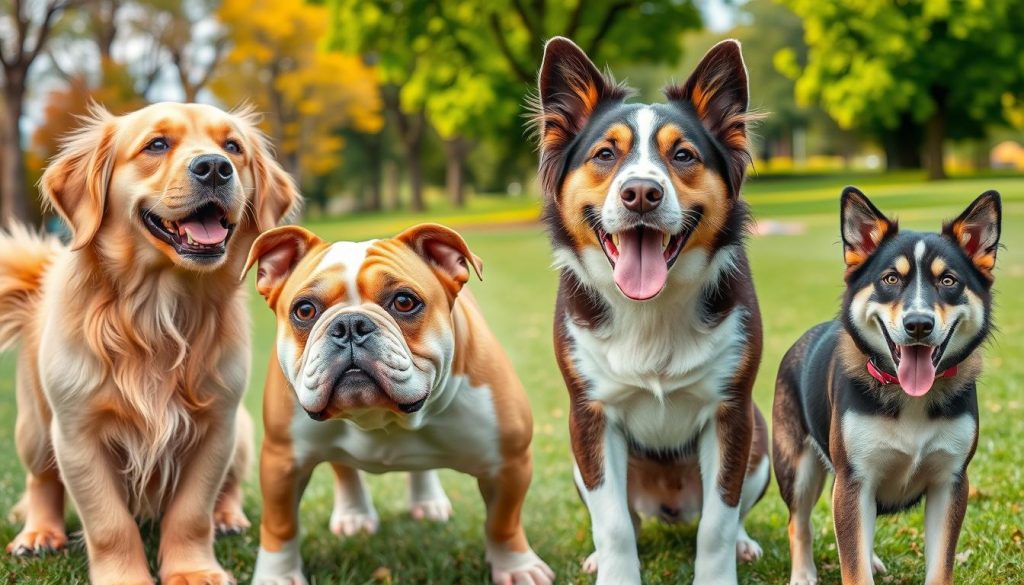
Start by checking out your dog’s temperament. Watch how they act in different situations. Look at their sociability, how easily they get scared, and their playfulness. The American Society for the Prevention of Cruelty to Animals has tools to help you understand these traits.
Talking to certified animal behaviorists is another smart move. They’re trained to figure out your dog’s temperament and give advice that suits your dog. Also, research from studies on animal behavior, found on places like PubMed, can provide science-based insight into puppy behaviors.
Using what you know about your dog’s temperament in training is key. It makes training not only effective but fun for your pup, too. Each dog’s personality is different, and recognizing their unique traits can greatly benefit their growth and your training journey.
Early Puppy Training Techniques
Starting early with puppy training is very important. During this time, you can teach them house rules and simple commands. Starting young can greatly improve their behavior for life.
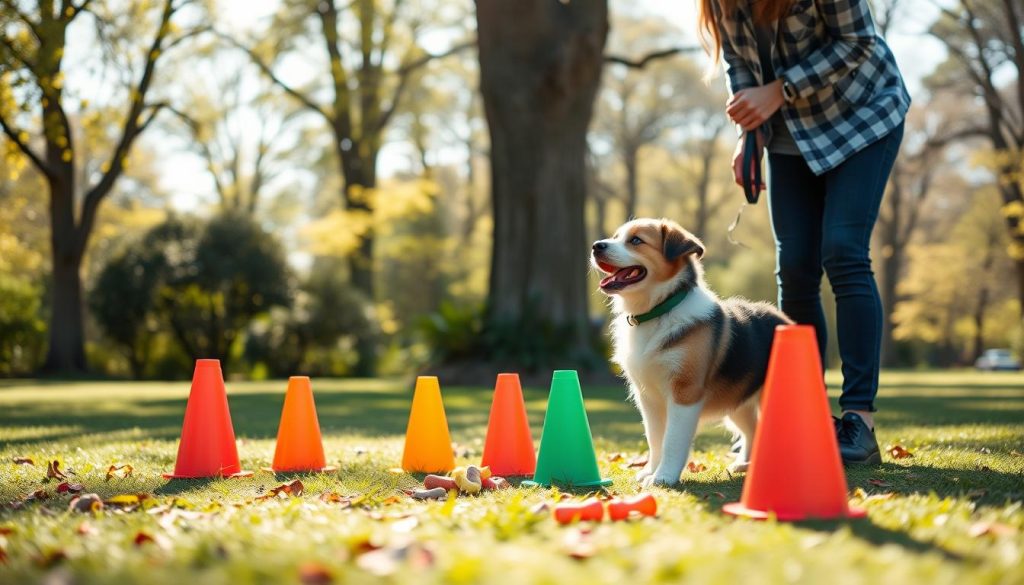
Housebreaking is one of the first steps in training. It teaches your puppy where it’s okay to go to the bathroom. Being consistent and using positive reinforcement are key. Treats and praise help your puppy learn and follow the rules.
Training also includes basic commands like “sit,” “stay,” and “come.” These aren’t just tricks; they’re essential for your dog’s safety and a peaceful home. Dog training books and schools stress the importance of teaching these early on.
For more tips, communities and forums are great. You can get advice and share training stories with other dog owners. These real-world insights can be very helpful, sometimes more than training manuals.
It’s important to be structured but flexible in training your puppy. Setting clear boundaries and being patient are key. Your efforts early on will help your puppy become a well-behaved and joyful friend.
Positive Reinforcement Training: The Key to Success
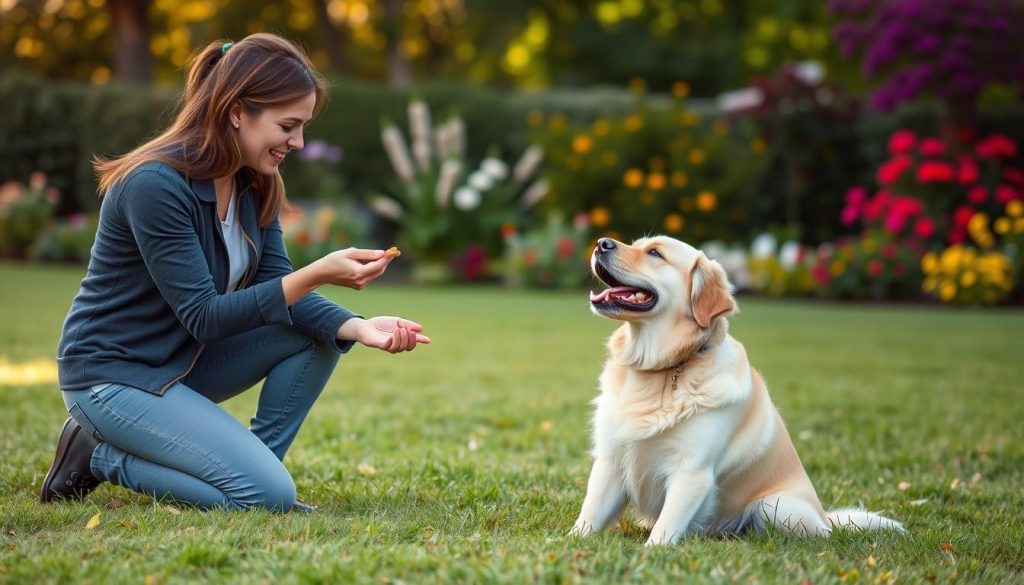
Starting positive reinforcement training can change your and your pup’s relationship. It uses rewards and praise to encourage good behavior. Studies show it’s more effective for lasting behavior change.
Clicker training is a key part of this method. It lets you mark when your dog does something right. The click sound, along with a treat, helps your dog learn faster.
Dog training experts, like Victoria Stilwell, support positive reinforcement. It builds trust and a strong bond. It’s better than punishment, which can cause fear and anxiety.
Many dog owners have seen great results with this training. Their dogs learn quicker and are more eager to train. Reward-based methods prepare your pup for a well-behaved life.
Positive reinforcement has long-term advantages. Dogs trained this way have fewer issues and adjust better to new situations. Try positive reinforcement training and see your dog succeed!
Basic Obedience Training: Commands Every Dog Should Know
Teaching your dog basic commands is very important. The first command most dogs learn is sit. You can teach them this by holding a treat near their nose. Then, lift your hand so they follow it, making their bottom go down. When they sit, say “sit,” give them the treat, and show them love.
After learning to sit, it’s time for the stay instruction. Make your dog sit, then show them your hand and say “stay.” Step back a few steps. If they stay, reward them with a treat and affection. Slowly, you can take more steps back before giving the treat.
The recall training command is next. It’s important for keeping your dog safe. Begin with little distractions inside your house. Call your dog’s name and say “come” in a happy tone. Give them a treat and lots of praise when they come to you.
Last, we have the “heel” command for walking nicely on a leash. Start walking with your dog on a leash. If they pull, stop walking or change directions. Reward them when they come back to your side and say “heel”. Success comes from repetition and being patient.
Using these commands makes your dog behave better and stay safe. Keep practicing regularly and be consistent. For more tips, look at dog training books, ask for advice from certified trainers, and read blogs. Success stories from other dog owners can offer useful tricks.
Quick Recommendation: Our blog is filled with tips and tricks for training your puppy or dog. If you are seeking a comprehensive training program, we recommend K9 Training Institute.
Addressing Canine Behavior Issues
Dogs have peculiar habits, yet some behaviors pose bigger challenges. It’s key to correct these for a peaceful home. Behaviors like aggression and excessive barking need addressing. Understanding why your dog acts out is the starting point.
Dealing with aggression means staying calm and cool. Seek help from a vet psychologist or a dog expert. They can offer specific strategies for managing your dog’s aggression.
Destructive chewing is another issue. Chewing is natural for dogs, but it’s a problem if they chew the wrong things. Giving your dog suitable toys and watching them can help steer their chewing the right way.
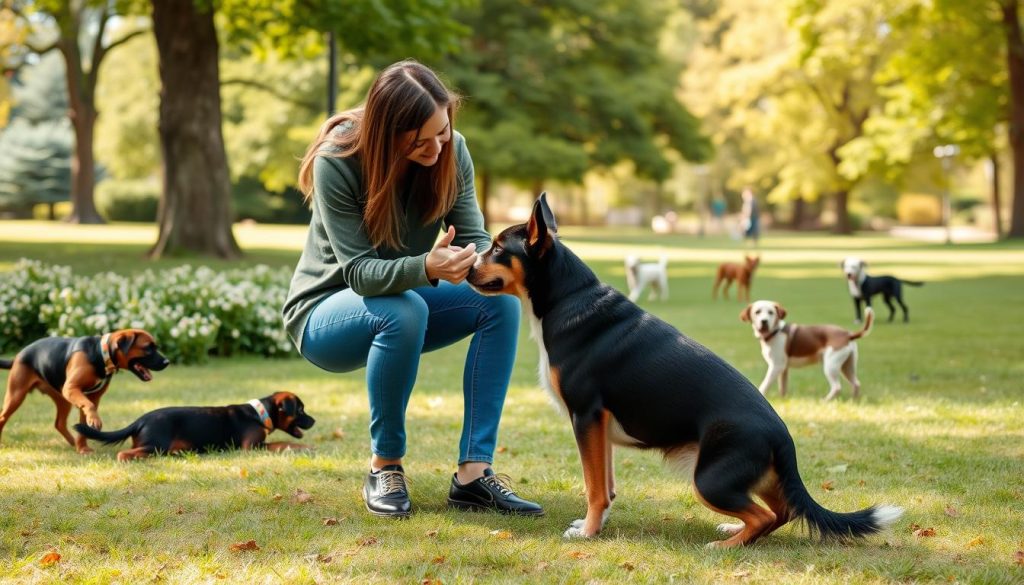
Loud barking can be annoying, but it’s usually a way dogs communicate. Finding out what triggers their barking is key. Things like boredom, fear, or protecting their area can cause it. Giving your dog plenty to do can cut down on the barking.
Fixing dog behaviors takes time and effort. With the right approaches and expert advice when needed, you can tackle any behavior issues your dog might have.
The Role of Socialization in Your Dog’s Development
Understanding how crucial socialization is can make a big difference for your pet. It helps your puppy grow up to be friendly and at ease with others. This is essential for living well with humans and other pets.
Early on, introduce your puppy to different places, people, and animals. The American Kennel Club says this is key. It helps your pet feel safe and builds their confidence.
Experts note that puppies who socialize early tend to have fewer problems with anxiety or aggression. Puppy classes and doggy daycare offer great chances for your puppy to meet others. These settings are safe for your pet to learn how to interact.
Stories from other pet owners show how great dog socialization can be. Watching puppies play with others can bring a lot of happiness. It also boosts their confidence and helps them adjust to new situations.
Training Tools and Equipment: What You Need
Choosing the right dog training tools can greatly impact your pup’s behavior. This guide covers everything from basic leashes to interactive toys. Discover the must-have items for training your dog.
A strong training leash is key. It helps manage your dog and teach basic commands safely. Pick from retractable or traditional leashes. Brands like PetSafe and Flexi are known for their quality.
Clicker training is a favorite for its effectiveness. A clicker marks good behavior clearly and quickly. Start with easy techniques and then try more challenging commands.
Interactive toys like Kong and Nylabone engage and educate your dog. Fill them with treats for a fun learning experience. They also tackle issues like chewing and barking.
Choosing the right collar or harness is vital. It depends on your dog’s size and behavior. Ensure they’re comfortable to prevent injury. For dogs that escape collars, try a martingale collar, suggests the American Kennel Club.
Treats are crucial for rewarding your dog. Pick tasty, healthy options. Brands like Blue Buffalo and Wellness are excellent choices. They make training enjoyable and rewarding.
With the right tools and approach, training can be effective and kind. Patience and consistency will greatly improve your dog’s behavior. Equip yourself for success in training your furry friend.
Consistency in Training: Why It Matters
It’s vital to set up a training routine for your dog. Doing the same things over helps your dog learn what you want. By sticking to a schedule, your dog gets what’s happening, which makes learning fun and easy for both of you. Studies show, keeping things consistent speeds up how fast your dog learns.
Training every day doesn’t need to take up all your time. Short lessons more often are better than long ones once in a while. Use times like meals or walks to work on commands and behaving well. This way, training feels like part of the day, not something extra. Experts say that when you repeat cues the same way, dogs catch on and stick to what they’ve learned faster.
It’s also key to have a good way of rewarding your dog. Always rewarding the right actions helps your dog understand what you want. Treats are great, but saying “good job” or playing can also mean a lot. Studies have found that dogs learn and remember what to do more when they know they’ll get a consistent reward.
Quick Recommendation: Our blog is filled with tips and tricks for training your puppy or dog. If you are seeking a comprehensive training program, we recommend K9 Training Institute.
BTW: If you are interested in everything from nutritional advice and natural health solutions to stress-relief techniques and overall wellness tips, check out our friends at PawfectlyHealthyPets.com.