

Want to make dog walks fun instead of a chore? Leash training is the key to stress-free strolls and a happier dog. It makes walks safer for you and your pet. Plus, it strengthens your bond.
Good leash training is more than just walking nicely. It’s about teaching your dog the right way to walk. Say goodbye to pulling, lunging, or getting tangled around poles. With the right methods, you and your dog will look forward to your walks.
Let’s explore leash training and see how it can make walks enjoyable for everyone.
Quick Recommendation: Our blog is filled with tips and tricks for training your puppy or dog. If you are seeking a comprehensive training program, we recommend K9 Training Institute.
Understanding the Importance of Leash Training
Leash training is key for every dog owner. It’s not just about controlling your dog; it’s about making walks safe and fun for both of you. Good leash manners prevent your dog from running into traffic or fighting with other animals. They also make sure you follow the law, which requires dogs to be on leashes in public.
Lead training is more than just safe. It builds a strong foundation for your dog’s behavior and obedience. Teaching your dog to walk nicely on a leash shows them who’s in charge. This respect helps in all parts of your relationship, making your dog listen better to you, on or off the leash.
Good leash training can turn walks into special times with your dog. Dogs that know how to walk on a leash don’t pull or run wild. This makes walks easier and more enjoyable for both of you. Soon, you’ll look forward to going out instead of dreading it.
Putting time into lead training is worth it. It stops accidents, lowers stress, and makes your bond with your dog stronger. It doesn’t matter if your dog is new or old. Improving your leash skills leads to safer, happier walks and a better-behaved dog.
Essential Equipment for Successful Leash Training
Choosing the right gear is crucial for leash training. A good leash is your first step. Look for nylon leashes, they’re tough and come in various lengths. For bigger or stronger dogs, consider leather leashes. They’re stronger and feel good in your hand.
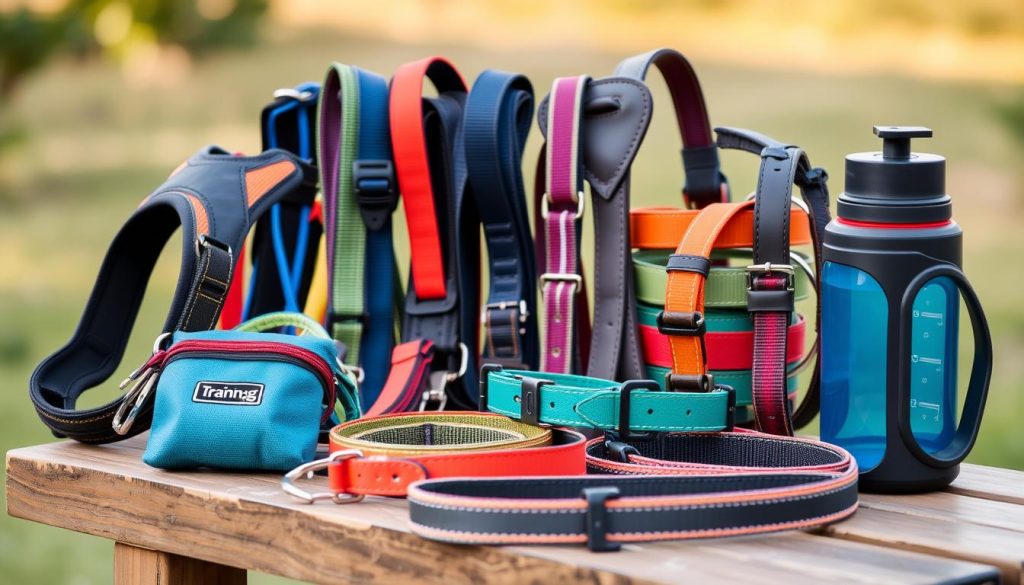
Collars are also key. Flat collars are perfect for everyday use. They hold your dog’s tags and are great for leash training. If your dog pulls a lot, think about a front-clip harness. These help control pulling without hurting your dog’s neck.
For some dogs, head halters can be useful. They give you more control over your dog’s head. This makes leash training easier. But not all dogs like them, so introduce them slowly.
The best gear depends on your dog. Small dogs need different gear than big ones. Your vet or a dog trainer can help you choose the right tools. With the right equipment, you’ll be ready to start leash training and learn good dog walking etiquette.
Starting with Indoor Leash Training
Indoor leash training is a fantastic way to help your dog become a well-behaved walker. Start by letting your pup get to know the leash in a place they feel safe. Let them sniff and check out the leash while you give them treats and praise. This makes them think the leash is a good thing.
Then, attach the leash to their collar or harness. Let them walk around while the leash follows them. Watch out for any tangles. As they get more comfortable, walk behind them with the leash. This teaches them what it feels like to be led.
When you’re training with the leash, use simple commands like “sit” and “come”. Give them treats and praise when they listen. This makes them link the leash with positive feelings.
Start walking short distances indoors, like in a hallway or big room. Encourage your dog to walk by your side. Use treats to help them stay in the right spot. As they get better, you can walk further and longer. Keep these training sessions short and fun to keep your dog excited.
Transitioning to Outdoor Leash Training
Once your dog has learned indoor leash training, it’s time to move outside. Outdoor training brings new challenges, but with patience and consistency, your dog can learn great leash manners.
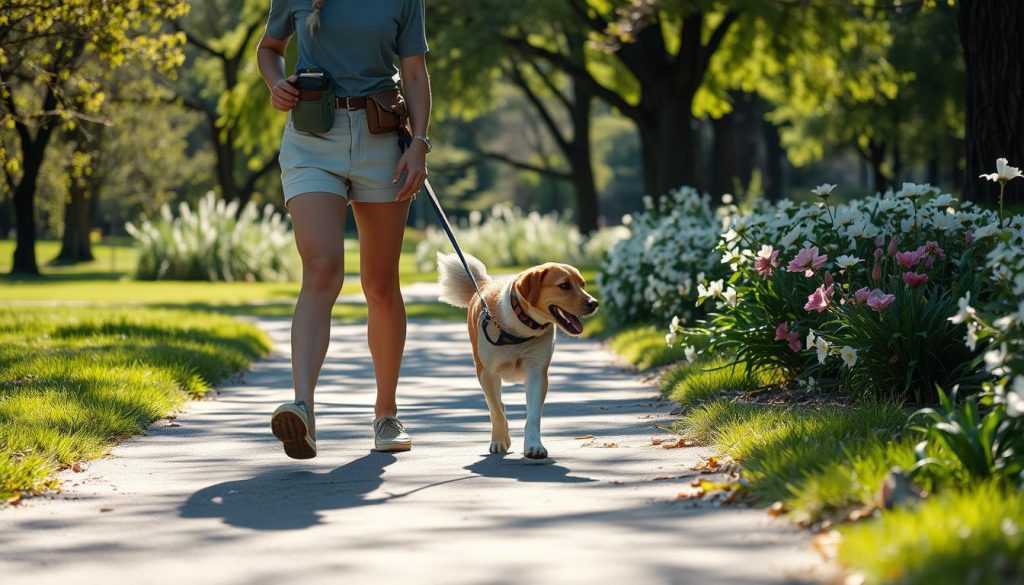
Begin in a quiet place with few distractions. Your backyard or a quiet park are perfect spots. Keep the first outdoor sessions short, about 5-10 minutes. This helps your dog get used to the new setting without feeling overwhelmed.
As your dog gets more comfortable, make outdoor training harder. Add new sights, sounds, and smells. Practice walking past other dogs, people, and cars. Always reward good behavior with treats and praise.
Be ready for challenges during outdoor training. Your dog might get excited or distracted by new things. If this happens, stay calm and refocus their attention on you. With time and effort, your dog will learn to ignore distractions and focus on you.
Consistency is crucial for good leash manners. Use the same commands and methods you used indoors. A regular outdoor training routine will make your dog a great walking buddy quickly.
Quick Recommendation: Our blog is filled with tips and tricks for training your puppy or dog. If you are seeking a comprehensive training program, we recommend K9 Training Institute.
Mastering Loose Leash Walking Techniques
Learning to walk on a loose leash is key for fun walks with your dog. Begin by teaching your dog to walk calmly by your side. Use the “stop and go” method to help them learn.
When your dog pulls, stop moving. Start walking again only when the leash is loose. This teaches your dog that pulling doesn’t get them anywhere.
Changing directions during walks keeps your dog focused on you. It helps them ignore distractions. Use commands like “let’s go” or “with me” to signal direction changes.
Give your dog treats or praise when they follow you without pulling. This positive reinforcement helps them learn faster.
Being consistent is important for mastering loose leash walking. Practice these techniques every day, even for a few minutes. Remember, it may take time for your dog to understand.
Some dogs might need weeks or months to learn. Stay positive and celebrate small successes. With patience and dedication, you and your dog will enjoy stress-free walks together.
Addressing Common Leash Training Challenges
Leash pulling is a big issue for many dog owners. Dogs often pull hard, wanting to go faster. This makes walks hard and can be dangerous.
To stop this, stop moving when your dog pulls. Only go forward when the leash is loose. This teaches your dog that pulling doesn’t speed things up.
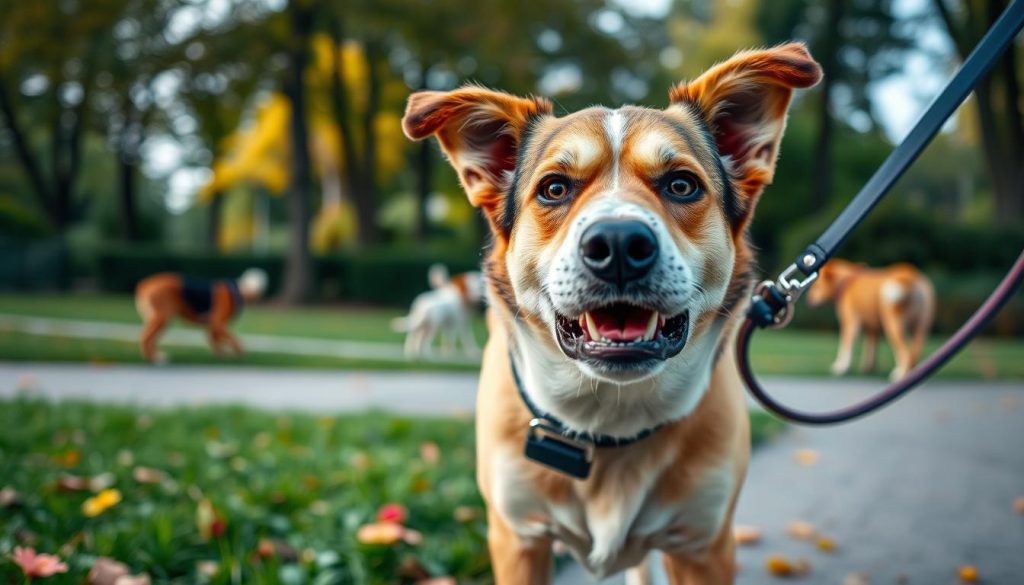
Leash reactivity is another big problem. Some dogs bark or growl at others or things while on a leash. This comes from fear, anxiety, or too much excitement.
To fix this, first figure out what triggers your dog. Then, slowly introduce them to these things from a safe spot. Reward them for staying calm. Gradually get closer over time as they get used to it.
If leash pulling or reactivity is a big problem, get help from a pro dog trainer. They can give you specific advice for your dog’s issues. Remember, it takes time and effort to fix these problems. But with patience and hard work, walks with your dog can be fun again.
Leash Training: The Key to Happy Walks
Leash training is key for fun walks with your dog. It makes outings stress-free and strengthens your bond. It teaches your dog about boundaries and what to expect on walks.
Well-behaved walks are great for dogs and owners. Dogs get exercise and mental stimulation. Owners get quality time with their pets. Leash-trained dogs also socialize better with other animals and people, boosting their confidence.
Good dog walking etiquette makes the environment positive for everyone. Keep your dog close, clean up after them, and respect others. Consistency and patience are crucial for leash training. Soon, walks will be a joy, deepening your bond with your dog.
Advanced Leash Training Techniques
Are you ready to improve your dog’s leash skills? Techniques like heel training and lead training can make walks better. Heel training teaches your dog to walk calmly by your side. Start in a quiet area and use treats to reward your pup for staying close. Gradually increase distractions as your dog improves.
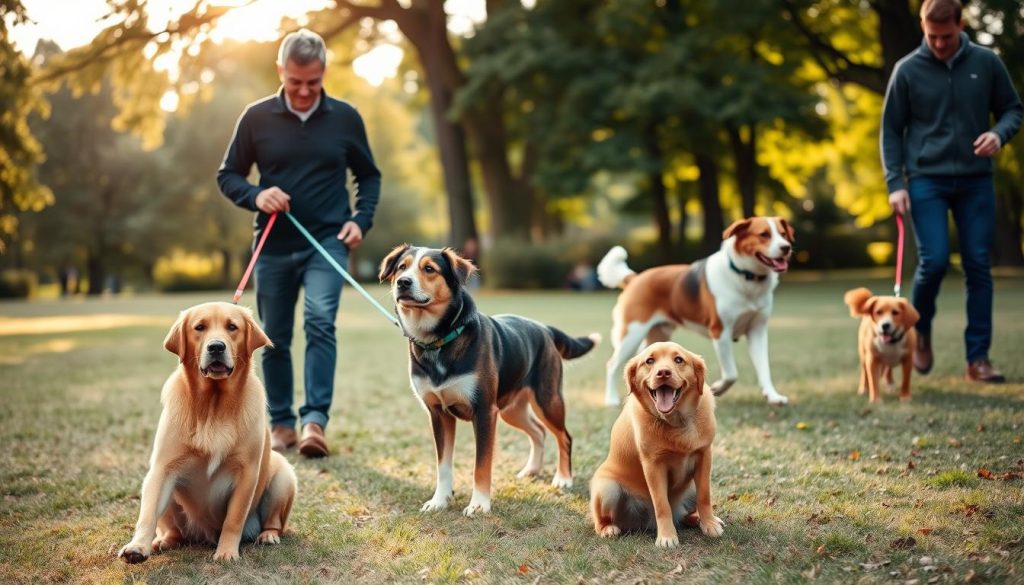
Lead training builds on these skills. Practice sudden stops and turns during walks. This keeps your dog focused on you and responsive to changes. Off-leash recall is another valuable skill. Begin in a safe, enclosed space. Call your dog’s name and reward them when they come to you. Slowly increase distance and add distractions.
Incorporate these advanced techniques into your daily routines. Use heel training when passing other dogs or crossing streets. Practice lead training in busy parks or on hiking trails. Remember, consistency is key. With patience and regular practice, you’ll enjoy more harmonious walks with your furry friend.
Important Tip: Training your dog is just the beginning. Keep them safe an healthy with Pin Paws Pet Care. Our blog provides the training advice, and Pin Paws offers the protection your pet deserves.
Leash Etiquette and Dog Walking Best Practices
Walking your dog with good etiquette makes the experience enjoyable for both of you. Always clean up after your dog. Use waste bags and throw them away in bins. This keeps our community clean and shows respect.
Leash manners are important for safe walks. Always use a leash where it’s the law. It keeps your dog safe from other dogs and people who might be scared of them. When you meet others, keep your dog close and give them space.
Be careful around other people and dogs on your walks. If someone wants to pet your dog, make sure they wait. Check that your dog is calm and okay with it first. This makes walks better for your dog and the people you meet.
Not all dogs like being approached by others. Always ask before letting your dog say hello to another dog. Following these tips makes walking your dog a positive experience for everyone.
Maintaining and Reinforcing Leash Training Skills
Keeping your dog’s leash training sharp makes walks enjoyable. Regular practice helps keep good habits and stops bad ones. Try new routes to keep walks exciting for you and your dog. This keeps leash skills sharp in different places.
Positive reinforcement is still key after your dog learns basic lead training. Always carry treats on walks and give them out for good behavior. This keeps your dog focused and responsive. Remember, being consistent is key to good leash manners.
As your dog gets older or meets new situations, you might need to change your training. Stay patient and understanding. If your older dog starts pulling again, go back to earlier training steps. For puppies with new distractions, use gentle guidance and lots of praise to keep them on track.
Make walks fun and engaging to strengthen your bond and improve leash skills. Try adding short training sessions or games to your walks. This keeps your dog’s mind sharp and makes walks rewarding. With ongoing effort and positivity, you’ll keep a well-behaved walking companion for years.
Quick Recommendation: Our blog is filled with tips and tricks for training your puppy or dog. If you are seeking a comprehensive training program, we recommend K9 Training Institute.
BTW: If you are interested in everything from nutritional advice and natural health solutions to stress-relief techniques and overall wellness tips, check out our friends at PawfectlyHealthyPets.com.