

Welcome to the world of crate training! This guide will show you how to make your pup’s crate a cozy den. Crate training keeps your furry friend safe and happy. It’s more than just a place for them to sleep; it’s a home within your home.
Dog den training, as some call it, uses your pup’s natural instincts. It gives them a safe spot to relax and feel secure. We’ll cover everything you need to know about crate training. You’ll learn how to make the crate a place your dog loves, not fears. Let’s start this journey to a well-behaved, content pup!
Quick Recommendation: Our blog is filled with tips and tricks for training your puppy or dog. If you are seeking a comprehensive training program, we recommend K9 Training Institute.
Understanding the Importance of Crate Training
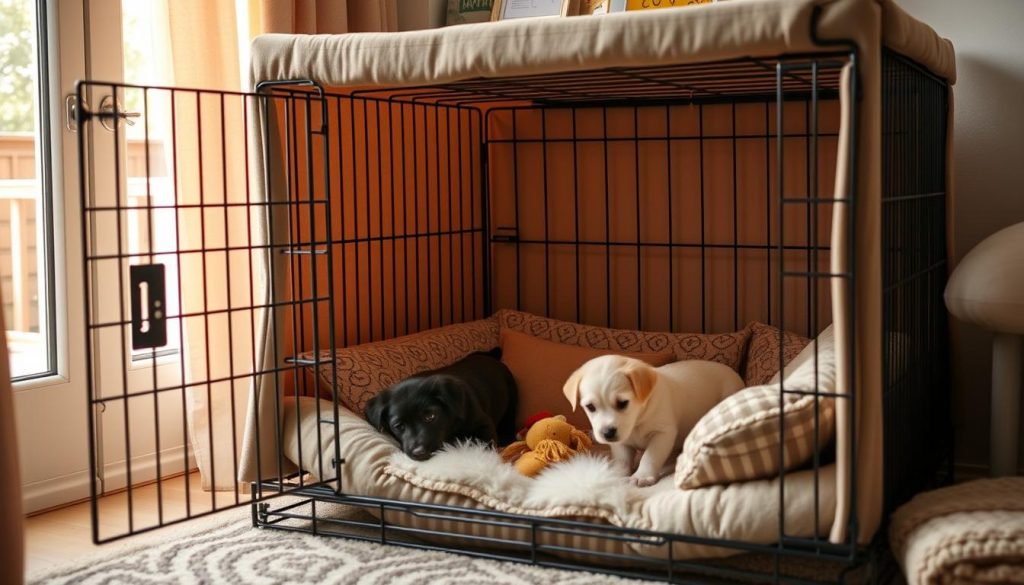
Crate training is key to raising a well-behaved and confident dog. It helps your furry friend have a safe space. Imagine it as their own cozy den where they can relax and feel safe.
Safe confinement is a big plus of crate training. It keeps your dog safe when you’re not watching, stopping accidents or damage. This is super useful for puppies still learning the house rules.
Crates also help with house training. Dogs don’t like to soil their sleeping spots, so a crate teaches them to wait until you take them out. This makes potty training quicker and more successful.
Your dog’s crate turns into their sanctuary – a quiet place to go when they’re feeling stressed or need a nap. By making crate time positive, you’re giving your pup a safe spot they can always go to.
Choosing the Right Crate for Your Puppy
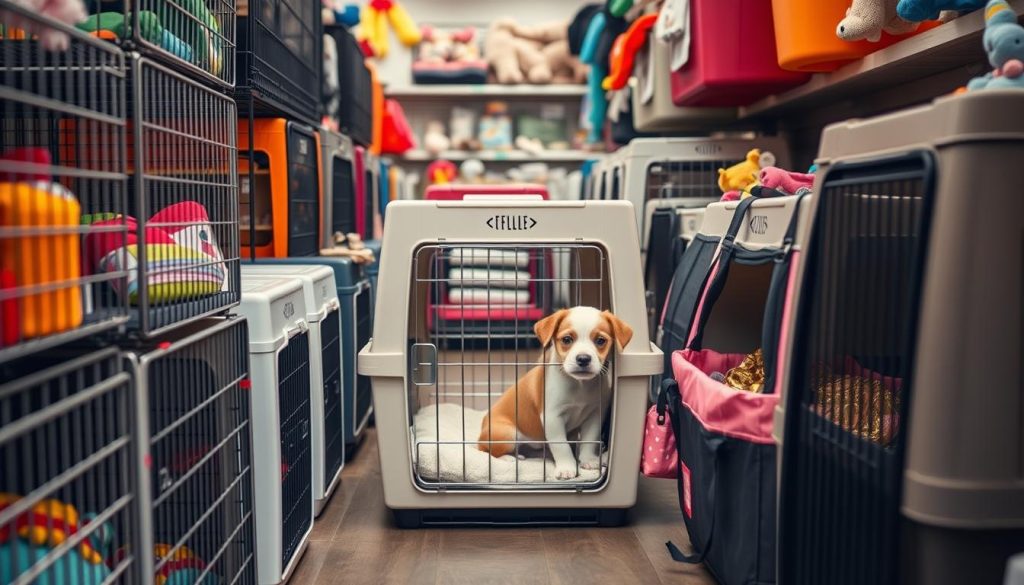
Finding the perfect crate for your puppy is crucial for a smooth start. The crate should be the right size for your pup. It should let them stand up, turn around, and lie down easily. But, it shouldn’t be too big, or your puppy might use one corner for accidents and sleep in another.
Think about how big your puppy will get when picking a crate. Many crates come with dividers. These let you change the space as your puppy grows. This is great for keeping your puppy safe during the early days and can also save you money.
There are different types of crates, like wire, plastic, and soft-sided ones. Wire crates are good for air flow and letting your puppy see outside. They help ease your puppy’s anxiety during crate training. Plastic crates give a cozy feel, perfect for dogs who like privacy. Soft-sided crates are good for small breeds and traveling but not for dogs that like to chew.
The crate you pick will be your puppy’s safe spot. It should be strong, easy to clean, and fit well in your home. With the right crate, you’re helping your puppy have positive crate experiences. This leads to a well-adjusted adult dog.
Setting Up the Perfect Crate Environment
Creating a cozy crate space is crucial for your dog’s comfort. Start by picking a quiet spot away from busy areas. This makes your pup feel safe and calm as they get used to the kennel.
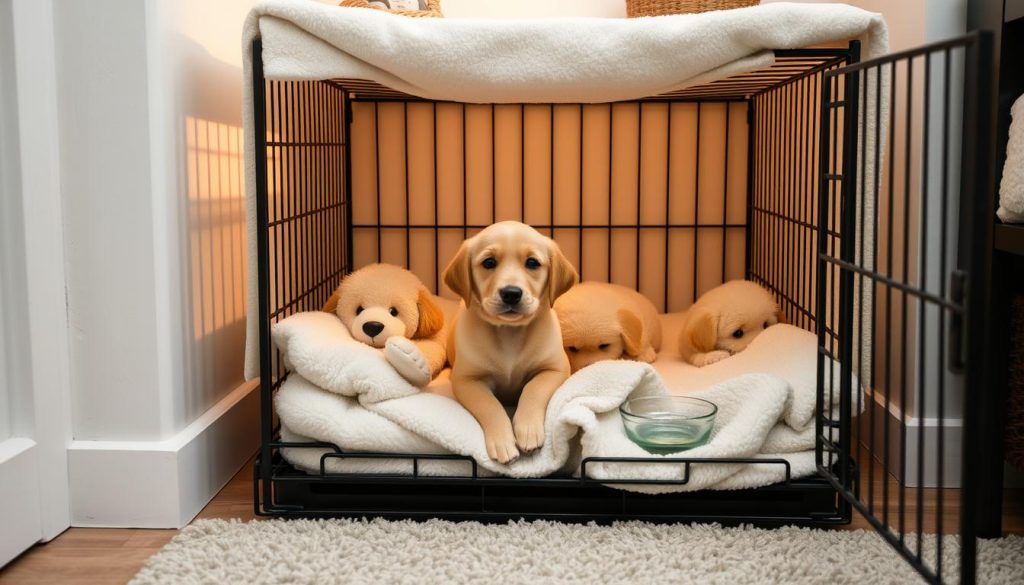
Put a soft, washable bed or blanket in the crate for comfort. Add some favorite toys to keep your dog happy during crate time. But, don’t put food or water bowls inside to avoid spills.
To help your dog get used to the crate, cover it with a light blanket. This makes it feel like a cozy den, which many dogs love. Make sure one side is open for air and for your dog to see outside. Adjust the crate as your dog grows and their needs change during kennel acclimatization.
Quick Recommendation: Our blog is filled with tips and tricks for training your puppy or dog. If you are seeking a comprehensive training program, we recommend K9 Training Institute.
Introducing Your Puppy to the Crate
Starting crate training early is crucial for your dog’s comfort. Place the crate in a spot where your puppy hangs out a lot. Let them check it out at their own speed with the door open.
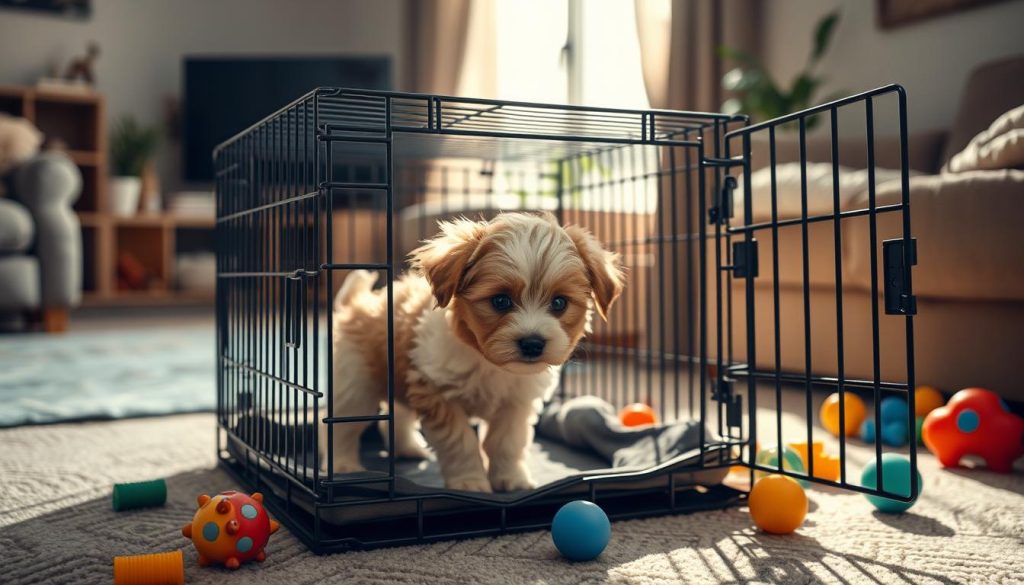
Make the crate a comfy spot with soft bedding and toys. Hide treats inside to make them want to go in. When they enter, praise them and give more treats to make it a good experience.
Slowly increase how long your puppy stays in the crate. Begin with short times while you’re there, then make it longer. Feed them near the crate, moving the bowl closer each day. This makes the crate feel like their own space.
Being patient is key in crate training. Don’t force your puppy into the crate or use it as a punishment. The aim is to make the crate a safe, cozy spot for them. With consistent positive reinforcement, your puppy will see the crate as a place to relax.
Positive Reinforcement Techniques for Crate Training
Crate training is more effective with positive reinforcement. This makes your dog see the crate as a good place. Begin by placing treats near the crate. Then, move them inside as your dog gets used to it.
When your dog goes into the crate on their own, praise them. Use a happy, upbeat tone to show they’re doing well. You can also give them a special toy for crate time. This links the crate to fun times.
Don’t force your dog into the crate during crate training. Let them go at their own pace. If they’re hesitant, try feeding them near the crate. Then, move the food bowl closer to and inside the crate. This helps them feel good about their new space.
Patience is crucial in crate training. Every dog learns at their own speed. Keep training sessions short and fun. With consistent positive reinforcement, your dog will soon see their crate as a safe, cozy place.
Establishing a Crate Training Schedule
Creating a consistent crate training schedule is key to successful puppy confinement. Start by aligning your pup’s crate time with their natural sleep patterns. Puppies need lots of rest, so plan for short naps throughout the day in their crate. This helps them associate the crate with comfort and relaxation.
Include potty breaks in your schedule. Take your puppy out immediately after waking up, eating, or playing. This prevents accidents and reinforces good habits. Gradually increase crate time as your pup grows older and more comfortable with safe confinement.
Balance crate time with plenty of playtime and attention. A typical schedule might include crate time for sleep at night, short naps during the day, and brief periods when you can’t supervise. Remember, puppies can’t hold their bladder for long, so adjust your schedule accordingly.
Consistency is crucial in crate training. Stick to your schedule as much as possible, even on weekends. This helps your puppy feel secure and understand what to expect. With patience and a well-planned schedule, your pup will soon view their crate as a cozy den.
Crate Training: Step-by-Step Guide
Are you ready to start crate acclimation? Follow this easy guide to help your puppy get used to their new space. Begin by letting your pup see the crate for short times during the day. Put treats inside to make it a positive place.
Slowly increase how long your puppy stays in the crate. Start with just a few minutes and then add more time. This helps your puppy get comfortable with it.
Keep a regular schedule during kennel acclimatization. Feed your puppy in the crate to make it a good place. After meals, take your pup outside to go to the bathroom. As your puppy gets more comfortable, you can leave them in the crate for longer while you’re home.
Remember, crate training takes time. Some puppies adjust fast, while others need more time. Always be patient and celebrate the small wins. With patience and positive rewards, your puppy will soon see the crate as a safe, cozy spot.
Important Tip: Training your dog is just the beginning. Keep them safe an healthy with Pin Paws Pet Care. Our blog provides the training advice, and Pin Paws offers the protection your pet deserves.
Dealing with Crate Training Challenges
Crate training can be tough. Your pup might whine, bark, or show signs of anxiety. Don’t worry! These are normal hurdles in dog den training.
When your furry friend cries, resist the urge to let them out right away. This can make the problem worse. Instead, wait for a quiet moment, then reward them with praise or treats.
Separation anxiety is another common issue. Start by leaving your dog alone for short periods. Gradually increase the time as they become more comfortable.
Add toys and treats to the crate to make it a positive space. This helps your pup associate their den with good experiences.
If barking persists, try covering the crate with a light blanket. This can create a calming den-like atmosphere. Remember, crate habituation takes time and patience.
Stay consistent with your dog den training approach. Your pup will soon see their crate as a safe, cozy retreat.
Transitioning from Crate to Free Roam
As your pup gets used to the crate, it’s time to give them more freedom. This move is a big step in crate training. Start by letting your dog explore a single room for short times when you’re home. Watch them and praise them for good behavior.
Slowly give your furry friend more time and space to explore. If they stay calm and don’t cause trouble, you’re doing great. Keep the crate open and let them know it’s still a safe place.
Some dogs might even choose to nap in the crate, showing they feel safe there. Remember, every dog is unique. Some may take longer to get full house freedom, while others might get there faster. Trust your instincts and your dog’s progress.
If your dog has a setback, don’t worry. Just reduce their freedom a bit and keep up with crate training. With patience and consistency, you’ll soon have a well-behaved dog who loves their crate and your whole home.
Quick Recommendation: Our blog is filled with tips and tricks for training your puppy or dog. If you are seeking a comprehensive training program, we recommend K9 Training Institute.
BTW: If you are interested in everything from nutritional advice and natural health solutions to stress-relief techniques and overall wellness tips, check out our friends at PawfectlyHealthyPets.com.