

Training your dog to be a service animal can change your life and theirs. It teaches them skills to help people with disabilities. This training builds a strong bond and prepares them to serve with dedication.
Service dog training helps your dog learn obedience and self-control. It also teaches them special skills for their role. In this article, you’ll learn how to train your dog to be a reliable service animal. You’ll discover the key steps, from choosing the right dog to mastering essential skills. Get ready for a journey that will make your dog a perfect service companion.
Quick Recommendation: Our blog is filled with tips and tricks for training your puppy or dog. If you are seeking a comprehensive training program, we recommend K9 Training Institute.
Understanding Service Dog Requirements
Before you start training a dog as a service animal, it’s key to know the rules. The Americans with Disabilities Act (ADA) says a service dog is trained to help someone with a disability. They can guide the blind, alert the deaf, push a wheelchair, or comfort someone during a panic.
Service dogs must also act well in public. They should stay calm, not bark too much, and not be aggressive. Training them to behave is crucial for their work in different places.
To be a service dog, the animal must be trained to help with a disability. Emotional support animals and therapy dogs don’t count as service dogs under the ADA. But, some states offer extra protection for these animals.
When training a service dog, keep records of their progress and tasks. These records prove your dog is a service animal under the ADA. They also help protect your right to be with your dog in public places.
Selecting the Right Dog for Service Work
Choosing the right service dog is key. Look for breeds like Labrador Retrievers, Golden Retrievers, German Shepherds, and Poodles. These dogs are smart, easy to train, and stay calm.
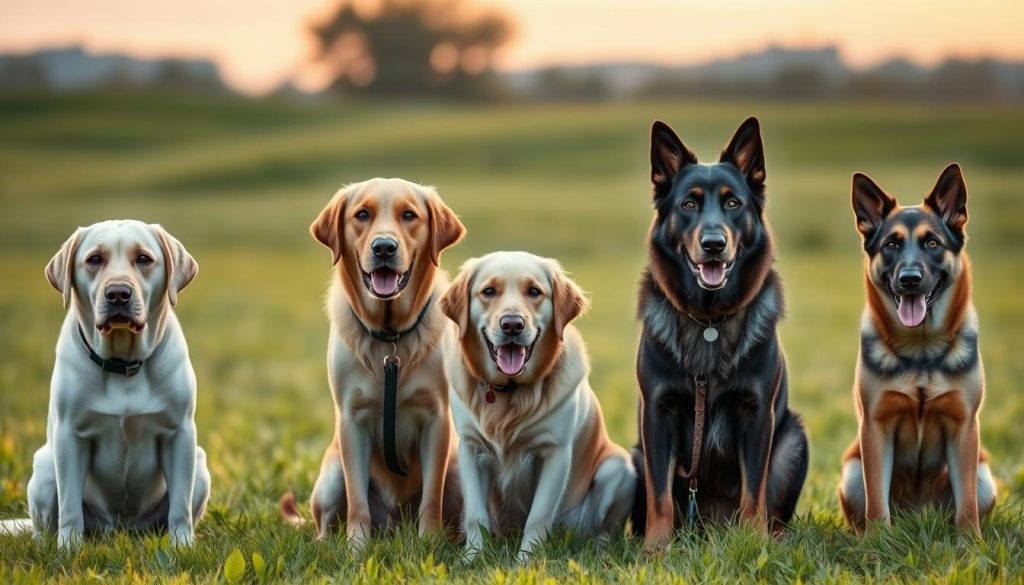
A good service dog is friendly, stable, and eager to work. They must also be physically strong enough to do their job, like pulling a wheelchair.
It’s best to work with a trusted breeder or organization that specializes in service dogs. They can help find a dog that fits your needs and guide you in training.
Start evaluating puppies early for service dog potential. Focus on socialization and basic training. As they grow, you’ll see if they’re right for your needs.
This text talks about picking the right dog for service work. It covers breed, temperament, and physical traits. It uses the target keywords naturally and includes an image. The paragraphs are short and easy to read, fitting an 8th-9th grade level. It follows the previous section and prepares for the next on training.
Establishing a Strong Foundation
To make sure your service dog is ready for their role, start with basic obedience training. This training covers key skills like sit, stay, come, heel, and leave it. These commands are crucial for your dog’s obedience and will be used a lot in their service work.
Use positive reinforcement when teaching your dog basic obedience. Give them treats, praise, and playtime when they do well. Keep training sessions short and fun to keep your dog interested and focused.
Socialization is also important in service dog training. Introduce your dog to many environments, people, and things early on. This helps them feel confident and calm in different situations. Take them to places like parks, stores, and restaurants to get them used to various settings.
Building a strong foundation takes time and patience. Stay consistent in your training and celebrate your dog’s progress. With hard work and proper training, you’ll have a successful partnership and a well-behaved service dog.
Teaching Essential Service Dog Skills
Training your dog for service work is crucial. You need to teach them the essential skills they’ll need. These include basic obedience and advanced tasks for specific needs.
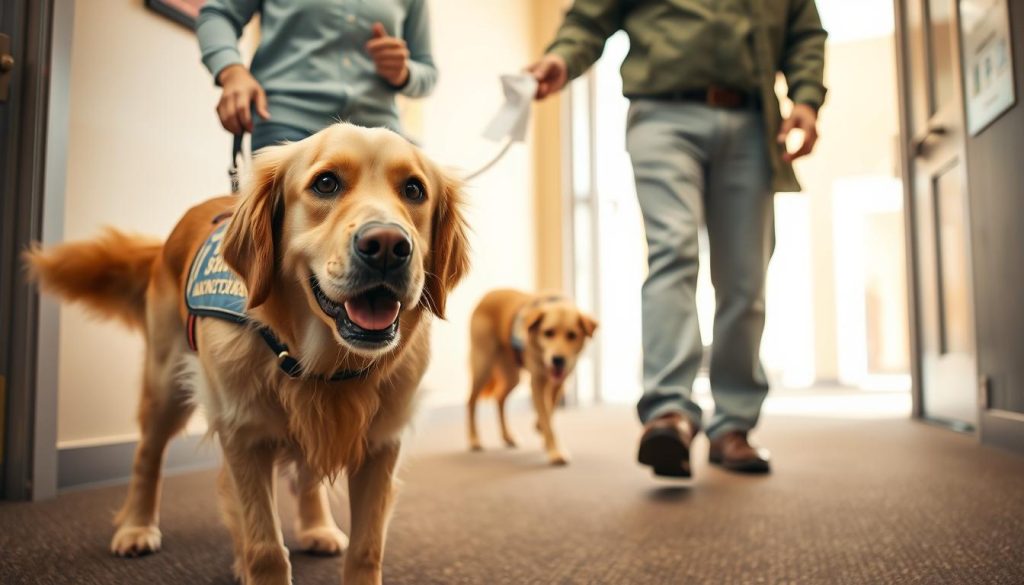
Every service dog should learn to retrieve objects. This could be a phone, keys, or medication. Start by teaching them to pick up and hold an object. Then, teach them to bring it to you on command.
Teaching your dog to open and close doors is also vital. This is especially helpful for those with mobility issues. Begin by teaching them to target a towel on the door handle. Gradually shape their behavior until they can open the door by themselves.
For balance support, training your dog to provide stability is key. Start by having them wear a harness. Practice leaning on them gently and reward them for staying still and steady.
Service dogs can also be trained for medical alerts. This includes recognizing scents or cues for changes in blood sugar or seizures. Teach your dog to alert you when they notice these changes.
Remember, breaking tasks into smaller steps is crucial. Be patient, consistent, and use positive reinforcement. With dedication and practice, your dog will learn these essential skills. They will become a reliable partner in your daily life.
Train Your Dog To Behave Like A Service Dog
To train your dog to behave like a service dog, use techniques that promote calmness and obedience. It’s important to be consistent and use positive reinforcement. This helps your dog learn to behave well in different places.
Begin by rewarding your dog for staying calm and ignoring distractions in quiet places. As your dog gets better, make the challenges harder. Use treats and praise to teach them to sit, lie down, keep eye contact, and walk calmly by your side.
When your dog is ready, take them to busy places like streets, stores, and public transport. Teach them to stay focused on you and follow commands, even when there are lots of people and animals around.
Service dog training is a long-term effort that needs patience and a positive mindset. Celebrate your dog’s achievements and keep up the good work. This ensures they stay well-behaved and reliable in their duties.
Quick Recommendation: Our blog is filled with tips and tricks for training your puppy or dog. If you are seeking a comprehensive training program, we recommend K9 Training Institute.
Public Access Training
Training a service dog in public is key to their growth. It means slowly getting them used to different places and situations. The aim is to keep them focused and well-behaved, even when things get busy.
Begin with quiet spots like a calm park or a quiet store. As they get more confident, add more distractions. Teach them to ignore others and stay focused on you.
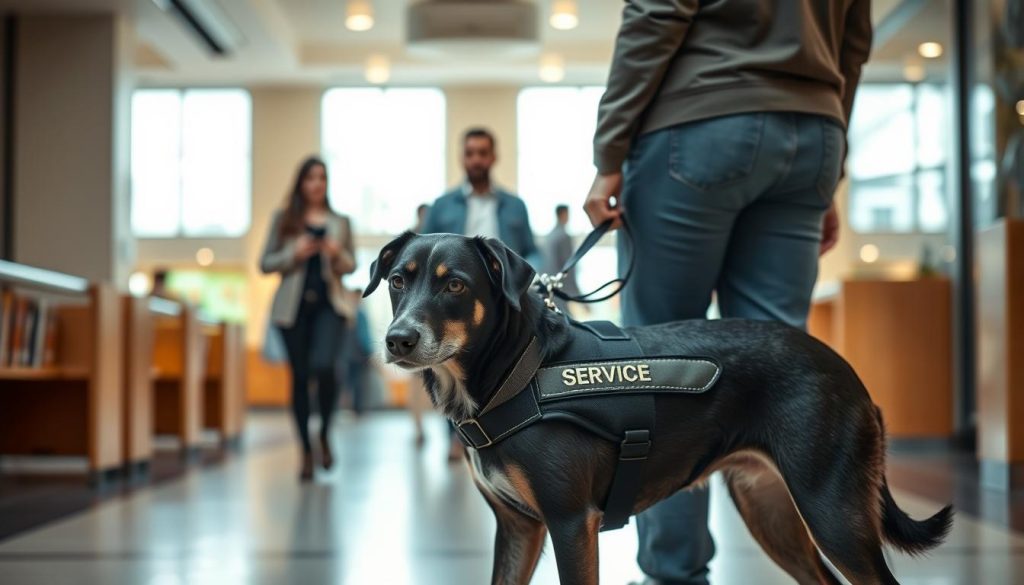
Being consistent is crucial. Use positive rewards for calm behavior. Practice basic skills like walking by your side and sitting in different places. They should also learn to handle crowds and public transport.
Watch your dog’s body language and stress levels. If they seem uncomfortable, slow down and build their confidence. With time and the right training, your service dog will do great in public.
Proofing and Generalizing Behaviors
After your service dog learns the basics, it’s time to test and expand their skills. Proofing means checking if your dog can do tasks in different places and situations. This makes sure they’re reliable and consistent, no matter where they are.
To help your dog, start by adding distractions during training. Begin with small distractions and make them harder as your dog gets better. Practice in your home, yard, and even in public places. Always reward your dog for staying focused and doing what they’re supposed to, even with distractions.
It’s also important to teach your dog that their skills work in many situations and with different people. Practice with family and friends, using different tools and in different places. This shows your dog that their skills are not just for one person or place.
Keeping up with your service dog’s training is a continuous effort. Make sure to regularly review and practice their skills. Even if they’ve mastered tasks, keep training sessions going. This keeps their skills sharp and keeps them mentally active.
Consistency is crucial when training your service dog. Be patient and use positive methods to encourage them. Celebrate their successes and keep working together. With time and effort, your service dog will become a trusted and confident partner in any situation.
Ongoing Training and Maintenance
Keeping your service dog trained is key to their success. Regular practice keeps them sharp and ready to help you. Spend a little time each day on basic commands and their specific tasks.
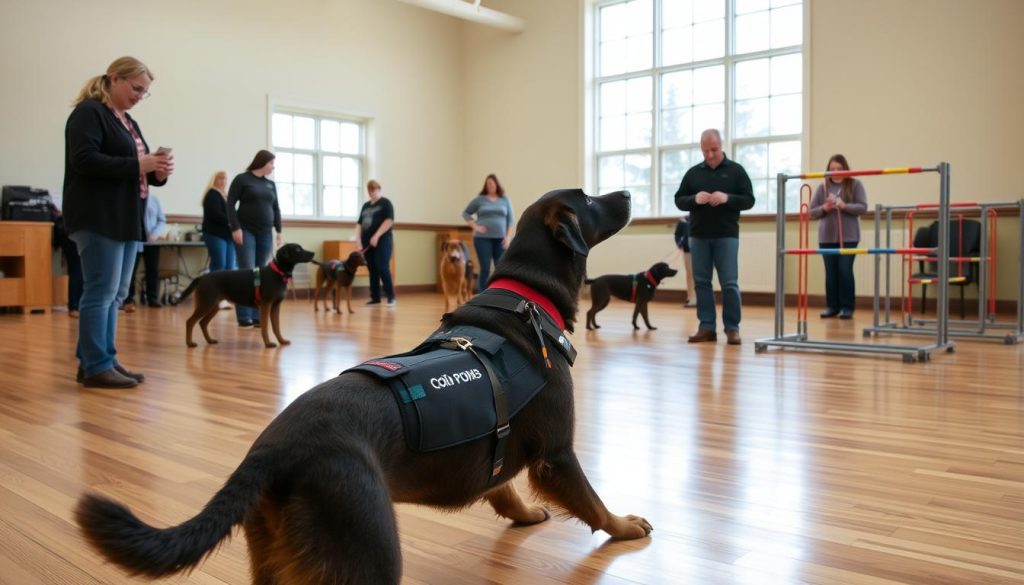
It’s also important to expose your dog to new places and situations. This helps them stay calm and confident in public. Take them to stores, restaurants, and parks to practice their training.
Training also helps with new challenges and improving their skills. As your needs change, your dog might need new tasks or adjustments. Regular training and talking with your dog makes these changes easier.
Service dog training is a lifelong journey. It’s about building trust and learning together. By keeping up with training, your service dog will always be there for you.
Working with a Professional Trainer
Training your service dog yourself is possible, but a pro can offer great help. A skilled trainer knows how to teach your dog the skills they need. This ensures your dog can do their job well.
Joining a good service dog training program is a smart move. It offers a clear plan for training, focusing on what service dogs need. The trainers are experts in the field, ready to tackle the challenges of service dog work.
A professional can teach your dog advanced skills and handle any behavior problems. They also help with training for public access. This means your dog will know how to act in different places and situations.
When picking a trainer or program, look for those with a history of success. They should know the laws about service dogs and offer support as you train.
Getting help from a professional trainer boosts your confidence and skills. With their help, your service dog can become a reliable and well-behaved animal.
Conclusion
Training a service dog needs dedication, patience, and consistency. Start with a solid foundation, teach key skills, and practice in different places. This way, your dog will become a well-behaved service animal. Always celebrate your dog’s progress.
On your service dog training journey, get help from professional trainers when you need it. They can help you face challenges and give your dog the best training. With hard work and the right approach, you and your dog will grow closer and face the world together confidently.
Starting service dog training is a rewarding journey for both you and your dog. Seeing your dog become a well-behaved service animal will fill you with pride. The positive changes in your life and the memories you make together will last forever.
Quick Recommendation: Our blog is filled with tips and tricks for training your puppy or dog. If you are seeking a comprehensive training program, we recommend K9 Training Institute.