
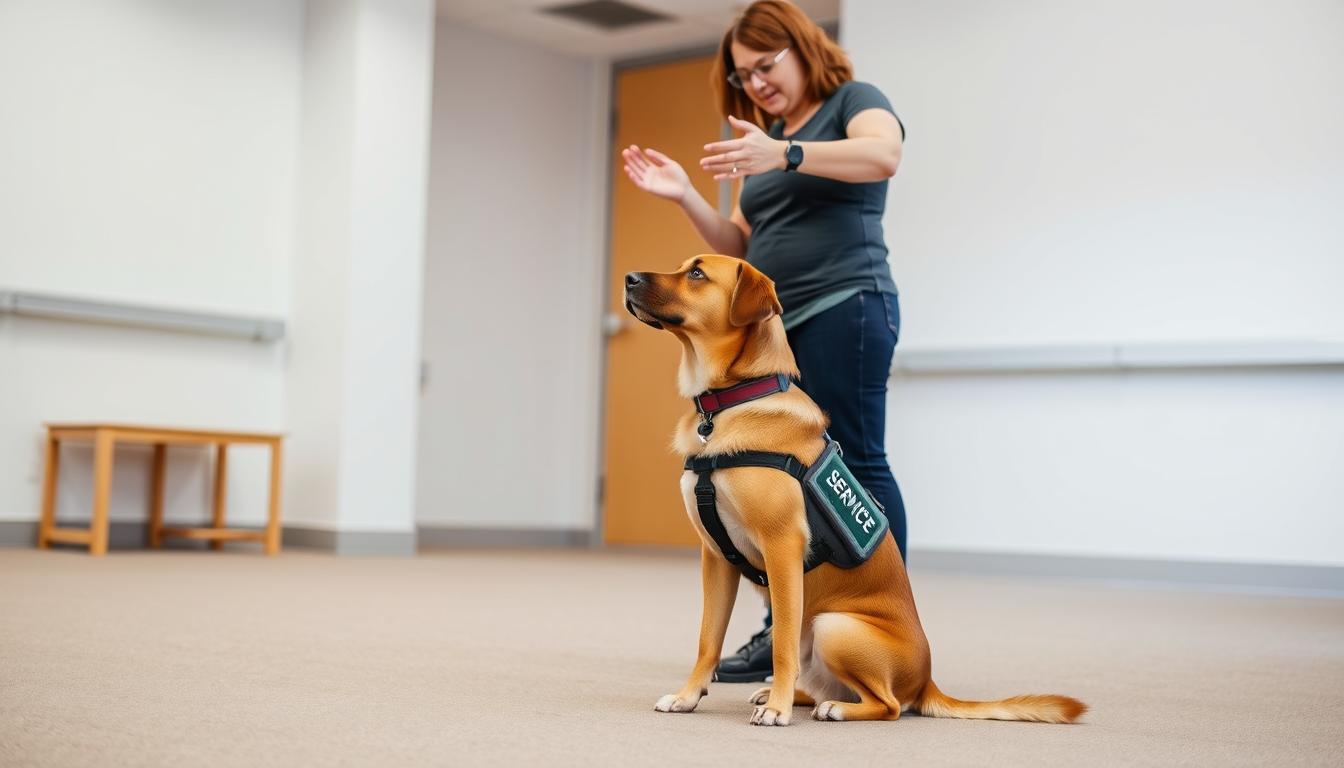
Basic obedience training is key for any service dog. It’s important whether you’re in a professional program or taking classes. Teaching your dog essential commands helps them be well-behaved and reliable.
Service dogs help people with disabilities every day. They offer support, comfort, and independence. Knowing basic obedience helps your dog move safely in public, respond to you, and stay focused.
In this article, we’ll talk about why basic obedience is so important for service dogs. We’ll cover the essential commands they need to know. You’ll learn how to use positive reinforcement and tips for socializing and addressing behavioral issues.
We’ll also look at the role of professional trainers, certification, and obedience standards. By the end, you’ll know how to make obedience training a part of your daily life. This will help build a strong and effective partnership with your service dog.
Quick Recommendation: Our blog is filled with tips and tricks for training your puppy or dog. If you are seeking a comprehensive training program, we recommend K9 Training Institute.
Understanding the Importance of Basic Obedience Training for Service Dogs
Basic obedience training is key for service dogs to do their job well. Without it, they might not listen to commands or behave in public. This is why service dog training tips and obedience are so important.
Obedience training builds a strong bond between the dog and their handler. It’s based on trust, respect, and clear communication. A well-trained service dog can focus, respond to commands, and stay calm in different places.
Basic obedience training also keeps everyone safe. A trained service dog won’t pull on the leash or jump on people. This behavior is not only annoying but also risky. Service dog behavior training teaches self-control, making it easier for them to move through public spaces safely.
Spending time on basic obedience training is crucial for a service dog’s success. With a solid obedience foundation, they can learn and do specific tasks for their handler. This improves the handler’s life greatly.
Essential Commands Every Service Dog Should Know
Teaching your service dog basic obedience commands is key. Commands like sit, stay, come, heel, and down are foundational. Consistency and regular practice are crucial for your dog to respond well in different situations.

“Sit” is a command you should teach first. It helps your dog stay calm and focused, especially in public. The “stay” command is also vital, teaching your dog to wait until you say it’s okay to move.
The “come” command is important for your dog’s safety and obedience. It ensures your dog comes back to you quickly, even when distracted. The “heel” command helps your dog walk calmly beside you, without pulling or straying.
Lastly, the “down” command teaches your dog to lie down on command. It’s useful when you need your dog to relax for a while, like during a meeting. By learning these commands, you’ll have a well-trained and reliable service dog.
Establishing a Strong Foundation with Positive Reinforcement
Positive reinforcement is crucial in service dog training. It helps build trust and communication between you and your dog. This method is better than punishing mistakes, which can cause fear and anxiety.
In obedience classes, trainers use treats and praise to teach dogs. Dogs learn to love following commands because they get rewards. This makes training fun for both the dog and the handler.
Positive reinforcement is more than just treats. It’s about creating a strong emotional bond with your dog. By rewarding good behavior and showing love, you become a trusted leader. This bond is key for service dogs, helping them stay focused and confident.
Building a strong foundation takes time and patience. Quality training programs and classes are worth the investment. They help your service dog succeed and build a lifelong partnership based on trust and understanding.
Basic Obedience Training for Service Dogs
Proper obedience training is key for service dogs to help their handlers well. Setting clear goals and following a schedule helps your dog learn important commands. Many programs and classes offer tips and tools for training.
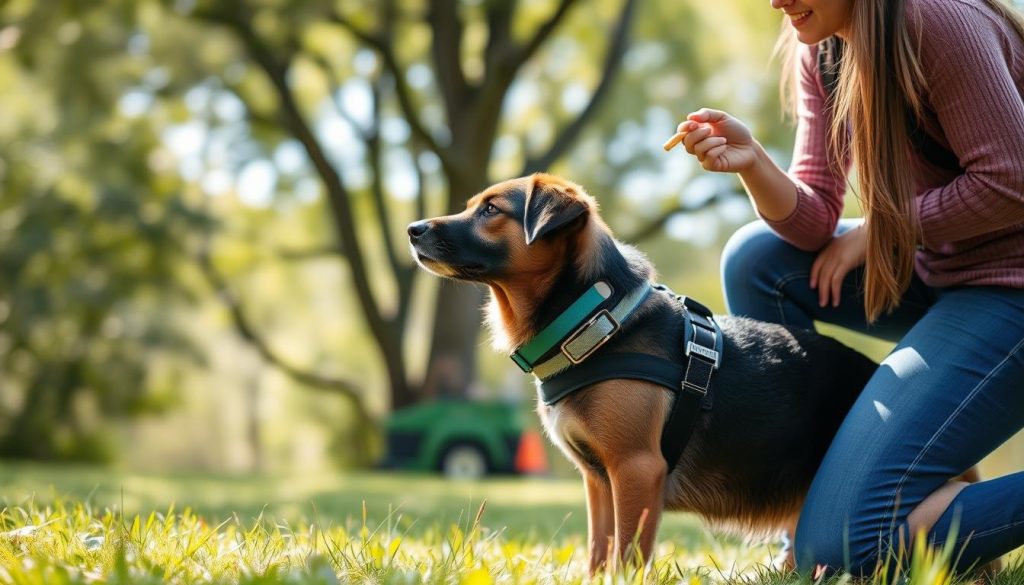
Start with the basics in obedience training. Teach your dog commands like sit, stay, come, heel, and down. Use treats and praise to make training fun and rewarding.
Practice commands in different places and with distractions. This helps your dog perform well in any situation. Remember, consistency is crucial.
Your service dog also needs to learn leash manners and behave well in public. Socialization is vital for staying calm in various settings. Introduce your dog to many people, animals, and places while rewarding good behavior.
With patience and the right training, you can build a strong obedience foundation. This will help your service dog throughout their career.
Socialization and Public Access Training
Socialization and public access training are key for a service dog’s education. They ensure your dog stays calm and focused in different places. With the right training, your dog will move through public areas with confidence.
It’s important to expose your service dog to various settings like restaurants and stores. This helps them become resilient and adaptable. During training, they learn to ignore distractions and focus on you.
Teaching your dog to behave around others is also crucial. They should stay calm and not approach people without permission. Socialization prevents fear or aggression, making your dog a reliable companion anywhere.
Consistent training and practice are essential to keep your dog’s skills sharp. Regular sessions in different places will reinforce their training. With patience and dedication, you can raise a well-socialized service dog.
Addressing Common Behavioral Issues in Service Dogs
Even with great training, service dogs can face challenges. It’s key to tackle these issues quickly and consistently. This ensures your service dog can help you well.
Excessive barking or whining is a common problem. Service dogs should only bark when they need to alert you. If your dog barks too much, find out what triggers it and work on fixing it. Reward them for being quiet and teach them to focus on other tasks.
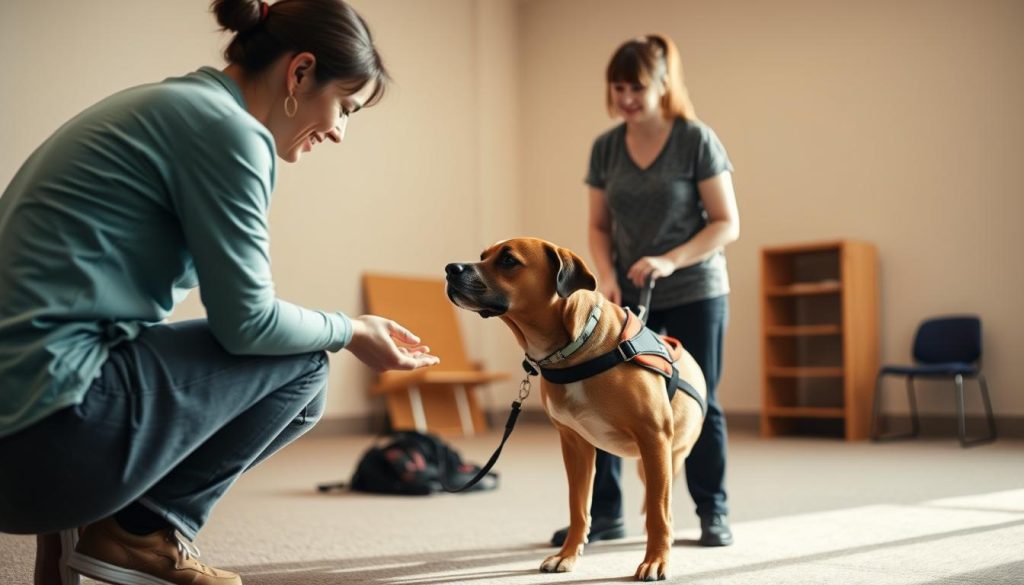
Pulling on the leash is another issue. Service dogs should walk calmly by your side. If your dog pulls, stop and wait for them to come back. Then, reward them for walking nicely and practice in different places.
Distractions can also be a problem. Service dogs need to ignore distractions like other dogs or people. Practice commands in busy places and reward them for staying focused on you.
If your dog’s behavior doesn’t improve, get help from a professional trainer. They can offer advice and support to fix specific problems. This ensures your service dog gets the right training to help you.
The Role of Professional Service Dog Trainers
Working with a professional trainer is key for your service dog’s success. Service dog training programs offer expert help. They ensure your dog gets the best education.
Professional trainers help you overcome common challenges. They share valuable insights during training. They teach complex tasks and the importance of a strong bond between you and your dog.
They also focus on socialization and public access training. Your dog will learn to stay calm in different situations. This is vital for reliable performance in real-world settings.
Professional training benefits both you and your service dog. It boosts your confidence and skills. With a skilled trainer, you and your dog can face any challenge together.
Maintaining Your Service Dog’s Training Over Time
Keeping your service dog’s training up is crucial. Regular sessions, even after they’ve learned the basics, are important. They help keep their skills sharp. Try to fit in short training moments into your day, like before meals or walks.
Keep your service dog’s mind active to avoid boredom. Try new things like advanced commands or puzzle toys. Always reward them with treats, praise, or playtime when they do well.
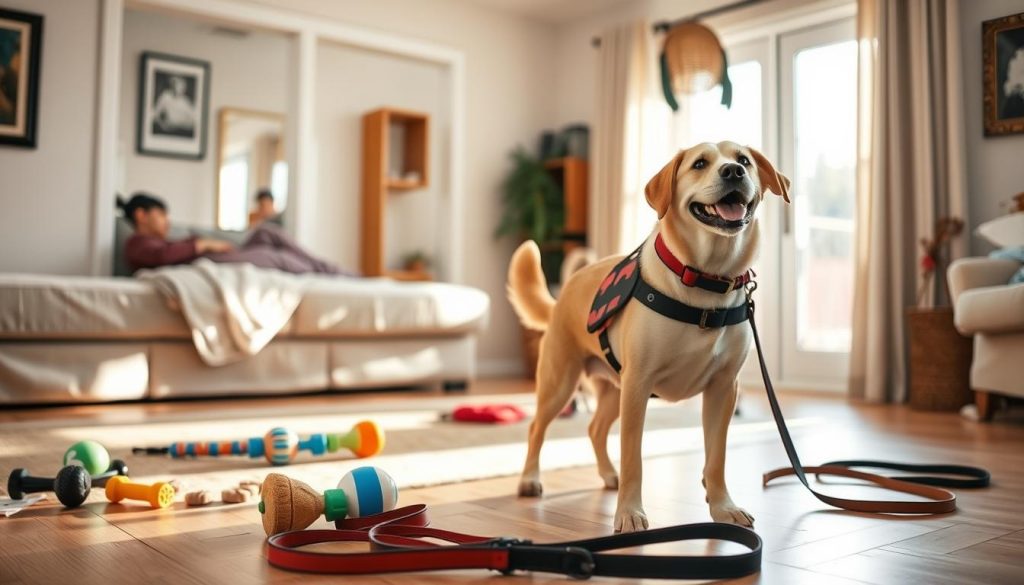
Going to ongoing service dog classes is a great idea. They offer a place to practice commands in distracting situations. You’ll also get feedback from trainers. Plus, your dog will learn to focus better around other dogs and people.
Consistency, mental challenges, and regular training are key. By spending time each day on training, your dog will stay reliable. They’ll help you with daily tasks and navigate public spaces confidently.
Quick Recommendation: Our blog is filled with tips and tricks for training your puppy or dog. If you are seeking a comprehensive training program, we recommend K9 Training Institute.
Service Dog Certification Requirements and Obedience Standards
Basic obedience training is key for service dog certification. Service dogs need to be obedient and in control. This ensures they can work well and safely in public.
Service dogs go through a lot of training. They learn basic commands like sit, stay, and come. They also learn to ignore distractions and navigate obstacles.
Service dog obedience classes are where they practice these skills. This training is crucial for their certification.
Certification groups have their own rules for service dogs. They must pass tests that check their behavior and skills. Handlers also need to show they can control and communicate with their dogs.
Even though there’s no single service dog certification, groups follow strict standards. This makes service dogs reliable and safe. With obedience training, handlers and their dogs can work together smoothly in everyday life.
Incorporating Obedience Training into Daily Life with Your Service Dog
Consistency is key in reinforcing your service dog’s training. Make obedience practice a part of your daily routines. This keeps your furry partner sharp and responsive. Every interaction is a chance to strengthen your bond and reinforce good behavior.
Make training sessions fun and rewarding for your service dog. Use positive reinforcement like praise, treats, and playtime. Keep sessions short but frequent, like asking your dog to sit before eating.
Be mindful of situations that may challenge your service dog’s training. Public spaces and loud noises can test their skills. Anticipate these and guide your dog with clear commands and positive reinforcement. Celebrate their successes to boost their confidence and motivation.
Service dog training is an ongoing process. Even after basic commands are mastered, keep reinforcing good behavior. With patience, consistency, and positive training, you and your service dog will have a strong bond built on trust and respect.
Conclusion
Basic obedience training is key for your service dog’s role in your life. Spend time teaching them essential commands and use positive methods. This builds a strong base for their success.
Socialization and public access training are also vital. They make your service dog well-rounded. This is part of a complete training program.
As your service dog trains, tackle any behavioral issues quickly. If needed, get help from professional trainers. Keeping up with training takes time, patience, and dedication.
By doing obedience training daily, you’ll grow closer to your service dog. This ensures they’re a reliable and effective partner.
Service dog training standards may change, but basic obedience is always important. Work with experienced pros to unlock your service dog’s potential. This improves your life together.
Investing in your service dog’s training means more for you. It boosts your independence, safety, and well-being.
Quick Recommendation: Our blog is filled with tips and tricks for training your puppy or dog. If you are seeking a comprehensive training program, we recommend K9 Training Institute.