

Teaching your dog to be well-mannered and sociable means more than simple commands. It’s crucial to dive into effective socialization methods for dog training. Socializing your pet is essential for their growth and happiness. It enables them to mingle peacefully with people, other pets, and adapt to new places. Starting early with socialization helps your dog become a confident and cheerful buddy, ready for different settings.
Quick Recommendation: Our blog is filled with tips and tricks for training your puppy or dog. If you are seeking a comprehensive training program, we recommend K9 Training Institute.
Why Socialization is Crucial for Your Dog’s Development
Puppy socialization is a key part of dog development. It focuses on psychological growth and learning how to behave. The American Veterinary Society of Animal Behavior says it’s crucial. Early socialization helps dogs deal with stress better. It also makes them good at meeting new people and animals.
Dogs that are well-socialized show fewer problems like aggression and anxiety. These benefits last as they grow up. This makes them friendly and easy to live with. Experts agree such dogs adjust better and have fewer issues in life.
Understanding Your Dog’s Behavior
Understanding your dog’s behavior is key in training. You need to know their body language, sounds, and facial expressions. This helps you bond with your dog in a special way. You can also make sure they’re safe when they meet new friends.
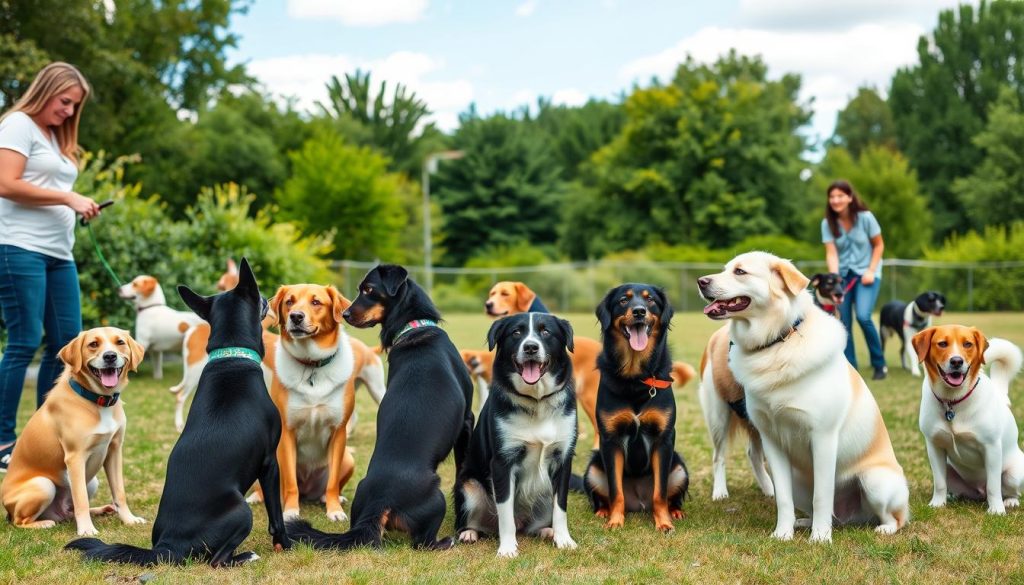
Dog body language reveals how they feel. A happy dog might wag its tail, have relaxed ears, and an open mouth. But, a scared or angry dog might do the opposite. They might tuck their tail, flatten their ears, or even growl.
Books like “Canine Body Language: A Photographic Guide” by Brenda Aloff teach you about these signals. They make you better at training your dog. Paying attention to your dog’s signals lets you care for them better and keeps them happy.
Understanding your dog’s body language is the first step in training. This knowledge deepens your relationship with them. It also makes hanging out with other dogs and people safer and more fun.
Socialization Techniques for Puppies
Starting socialization early is crucial for puppies, ideally between 3 to 14 weeks old. In this key time, it’s important to expose them to different people, places, and experiences. This leads to them growing up to be well-behaved adult dogs. Dr. Ian Dunbar, a leading expert in puppy training, stresses the importance of positive, gentle exposure.
To socialize your puppy, try introducing new things every day. This could be visits to the park, short car rides, or meeting new folks in a controlled environment. Make sure these experiences are happy ones, rewarding good behavior with treats and praise.
Puppy classes offer a structured setting for learning and mingling with other puppies. The American Kennel Club suggests signing up for these classes for safe, supervised social time. These classes also help teach basic commands and manners, building a strong base for further education.
Using these training techniques will make your puppy more confident and prevent future behavior problems. Early socialization is the secret to having a friendly, well-adjusted dog. So, seize every chance to introduce your puppy to new aspects of the world. By doing so, you’ll help them become a joyful part of your family.
Using Positive Reinforcement in Socialization
Positive reinforcement training is key to a well-behaved, socially adept pet. By using treats, praise, or playtime, you encourage good behaviors. This method not only modifies behavior but also strengthens your bond with your pup.
A study by Pat Miller in “The Power of Positive Dog Training” highlights the effectiveness of positive reinforcement. Dogs start to see social situations as positive experiences. This reduces their anxiety and promotes friendly behavior.
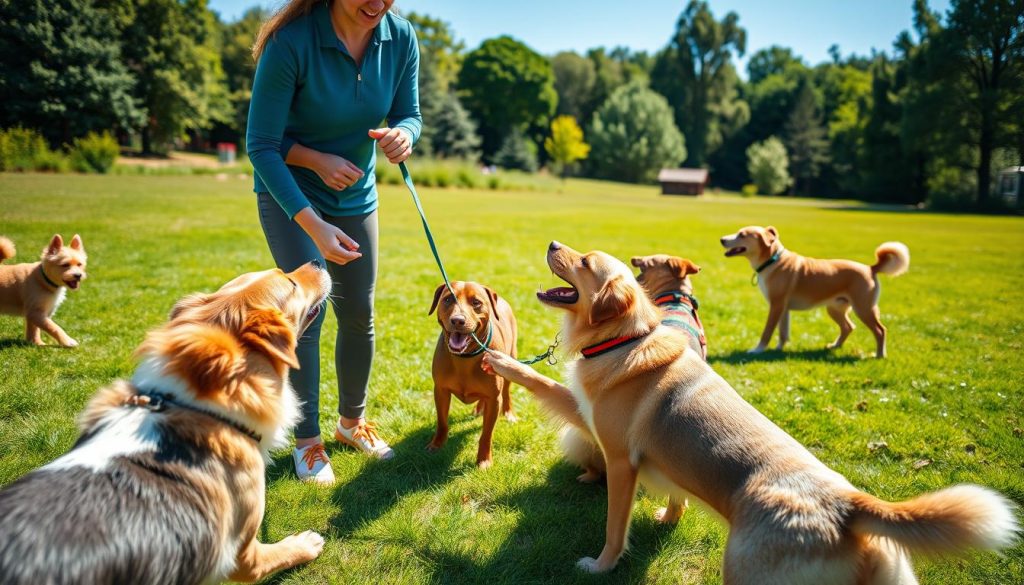
But, it’s not all about treats and toys. Verbal praise and physical affection are just as powerful. A simple “Good job!” with a head pat can make a big difference when your pet behaves around others. Remember, the key to success is being consistent with rewards.
Addressing Common Socialization Challenges
Socializing your dog can seem tough, especially with aggression, fear, or anxiety. It’s important to help them overcome fear to fit well into your family and society. Here are easy tips for dog socialization to tackle these issues.
Behavior adjustment training is a good strategy. “Behavior Adjustment Training 2.0” by Grisha Stewart talks about it. This method slowly helps your dog get used to what scares them. You slowly expose them to their fears, so they learn to react better.
First, figure out what makes your dog anxious or scared. This might be other pets or new places. Start introducing these fears from a distance they’re okay with. Use treats and praise when they stay calm. Slowly, you can get closer.
Being patient and consistent is crucial. Take small steps to help your dog feel brave and get past their fears. Watch how they act and never make them too uncomfortable. Over time, this training changes bad feelings into good ones. This makes meeting new friends easier for your dog.
Enrolling in Professional Dog Training Classes
Professional dog training classes can really help your pet. They lay the groundwork for great behavior and social skills. Your pet learns to behave well in all situations.
These classes offer the skills of certified trainers. The Certification Council for Professional Dog Trainers ensures they know their stuff. This means your dog gets top-notch training and has fun too.
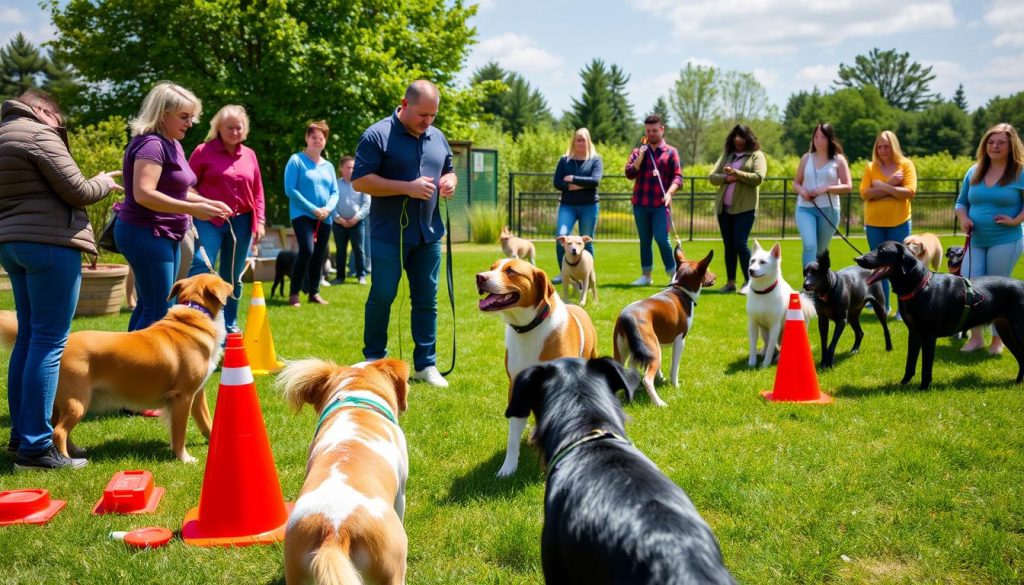
The Association of Professional Dog Trainers offers many programs. They have everything from basic obedience to fixing behavior problems. They tailor the training to fit your dog’s needs.
These classes also help your dog get along better with others. They learn to interact under the watchful eyes of professionals. Plus, specialized programs target any specific issues, making outings more enjoyable.
Finding the right class can make a big difference. With the help of certified trainers, your dog will do well in social settings. They become a happy and polite companion.
Quick Recommendation: Our blog is filled with tips and tricks for training your puppy or dog. If you are seeking a comprehensive training program, we recommend K9 Training Institute.
Socializing Adult Dogs
Socializing adult dogs is a big challenge. It’s quite different from puppies. Many adult dogs, especially rescue ones, missed early socialization. Knowing about rescue dog behavior is key to start.
With adult dogs, being patient is very important. Introduce them to new places slowly. Step by step exposure helps reduce their fear. Positive rewards like treats and praise really help make it fun.
When re-socializing, it’s important to know the dog’s background. Talking to professionals and using info from groups like the ASPCA is helpful. They have tips that work well for older dogs.
Remember, every dog is different. Adapting your method for their needs works best. With ongoing effort and patience, you can help your adult dog become happy and well-behaved.
Tools and Resources for Effective Socialization
Starting your dog’s socialization journey is easier with the right tools. Essential items include toys, interactive games, and cards. These help your dog get used to various stimuli and places.
It’s also critical to use the right training aids. Treat pouches, clickers, and leash attachments are key for good behavior. Trainers and behaviorists recommend these to make socializing your dog a success.
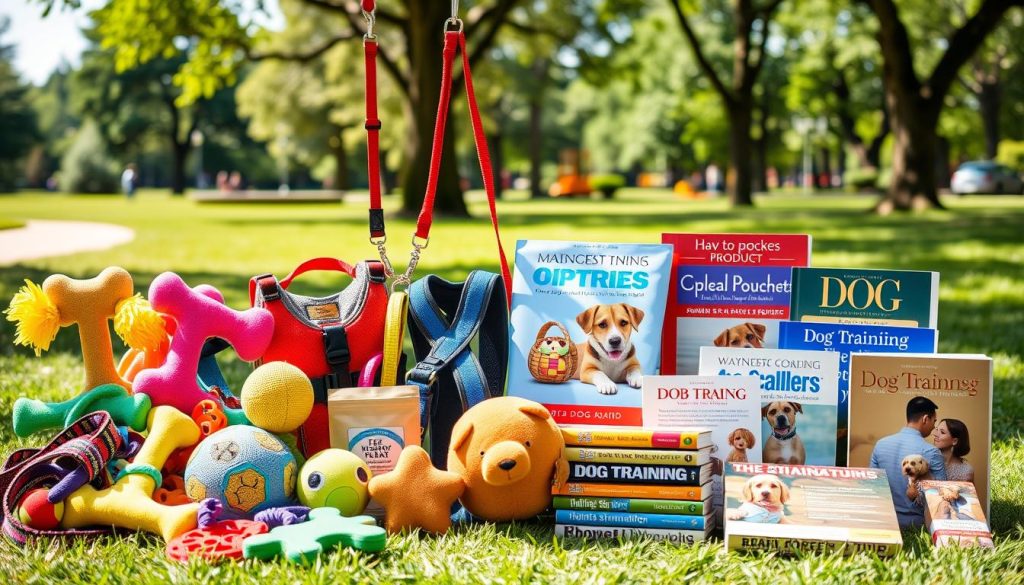
But it’s not just about physical products. Educational materials for dog owners are just as important. These can be books, online courses, and videos. They provide deep insights into how dogs behave and how to socialize them properly.
Works by experts like Cesar Millan and Patricia McConnell are especially useful. They share strategies that come from years of experience.
“Social Savvy: Socialization Strategies in Dog Training” Case Studies
In this section, you’ll discover moving dog training success stories. They show how good socialization can change a dog’s behavior. Different examples highlight why it’s crucial, no matter the dog’s breed or past.
Take Charlie, a Golden Retriever from Best Friends Animal Society, for instance. He was shy and uneasy with other dogs at first. Through regular socializing, like going to parks and meeting dogs in a safe way, he became much more confident. These stories prove that being patient and consistent leads to great results.
Then there’s Max, a Pit Bull mix rescued by the ASPCA. He was aggressive because he had been hurt before. Slow, positive steps with friendly dogs helped Max learn to be calm and kind. His story shows how special socialization plans can really make a difference.
Bella’s journey is another example. She’s a Chihuahua that was scared of new places. Her foster family gently introduced her to various environments. Combining these outings with treats and encouragement, Bella began to feel safer.
The stories shared show just a few ways socialization can help a dog. Taking cues from these success stories may help you with your own pet. Keep in mind, every dog is different. Trying various approaches may lead to success.
Conclusion
Starting your journey in dog socialization is truly impactful for your furry friend’s growth and happiness. It involves understanding their behavior and starting socializing early. Overcoming challenges is key to a strong bond.
Positive reinforcement and training classes help create a well-behaved dog. This dog will do well at home and in the community.
Adult dogs also need attention in socializing. The right tools and resources help them keep learning and adapting. This makes sure they stay happy and confident.
Dog training does more than teach obedience. It leads to a happier life for you and your pet.
Overall, dog socialization is an ongoing effort with great benefits. By using these strategies regularly, you improve your dog’s life and your own experience. As you go forward, keep these insights in mind. Enjoy the deep rewards of this journey with your beloved dog.
Quick Recommendation: Our blog is filled with tips and tricks for training your puppy or dog. If you are seeking a comprehensive training program, we recommend K9 Training Institute.
BTW: If you are interested in everything from nutritional advice and natural health solutions to stress-relief techniques and overall wellness tips, check out our friends at PawfectlyHealthyPets.com.