
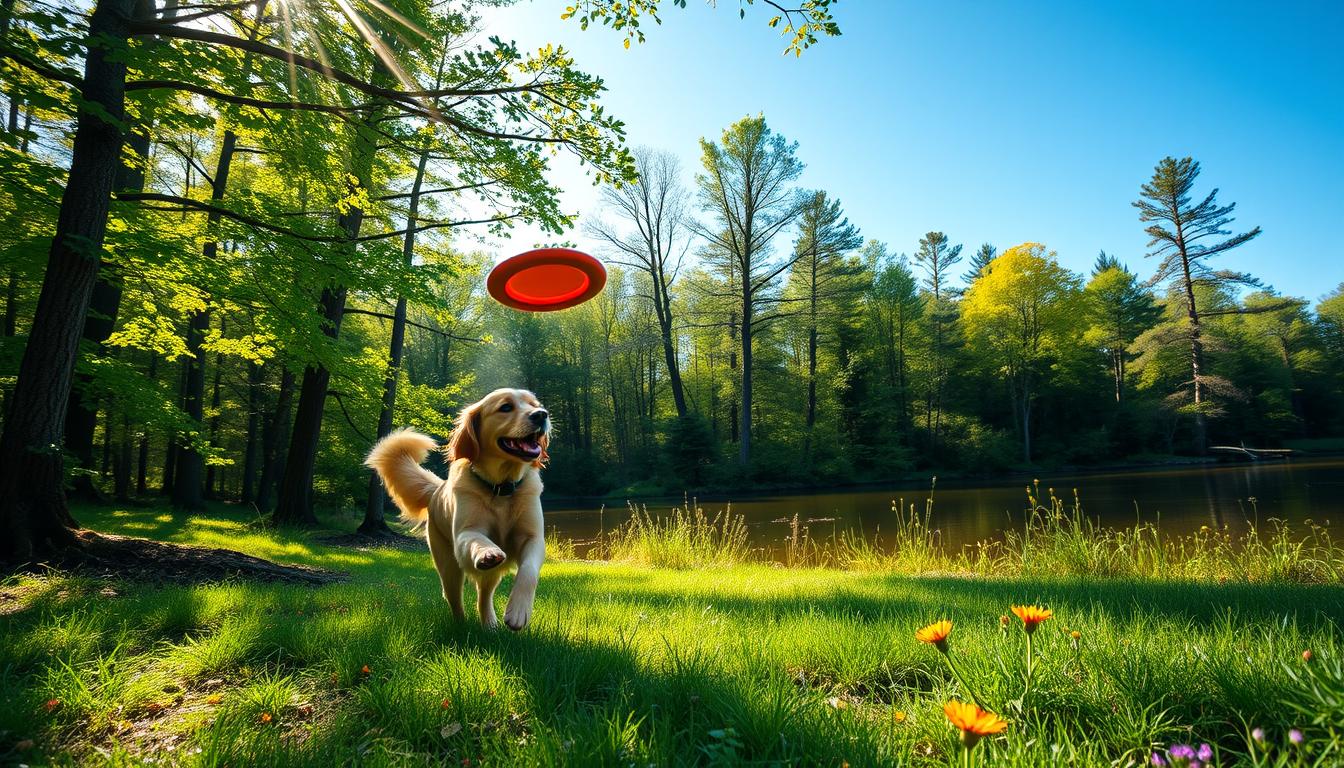
Embarking on adventures outside is a great way to bond with your dog. It leverages the benefits of nature for dog training. Outside, the world is an exciting classroom with lots of lessons and experiences for your dog.
Training outside improves your dog’s obedience and agility. It also gives them important mental and physical exercise.
Imagine your dog exploring trails, listening amid distractions, and loving the open spaces. This guide covers how to train your dog in nature. It highlights the fun and challenges of outdoor training sessions.
Quick Recommendation: Our blog is filled with tips and tricks for training your puppy or dog. If you are seeking a comprehensive training program, we recommend K9 Training Institute.
Benefits of Outdoor Dog Training
Training your dog outside offers many great benefits. It’s good for their body and mind. The varied ground and intriguing settings make learning more fun for them. Outdoor activities are great for keeping them physically fit and mentally sharp.
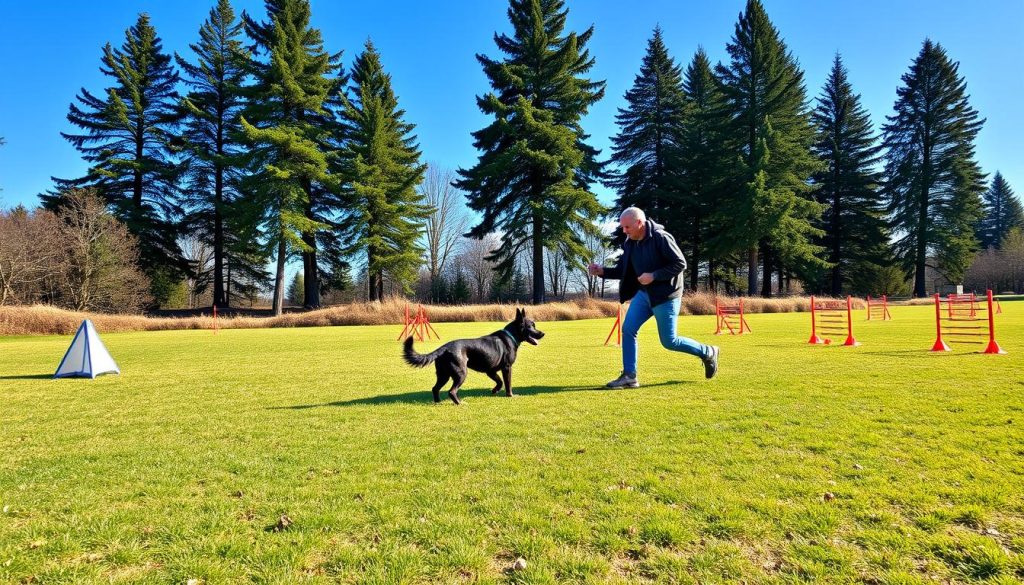
One big plus of training outside is how it helps your dog act better. Different sights, sounds, and smells can make them less anxious and more adaptable. Meeting other animals and people while outside helps them get better at socializing. It makes them more confident and good at making friends.
Also, doing activities outside helps you and your pet get closer. Adventures together make your bond stronger. Whether it’s a stroll in the park or structured training in the wild, it’s good for you both. These fun times lead to a joyful, fit, and well-behaved dog.
Essential Gear for Outdoor Dog Training
Getting the right outdoor dog training gear is key for a great training experience. You should get durable leashes first. They need to handle all kinds of weather and your dog’s energy, giving both strength and comfort.
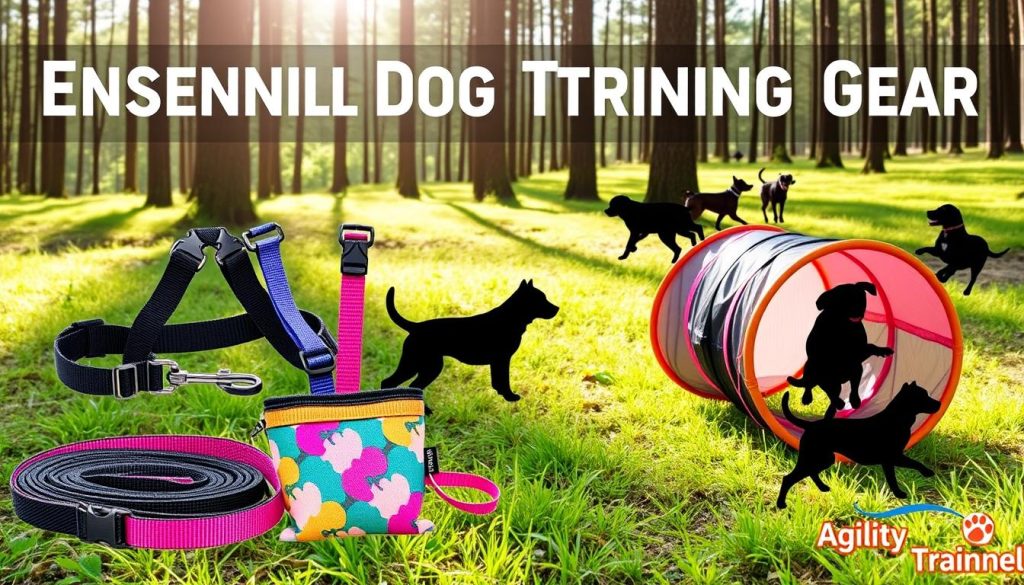
A good harness is also important for more control and to be kind to your dog’s neck. Dog training accessories like tasty treats are great for encouraging your dog. Also, don’t forget portable water bowls to keep your dog hydrated during practice.
Keeping your dog safe is very important. Use reflective vests or collars to make sure your dog is seen in the dark. It’s also a good idea to have a first-aid kit for pets. Choosing top-notch, useful items means you’re ready for outdoor training challenges.
Quick Recommendation: Our blog is filled with tips and tricks for training your puppy or dog. If you are seeking a comprehensive training program, we recommend K9 Training Institute.
Choosing the Perfect Training Location
Finding the best place for outdoor dog training matters a lot. You’ll need to think about several things to make your sessions both fun and fruitful.

Choose safe spots outdoors where your dog won’t face any dangers. Look for places with smooth ground to avoid injuries. Make sure there are no harmful plants or trash around. In cities, find parks where dogs are welcome. These parks should offer enough room for your pet to move and learn commands without too many people around.
Getting to your training spot easily is important. It should be simple to find and get to, especially if you’re carrying training gear. Also, check the rules about leashes and training without one to keep out of trouble.
Distractions can impact your training sessions. At first, choose quieter spots to help your dog focus. Later on, practicing in busier places can boost your dog’s skills. This step-up approach helps your pet handle more distractions confidently.
Finally, think about wildlife in the area. Animals can distract your dog, but they also give a chance to improve. Ensure your pet’s safety by picking locations carefully, keeping outdoor training safe.
Basic Commands to Train Outdoors
Teaching your dog basic commands like “sit,” “stay,” “come,” and “heel” is essential. These commands are key for keeping your pet safe and well-behaved outdoors.
Start with “sit.” First, use a treat to catch your dog’s attention. Then, move the treat towards their nose and lift it slowly over their head. As they look up, their bottom will go down. Once they’re sitting, give them the treat and some praise.
To teach “stay,” have your dog sit. Then, extend your hand, palm forward, and say “stay” clearly. Step back a few steps, return, and reward them for staying put. Regular practice improves their staying power, even with distractions.
For “come,” call your dog with their name and follow with “come.” Initially, use a leash to pull them gently towards you. When they come to you, reward them with treats and praise.
The “heel” command helps during walks. Keep a treat by your leg, encouraging your dog to stay close without pulling ahead. Stop if they pull, and reward them for staying by your side. Regular use of these techniques will make outdoor times better for your dog.
Advanced Outdoor Training Techniques
Once your dog knows basic commands, it’s time for more advanced training. This includes precise obedience and listening, even outside. Off-leash training is key. Your dog learns to follow commands without being tied down. This keeps everyone safe and makes time together more fun.
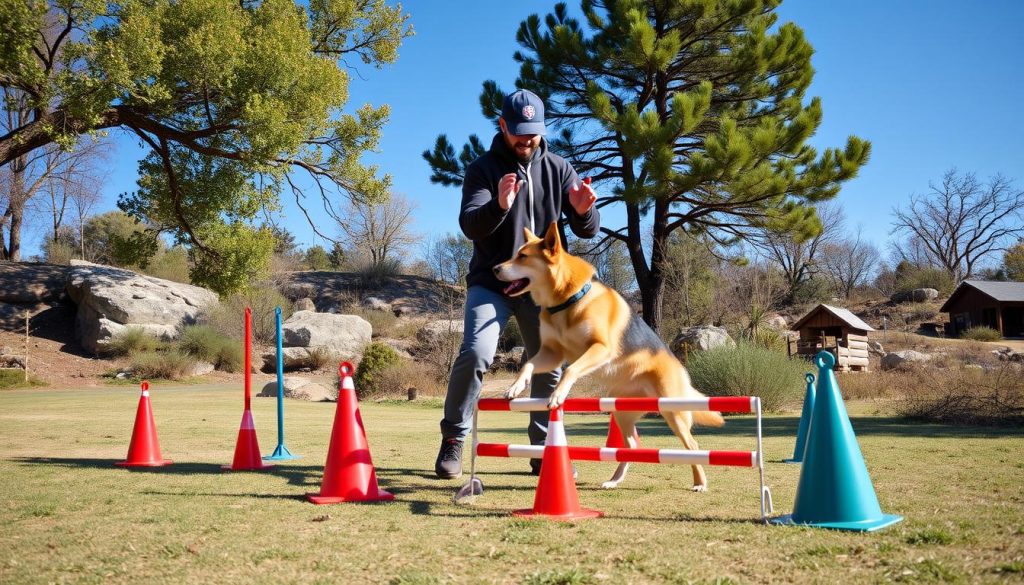
Training in the wilderness means dealing with different terrains like forests and streams. It’s good for your dog’s agility and confidence. Teach them how to behave on trails. They should be polite to other hikers and animals. This way, your dog becomes a friendly partner in your outdoor fun.
Experts suggest making training harder gradually. Start with easy off-leash exercises in a safe place. Then, try more difficult tasks in the wild. Watch how your dog reacts and always praise them for doing well. This builds trust and ensures they’re not just trained, but also happy and eager to explore.
Maintaining Safety During Outdoor Adventures
When you take your furry friend outdoors, it’s key to focus on safety. Start by keeping an eye on your dog’s energy. Watch for signs they’re too tired, like panting a lot or falling behind. Taking these steps helps keep your dog safe outside.
To avoid heatstroke, bring plenty of water for you both. Also, take breaks under shade. A foldable water bowl is great for these stops. Knowing how to cool down a dog that’s too hot is critical in warm places.
Running into wild animals is a real risk on outdoor trips. Keep your dog leashed in new places to stay in control. Teaching your dog commands like “Leave it” or “Come” can prevent dangers with wildlife. This keeps your pet safe.
Being ready for emergencies is vital for safety. Put together a pet first-aid kit with bandages, antiseptic wipes, and a thermometer. Learn basic pet emergency care. This knowledge is crucial for dealing with any accidents.
By practicing these safety tips, you and your dog can enjoy outdoor activities without worry. It makes every outing with your dog both fun and safe.
Outdoor Canine Exercises for Better Health
Helping your dog stay active outdoors can make them healthier and happier. Hiking is a top exercise for dogs. It offers them a good heart workout and lets them explore new scents and sights.
Swimming is another excellent outdoor activity. It’s perfect for dogs with joint problems because it’s gentle but works out the whole body. Just make sure the water is clean and your dog is okay with swimming.
Dog agility training challenges your pet both mentally and physically. Setting up agility equipment like tunnels and weave poles in your yard or a park can be fun. It boosts their fitness and brings you closer together.
It’s important to pick exercises that fit your dog’s age, breed, and health. Young puppies may need short play times, while older dogs might do better with easy walks and swimming.
Adding different exercises like hiking, swimming, and agility training to your routine can greatly improve your dog’s health and energy.
Incorporating Fun Activities into Training
Your dog’s training can be fun by using play-based methods. This way, learning becomes both enjoyable and effective.
Think about spending a day outside, playing fetch or frisbee with your dog. These fun outdoor games keep your pet fit and teach important commands. By making training fun, your dog will want to learn more.
Hide-and-seek is another great game. It boosts your dog’s ability to track and helps with recall commands. This game also makes your dog think, which is as important as physical workouts. Outdoor games like these strengthen the bond with your pet, leading to better behavior.
Adding fun activities to training makes learning enjoyable. It also builds a strong connection between you and your dog. This leads to a peaceful and happy relationship.
Conclusion
Training your dog outside is indeed a rewarding experience for both you and your pet. In this article, we’ve covered the benefits of outdoor training. These include physical activity, mental challenge, and the need for the right gear for comfort and safety. Picking appropriate locations and mastering commands are key for a great start in your dog training journey.
Outdoor activities keep your dog fit and happy, while also bringing you closer. They make training fun and turn sessions into adventures. This approach greatly enhances your training routine, making sure your dog stays focused and listens.
Keep trying new methods and places to make training exciting. Remember, every outdoor session is a chance to bond and learn together. Share your success and encourage others to train their dogs outside too. Let’s create a community of well-trained, happy dogs together.
Quick Recommendation: Our blog is filled with tips and tricks for training your puppy or dog. If you are seeking a comprehensive training program, we recommend K9 Training Institute.
BTW: If you are interested in everything from nutritional advice and natural health solutions to stress-relief techniques and overall wellness tips, check out our friends at PawfectlyHealthyPets.com.