
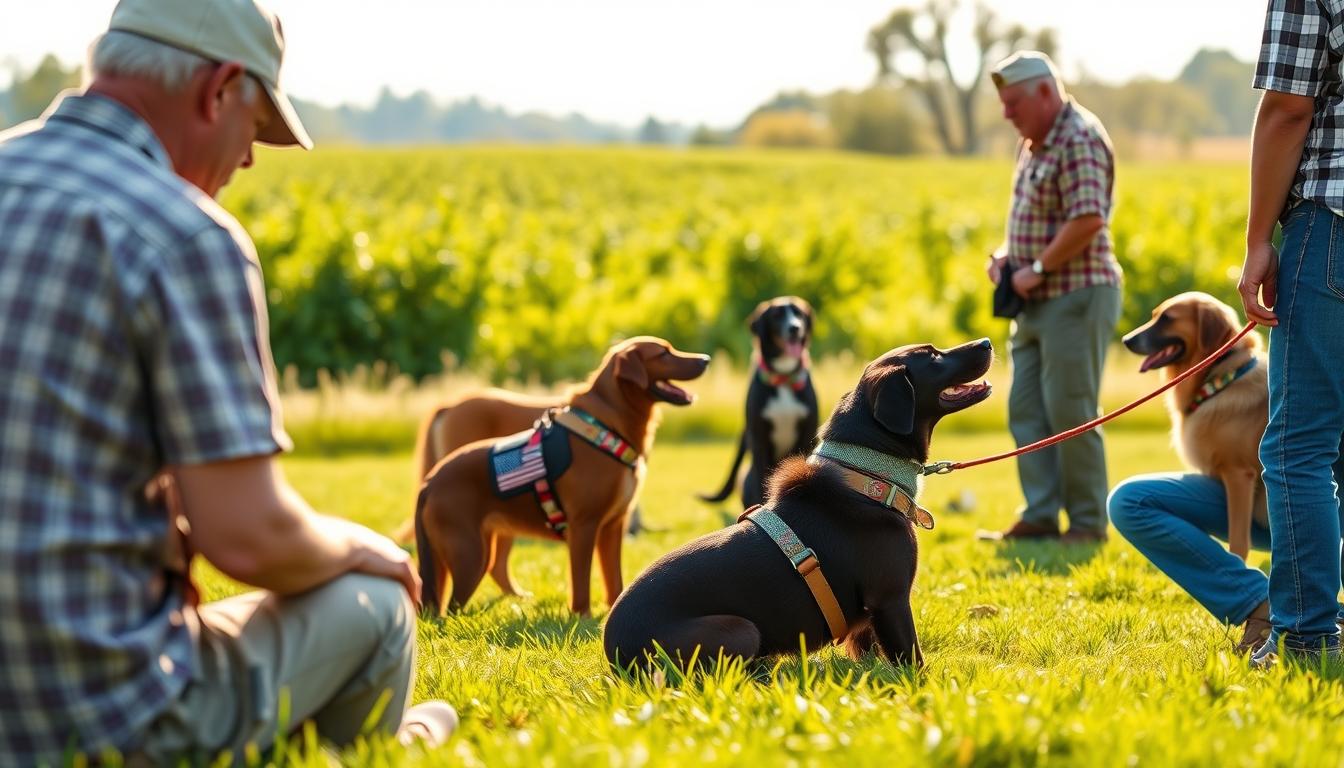
As a veteran, you’ve given a lot to your country. Now, you might face new challenges and disabilities. Service dog training for veterans can help. It offers the support and companionship you need to live independently again.
We’ll look at how service dogs change lives and how to choose and train the right one. You’ll learn about the important tasks they can do. We’ll also talk about the programs and resources to get a service dog.
Discussing certification and access rights, we’ll also share the special bond between veterans and their dogs. You’ll hear inspiring stories of how these dogs have changed lives.
The Life-Changing Impact of Service Dogs for Veterans
For veterans with PTSD, mobility issues, or disabilities, a PTSD service dog can change their life. These dogs offer emotional support and help with daily tasks. They help veterans feel independent and confident again.
Service dogs give unconditional love and support, which is comforting for veterans with PTSD. Their calm presence can reduce anxiety, nightmares, and flashbacks. They encourage veterans to go out and socialize, something they might have avoided before.
Service dogs also help with physical tasks, making life easier for veterans. They can fetch items, open doors, turn on lights, or help with balance. This way, veterans can live more independently and confidently.
The bond between a veteran and their service dog is special. The dog offers comfort, security, and love without condition. This bond is therapeutic, helping veterans feel less alone and more connected.
For veterans thinking about a service dog, it’s key to know these dogs are not pets. They are trained to help with PTSD and disabilities. While emotional support animals offer comfort, service dogs have special rights under the Americans with Disabilities Act.
Understanding the Unique Needs of Veterans with PTSD and Other Disabilities
Veterans with PTSD and other disabilities face big challenges every day. They deal with PTSD, anxiety, depression, and mobility issues. Luckily, a PTSD service dog can offer the support and friendship they need.
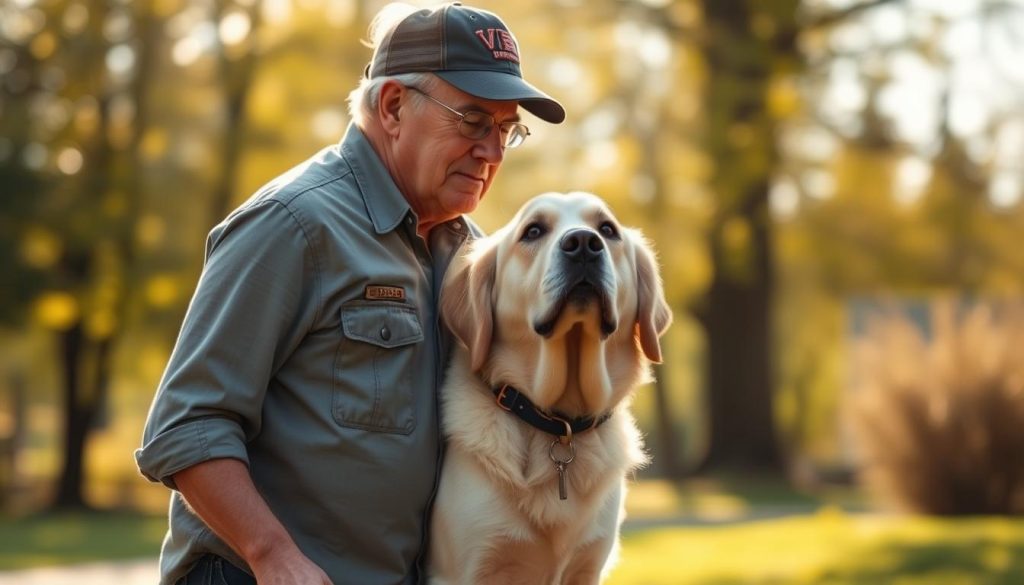
Service dogs get special training to help veterans with PTSD and disabilities. They learn to spot when their veteran is upset and calm them down. They even wake their partners up from nightmares.
These dogs bring comfort and security to veterans. They help manage symptoms and boost confidence. This makes it easier for veterans to handle daily life.
Service dogs also help with everyday tasks. They can pick up things, open doors, and support veterans who have trouble walking. Getting a service dog certified helps veterans use these dogs in public. It makes their lives easier and more independent.
Selecting the Right Dog for Service Training
Choosing the right dog for service training is key for veterans. The best dog should be calm, eager to learn, and flexible. Breeds like Labrador Retrievers, Golden Retrievers, and German Shepherds are often chosen. They are smart, easy to train, and friendly.
The dog’s size is also important. It should be big enough to help with tasks like balance support or fetching things. The dog must be healthy and strong to do its job well.
It’s vital to socialize and train the dog early. Introduce it to different places, people, and situations. This builds confidence and readiness. Basic obedience is the first step to more advanced training.
Choosing a dog for service work means finding a reputable breeder or organization. They can help pick the right dog. They know what qualities and potential are needed for a service animal.
The Service Dog Training Process
Turning a dog into a skilled service animal for a veteran is a detailed process. It starts with picking the right dog, one with the right temperament and physical traits. Most training for service dogs begins when the dog is still a puppy. This ensures they learn social skills and obedience early on.
The first steps in training cover basic commands like sit, stay, come, and heel. The dog also learns to be house-trained and comfortable in different places. Socialization is crucial to prepare the dog for the various situations it will face as a service animal.
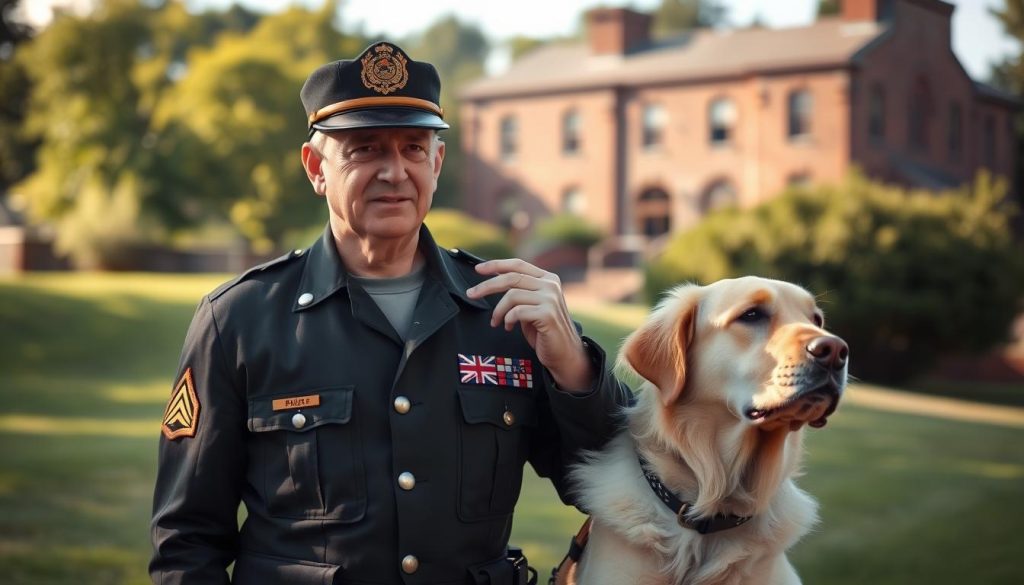
As training goes on, the dog learns advanced skills specific to the veteran’s needs. This might include helping with balance, alerting to sounds, interrupting anxiety attacks, or fetching items. Professional trainers work with the veteran to teach these specialized skills to the dog.
Training a service dog for veterans is a long and intense process that takes months. Even after the dog is paired with a veteran, they continue to train. This ensures the dog’s skills stay sharp and strengthens their bond. The end result is a highly trained service dog that can greatly assist and support a veteran.
Essential Tasks and Skills for Veteran Service Dogs
Trained service dogs for veterans learn many important tasks. These tasks help their handlers live more independently and confidently. Let’s look at some key tasks that therapy dog training for veterans covers.
One key role of service dogs is to help with balance. Veterans often face mobility issues. Their dogs are trained to support them while walking, climbing stairs, or standing up.
Service dogs are also great at fetching things for their handlers. They can pick up dropped items, get medication, or bring a phone in an emergency. This is very helpful for veterans with mobility problems or chronic pain.
For veterans with PTSD, anxiety, or panic attacks, service dogs are a big help. They learn to recognize when an episode is coming. They then use nudges, licks, or deep pressure therapy to calm the veteran. This helps the veteran feel safe and grounded.
Each service dog’s tasks are customized for the veteran they serve. Trainers work with veterans to find out what they need. This way, the service dog can offer the right support for the veteran to do well.
Service Dog Training for Veterans: Specialized Programs and Resources
Many programs and resources are available for veterans looking for service dog training. These programs help veterans find the right service dog companion. Service dog organizations across the country offer training tailored to veterans’ needs.
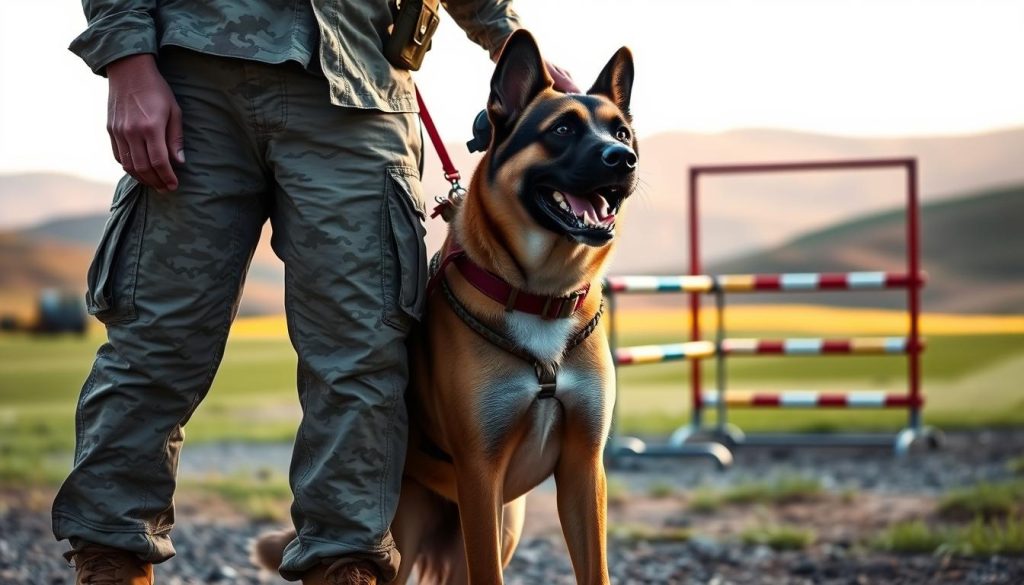
Non-profit organizations are key in providing service dog training for veterans. They have programs that pair veterans with the right service dogs. These organizations work with veterans to understand their needs and match them with suitable dogs.
Government initiatives and private training facilities also offer service dog training for veterans. These programs may provide financial help and support. Veterans can contact these organizations to learn more about their services.
When looking for service dog training, it’s important to choose a reputable organization. Look for ones with experience working with veterans. These organizations understand veterans’ challenges and can offer the needed support.
Certification and Access Rights for Veteran Service Dogs
As a veteran, it’s key to get your service dog certified. This is for your rights and privileges under the Americans with Disabilities Act (ADA). The certification process trains your dog to help with your disability tasks.
Service dogs for veterans go through tough training to meet ADA standards. After training, you get a certification and items like a vest and ID card. These show your dog is a certified service animal, letting you into places pets usually can’t go.
Knowing your rights and duties as a handler is important. The ADA lets you bring your service dog into places like restaurants and stores. But, you must keep your dog under control and not cause trouble.
Having your service dog certified and identified is more than just a right. It also teaches people about the important role these dogs have in veterans’ lives. By showing your dog’s certification and following ADA rules, you can move through public spaces with ease and freedom.
The Bond Between Veterans and Their Service Dogs
The bond between veterans and their service dogs is truly special. These loyal companions offer more than just practical help. They provide emotional support and a sense of purpose. For many veterans with PTSD or disabilities, service dogs are their lifeline.
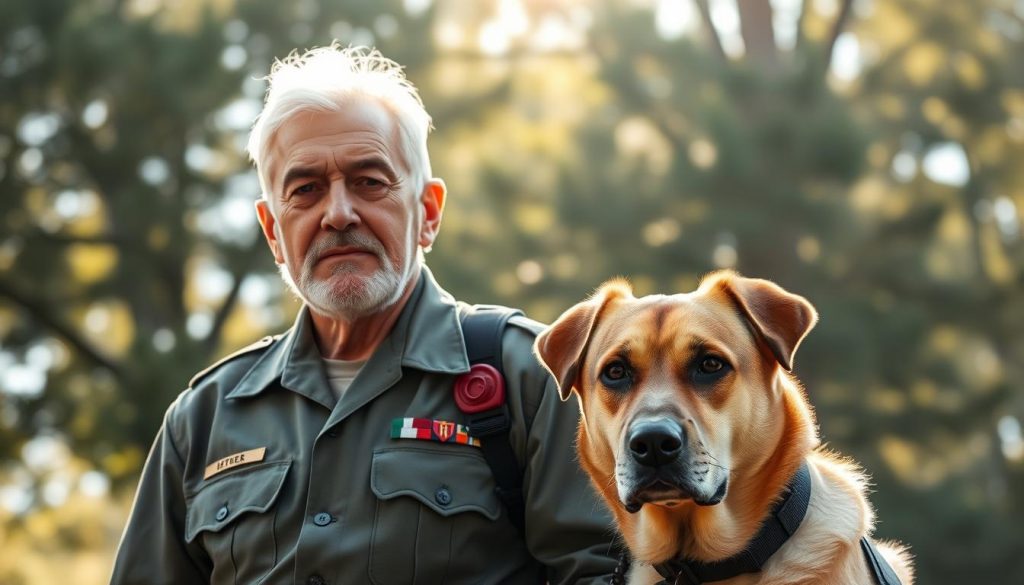
The bond between a veteran and their service dog is built on trust, understanding, and unconditional love. These dogs are trained to sense their handler’s emotions. They respond with comfort and reassurance in times of distress.
Whether it’s a gentle nudge or a calming presence, service dogs are always there for their veterans. They help in many ways, from interrupting panic attacks to providing a sense of calm.
Service dogs also give veterans a renewed sense of independence and confidence. With their canine partner, veterans feel more capable of handling daily life. The presence of a service dog can also reduce feelings of isolation and loneliness.
This bond has a positive impact on both the veteran and the service dog. These intelligent and dedicated animals thrive on having a purpose and forming a close relationship with their handler. Together, they experience the joy and fulfillment of a meaningful partnership.
Success Stories: How Service Dogs Have Transformed Veterans’ Lives
For many veterans with PTSD, a service dog is a lifeline. These dogs offer comfort, support, and a new purpose. Here are inspiring stories of how PTSD service dogs have changed veterans’ lives.
Army veteran John Smith says his service dog, Max, saved his life. After returning from deployment, John faced severe anxiety and depression. Max helped him regain confidence and independence.
“Having Max by my side gives me the strength to face each day,” John shares.
Marine veteran Sarah Johnson found hope in her service dog, Luna. Sarah’s PTSD made it hard for her to leave the house or talk to others. Luna learned to provide deep pressure therapy and guide Sarah through panic attacks.
“Luna has given me my life back,” Sarah says gratefully.
These stories are just a few examples of veterans whose lives were changed by PTSD service dogs. With these amazing animals and specialized training, veterans can find healing, hope, and a brighter future.
Conclusion
We’ve looked at how service dog training for veterans can change their lives. These dogs offer vital support for PTSD, mobility issues, and disabilities. They provide both practical help and emotional comfort, giving veterans a new sense of purpose.
If you or a veteran you know needs a service dog, start by looking into available options and programs. Many groups help match veterans with trained service dogs. It’s key to find the right dog and get proper training for a strong partnership.
We must keep supporting and raising awareness about service dogs for veterans. By sharing information and advocating, we help more veterans get the benefits of a loyal service dog. Let’s empower our nation’s heroes to regain their independence and quality of life.