
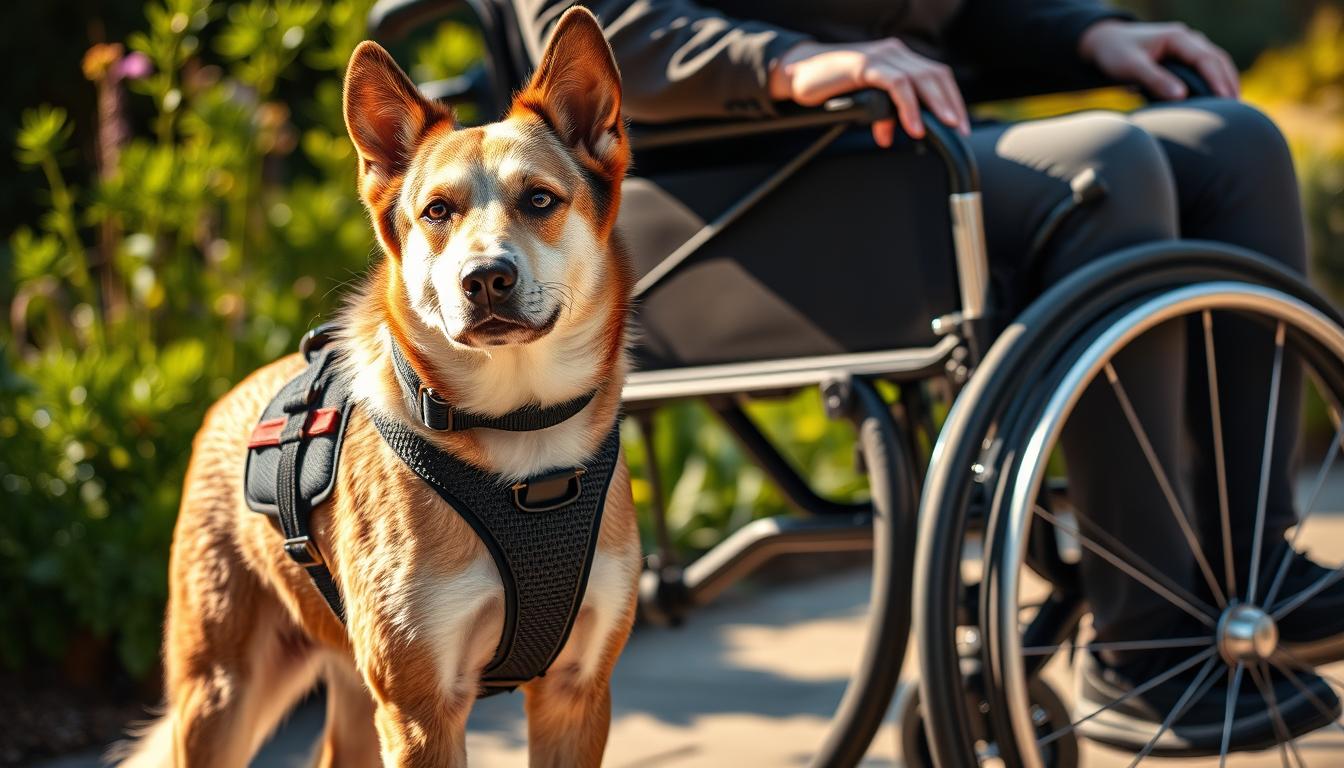
If you or a loved one has trouble moving around, a trained service dog can make a big difference. These dogs learn to help with tasks that make life easier and more independent. They get trained to assist people with physical challenges, helping them face daily tasks with more confidence.
Service dog training starts with basic obedience. This is the base for more complex skills. Trained mobility service dogs offer both practical help and emotional support. They help people with mobility issues feel more free and in control, opening doors to new experiences.
Getting your dog trained for mobility is a big step. It ensures they can assist safely and effectively. In this article, we’ll explore the benefits of a mobility service dog. We’ll also look at the skills they learn and how to find the right trainers. Learn how a mobility service dog can change your life and bring more freedom.
Understanding Mobility Service Dogs
Mobility service dogs are trained dogs that help people with physical disabilities. They learn to assist their owners in many ways. This lets their owners live more independently.
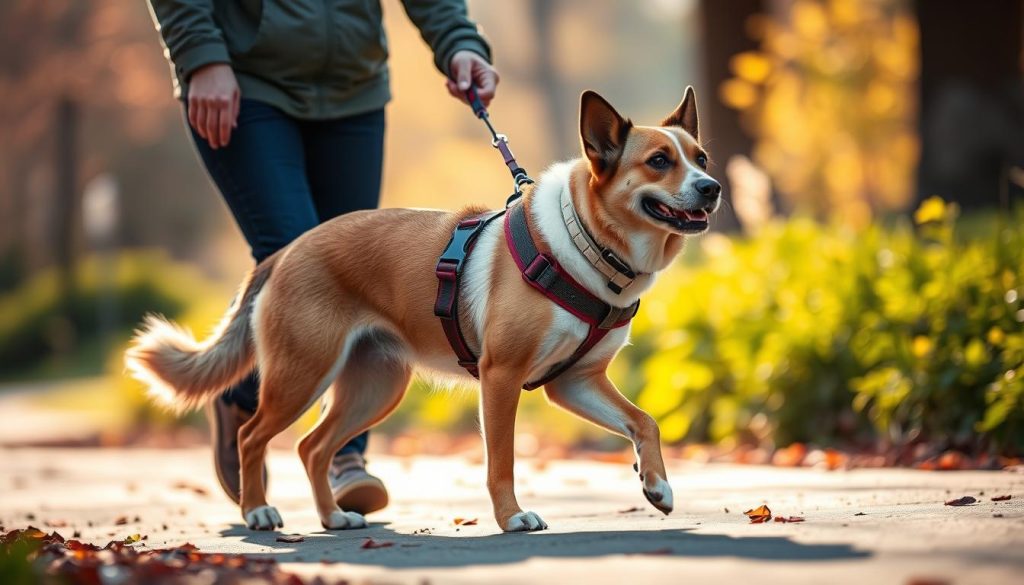
These dogs are different from others that help with hearing or vision problems. They are trained to help with mobility issues. They can support balance, get things, open doors, and help with daily tasks.
These dogs are crucial for people with conditions like multiple sclerosis or spinal cord injuries. They help their owners move around more easily. These dogs go through a lot of training to help their owners in different places.
Benefits of Service Dog Training for Mobility
Mobility service dogs bring many benefits to your life. They help you feel more independent. With a trained service dog, you can do daily tasks with more confidence and less help from others.
These dogs also make you safer. They help you stay balanced and prevent falls. They can pick up things, open doors, and even warn others in emergencies. This gives you peace of mind and security.
Having a mobility service dog also helps you meet new people. They are friendly and can start conversations. This is great for those who feel lonely or shy because of their mobility issues.
But the best part is the emotional support they offer. The bond with your service dog can make you feel less stressed and happier. They become more than helpers; they become part of your family and true friends.
Choosing the Right Dog for Mobility Service Training
When picking a mobility service dog, think about breed, size, temperament, and health. It’s key to find a dog with the right body and mind for the job. This ensures they can do well as a service animal.
Labrador Retrievers, Golden Retrievers, German Shepherds, and Standard Poodles are great for service work. They’re smart, easy to train, and friendly. Plus, they have the strength and endurance needed for mobility tasks.

It’s also vital to look at a dog’s personality. A good service dog is calm, confident, and loves to please. They should handle different places well and stay focused on their handler.
Health is another big factor. The dog should be healthy and free from genetic problems or health issues. Regular vet visits and health checks keep them in great shape.
Choosing the right dog for service work means looking at breed, personality, and health. With the right dog, they’ll excel in their role as a mobility service animal.
Essential Skills Taught in Mobility Service Dog Training
Looking into mobility service dog training? It’s key to know the essential skills your dog will learn. These skills help them assist and support you every day. They’ll learn to balance, retrieve items, open doors, and respond quickly to commands.
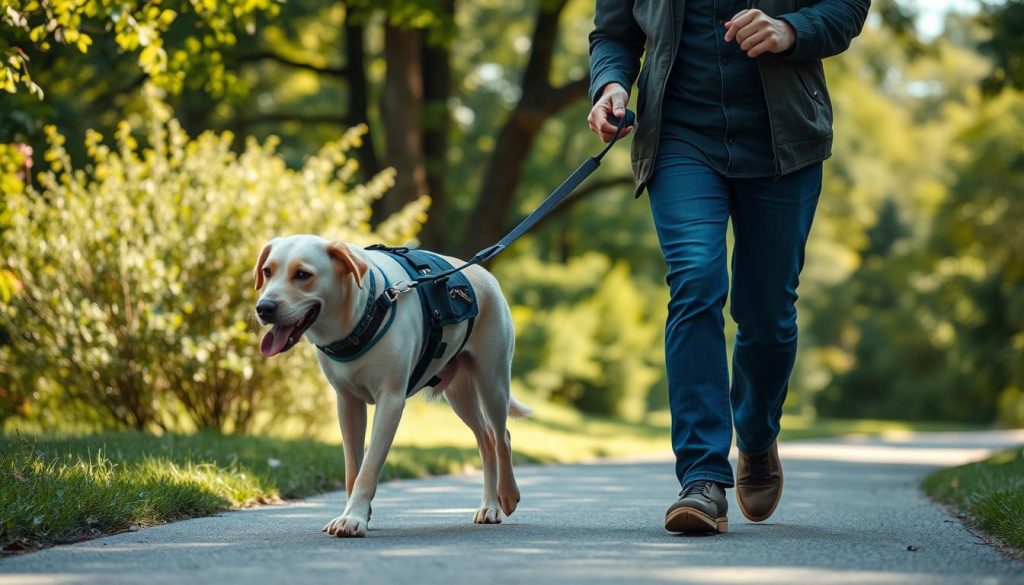
One vital skill is balance and support. Your dog will help you stay stable while walking or using stairs. They’ll stand firm, giving you confidence to move safely.
Retrieving objects is another skill they’ll master. Your dog will fetch your phone, keys, or anything you drop. This is super helpful if you have trouble bending or moving.
They’ll also learn to open doors for you. This is a big help when you’re using a wheelchair. With training, your dog will open doors on command, giving you more freedom.
Your dog will learn to respond quickly to your commands. This is crucial for getting the help you need when you need it. Advanced training will make them reliable and trustworthy in your daily life.
Finding Qualified Mobility Service Dog Trainers
When looking for professional service dog trainers for your mobility needs, do your homework. Seek out trainers with a focus on mobility service dogs and a history of success. Ask for references and testimonials to gauge their expertise and results.
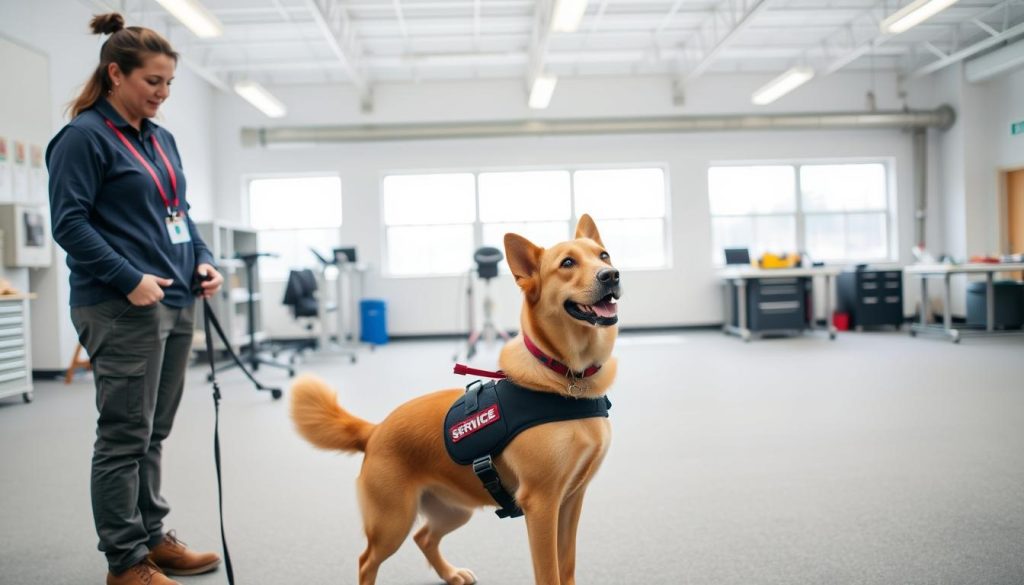
To find reliable trainers, try searching for “service dog training near me” online. This will show you local trainers and organizations focused on service dog training. You can also ask disability advocacy groups or your vet for trusted trainer recommendations.
When checking out potential trainers, ask about their credentials and certifications. Look for those who have finished accredited service dog training programs and belong to groups like Assistance Dogs International (ADI) or the International Association of Assistance Dog Partners (IAADP). These signs mean they follow industry standards and best practices.
Finding the right mobility service dog trainer takes time and effort. By choosing a qualified, experienced trainer, you and your service dog will thrive. This will improve your mobility and independence.
The Service Dog Training for Mobility Process
Starting to train a mobility service dog is a big step. It’s key to know the process and how long it takes. The first step is an evaluation to see if a dog fits your needs. This makes sure the dog is the right match for the job.
After picking a dog, the real work starts. The dog will learn important skills like getting things, opening doors, and helping with balance. How long it takes depends on the dog and your needs, but usually, it’s 6-12 months.
But the training doesn’t stop after the dog is ready. Keeping the dog’s skills sharp is important. You’ll need to practice regularly and go to workshops. Your trainer will help you plan how to keep the dog’s skills up.
Training a mobility service dog is a journey that builds a strong bond. It might be tough, but the reward is a loyal friend who makes your life better. With hard work and patience, you and your dog will be a team that supports each other.
Costs and Funding Options for Mobility Service Dog Training
Getting a mobility service dog can really improve your life and freedom. But, the cost of training one can be high. Luckily, there are many ways to get help, like grants and scholarships for service dogs.
The cost for training a mobility service dog is usually between $20,000 and $30,000. This includes buying the dog, vet care, training, and gear. Even though it’s a lot, some groups offer money to help with these costs.
To find money for your service dog, look into grants and scholarships from non-profits. These programs might have rules, like income limits or disability types. So, make sure you meet the criteria before you apply.
You can also try fundraising to help pay for your service dog’s training. Many people have raised money online, at local events, or by asking friends and businesses for help.
Remember to plan for ongoing costs like food, vet visits, and gear upkeep. With the right planning and help, you can get a service dog that will change your life.
Success Stories: Lives Transformed by Mobility Service Dogs
Mobility service dogs have a huge impact on their handlers’ lives. They offer physical help and emotional support. This leads to a better quality of life and more independence for their human partners.
Sarah, a young woman, got a spinal cord injury in a car accident. With her mobility service dog, Max, she felt confident to go out again. Max helped her navigate streets, pick up items, and open doors.
Sarah’s newfound freedom let her go back to work and meet up with friends. This greatly improved her life.
Michael, a veteran, faced mobility issues from a combat injury. His service dog, Luna, helped him with daily tasks and gave him companionship and security. With Luna’s support, Michael cut down on pain meds and started physical therapy.
This led to more mobility and an active lifestyle for Michael.
These stories show the amazing impact of mobility service dogs. They help their handlers regain independence and improve their lives. Mobility service dogs are truly invaluable for those facing physical challenges.
Conclusion
Mobility-enhancing service dog training can change lives for the better. These dogs offer great help, friendship, and support. They help people regain their independence and live better lives.
These dogs do so much, from helping with daily tasks to keeping their handlers stable. If you or someone you love has mobility problems, think about getting a mobility service dog.
Finding the right dog and training take time and work. But the benefits are huge. With a good trainer and a matching dog, you can feel free and confident again. Start today and see how a mobility service dog can change your life.