
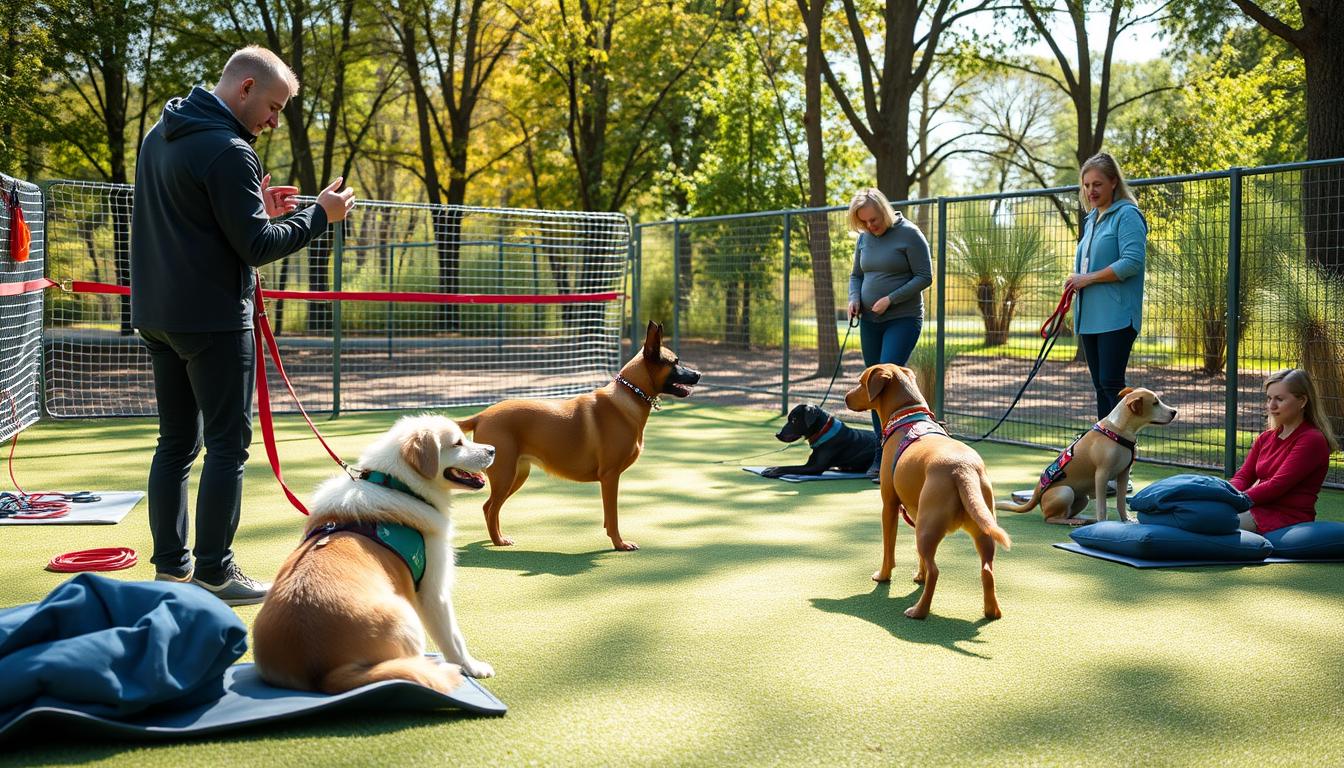
Training your furry friend is rewarding. But, safety during training is key. This guide covers safe dog training tips. It talks about understanding your dog’s behavior and setting up a safe training space. We’ll point out risks and give tips for safe and confident training. Dive into a journey that keeps you and your dog safe.
Quick Recommendation: Our blog is filled with tips and tricks for training your puppy or dog. If you are seeking a comprehensive training program, we recommend K9 Training Institute.
The Importance of Safety in Dog Training
Keeping your dog safe during training is very important. It makes sure they stay well and helps the training work better. A safe place helps build trust with your dog, making training more fun and effective.
Dog training pros like Cesar Millan and Victoria Stilwell stress safety’s value. They’ve found that safety leads to better training results. Lacking safety can hurt or stress you and your dog.
To avoid accidents during training, it’s crucial to be careful. Use the right gear, know what your dog can handle, and keep the area under control. This lowers risks and makes training better.
Ignoring safety steps can cause problems. Bad training may make dogs anxious, behave badly, or even become aggressive. So, it’s vital to always think about safety to keep you and your dog happy together.
Remember, being safe in training is more than just for now. It’s about building a habit of good, safe communication with your dog. This can make your relationship with them stronger and happier in the long run.
Creating a Safe Training Environment for Dogs
Keeping your dog safe during training is very important. Choose non-slip surfaces to stop slips and falls. Put up barriers to keep the area clear and reduce distractions.
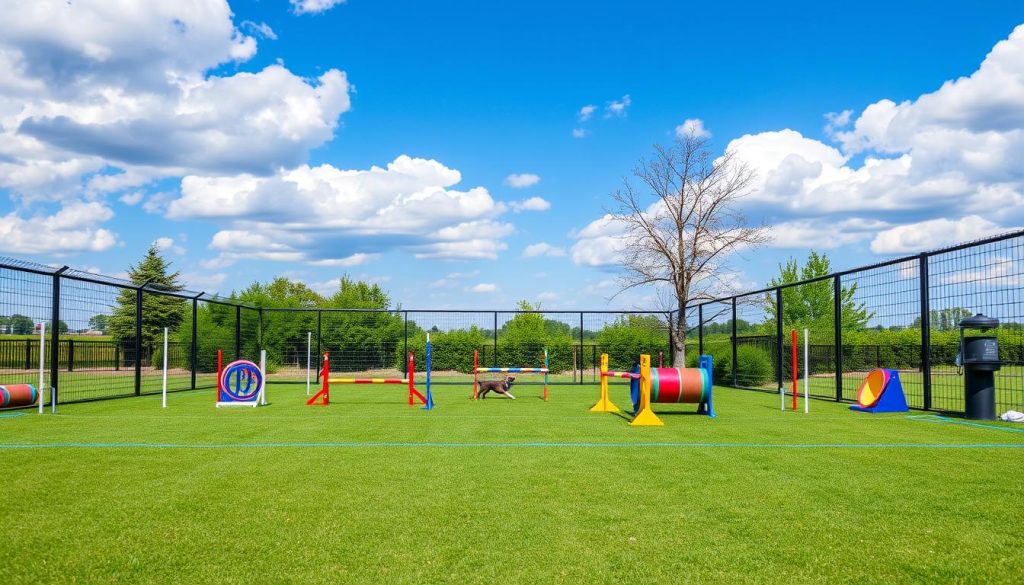
Using safe dog training methods is key. Pick toys and treats that are the right size and safe to eat. This makes sure your dog is happy and healthy during training.
A calm setting is vital for your dog’s learning. It makes it easier for them to listen and follow commands. Always use the same signs and cues to make them feel at ease.
Making a safe training area needs time and effort. But, it’s worth it for your dog’s learning. The right setup and a calm atmosphere help a lot in their training success.
Dog Training Safety Tips Every Owner Should Know
Training your dog should be rewarding and safe. Here are essential dog training safety tips to follow. They will keep your buddy safe and joyous during their training.
Begin by closely watching your dog during playtime. Excitement can lead to accidents or injuries easily. Know when they’re tired or stressed. Watch for heavy panting, a lot of drooling, or if they’re slow to follow commands. These signs mean they need a rest.
Choosing the right equipment is key. The wrong collars or harnesses can hurt your dog. Pick training tools that are gentle and fit well. Ask a professional for advice if you’re not sure.
Being consistent and patient is very important. Set up a training schedule that works for you and your dog. It aids in learning and ensures safe training practices for dogs. Consistency also lessens your pet’s confusion and stress.
Check your dog’s health before training sessions start. Look out for any signs of sickness or injury. A healthy dog learns better and enjoys training more. Regular vet check-ups are essential. They keep your dog in tip-top shape for learning.
Stick to these dog training safety tips for a safe and positive environment. Training should always be a good experience for your dog. Happy training!
How to Handle Aggression During Training
Handling aggression in dogs during training is important. Knowing what triggers aggression is the first step. This helps create a plan to manage it well.
Using de-escalation techniques is key with an aggressive dog. Techniques like redirecting focus, calming commands, and a safe space are helpful. Stay calm and avoid punishing your dog, as it can make aggression worse.
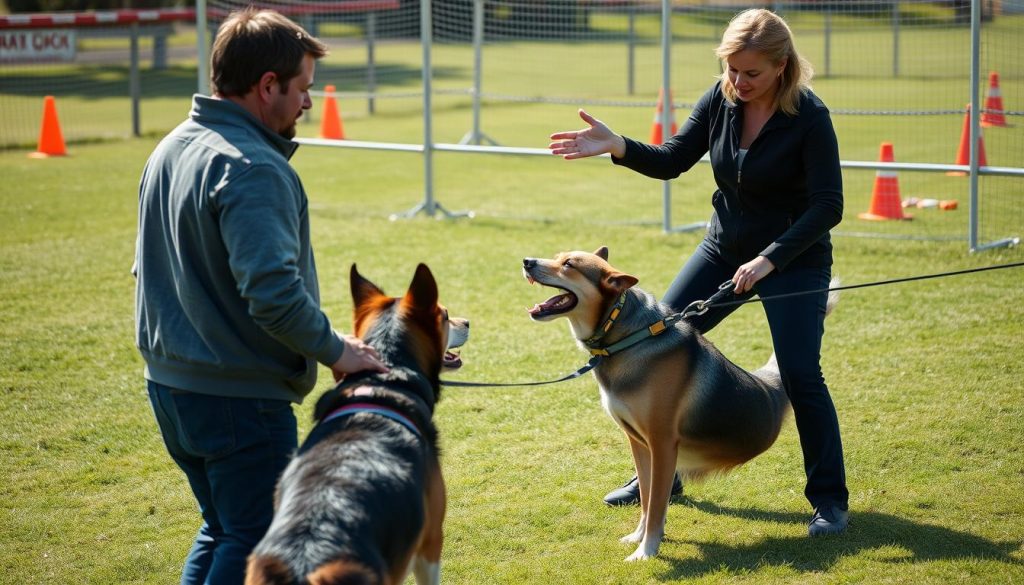
It’s also crucial to know when to seek professional help. If aggression doesn’t improve, experts like Cesar Millan and Victoria Stilwell advise getting a professional. This ensures a safe, controlled environment for both of you.
Being proactive and using the right approaches makes handling aggression easier. Understanding and addressing your dog’s needs can make training safer and more effective.
Safe Training Practices for Puppies
Ensuring your puppy’s training is safe is key to their growth. Safe practices help them trust and feel confident. Start with training that suits their age, like rewarding them with treats and kind words. Avoid being too harsh or physical, as it can scare or hurt them.
Puppies are still growing, so it’s crucial to mix training and play. This keeps them from getting too tired. Short, regular training sessions work best. Watch for any signs they’re tired or stressed, and let them rest well.
When training, make sure the area is safe and tidy. Use things like harnesses and simple leashes for control without harm. This keeps them safe and strengthens your bond with your puppy.
Every puppy is different, so be patient. Introduce new commands and places slowly, making sure they’re comfortable. By focusing on safe training, you’re preparing them to be well-mannered and confident as they grow.
Quick Recommendation: Our blog is filled with tips and tricks for training your puppy or dog. If you are seeking a comprehensive training program, we recommend K9 Training Institute.
Avoiding Common Mistakes in Dog Training
When training your dog, it’s vital to avoid common mistakes for a good experience. A crucial part is understanding your dog’s body language properly. Misinterpreting these signals can cause confusion and stress for your dog. Watch their reactions closely. Look for signs of discomfort or worry. Then, change how you’re interacting as needed.
Many people also make the light of having a regular routine. Dogs love knowing what to expect, so a steady routine really boosts their learning. Stick to the same commands, training times, and places. This helps your dog remember and follow new lessons.
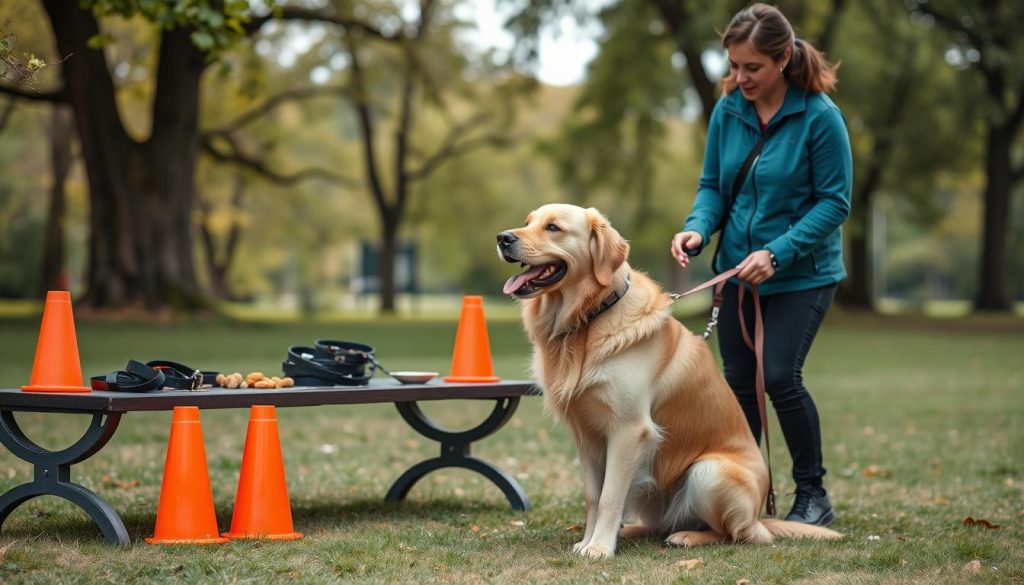
Another mistake to dodge is over-punishing. Though it might seem effective at first, too much punishment can break your dog’s trust and slow their learning. Instead, use positive reinforcement. Reward their good actions to motivate them to keep it up. This method helps in learning better.
By steering clear of these common errors and practicing safe dog training methods, you create a better environment for training. Always remember, being patient and consistent is the secret to successful dog training.
Maintaining Safety During Off-Leash Training
Starting off-leash dog training safely is key. Take it slow and check if your dog is ready. Step by step, introduce them to being off-leash in a safe area. Start in a place with fences so they can’t run off. This builds their confidence and makes sure they listen well before trying it in bigger spaces.
Learning to call your dog back is a major off-leash training tip. Being able to get your dog to come back in any situation is vital for their safety. Reward them with treats or praise to make them want to come back. Try this in different places so they always listen, no matter where you are.
Watch your dog closely to see if they’re ready to train without a leash. Look for signs they listen well, behave, and stay calm around others. Knowing these things will show you if they can handle being in big, open areas safely.
Be ready for anything by bringing the right safety gear. Things like a whistle, a dog GPS, or a long leash can help if something unexpected happens. With these tools on hand, you can quickly deal with any issue that might put your dog at risk.
Following these tips can keep your dog safe while they enjoy some freedom. They’ll get to wander and explore, all while staying safe.
Safe and Effective Dog Training Methods
Training your dog should always be safe and effective. Positive reinforcement is one of the top methods. It rewards good behavior, making dogs want to keep doing it. Treats, praise, and play are great rewards that help dogs learn the right behaviors.
Clicker training is another safe method. It uses a clicker to signal when a dog does something correctly. This helps with teaching complex behaviors and improves how you communicate with your dog.
Relationship-based training strengthens your bond with your dog. It’s about understanding their body language and needs. This approach makes training safe, effective, and tailored to your dog’s personality.
Choosing the best technique is key to a good training experience. Always pick methods that are safe and keep your dog’s happiness in mind.
Understanding Your Dog’s Body Language
Reading dog communication signals is key for a safe training session. Knowing their body language helps spot when they’re stressed or happy. This way, you can make training fun and secure for your dog.
Dogs show their feelings through body positions, facial expressions, and sounds. A tail wag might mean happiness, excitement, or nervousness. Learning these signs helps you understand what your dog needs while training.
Look at your dog’s ears. Standing ears often mean they’re interested or curious. But if their ears are flat, they might be scared or feeling submissive. Their eyes also tell a story. Big, open pupils can mean they’re stressed, while half-shut eyes usually mean they’re content.
Dog sounds like barking, whining, or growling tell us about their feelings. Recognizing what these sounds mean helps you meet their needs better. This makes training more positive for both of you.
Getting the hang of dog body language takes time and practice. The more you watch and interact with your dog, the better you’ll get at understanding them. This skill not only improves training but also deepens your bond with your pet.
Safe and Sound: Ensuring Safety During Dog Training Sessions
When we talk about looking after your furry friend, it’s vital to put their safety first during training. It all begins with knowing the duties of training.
Choosing a secure place for training is essential. It should be free from danger. This way, you maintain safety. Make sure your gear is also safe to prevent accidents.
It’s crucial to understand what your dog is feeling. By knowing their body language, you can see if they’re upset or stressed. This lets you change your training to keep them happy and safe.
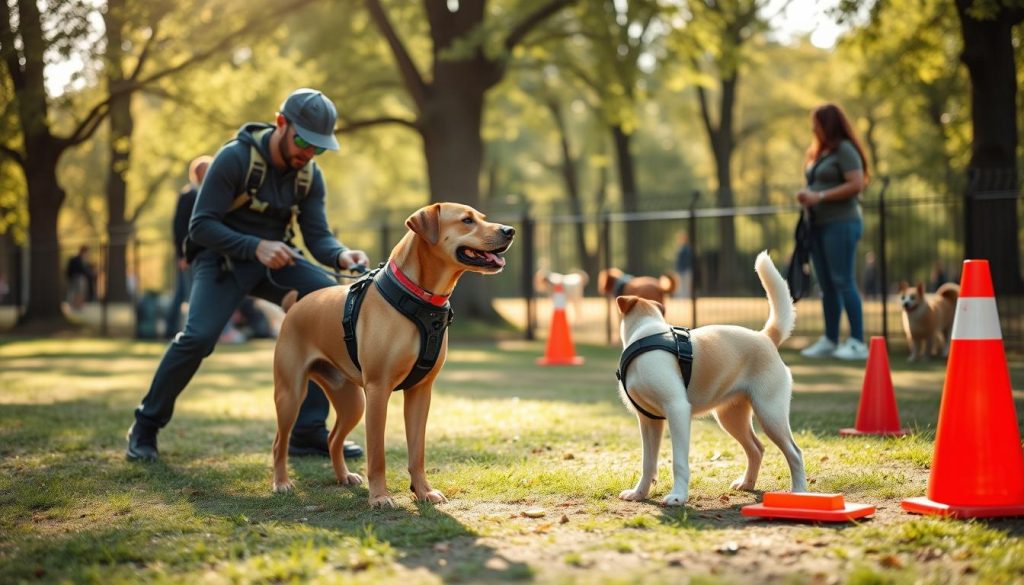
Dealing with aggressive behavior needs care and calmness. This prevents any injuries to you or your pet. Training should always be enjoyable and filled with positive experiences.
Being consistent with safe training is important. It leads to better outcomes and shows safety’s role in your pet’s learning. A trained dog is not only joyful but also secure.
Conclusion
We’ve covered essential safety tips for dog training in this article. It’s vital to have a safe space for training. This helps build trust and makes training more effective. Each part of the article stressed on safety, from setting up a secure area to understanding your dog’s signs.
Starting your dog training journey? Always put safety first. This applies to both young puppies and older dogs. Safe training practices help your pet learn and grow. It also builds respect and trust between you and your pet.
To sum up, remember to create a safe space and handle aggression wisely. Use methods that work well and understand what your dog is trying to say. Following these safe training tips is key. You’ll create a place where you and your pet can do well together. Be patient and kind, and you’ll build a great bond.
Quick Recommendation: Our blog is filled with tips and tricks for training your puppy or dog. If you are seeking a comprehensive training program, we recommend K9 Training Institute.
BTW: If you are interested in everything from nutritional advice and natural health solutions to stress-relief techniques and overall wellness tips, check out our friends at PawfectlyHealthyPets.com.