
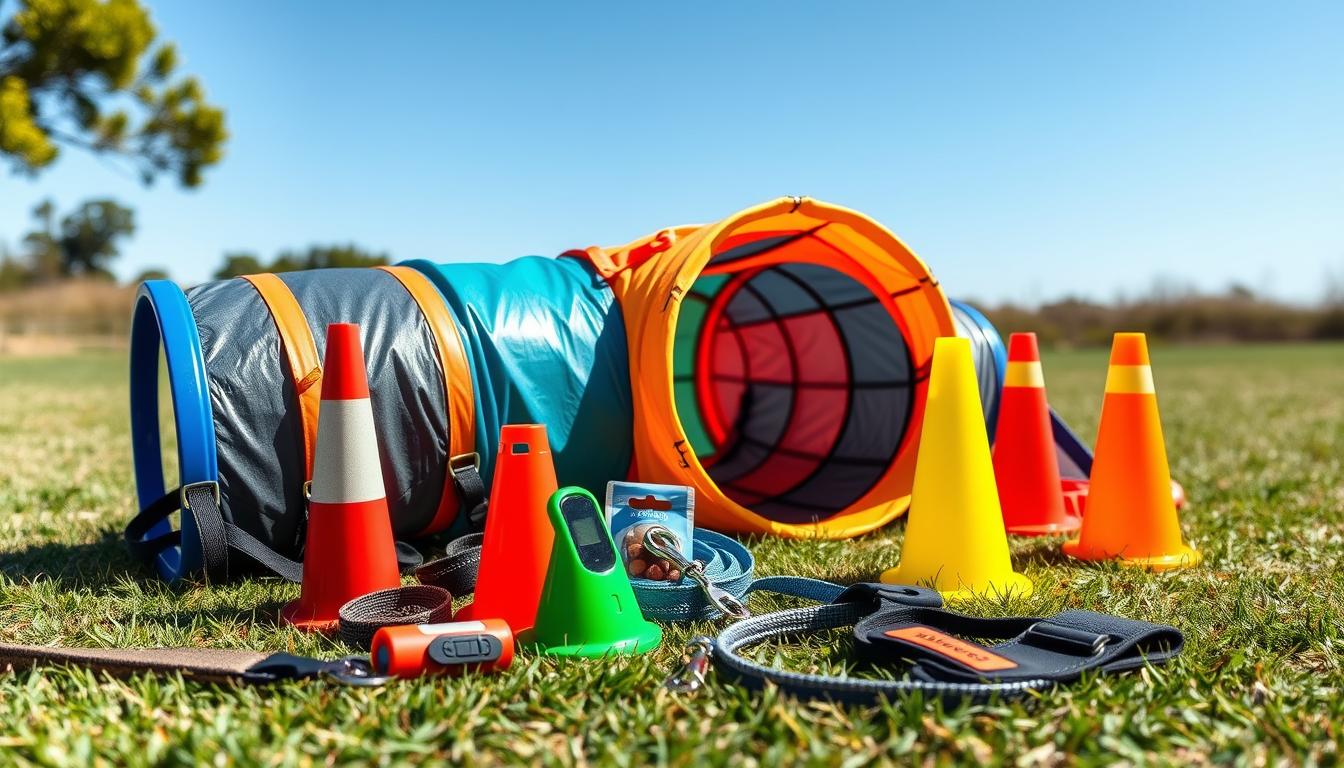
Training your dog can be fun and rewarding. But the right dog training tools are crucial for success. The proper gear is key for training your dog to be well-behaved and responsive. From simple leashes to advanced clickers, the right tools can make training both productive and fun for you and your dog.
Next, we’ll look at different types of equipment for various training needs. This ensures you’re prepared for excellence at every step.
Quick Recommendation: Our blog is filled with tips and tricks for training your puppy or dog. If you are seeking a comprehensive training program, we recommend K9 Training Institute.
Understanding Your Dog’s Training Needs
Choosing the right training gear for your dog is vital. Dogs have different personalities and needs that affect their training. The breed, size, temperament, and behaviors you want to change or encourage are important.
Breed plays a big role in choosing equipment. Energetic breeds might need tougher leashes and harnesses. Meanwhile, smaller breeds often require lighter gear.
Size matters too. Big dogs need strong equipment. Small dogs do better with lighter gear. Using the right size equipment makes training safer and more comfortable.
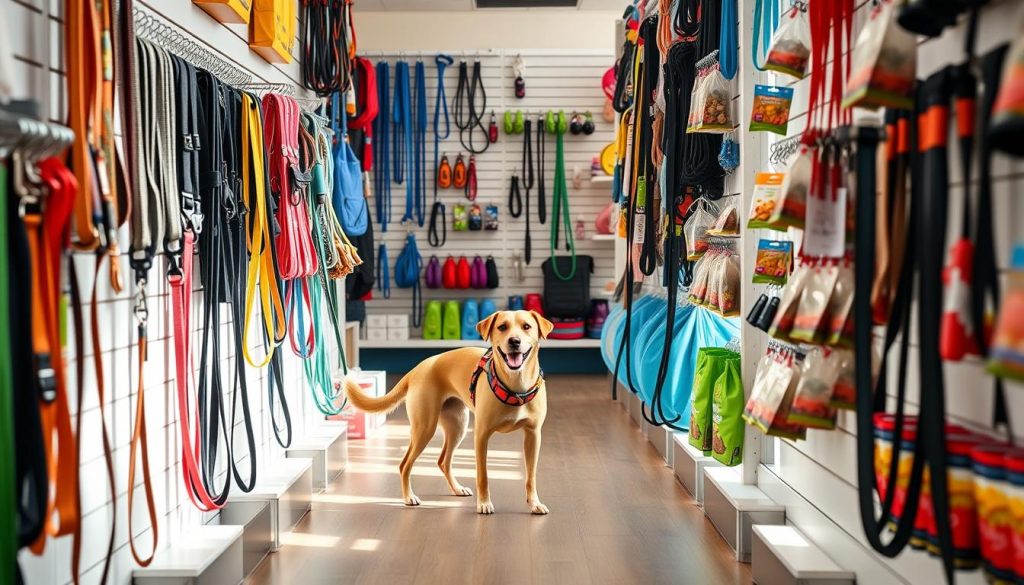
Temperament is also crucial. Some dogs are more aggressive or anxious. For them, calming harnesses or gentle leaders can help ease training anxiety.
Finally, think about what behaviors you’re training. Whether it’s obedience, agility, or behavior change, the right gear helps. It makes training more effective and strengthens your bond.
The Basics: Leashes, Collars, and Harnesses
Starting with the basics is essential when selecting dog training equipment. Knowing about different leashes, collars, and harnesses helps you choose wisely for your dog’s training. We will explore these basic tools.
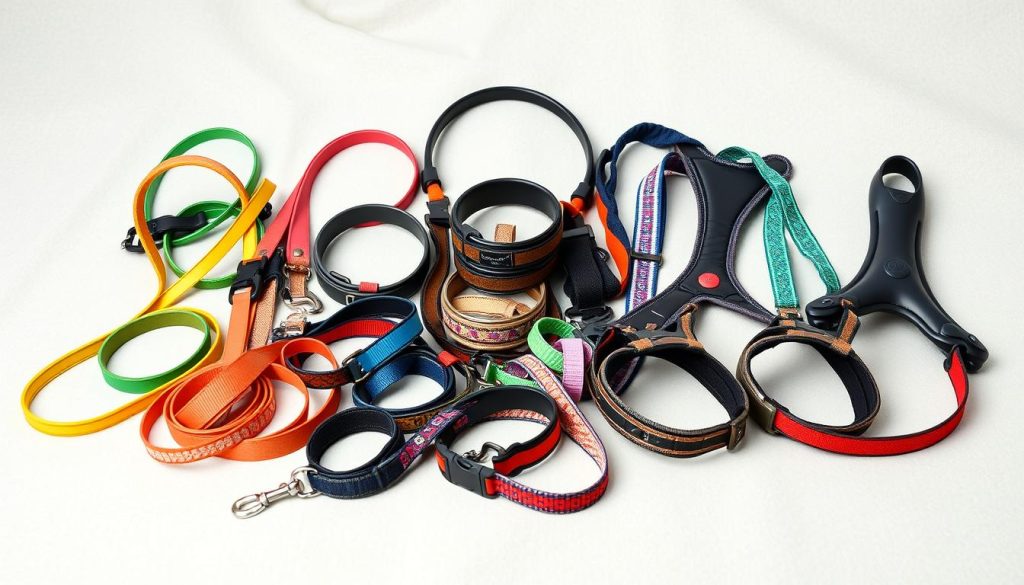
Leashes: Leashes are made from various materials and come in different lengths. A standard leash, usually nylon or leather, is good for daily training. Retractable leashes allow more freedom but may offer less control during focused training. A strong, fixed-length leash is often the best choice for effective training.
Collars: Collars help with identification and are key in training. Flat collars are common, easy to use, and good for attaching leashes. Martingale collars prevent slipping without choking, good for some dogs. Prong collars, though debated, help experienced trainers with strong dogs. It’s important to weigh the pros and cons to choose the right collar for your dog’s needs and temperament.
Harnesses: Harnesses spread pressure evenly, making them gentle on your dog’s neck. No-pull harnesses work well for dogs that pull. You can choose a back-clip for everyday walks or a front-clip harness for better control during training. Selecting the right type of harness means considering what will be most comfortable and effective for your dog.
Choosing suitable leashes, collars, and harnesses is vital for effective training. Always think about your dog’s specific needs and behaviors when picking out their training gear. The right equipment sets the stage for successful behavior training with your dog.
Advanced Tools: Electronic Collars and Clickers
Electronic collars and clickers are top choices for refined dog training gear. Electronic collars, or e-collars, include bark control and containment options. They send a small electric signal, grabbing your dog’s attention. It’s crucial to use them thoughtfully to keep the training kind and effective.
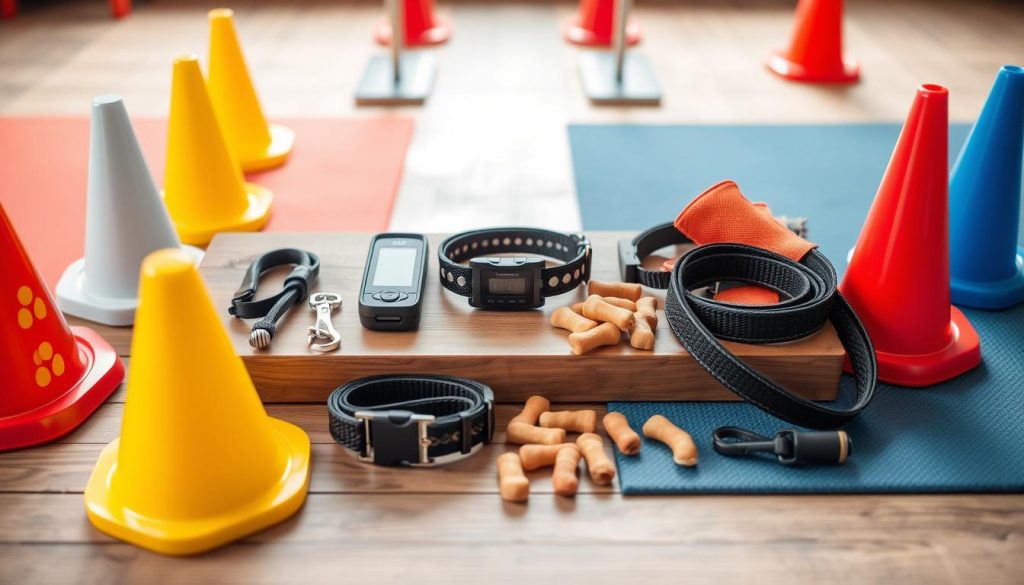
Clickers work with sound to aid in training. They make a noise when your dog does something right, then you give a treat. This helps your dog understand clearly and learn faster. Clicker training is great for teaching tricks and encouraging good actions.
Even though these tools are very helpful, it’s important to think about their pros and cons. This is especially true for e-collars, which some trainers debate about. If you’re not careful, they can be used in the wrong way. Make sure to learn about them well before adding them to your training routine.
Behavioral Tools: Muzzles, Head Halters, and No-Pull Harnesses
Muzzles, head halters, and no-pull harnesses are great for training challenges. They help manage aggression, pulling, and jumping. This makes it easier to control your dog’s behavior.
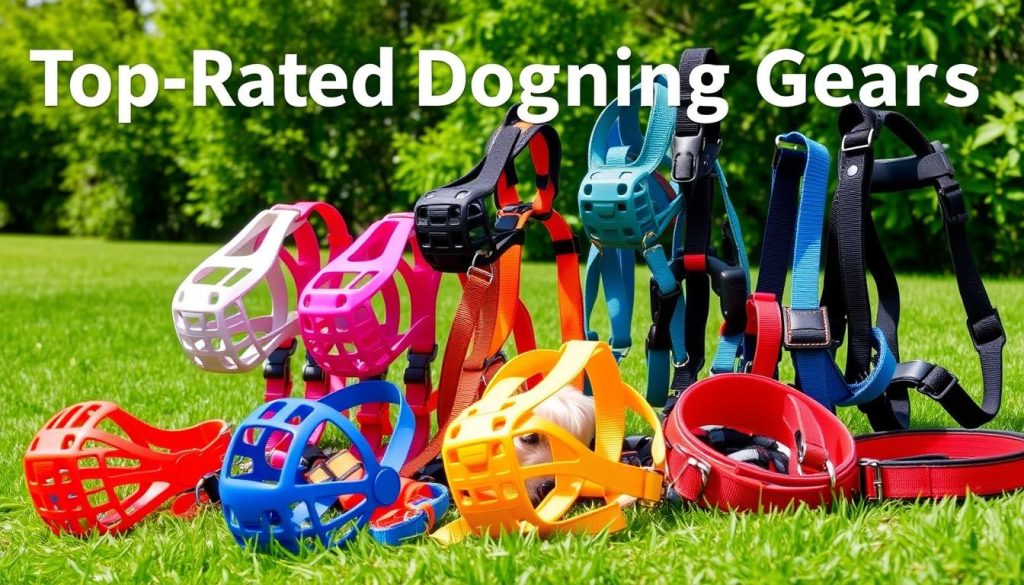
Muzzles are key in certain situations, even though some people misunderstand them. They stop biting and help handle an aggressive dog safely. Make sure to pick a muzzle that fits well and lets your dog breathe easily, like the ones from Baskerville.
Head halters, like the Gentle Leader, control your dog’s direction by guiding their head. This can really help reduce pulling on walks. It’s important to get your dog used to the halter slowly, using treats and praise to make it a good experience.
No-pull harnesses are perfect for dogs that pull on their leash. Brands such as PetSafe create harnesses that spread out the pulling force. This means less pressure on your dog’s neck and a kinder way to teach them not to pull.
Adding these top-rated training tools to your daily walks can change things for the better. The aim is to not only control but also improve your dog’s behavior with gentle training.
Quick Recommendation: Our blog is filled with tips and tricks for training your puppy or dog. If you are seeking a comprehensive training program, we recommend K9 Training Institute.
Interactive Toys and Treats for Training
Interactive toys and treats are key in dog training tools. They help improve your dog’s learning. These canine training essentials make training fun. They also promote good behavior through positive rewards.
A treat-dispensing ball is a smart choice. It makes your dog use their brain and stay focused. It’s great for their mental health, just like physical activities are.
Puzzle toys also keep your dog’s mind sharp. When they solve a puzzle and get a treat, it boosts their problem-solving skills.
Choose treats that are both healthy and tasty. Go for quality dog treats or make your own with meats and veggies. Pick low-calorie options to prevent overfeeding.
When picking out canine training essentials, safety and durability matter. Avoid toys with small parts. Watch your dog as they explore new toys.
Using interactive toys and tasty treats will make training better. It will be a fun experience for you and your dog.
Setting Up a Home Training Space
Creating a good home training space is key for your dog’s learning. Choose a quiet, distraction-free area. This helps your dog stay focused while training.
Pick an open area in your home, away from busy spots. This reduces interruptions, making a better learning space. Think about what to include. Mats or non-slip rugs make it comfy for your dog to learn commands.
Also, getting good training tools, like clickers and treat dispensers, improves training. Keep these tools close for easy use. Make sure they fit your dog’s size and breed.
Keeping distractions low is important for a good training space. Take away toys or things that might distract your dog. Using the same space for training helps your dog get used to it, responding better over time.
Keep training positive and rewarding. Short, regular sessions are best. This reinforces learning and keeps your dog excited about training. A well-set home training space with the right tools makes a big difference in training.
Investing in Quality Training Gear
Investing in top-notch pet training gear can make your dog’s training better. High-quality items are reliable and durable. They ensure your training sessions run smoothly. You’ll see your dog react better to these than to cheaper options.
When picking training gear, choose strong materials. Brands like Ruffwear and Kurgo are known for lasting a long time. They create items that help make training simpler and more effective. Even though these items might cost more, they’re worth it.
Think about the long run when buying dog training tools. Strong leashes and dependable electronic collars last longer and work better. This means you get more for your money. The best training supplies make training easier and more enjoyable for you and your dog.
Conclusion
Choosing the right gear for training your dog is key to a positive experience. This article has shown a range of tools for your dog’s needs. We covered basics like leashes and collars, and advanced equipment like electronic collars and clickers.
Tools like muzzles and no-pull harnesses help with behavior issues. Interactive toys and treats make training fun for you and your dog. Having a dedicated space at home for training is also important. Quality gear makes a big difference in the long run.
Training your dog is a journey that never really ends. It’s crucial to stay open to new methods and tools as your dog grows. The right equipment, designed for your dog’s needs, lays the groundwork for success. It also strengthens your bond. Keep exploring and adjusting to make every training session productive and joyful.
Quick Recommendation: Our blog is filled with tips and tricks for training your puppy or dog. If you are seeking a comprehensive training program, we recommend K9 Training Institute.
BTW: If you are interested in everything from nutritional advice and natural health solutions to stress-relief techniques and overall wellness tips, check out our friends at PawfectlyHealthyPets.com.