

Ever thought about why some dogs do well in training while others don’t, even with equal effort? The key might be in their food. Good dog nutrition is vital for canine health and success in training, but many owners don’t realize this.
A diet designed for your dog’s specific needs can help them learn better, perform well, and recover fast. We will see how focusing on what your dog eats can change the training game.
Quick Recommendation: Our blog is filled with tips and tricks for training your puppy or dog. If you are seeking a comprehensive training program, we recommend K9 Training Institute.
The Importance of Nutrition in Dog Training
It’s vital to know how nutrition affects dog training. A balanced diet fuels your dog for training, sharpens their mind, and keeps them emotionally well.
The National Academy of Sciences finds some nutrients boost a dog’s cognitive and physical ability. These nutrients reduce stress during training and improve results. A diet focused on proteins, fats, and carbohydrates maintains high energy and focus.
Experts in canine nutrition suggest vitamins and minerals affect behavior. Foods high in omega-3s, antioxidants, and B vitamins help improve behavior during training sessions.
Studies show dogs on enriched diets make big strides in training. Healthy treats with good ingredients can motivate and nourish your dog, supporting their brain and stamina. This way, you lay the best groundwork for your dog’s learning and obedience.
Understanding Your Dog’s Dietary Needs
Every dog has unique dietary needs that we must understand. It’s important to provide the right kind of food for their well-being. Starting with basic advice from the Association of American Feed Control Officials (AAFCO) is a good idea. This ensures your dog gets a balanced diet with all the nutrients they need.
Your dog’s age and how active they are impact what and how much they should eat. Puppies require more calories and proteins for their fast growth. Senior dogs, however, might need less energy but more fiber for their digestion. Dogs that are active need more food since they burn calories faster.
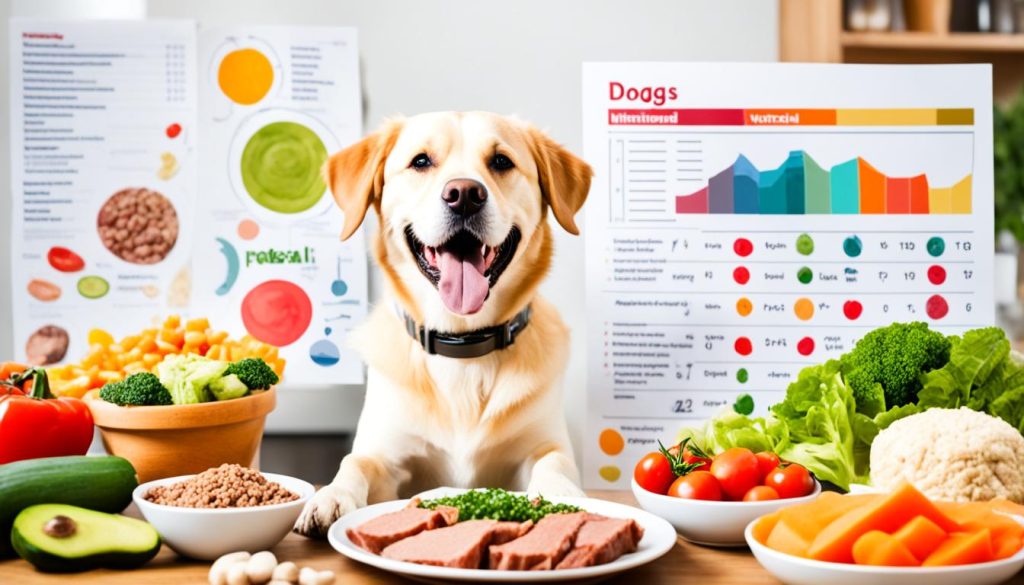
Veterinarians often say the diet should match a dog’s activity and breed. Watching your dog’s health and behavior helps pick the right food. A working dog might do well on a high-protein diet. But companion breeds might prefer a diet that’s moderate in calories.
A study found that different dog breeds have various metabolic rates. Knowing your dog’s breed-specific needs helps you choose the best food. This way, you provide the right amount of food for your dog to stay healthy.
Choosing the Right Dog Food for Training
Getting the best dog food for training means knowing what’s in it. First, check the food labels. You should see good proteins like chicken, beef, or fish. Avoid foods with “meat meals” or “by-products.” These often don’t have what your dog needs.
Quality protein is important for fixing and building muscles. Your dog also needs fats and carbs for energy. For active dogs, look for foods with healthy fats. Fats like omega-3 and omega-6 help a lot.
When reading labels, watch out for fillers and additives. They don’t add much nutrition. Instead, pick foods with whole grains, veggies, and fruits. These not only taste better but also have important vitamins and minerals.
The Pet Food Institute says to focus on ingredient quality. They advise against artificial preservatives or dyes. Pet nutrition experts agree. They also suggest energy-rich foods for active dogs. This helps them stay strong during training.
Look at reviews from trusted pet food rating groups. They highlight foods with good protein, balanced energy, and no extra fillers. Picking the right food means your dog will be well-fed. This leads to better performance and health.
Training Treats: What You Need to Know
Using treats can make your dog more driven during training. It’s important to pick the right type and time for giving them. You should also make sure the treats are good for your dog’s health.
It’s crucial to pick healthy treats. This helps your dog not gain too much weight or miss out on nutrients. A vet suggests choosing treats made with natural ingredients and few additives. This keeps your dog healthy.

Treats should only be a small part of your dog’s food. They shouldn’t be more than 10% of what your dog eats in a day. This stops them from getting too many calories. It also helps your dog not become overweight. By doing this, your dog can still have a balanced diet.
Experts say using treats the right way gets good results. Match your training words with giving treats at the correct time and amount. This can help improve your dog’s behavior. Plus, it keeps their diet healthy.
Quick Recommendation: Training your dog is just the beginning. Keep them safe an healthy with Pin Paws Pet Care. Our blog provides the training advice, and Pin Paws offers the protection your pet deserves.
Dog Diet: Maintaining a Balance
It is crucial to make sure your dog’s meals are complete and balanced. The World Small Animal Veterinary Association states that the right diet helps with many things. This includes making muscles strong and keeping their immune system in good shape. A mix of proteins, fats, and carbs is key for your pet’s health.
Varying what your dog eats gives them all the nutrients they need. This keeps their meals interesting while staying healthy. Meats help build strong muscles. Fruits and veggies give them vitamins and minerals for a strong immune system. Adjust the portions based on what your dog requires for a personalized diet.
Studies show omega-3s and antioxidants are vital for muscle health and immunity. Pick foods high in these nutrients for a beneficial diet. Your vet can help you pick the right foods for your pet. They can tailor a diet plan that’s just right for them.
Pre-Training Meals: Timing and Composition
Planning your dog’s pre-training meals wisely is key. Knowing when to feed them and what nutrients to include matters a lot. The Journal of Veterinary Science says dogs do best with meals carefully timed for energy and easy digestion.
Experts recommend feeding your dog about four hours before training. This gives enough time to digest, avoiding tummy problems. For fast-paced actions like in agility, a snack packed with nutrients one to two hours before can be good. This snack should not upset your dog’s stomach.
Specialists in canine sports highlight balanced nutrients as vital for pre-training. A mix of proteins, fats, and carbs keeps your dog going steadily. Choosing proteins that are easy to digest and moderate fats is great. It supports their stamina without making digestion hard.
So, focusing on the right meal timing and mix can take your dog’s training up a notch. It makes the whole experience better, for both you and your furry friend.
Quick Recommendation: Our blog is filled with tips and tricks for training your puppy or dog. If you are seeking a comprehensive training program, we recommend K9 Training Institute.
Hydration: The Overlooked Factor
Ensuring your dog drinks enough water is vital for training success. Water keeps their energy up and their health in check, especially while training hard. It’s important to know how much water your dog needs around exercise times to prevent dehydration.
Before starting any physical activity, encourage your dog to drink some water. A guideline is to give them water roughly 30 minutes beforehand. During activity, make sure to pause for water breaks, especially when it’s hot or the exercise is tough.
Hydrating after training is also crucial. After exercise, let your dog drink to rehydrate. Watch for signs of dehydration such as heavy panting or dry gums. If you see any signs, act fast to keep your dog healthy.
Getting your dog to drink enough water can be tough. Some dogs aren’t eager to drink. In these cases, try using products like portable water bottles or sticks that help them drink more. These products, recommended by dog sports enthusiasts, can keep your dog well-hydrated. This will help them perform better and be healthier every day.
Supplements: Do They Help?
Many dog owners ask if supplements can improve their pets’ health. They often look at joint supplements like glucosamine and chondroitin. Research shows active dogs’ joint health might benefit from these supplements. This insight comes from the Journal of the American Veterinary Medical Association.
Omega-3 fatty acids are also well-known for their perks. They can make a dog’s coat better and cut down on inflammation. Experts say these fats are very good in a dog’s diet, especially for those training hard.
Yet, picking the right supplements is key. A trusted pet health group checked many products and found not all of them work as they say. So, before you give your dog any supplement, make sure to do your homework. Talk to your veterinarian as well to make sure what you choose is the best for your dog.
Foods to Avoid in Dog Training
Knowing which foods to keep away from your dog is key for their health and good training. Some human foods are bad for dogs. They can cause health issues or make training harder. Let’s look at what not to feed your dog.
First, chocolate and caffeine are harmful because they have stimulants. Grapes and raisins can hurt a dog’s kidneys. Onions and garlic can harm a dog’s red blood cells, which leads to anemia.
Don’t give your dog avocados because they contain persin, which is toxic. Macadamia nuts can make a dog vomit or have muscle tremors. Xylitol, found in sugar-free gum, causes fast insulin release, leading to low blood sugar.
The ASPCA has a list of many toxic foods for dogs. And a vet toxicologist says we must be careful with human food around dogs to avoid poisoning.
Research and a study in the International Journal of Applied Research in Veterinary Medicine show that dogs remember foods that are harmful. They avoid learning new commands when they’ve had bad food experiences.
For a safe choice, use dog treats made commercially or approved by a vet. This helps avoid bad foods and keeps your dog’s diet healthy for training.
Common Dietary Problems and Solutions
Training your dog requires a healthy diet. However, issues like digestive problems, allergies, or managing weight can be a hurdle. Solving these problems will boost your dog’s health and performance.
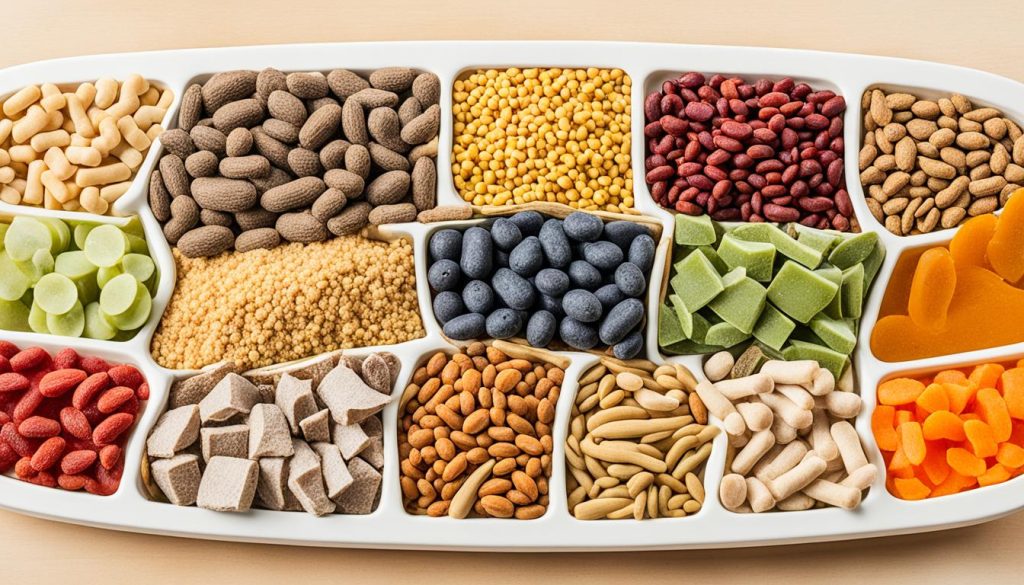
Sudden diet changes, eating non-food items, or food intolerances can lead to digestive troubles. Warning signs include vomiting, diarrhea, and less interest in food. Your vet can pinpoint the problem foods and improve your dog’s digestive system.
Another issue is food allergies. Grains, dairy, and certain proteins might be the cause. Signs to watch for are itching, hives, and ear issues. An elimination diet, supervised by a vet, can clear the problem from your dog’s diet. This approach can make your dog more attentive during training, free from allergic discomfort.
Managing your dog’s weight is key for top training shape. Avoid overfeeding, little exercise, and unhealthy snacks to prevent weight issues. Choose low-calorie treats and monitor how much your dog eats. Consultations with a nutritionist allow for a custom weight management plan.
Identifying and solving dietary problems is vital for your dog’s training success. Tackling digestion, allergies, and weight issues sets your dog on the path to a better life. A happier, healthier dog is more ready for training.
Dog Nutrition: Best Practices for Optimal Results
Finding the right food for your dog is just the first step. You must also learn about lifelong nutrition to keep your pet healthy. By understanding and applying these principles, you can see big improvements in your dog’s health and energy.
Tips on dog nutrition come from pet diet experts. They stress that a dog’s diet should change as it grows. This includes watching their weight, changing how much they eat, and adding healthy foods.
The diet should also match how active your dog is. Sports vets suggest feeding them more protein and fats if they’re very active. For less energetic dogs, giving them fewer calories is key to keeping them at a healthy weight.
As your dog gets older, their diet needs can change. Research shows that older dogs may need food with less calories but more support for their joints. Puppies, on the other hand, need food that helps them grow strong.
To keep your dog in top shape, it’s essential to combine the right food with enough exercise. This lifelong approach to nutrition and fitness can make a huge difference. It ensures your dog stays happy and active for many years.
Conclusion
Now, it’s time to close our dive into dog nutrition and training. It’s key to commit to a solid action plan. This commitment will boost both your dog’s training and health outcomes. Reflect on these main points to ensure you’re on the right track for your furry friend’s nutrition.
Let’s remember some great tips from top dog trainers. For effective training, it’s vital to know what your dog should eat and when. This includes picking the right food and treats. Don’t forget, timing your dog’s meals, especially before training, can improve how they perform. Keeping your dog hydrated is also essential for their overall health.
Follow the ASPCA’s checklist to keep your dog at their best. This list includes the right training treats, a balanced diet, and avoiding common nutrition mistakes. It will help ensure your dog stays healthy and performs well.
The recent dog health symposium shared crucial insights from experts. They emphasized that a balanced diet, enough water, and smart use of supplements are key. These aspects can greatly boost your dog’s training journey. Stick to the plan we discussed, and you’ll see your pup’s potential and health truly shine in training.
Quick Recommendation: Our blog is filled with tips and tricks for training your puppy or dog. If you are seeking a comprehensive training program, we recommend K9 Training Institute.
BTW: If you are interested in everything from nutritional advice and natural health solutions to stress-relief techniques and overall wellness tips, check out our friends at PawfectlyHealthyPets.com.