

Is your backyard looking like the moon? Digging is a common problem for many dog owners. It’s important to understand and redirect your dog’s digging to keep your yard looking great and your pet happy. We’ll look into why dogs dig and how to manage it, so your lawn stays perfect.
Knowing what makes your dog dig and how to stop it is key to your pet’s happiness. By the end of this guide, you’ll know how to keep your dog from digging up your yard.
Quick Recommendation: Our blog is filled with tips and tricks for training your puppy or dog. If you are seeking a comprehensive training program, we recommend K9 Training Institute.
What Triggers Digging Behavior in Dogs?
Knowing what makes your dog dig can help you change their behavior. Many dogs dig because it’s in their nature. This is true for breeds like Terriers or Dachshunds, who were bred to dig for prey.
Boredom also makes dogs dig. If they don’t get enough fun or exercise, they might dig for fun. They might also dig to cool off or find a comfy spot, especially when it’s hot.
Some dogs dig to hide their toys or food. They do this to keep them safe from other animals. This is a key reason why some dogs dig. Others dig to get out and explore, or if they feel trapped.
To stop your dog from digging, you need to understand why they do it. By addressing these reasons, you can help your dog stop digging. Knowing what drives your dog to dig will guide you to the best solutions.
Understanding Your Dog’s Digging Habits
Watching how your dog digs can help you understand what they need and why they do it. By knowing how dogs behave, you can figure out why they might dig. This can help you meet their needs better.
Dogs dig for many reasons, like looking for comfort or to fight boredom. Watch when and where your dog digs. This tells you a lot about how they feel inside and out. For example, digging when left alone might mean they’re anxious to be with you. Digging in cool spots could be how they keep cool.
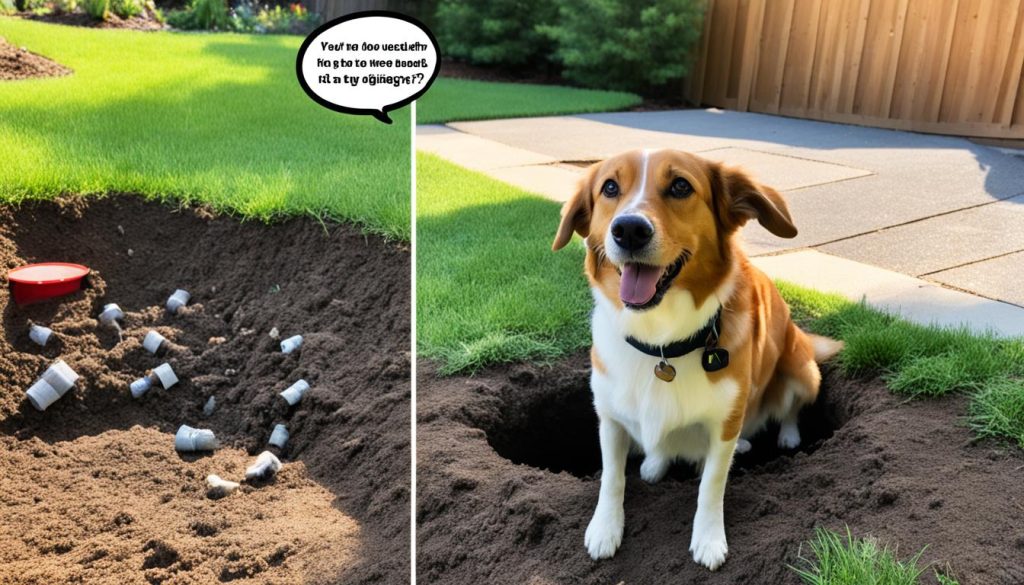
Use training tips to help with these behaviors. A regular routine and positive rewards can really help. Knowing what your dog does can tell you if they’re stressed or not. This lets you take steps to keep them happy and healthy.
Immediate Solutions to Stop Dog Digging
Ever seen your yard filled with holes from your dog’s digging? It can be frustrating, but there are quick fixes. These solutions aim to stop the digging and keep your yard safe.
Start by making sure your dog gets enough exercise. Digging can be a way for them to release energy. Try taking them on long walks, playing in the park, or even a game of fetch. This can help reduce the urge to dig.
Watching your dog while they are outside is also important. Being there stops them from digging and lets you correct the behavior right away. You can also use chicken wire or garden fencing to protect certain areas of your yard.
Using deterrents can be very effective. Citrus peels, vinegar, and commercial sprays can keep your dog away from digging in certain spots. Putting these around where your dog digs can make it less appealing for them. These methods help change your dog’s behavior for the better.
Don’t forget to give your dog other things to do. Designate areas for digging or provide puzzles to keep their mind busy. Redirecting their behavior to positive activities stops the unwanted digging and makes them happier.
Training Techniques to Redirect Digging Behavior
Positive reinforcement is a great way to change your dog’s digging habit. Give treats and praise when your dog plays with toys or relaxes in a special spot. Always reward the good behavior you want to see more of.
Structured training is also important. Have daily training sessions using commands like “leave it” or “stop.” This helps your dog learn what to do instead of digging.
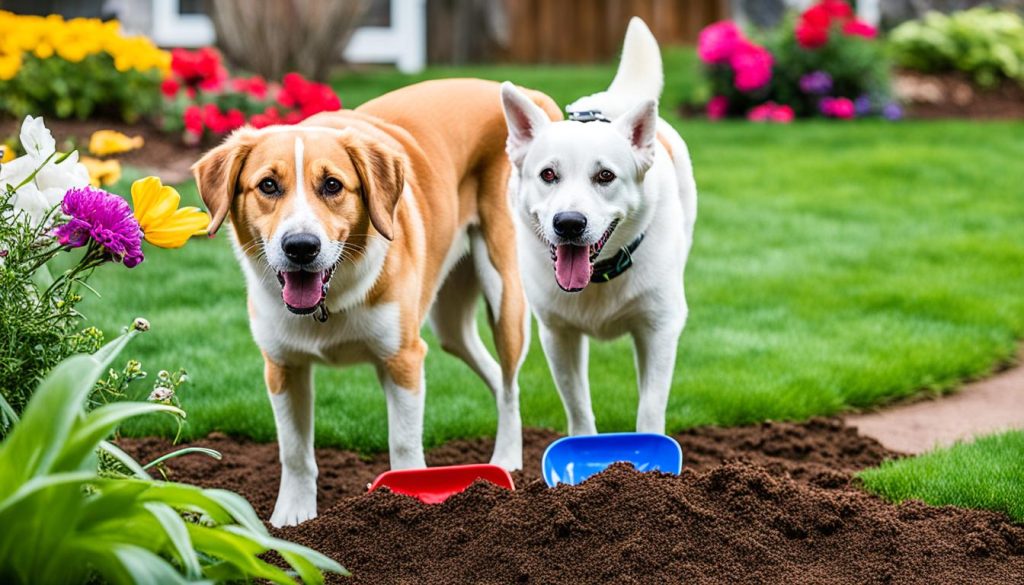
Being patient is key in dog training. Your dog might not understand right away, so stay calm and keep training the same way. Watch and change your training as your dog learns.
These methods will help stop your dog from digging and make your home happier for your pet. If problems don’t go away, talk to a professional dog trainer for more advice.
Quick Recommendation: Our blog is filled with tips and tricks for training your puppy or dog. If you are seeking a comprehensive training program, we recommend K9 Training Institute.
Creating a Digging Zone for Your Dog
Understanding dog behavior is key to managing their digging habits. Creating a special digging zone can help. It lets them dig naturally while saving your yard.
First, pick a spot in your yard for your dog’s digging area. It should be easy for you to watch and keep clean. Use soft soil or sand, which dogs find appealing and easy to dig.
Then, make the area more interesting by burying toys, treats, or bones in the soil. This keeps them busy and stimulated. Always praise and reward your dog when they dig in this area. They’ll learn it’s their spot, and they’ll stop digging elsewhere in your yard.
Creating a digging zone is a smart way to manage your dog’s digging. With time and consistency, you can teach your dog to dig in one spot. This approach benefits both you and your dog, keeping everyone happy and healthy.
Effective Tools and Products to Manage Digging
Looking into dog digging solutions, you’ll find many products to stop your pet from digging too much. Using the right tools can really help keep your yard safe and your peace of mind.

Deterrent sprays are a good choice. They make digging in certain spots unpleasant for dogs. By spraying these in areas your dog digs often, they’ll learn to avoid them.
Another great option is digging mats. These mats let your dog scratch and dig safely, without harming your garden. They’re a good way to let your dog dig without damage.
Interactive toys can also help. Toys like puzzle toys and Kongs keep your dog busy and distracted from digging. They’re a fun way to keep your dog’s mind and body active.
Products like pheromone diffusers and calming collars can calm your pet. This makes them less likely to dig or cause trouble.
Using these tools together can make living with your dog easier. The right mix of sprays, mats, and toys can change your yard and your dog’s habits for the better.
How a Veterinarian or Behaviorist Can Help
Dealing with your dog’s digging issues can be tough. Getting help from a vet or a behaviorist can really change things. They offer deep insights into your dog’s behavior and help create a plan just for them.
A vet will check for health problems like anxiety, nutritional issues, or parasites that might cause digging. If there’s no health issue, they might suggest seeing a behaviorist. A behaviorist has special training to understand your dog’s behavior better.
When you meet with a professional, they’ll look at your dog’s living space, daily life, and digging habits. They’ll suggest ways to change your dog’s behavior. This could be through changes in the environment or training to stop the digging.
Working with a vet or behaviorist means getting a full plan to stop your dog from digging. This leads to a happier, healthier pet. Understanding your dog’s behavior is crucial for changing it and making a good home for them.
Long-Term Strategies for Digging Prevention
Using long-term strategies can change your pet’s digging habits for the better. A key method is to create a consistent routine. Dogs like knowing what to expect, which helps them dig less from boredom or stress. Make sure to spend quality time with your pet, keeping them busy.
Adding variety to your pet’s environment is crucial. Give them different toys and games that keep their mind and body active. Puzzle toys and fetch are great ways to redirect their digging urge into positive activities.
Adding digging prevention to your daily life can be simple. Designate a spot for your dog to dig. This way, they can dig without harming your yard. It’s a balance of letting them dig and keeping control.
Finally, always watch your dog and praise them for good behavior. Rewarding them for positive actions helps them learn what’s right. With time and effort, these strategies can lead to better behavior and a happier home.
Addressing Digging Behavior in Multiple-Dog Households
Dealing with digging in homes with many dogs can be tough, but it’s doable. It’s important to know how your dogs interact with each other. Dogs often dig because they follow each other, so looking at both their individual and group behavior is key.
Start by looking at each dog’s actions alone. It might be hard to figure out who digs the most, but watch them closely to see what makes them dig. Once you know, you can train them both as a group and as individuals. Being consistent is very important.
Then, use positive ways to encourage good behavior and stop digging. Give your dogs treats or praise when they don’t dig or stick to certain spots for digging. Doing this regularly will help you manage their digging. Also, give them fun activities to keep their minds and bodies busy, so they don’t dig out of boredom or too much energy.
Last, make sure all your dogs get their fair share of toys, treats, and attention. This prevents jealousy and competition, which can lead to digging. In homes with many dogs, knowing how they interact and rewarding good actions are key to stopping too much digging.
Understanding and Redirecting Digging Behavior in Different Environments
Dogs dig for different reasons in various places. Whether you’re in a city or the countryside, or if you’re inside or outside, knowing how to stop your dog from digging is key.
In cities, dogs might dig indoors because they’re bored or frustrated with little space. Giving them toys and games can help change their behavior for the better.
In rural areas, dogs might dig to chase small animals or just because they love the wide open spaces. Setting aside a special area for them to dig can help control this urge and protect your garden.
For indoor dogs, keeping them busy with toys that make them work for treats is important. This can stop them from digging. Outside, you might need to use training and special tools to stop them from digging.
Knowing what makes your dog dig in different places is crucial. This knowledge helps you manage and change their digging habits effectively.
Important Tip: Training your dog is just the beginning. Keep them safe an healthy with Pin Paws Pet Care. Our blog provides the training advice, and Pin Paws offers the protection your pet deserves.
Success Stories: Redirecting Digging Behavior
Discovering effective dog behavior modification techniques can change your life and your dog’s life for the better. Sarah in Denver found this out with her lively terrier, Max. Max was digging up the backyard nonstop. Sarah used patience and consistency with positive reinforcement training. She also set up a special digging zone with sand and toys.
Over time, Max learned to dig in this area instead. Now, Max has his own sandbox, and Sarah’s garden is safe.
In Austin, Texas, the Davis family had a similar issue with their Labrador, Duke. Duke loved digging up the lawn, which was a big problem. They worked with a professional dog behaviorist to figure out why Duke was digging.
They changed Duke’s exercise routine and gave him interactive puzzle toys. This helped reduce his digging a lot. Their story shows how important it is to understand why your dog behaves a certain way.
Cathy from another story also found success with her beagle, Bella. She tried many things before adding agility training to Bella’s routine. This gave Bella both physical and mental stimulation and stopped her from digging.
Today, Cathy shares her story with other dog owners who are facing similar issues. These stories show that changing your dog’s behavior takes understanding their needs and consistent training. Whether it’s a special digging zone or getting professional help, you can succeed. Let these stories motivate you to live better with your dog.
Conclusion
Dogs naturally dig, but you can manage this behavior with the right techniques. By knowing what makes your dog dig, you can use training and special spots for digging. This way, you meet their needs while keeping your yard tidy.
Using the right tools and getting advice from vets or behaviorists is important. They can help prevent digging problems from getting worse. With the right approach, you can solve digging issues in any home, even if you have more than one dog.
Being patient and consistent is crucial. By using these strategies, you’ll stop your dog from digging and strengthen your bond. Adopting these methods can make your home happier and more peaceful for you and your dog.
Quick Recommendation: Our blog is filled with tips and tricks for training your puppy or dog. If you are seeking a comprehensive training program, we recommend K9 Training Institute.
BTW: If you are interested in everything from nutritional advice and natural health solutions to stress-relief techniques and overall wellness tips, check out our friends at PawfectlyHealthyPets.com.