
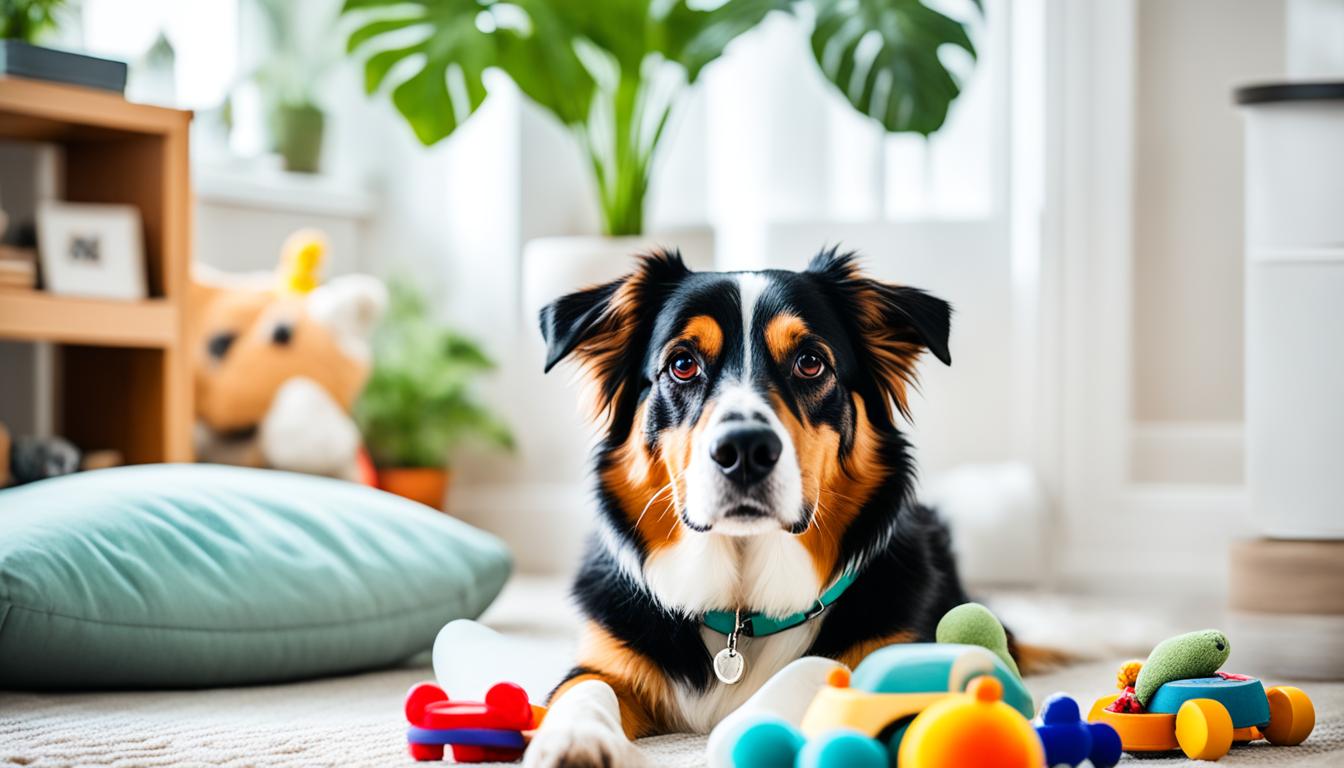
Separation anxiety in dogs can be tough for both you and your pet. Dogs may bark nonstop or chew things they shouldn’t. But, there’s hope. Learning the signs and getting the right support can really help.
The American Veterinary Medical Association says behaviors like whining and chewing furniture are signs of anxiety in pets. With advice from groups like The Humane Society, you can make your dog feel safer. This can be the first step in easing their separation anxiety.
Quick Recommendation: Our blog is filled with tips and tricks for training your puppy or dog. If you are seeking a comprehensive training program, we recommend K9 Training Institute.
Understanding Separation Anxiety in Dogs
Dogs can feel anxious just like humans do, especially when they’re away from their owners. This feeling is called separation anxiety. It comes from a strong bond between the dog and its owner, as PetMD explains.
Dogs with separation anxiety show clear signs that can be worrying. They may drool a lot, pace back and forth, or try to get out. These signs are more than just normal dog behavior. Spotting them early can help ease your dog’s anxiety.
It’s important to know the difference between normal dog behavior and true anxiety. If your dog often chews on furniture, it might just be bored. But if it does it right after you leave, it could be separation anxiety. Vets say that trying to escape, like digging or chewing doors, shows real distress.
Knowing the signs of separation anxiety in dogs helps you help your pet. By telling apart normal misbehavior from true anxiety, you can tackle the real issue. This way, you can make your dog feel better.
Why Your Dog Develops Separation Anxiety
It’s important to understand why your dog might feel anxious when left alone. Many things can cause this, from their environment to their biology. For example, changes in your routine or family can make dogs anxious, says the ASPCA. Things like a new job, moving, or a new baby can upset your dog.
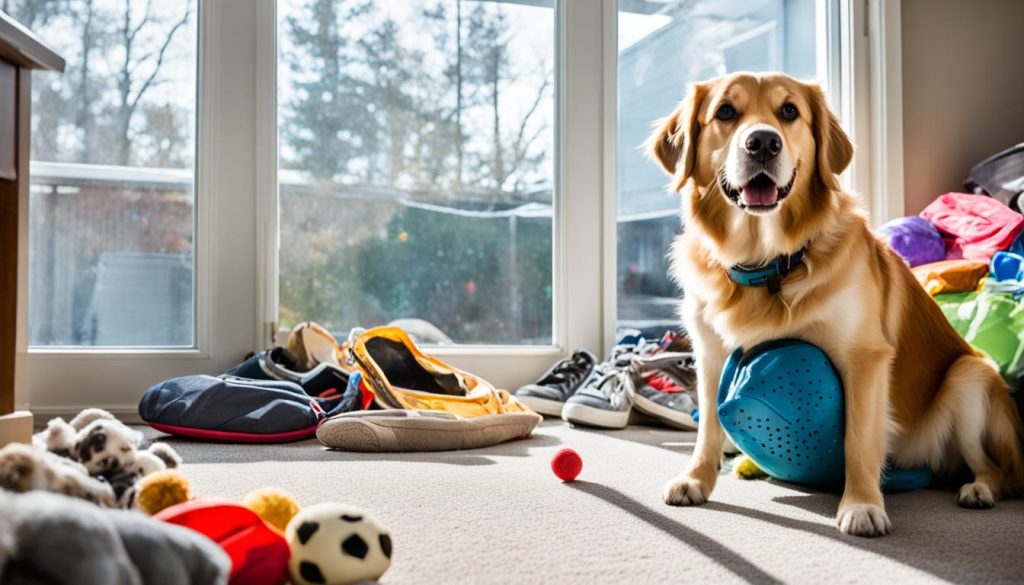
On the other hand, your dog’s past and genes can also affect their anxiety. Studies show that some breeds are more prone to anxiety. This can be due to not being socialized enough as a puppy or having bad experiences, like being moved around a lot. Some dogs are just naturally more anxious because of their genes.
The place your dog lives in also matters a lot. Dogs like a steady routine. When things change, they can get stressed and anxious. Knowing what causes your dog’s separation anxiety can help you make things better for them. This way, your dog will feel safer and less anxious when you’re not there.
How to Help Dog Separation Anxiety: Initial Steps
Helping your dog with separation anxiety starts with mindfulness and patience. Begin by creating routines that help your dog get used to being alone. Experts say slowly getting your dog used to being alone can really help reduce their anxiety.
Start with short times apart and then increase it little by little. This helps your dog get used to being alone without feeling anxious.
Creating a calm goodbye routine is also key. Pet trainers suggest leaving quietly to avoid making your dog feel anxious. A calm goodbye, like giving a treat-filled toy, can make your dog feel good when you leave.
This helps your dog see your leaving as a positive thing. It makes your home a calm place for your dog when you’re away.
Make sure your home is a calm place for your dog. Give your dog a cozy, safe spot to relax in when you’re not there. Using items with your scent, like an old t-shirt, can make your dog feel close to you even when you’re not there.
Effective Ways to Alleviate Dog Separation Anxiety
Helping your dog with separation anxiety can take time, but there are steps you can take. One good idea is to make sure your dog gets enough exercise and mental stimulation every day. This can help them relax more when you leave them alone.
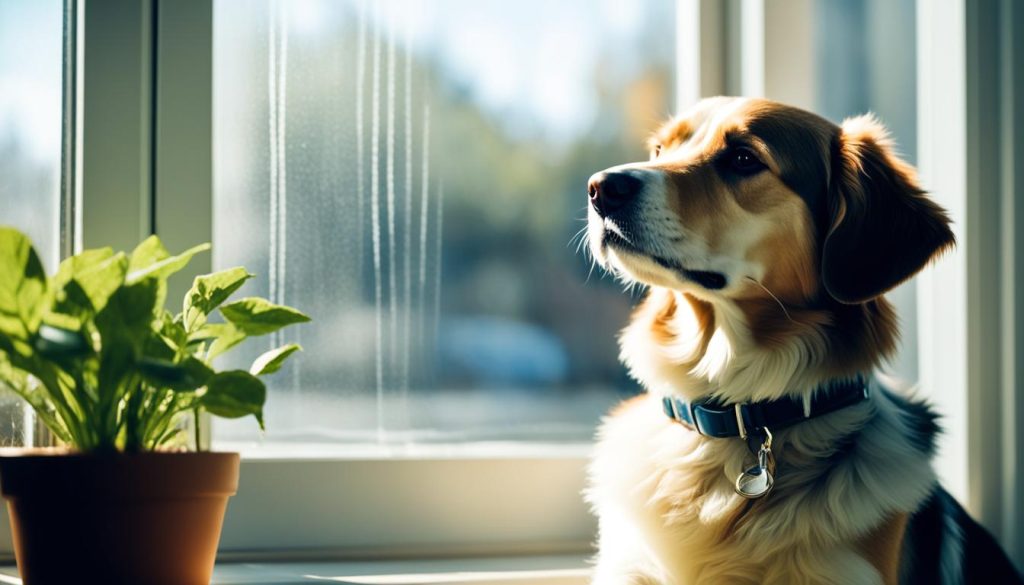
Experts in animal psychology recommend using calming products like pheromone diffusers and anxiety wraps. These items can make your dog’s space feel calm and reduce their stress. Anxiety wraps apply gentle pressure that can soothe a worried dog.
Music therapy is another way to help your dog feel calm. Some music can lessen a dog’s anxiety, creating a peaceful atmosphere. Also, giving your dog a safe spot, like a cozy crate or special area, can make them feel secure when you’re away.
Behavioral Training for Reducing Separation Anxiety
Behavioral training is key to reducing dog separation anxiety through training. The Association of Professional Dog Trainers suggests behavioral conditioning. This method helps your dog see being alone as not scary and even positive.
Certified dog behavior consultants offer specialized training too. They teach your dog to be independent, which helps reduce anxiety. They use techniques that fit your dog’s specific needs.
Crate training is a common method in behavioral therapy for dogs. Start by making the crate a comfy spot with toys and treats. This way, your dog will see the crate as a safe place, not just a box.
Setting boundaries in your home also helps with reducing dog separation anxiety through training. Pick certain areas where your dog can go and slowly increase time apart. Start with short periods in another room and make it longer over time.
Quick Recommendation: Our blog is filled with tips and tricks for training your puppy or dog. If you are seeking a comprehensive training program, we recommend K9 Training Institute.
Canine Separation Anxiety Solutions: Professional Help
Many dog owners find professional help crucial for their pets’ anxiety. The American College of Veterinary Behaviorists says seeing a veterinary behaviorist is key. These experts are trained to help with issues like separation anxiety in dogs. They offer custom solutions for your dog’s needs.
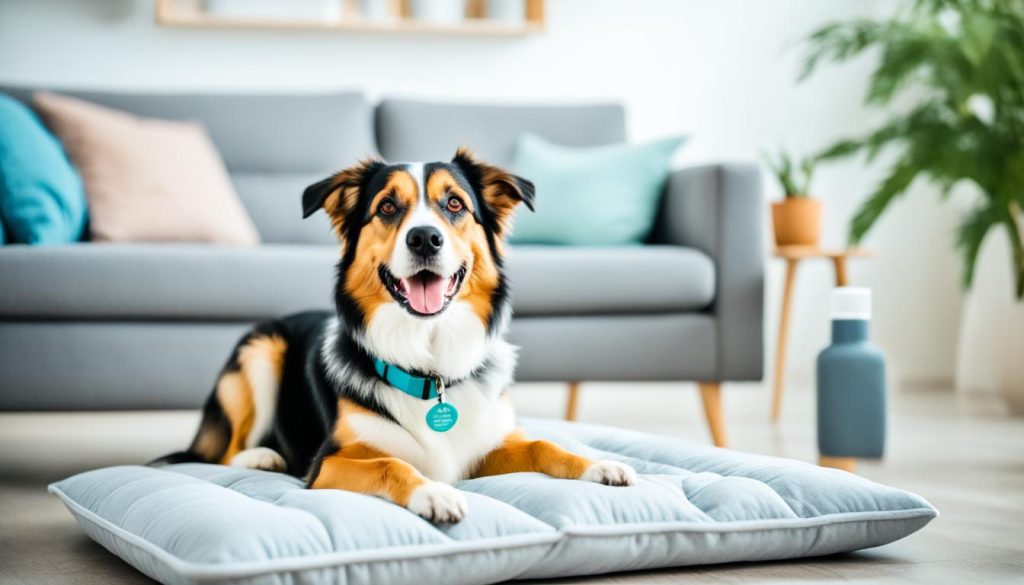
Real stories show how big an impact professional help can be. Many dogs have gotten better with the help of animal behavior experts. Things like behavior changes or special training can make a big difference, making pets happier and more balanced.
In serious cases, medication might be an option. Veterinary behaviorists can suggest the right medicines to lessen anxiety. These medicines work best with other therapies, making sure your dog’s life gets better overall.
Alone But Not Lonely: Easing Your Dog’s Separation Anxiety
When you’re trying to help your dog with separation anxiety, they don’t have to feel alone. There are many ways to keep them engaged and secure when you’re away. Giving them interactive toys is a great way to keep their mind busy and stop boredom.
Using clever devices like treat-dispensing cameras also helps. These let you check in and reward your pet during the day. This makes them feel less alone. Training your dog to stay calm when you’re not there is also important. Start with short practice sessions to help them get used to being alone.
Adding background noise, like a radio or TV, can make them feel like they’re not alone. Remember, being consistent with these methods is key for long-term success.
Adding these steps to your daily routine can make your home less stressful for your pup. It shows that your dog can be alone but not lonely. It’s also a good idea to talk to your vet or a professional trainer for more advice on helping your dog.
With the right help, both you and your dog can have a more peaceful life without anxiety.
Coping with Dog Separation Anxiety: Your Own Mental Health
Dealing with your dog’s separation anxiety can be tough and stressful. The American Psychological Association points out how pet anxiety affects owners deeply. It’s key to look after your mental health while helping your dog.
It’s hard to ease your dog’s anxiety, but don’t forget about your own well-being. Experts recommend mindfulness and regular exercise to reduce stress. These methods help you deal with your dog’s separation anxiety better.
Remember, you and your pet are connected. A balanced approach helps you both live happier and healthier lives. By focusing on your mental health and your dog’s needs, you’ll find a way that works for everyone.
Important Tip: Training your dog is just the beginning. Keep them safe an healthy with Pin Paws Pet Care. Our blog provides the training advice, and Pin Paws offers the protection your pet deserves.
Tips for Managing Dog Separation Anxiety During Vacations
Traveling with a dog can be tough, but you can make it easier. Start by taking short trips to places close by and slowly increase the time. Bring your dog’s favorite toys and bedding to make them feel at home.
Keep your dog’s daily routine the same as much as you can. Stick to the same feeding, walking, and play times. This helps reduce their anxiety. Using calming aids like anxiety wraps or pheromone sprays can also help.
Think about using dog-sitting services from sites like Rover.com. A trusted sitter can give your pet the care they need while you’re away. This can lower stress for both you and your dog. Talking to your pet in a calm voice can also make them feel better.
By following these tips, you can make your trips less stressful for your dog. Keeping things consistent, using familiar items, and getting professional help are important. These steps can help your dog feel more secure while traveling.
Conclusion
We’ve looked into how to help your dog with separation anxiety. We covered the causes and signs of this issue. We also talked about steps to help your dog feel better.
Methods like creating a safe space and using positive reinforcement work well. Many dog owners have seen great results by trying these methods. They show that with effort and patience, dogs can get better.
It’s important to get professional help if needed for tailored advice. Taking care of your mental health is also key when dealing with your dog’s anxiety. By doing these things, you can help your dog feel less anxious and improve your bond with them.
Quick Recommendation: Our blog is filled with tips and tricks for training your puppy or dog. If you are seeking a comprehensive training program, we recommend K9 Training Institute.
BTW: If you are interested in everything from nutritional advice and natural health solutions to stress-relief techniques and overall wellness tips, check out our friends at PawfectlyHealthyPets.com.