

Have you noticed your happy dog acting anxious for no clear reason? Dog anxiety can really affect how our pets live and feel, causing them to act out or hide. The key is to notice the signs early. Then, we can start to help our dogs feel better.
It’s important to get what dog anxiety is all about to help. This article will help you understand what dog stress is. You’ll find out how to tell if your dog is anxious. Plus, learn what causes it and how to make your home a calm place for your dog.
Quick Recommendation: Our blog is filled with tips and tricks for training your puppy or dog. If you are seeking a comprehensive training program, we recommend K9 Training Institute.
Recognizing the Signs of Dog Anxiety
Understanding pet anxiety begins with spotting the signs. Dogs show stress through different behaviors. They might pant a lot, tremble, or not sit still.
Severe anxiety signs in dogs can be seen through aggression or making messes inside. They might also chew things a lot. But, it’s important to look for the less direct signs too, like lots of barking, pacing, or excessive licking. If your dog acts strangely all the time or does things over and over, it might be anxious.
Dogs might also act like they want to be alone or try to hide. You might notice they make a lot of noise, jump a lot, or shake. Watching for these behaviors is key. Noting any behavior change early can help you help your dog better.
It’s important to know about dog anxiety and its signs. This way, you can help your dog feel better and lower its anxiety.
Common Triggers for Anxiety in Dogs
Anxiety in dogs comes from various triggers like loud noises and social settings. Many dogs fear thunderstorms, fireworks, and sudden sounds at home. Hearing these sounds can make them scared, showing it by trembling or barking a lot.
Some dogs worry when they are alone, especially if they were rescued from shelters. They might scratch doors, wreck furniture, or howl when left by themselves. The recent changes caused by the pandemic made these problems worse since the dogs got used to having people around all the time.
Canine anxiety doesn’t just come from being alone or hearing loud noises. If dogs are not used to being around other people or pets, they can act out. This might look like aggressive behavior, especially if they are in places they are not familiar with, like dog parks. They might lunge, bark, or even bite others.
Changing routines, moving to a new place, or being sick can also stress pets out. Older dogs can get anxious because of health issues like arthritis or memory loss. These problems can make them more scared, so it’s important for pet owners to notice and help.
Sometimes, dogs get anxious because they are sick. They might not want to be touched, or they could be mean to their families. Talking to a vet online can be helpful since it’s easy and cheaper. This way, owners can get advice on how to help their anxious pets.
Learning what makes your dog anxious can really help to make their life better. Understanding what stresses them out and helping them to deal with it is very important for their happiness. By doing this, you can create a more peaceful and happy space for your pet.
Creating a Calming Environment for Your Dog
Make sure your furry friend has a peaceful place of their own. This can really help reduce their anxiety. According to the Journal of Veterinary Behavior, playing classical music can calm your dog. Soft rock and reggae have also been shown to lower stress.
To make your home more dog-friendly, add items that make them feel safe. Like soft dog beds, cozy areas for them to hide, and secure crates. Adding the scent of lavender can also help. But, always check with your vet first. Some natural herbs like Catnip and Valerian Root can reduce anxiety too.
Mental activities are also important. Playing games with your dog can calm them down. It also strengthens the bond between you and your pet. Confidence-building programs like the AKC GoodDog! Helpline can help your dog deal with stress better.
The colors in a room can affect your dog’s mood. Choose soft, calming colors for your dog’s space. Use soft materials like blankets and pillows to make the area feel safe for them.
Using pheromone diffusers can make your home feel relaxing for your dog. These products come in different forms and help mimic a stress-free environment. A quiet, safe space can help your pet feel more relaxed during stressful times.
Your touch is important too. Massages can relax your pet and relieve tension. Regular exercise is key for their mental and physical well-being. It releases endorphins which make your pet feel happier.
Creating a peaceful spot for your dog involves sound, smells, touches, and sights. On August 15th, National Relaxation Day, focus on your pet’s health using these tips. With thoughtful care and design, you can greatly improve your dog’s daily life.
Dog Calming Products: An Overview
The market for dog calming products is big. Some products offer relief from anxiety in dogs. However, not many of these products have been tested and truly proven to work. It’s key to talk to a vet before using calming products for your pet.
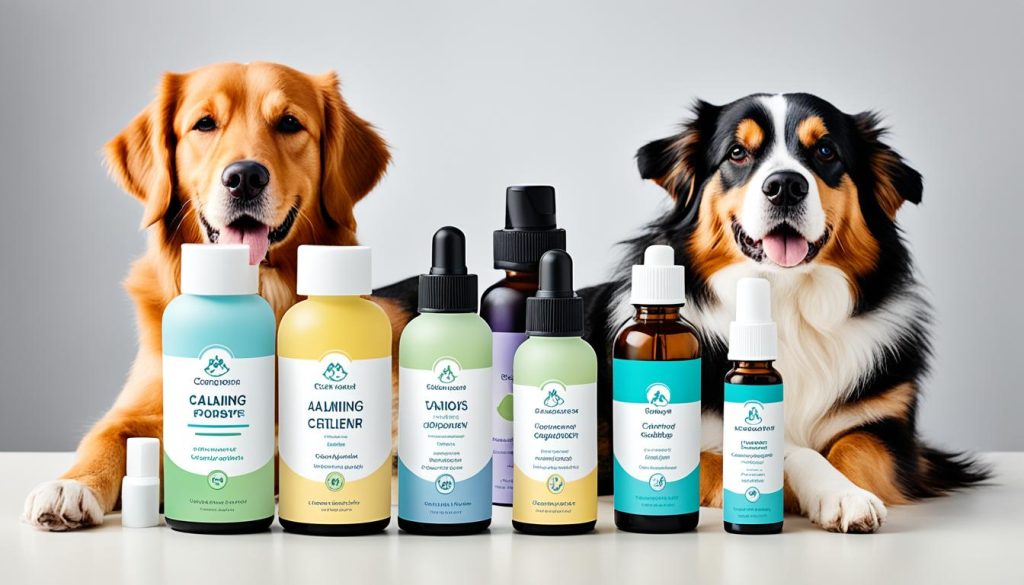
More and more studies are looking into calming products that aren’t medicine. Alpha-Casozepine in Zylkene®, for example, might help your dog feel less anxious. Yet, it’s not clear how well things like L-Theanine work against stress.
There are supplements with valerian, found in Pet Remedy, which seem to work. Even probiotics in Purina Pro Plan Calming Care can help reduce anxiety. But, because these calming products aren’t all checked the same way, their quality can differ.
Products like the Adaptil Calm Home Diffuser and NaturVet Quiet Moments are quite liked by pet owners. DogTV is another neat idea. It’s a streaming service with shows that can entertain your dog, helping with anxiety and boredom.
When choosing calming products, you’ve got many options. You could go for things like Honest Paws CBD treats. Always check with your vet to find what’s safest and most helpful for your dog.
Popular Ingredients in Dog Calming Supplements
When looking at calming supplements for dogs, check their ingredients. The best treats use natural, whole foods without added preservatives, like molasses. These also come with health benefits for your pet.
These supplements often contain melatonin, a natural calming hormone in dogs. It helps them relax during stressful moments or before procedures. L-theanine is another key ingredient. It’s from green tea and lowers stress hormone levels, managing stress well.
Behavioral supplements also include vitamin B1, helping the dog’s nervous system. It lessens anxiety.
Herbal ingredients such as valerian root, chamomile, ginger, and passion flower are safe for dogs. These have calming effects. Valerian root and passion flower help produce GABA. This neurotransmitter induces a calm state.
Melatonin is very important in these supplements. But be careful about the dosage, as it could affect your dog’s sleeping or heart rate. Always check with your vet to ensure the supplement is safe and effective for your pet.
Quick Recommendation: Training your dog is just the beginning. Keep them safe an healthy with Pin Paws Pet Care. Our blog provides the training advice, and Pin Paws offers the protection your pet deserves.
Behavioral Training Techniques to Reduce Anxiety
Managing your dog’s anxiety is tough, but you can make a big difference with the right techniques. Dog training can help your pet face their fears and lower stress.
Some dogs get nervous around strangers, other dogs, or loud sounds like the vacuum. Signs of this anxiety include cowering, shaking, or not being interested in their favorite toys or treats. Dog behavior like yawning, ground sniffing, and lunging can also mean they’re anxious.
Two techniques can help dogs deal with their fears. Desensitization means slowly getting your dog used to what makes them anxious in a safe space. This helps them get more comfortable over time. Counter-conditioning is mixing what makes them anxious with good things, forming a positive link instead.
When dealing with dog anxiety, positive reinforcement plays a major role. By praising your dog for staying calm, you can boost their confidence. This helps them feel better in stressful situations. Different activities like daily routines, basic training, and agility can also build their self-assurance.
Being consistent and patient is very important when changing your dog’s behavior. Every dog is different, so what works varies. Games like hide-and-seek or scent work can keep their minds sharp and reduce anxiety.
Keeping track of your dog’s progress through a training log can offer insights. For instance, both Oliver and Hestia were trained against anxiety starting at 6-7 months. They learned to notice signs like changes in owner hormone levels and respond to training cues.
Using a system of rewards and slow training can make your dog better at handling anxiety. This approach aims to improve your dog’s ability to deal with stress, making them happier overall. With the right training and effort, you’ll have a calm, confident pet.
Quick Recommendation: Our blog is filled with tips and tricks for training your puppy or dog. If you are seeking a comprehensive training program, we recommend K9 Training Institute.
Using Dog Pheromones to Ease Anxiety
Dog appeasing pheromones, or DAP, are great for reducing stress in dogs. They copy the natural calm chemicals that mother dogs produce. This helps calm puppies and also adult dogs that stress about being alone, loud noises, or traveling.
DAP comes in different forms, like Adaptil diffusers, sprays, and collars. The diffusers can work in big areas and need to be changed every month. Collars have a calming smell always near your dog, helping them chill out.
DAP is good for many worries dogs have, like crying at night or moving to a new home. For quick fixes, ThunderEase sprays are easy to use when visiting the vet or during trips. They work best on fabric or in crates, not on your dog directly.
Research shows how DAP can make a big difference in shelters. More than 90% of dogs felt less anxious and acted better with these pheromones. Top items, like Adaptil’s diffuser and ThunderEase’s kit, show that these artificial smells really work.
The best way to use pheromones is along with other ways to soothe your dog. By combining smells with good habits and a nice place to be, dogs feel safer and happier.
Environmental Enrichment to Alleviate Anxiety
Environmental enrichment can make a big difference in managing your dog’s anxiety. Using interactive toys and other activities provide mental stimulation. This keeps their minds busy and away from anxiety.
Studies have shown that dogs in an enriched setting handle stress better. In one study, 20 dogs were involved. Those in the enrichment group needed stress medication later than those in a regular setting. They also needed less pain relief after surgery. This shows how vital mental activities and toys are for their recovery.
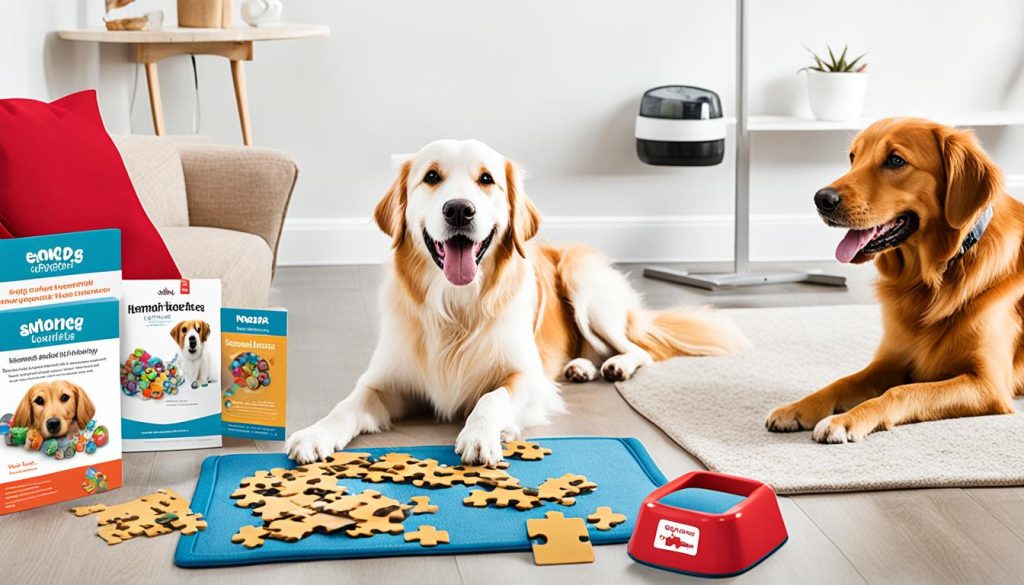
Food-based enrichment, like long-lasting chews, is also crucial. Studies have found that dogs enjoy these chews a lot and stay relaxed. By adding such items to their routine, we can make them feel safer.
These activities help more than just anxiety. They also boost overall animal wellbeing. Giving various choices and enrichments can greatly better your dog’s life. A balanced and engaging environment is crucial for a happy, worry-free pet.
If your dog is showing signs of anxiety, try enrichment activities. It is a simple and effective method to help them stay calm and happy.
Understanding and Managing Separation Anxiety
Separation anxiety in dogs is tough. It shows in various ways like peeing, pooping, barking, and wrecking things when alone. This happens a lot and starts right after the pet’s human leaves. It’s hard on both the dog and the person.
Many things can cause this issue. Such as a change in who takes care of the dog, the daily routine, where you live, or the people at home. It’s important to make sure the problem is not a different health issue or not being fully taught how to act at home.
To help, you can use a mix of things. Like teaching your dog new behaviors, changing their living space to make them feel secure, and using special things or food that help them calm down. Having a regular daily plan will also help your dog know what to expect when you’re gone. For example, give your dog something special every time you go, and keep your hellos and goodbyes quiet.
Some dogs may try to escape when they’re alone. This can hurt them. To stop this, make sure your dog gets a lot of action and activities every day. Toys that make them think, games you play together, and even your clothes that smell like you can help lower stress.
If your dog walks around in a set path or makes a lot of noise when you’re away, they might have separation anxiety. These signs can get better if you get them used to being alone slowly, bit by bit. A vet or someone who knows a lot about dogs can help with more tips or treatments.
Being patient and sticking to a plan is key. With the right steps and a lot of care, you can help your dog feel better and be happier.
Addressing Noise Phobias in Dogs
Many dogs get scared of loud sounds like thunder or fireworks. It’s important to make their environment calm and safe. You can do this with soundproofing to dampen loud noises. This creates a safe area for your dog.
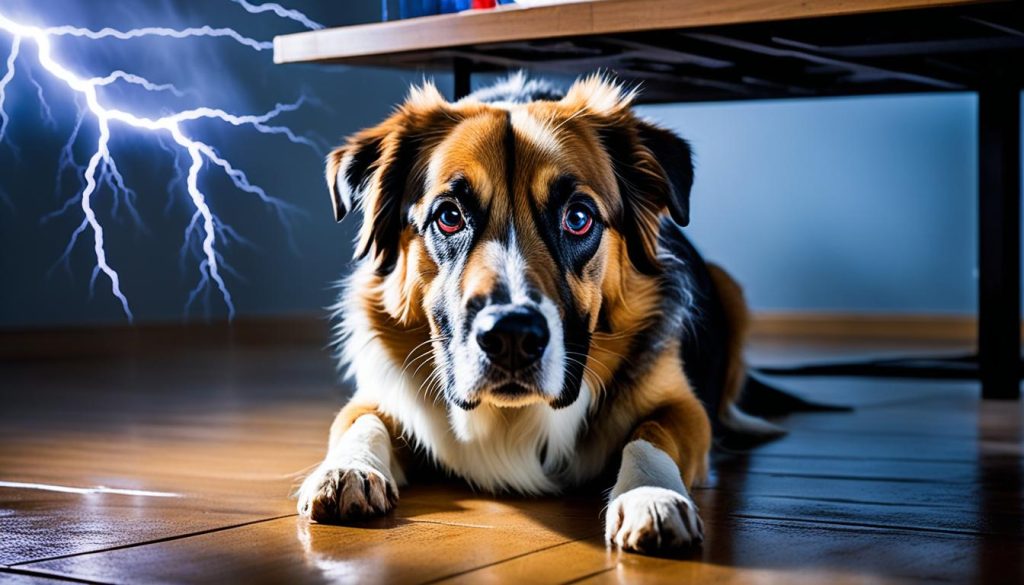
There are different ways to help dogs with their fear of loud sounds. Techniques like counterconditioning and desensitization can make loud noises less scary. These methods help dogs learn to like the noises.
Medication is also important for some dogs with serious noise phobias. Drugs like anti-anxiety meds, antidepressants, and tranquilizers can help. Medicines like Dexmedetomidine (Sileo®) and Imepitoin (Pexion®) are effective for calming dogs.
Using white noise, music, and window blinds can also help reduce anxiety. Special clothing like Thundershirts and calming sprays work too. These can make your dog feel calm.
Sometimes, dogs with noise phobia also get separation anxiety. It’s common; up to a third of all dogs might be affected. This can lead to intense fear if not managed.
It’s key to watch for signs of fear of noise as your dog grows. Whether they’re young or old, addressing their fears is vital. This can help keep them from being overly stressed.
Choosing the Right Dog Anxiety Vest
Choosing an anxiety vest for your dog may seem hard, but it’s not. Knowing what’s out there can help. Many pet owners love the ThunderShirt® for its soothing pressure. It’s shown to reduce anxiety signs in over 80% of dogs who wear it.
Finding the right size is key. The ThunderShirt Polo Anxiety Vest fits dogs of all sizes, from tiny to huge. It comes in seven sizes, more than the AKC Calming Coat offers. This large size range makes it easier for most dogs to get a good fit.
Some vests are cheaper but not as good. The CozyVest 3-in-1 Dog Anxiety Vest is top-tier with extras like scents and music to soothe your dog.
The Zeaxuie Baby-Use-Grade Dog Anxiety Vest is great for little dogs. Yet, it may not stay on as well due to its fastener style.
Calming wraps work wonders for dogs scared of loud noises or travel. These wraps apply gentle pressure, which can help your dog feel relaxed and safe.
Getting the right fit and using the vest at the right times is crucial. Remember, a dog’s vest should be snug and be worn only when needed. Using a vest correctly is part of a larger plan to help your dog feel better, which may include changing their behavior or seeing a vet. Weighted vests are helpful, but not by themselves.
Choosing a vest like the ThunderShirt® means looking at what your dog needs. The right vest will fit well and make your dog feel better. This leads to a happier, more relaxed pet.
Conclusion
A good plan to manage dog anxiety is key to their well-being. First, noticing the signs, like too much barking or being overly active, is crucial. In just two years, dog anxiety when alone has risen over 700%. Fear of strangers has also made dog anxiety jump by 295%. These growing numbers show we need to act fast.
Creating a calm space for dogs can work wonders. It combines changes in their behavior, living area, and maybe some supplements. Things like calming products, pheromones, and making their space more fun can lower anxiety. Also, teaching them how to behave helps a lot.
Remember, each dog is different, and dealing with their anxiety takes time. Half of all dog owners say their dogs show anxiety often. But, with a mix of the right strategies, you can make things better. A calm, happy life for your dog is possible with the right care. It’s all about finding what works for your furry friend.
Quick Recommendation: Our blog is filled with tips and tricks for training your puppy or dog. If you are seeking a comprehensive training program, we recommend K9 Training Institute.
BTW: If you are interested in everything from nutritional advice and natural health solutions to stress-relief techniques and overall wellness tips, check out our friends at PawfectlyHealthyPets.com.