
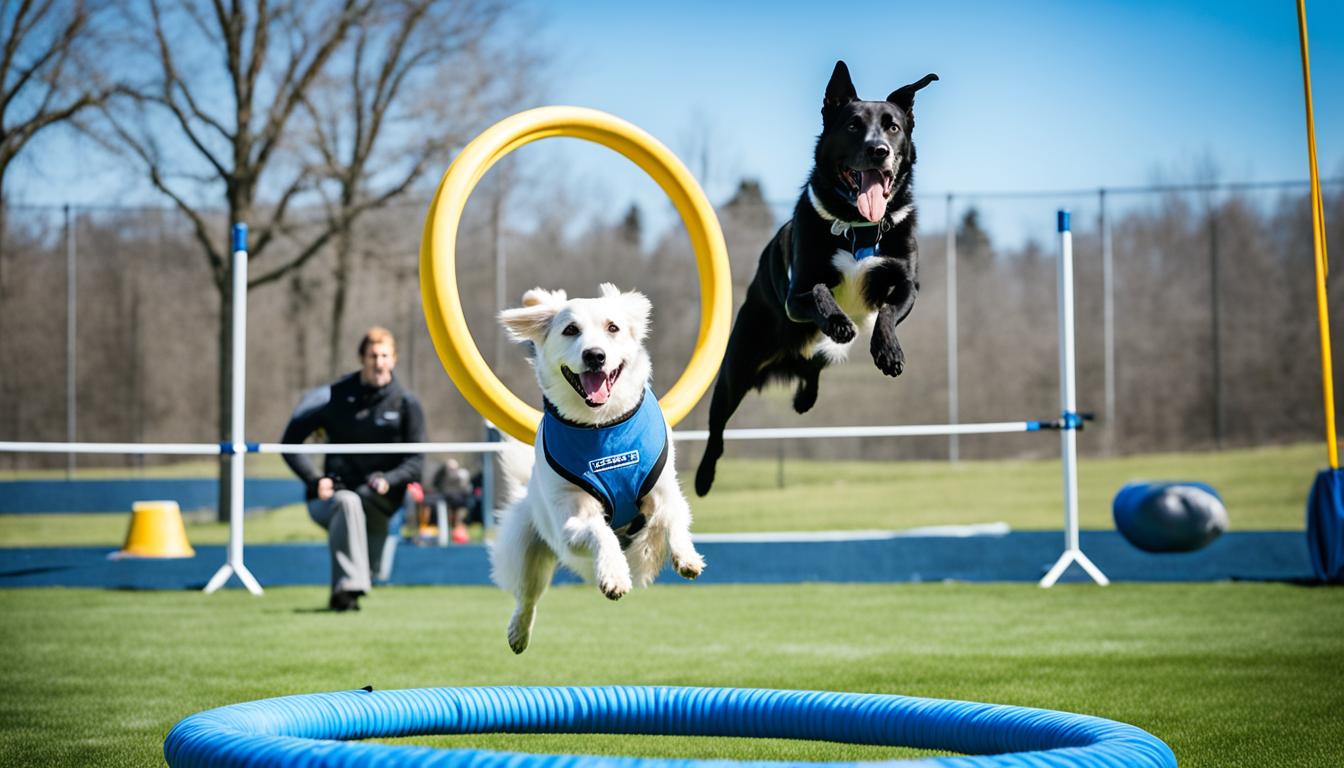
Ever wonder why dog agility is growing in popularity in America? It’s because it brings many benefits. It can make your dog healthier and better behaved. Plus, it’s fun for both you and your furry friend. But how do you begin?
This guide will cover the basics of dog agility training. This sport is great for bonding with your dog. It’s also a fun and healthy activity for them. Are you ready to start your dog’s agility journey? Let’s do it!
Quick Recommendation: Our blog is filled with tips and tricks for training your puppy or dog. If you are seeking a comprehensive training program, we recommend K9 Training Institute.
Introduction to Dog Agility
Dog agility is a thrilling sport for you and your furry friend. Together, you tackle obstacle courses with speed and skill. It’s not just about the race; it strengthens the bond between you and your dog.
The sport started in the 1970s in England. It was introduced during a pause in a horse jumping show. Since then, it has become a beloved sport around the world. Dog agility is an excellent entry point into the world of canine sports.
In agility trials, there are many competitions to join. Dogs showcase their skills in speed, accuracy, and listening to their handlers. The people in these events are friendly and supportive, making it a great place for everyone, no matter their experience level.
Choosing the Right Breed for Agility Training
Breed choice is key in agility training. Some breeds naturally do well in this sport. They have the right body, mind, and energy for it. Speed, agility, and a strong work ethic are assets in these dogs.
Top breeds for agility include Border Collies and Australian Shepherds. They’re high-energy and very smart. They learn fast and respond quickly, perfect for agility training. Jack Russell Terriers are also a great pick for their energy and agility.
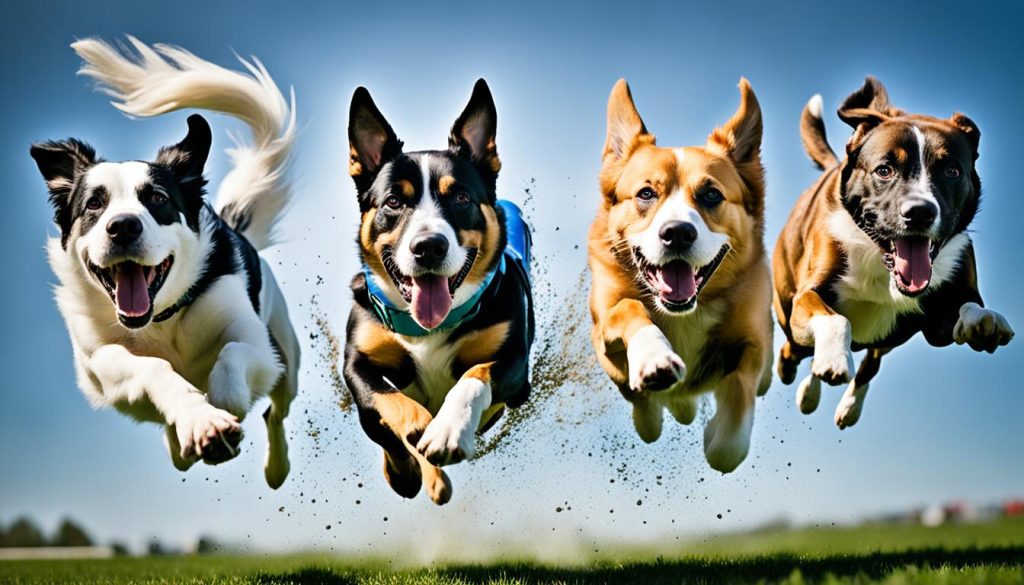
Don’t forget, almost any breed can enjoy agility with the right help. Little dogs like Papillons and Shetland Sheepdogs do great. So do big dogs like Golden Retrievers, and even mixed breeds can excel.
The secret to picking a breed for agility is knowing your dog well. Focus on a match of energy, smarts, and a love for moving. While certain breeds are naturally better, training and practice are what matters most in agility.
In short, the breed you choose is key for agility success. Think about what the top agility dogs have. This will help your dog reach its full agility potential and enjoy the sport.
Essential Equipment for Dog Agility Training
To start your dog in agility training, you’ll need key gear. A good beginning set has jumps, tunnels, and weave poles. This equipment is fundamental in boosting your dog’s speed and skills. It also makes training fun for you both.
It’s important to pick high-quality gear for safety and good results. For jumps, find ones you can adjust for different dogs and levels. Tunnels that can fold up are great for saving space. They should also be strong for lots of use. Weave poles are crucial for teaching your dog to be precise. Look for a solid set to last through tough training.
Remember, safety comes first. Make sure all gear is safe and free from harmful materials. Check your equipment often for any damage. If you see wear, replace it to avoid injuries.
Choosing the right agility gear means you’re taking your dog’s training seriously. It also means training will be safe and fun. These tools will help you overcome any training challenges!
Quick Recommendation: Training your dog is just the beginning. Keep them safe an healthy with Pin Paws Pet Care. Our blog provides the training advice, and Pin Paws offers the protection your pet deserves.
Basic Agility Training Commands
Start with basic agility commands to make your dog perform better. It also helps you talk with your dog more clearly. Key agility commands are “jump,” “tunnel,” and “weave.” They are vital for your dog’s agility training.
To teach your dog to “jump,” start with a low hurdle. Lead your dog over it while saying “jump.” After your dog learns, raise the hurdle slowly. Always reward them, putting more strength in the command. Teaching the “tunnel” command is similar.
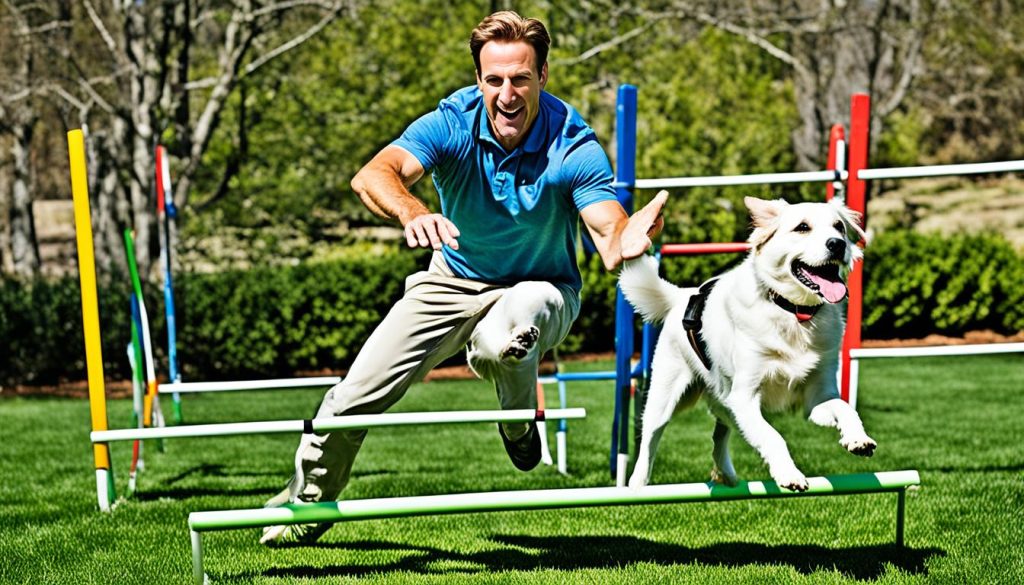
To teach the “weave” command, guide your dog between poles with a leash. Afterwards, always praise your dog. Positive feedback and doing this regularly help your dog’s understanding.
Good communication is key in agility training. Always be kind and patient. Always notice the small wins and gently fix mistakes. Doing these things regularly lays a solid foundation for advanced agility training.
Setting Up Your Own Agility Course
Setting up an agility course in your yard can be really fun. It’s great for both you and your dog. First, pick an open spot. Start with simple things like weave poles, jumps, and tunnels which you can move around easily. This way, you can change the setup as your dog gets better.
When you gather your supplies, think about using PVC pipes for the weave poles and wooden planks for jumps. Make sure everything is safe and strong. For easy storage, find jumps and tunnels that can fold up.
As your dog gets better, you can make the course harder. Change the jump heights or make the weave poles closer together. Changing the layout often will keep things fun and your dog learning.
Building Trust with Your Dog
Creating a strong bond with your dog is central to agility training success. Trust is built through various exercises. These help your dog to feel safe and sure about following your commands.
To strengthen this bond, consistency is key. Regular training makes your dog aware of what you expect. Simple games like fetch or tug-of-war are great. They not only keep your dog fit but also sharp.
It’s important to learn your dog’s body language. Watch for signs like wagging tails and ear movements. Knowing what they mean brings you closer, improving your training together.
Don’t forget the fun! Extra playtime outside of training strengthens your relationship. Make sure your dog links you with good times. This boosts your team’s bond.
Keep trust as your foundation in agility training. It will lead to a successful journey. Plus, it will be enjoyable for both you and your furry friend.
Quick Recommendation: Our blog is filled with tips and tricks for training your puppy or dog. If you are seeking a comprehensive training program, we recommend K9 Training Institute.
Introducing Your Dog to Agility Obstacles
Starting agility obstacle training must be fun and encouraging for your dog. The first phase might seem tough, but with time and regular practice, your dog can tackle obstacles confidently.
Let your dog check out the gear before anything else. Sniffing around and exploring without push helps them build confidence. This way, your dog can feel safe and start getting used to everything.
Introduce each obstacle slowly, starting with easy ones like tunnels and low jumps. Use treats and cheers to guide your dog. This approach makes their first agility experience positive and fun.
Don’t rush your dog if they’re not keen at first. Take it easy and enjoy even the small wins. You can add more challenges over time as they get better. Showing love, staying excited, and being steady are the best ways to help your dog feel more confident on the agility course.
Advanced Agility Techniques
Advanced agility techniques can boost your dog’s performance and speed. It’s about perfecting footwork and timing. This makes it easier to get through tough courses.
Include challenging drills to keep you both sharp. Make your agility course harder over time. Teach your dog advanced moves like tight turns and weave poles. These will check their skill and quickness. Speed training is essential to keep them fast and accurate.
Learning these techniques takes time and effort. Practice regularly while paying attention to what your dog needs. Soon, you will see major improvements in how they handle agility courses.
Common Mistakes in Agility Training
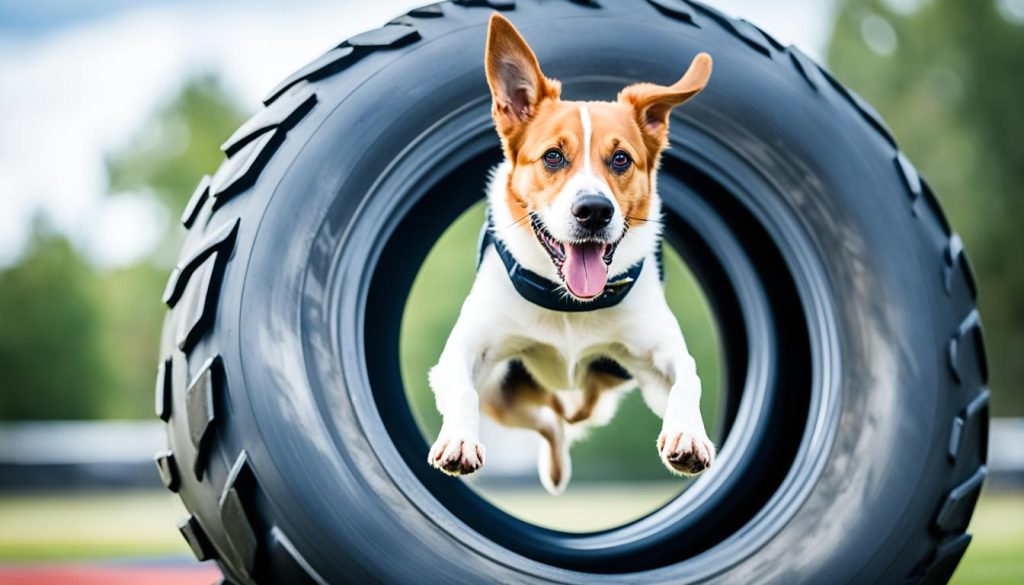
Agility training for your dog can be very rewarding. However, there are common mistakes you should avoid. One of these is not timing commands correctly. If you’re too late or too early with a command, your dog may get confused.
Another mistake is overworking your pet. Just like people, dogs get tired and need rest. Watch your dog’s energy and stop if they seem too tired. Training should be fun for them.
It’s also important to teach yourself about agility, not just your dog. Being consistent with your commands and rewards is vital. This consistency helps your dog know what to do on the course.
If you’re having a hard time, don’t be afraid to ask for help. Experienced trainers or agility groups can give you advice. They can show you new ways to teach your dog. Remember, agility training strengthens the bond between you and your dog.
Joining a Dog Agility Club
Joining a local agility club can really step up your dog’s training. You’ll get to know other dog lovers who are just as keen. Plus, they have gear and tips you might not find elsewhere.
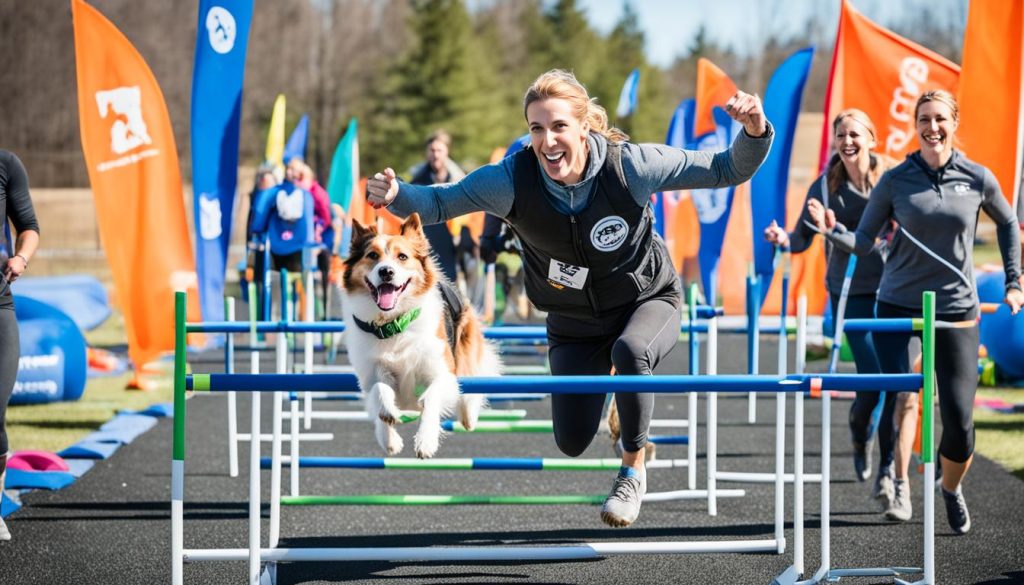
One of the biggest perks is getting to join agility events. These offer both a challenge and a chance to learn. For you and your pooch, it’s also a great way to make friends.
Start your search by checking out clubs nearby. Go visit some and talk to the people there. You’ll soon see if a club feels right for you and your dog.
No matter your level, a club will offer you help and support. With lots of events to keep you and your dog busy, the learning never stops.
Maintaining Your Dog’s Health
Keeping your dog healthy for agility is key for any owner in this sport. Good nutrition is crucial. It gives the energy and nutrients for tough training. It also keeps your dog in top shape.
Your dog’s diet should include high-quality proteins, healthy fats, and key vitamins. This will boost their performance and overall health.
Having a regular exercise plan is very important for your dog. It includes long walks, runs, and specific agility training. This boosts their strength, stamina, and lowers the risk of getting hurt.
Changing your dog’s exercises helps prevent them from getting bored. It also keeps them happy and healthy.
Preventing injuries is critical for agility. Your dog should have regular check-ups with the vet. This helps catch and treat health problems early.
Warming up and cooling down before and after training is also important. It helps lower the chances of your dog getting hurt.
Don’t forget about your dog’s recovery time. They need enough rest to repair their muscles. This keeps them strong and prepared for new challenges.
By focusing on these elements, you’re making sure your dog has a long, healthy, and successful agility journey.
Conclusion
At the end of our journey into agility training, it’s obvious that it offers great benefits. Both you and your dog can reap the rewards. Starting with the basics and selecting the right dog for agility, you’ve built a strong base. You now know key gear and commands that are essential for good training.
Creating your own agility zone and gaining your dog’s trust is more than routine. It’s a bond based on mutual activities beyond commands. Teaching your dog tricky obstacles and moves is hard, but makes agility truly exciting.
Failures are lessons on the path to success. Joining a club for agility gives you support and shared insights, helping on your journey. Keeping your dog healthy ensures they enjoy and perform well in agility. With commitment and continuous education, agility brings both discipline and happiness. Here’s to your success in the lively world of dog agility!
Quick Recommendation: Our blog is filled with tips and tricks for training your puppy or dog. If you are seeking a comprehensive training program, we recommend K9 Training Institute.
BTW: If you are interested in everything from nutritional advice and natural health solutions to stress-relief techniques and overall wellness tips, check out our friends at PawfectlyHealthyPets.com.