
Is your furry friend acting strange? They might be dealing with anxiety. Dog anxiety is more common than you think. It can turn your happy pup into a nervous wreck. Understanding and alleviating dog anxiety is key to helping your pet live their best life.
Dog behavior can change when stress takes over. You might notice excessive barking, destructive chewing, or even aggression. These are signs your dog needs help. By learning about canine stress, you can spot the signs early and take action.
This guide will walk you through the ins and outs of dog anxiety. You’ll learn how to identify triggers, manage symptoms, and create a calmer environment for your four-legged friend. Let’s dive in and help your pup find their zen!
Quick Recommendation: Our blog is filled with tips and tricks for training your puppy or dog. If you are seeking a comprehensive training program, we recommend K9 Training Institute.
What is Dog Anxiety?
Dog anxiety is a common issue that affects many pets. It’s a state of unease or fear that can stem from various causes. Your furry friend might experience anxiety in different forms, such as separation anxiety, noise phobias, or social anxiety. Understanding these types can help you provide better pet anxiety relief for your canine companion.
Separation anxiety occurs when dogs become distressed when left alone. They may bark excessively, destroy furniture, or have accidents indoors. Noise phobias involve fear reactions to loud sounds like thunderstorms or fireworks. Social anxiety makes dogs uncomfortable around other dogs or people, leading to shy or aggressive behavior.
Recognizing anxiety triggers in dogs is crucial for addressing their concerns. These triggers can vary widely, from changes in routine to unfamiliar environments. Some dogs may feel anxious during car rides, while others might react to specific objects or situations. By observing your dog’s behavior closely, you can identify their unique anxiety triggers and work towards effective solutions.
Remember, dog anxiety is treatable. With patience, understanding, and the right approach, you can help your furry friend feel more relaxed and confident. The key lies in recognizing the signs early and taking appropriate steps to manage their anxiety.
Identifying Anxiety Triggers in Dogs
Dogs can feel anxious for many reasons. It’s important to know what makes them anxious. Loud noises often upset our furry friends. Things like thunderstorms, fireworks, and construction sounds can make them scared and anxious.
Your dog might hide, shake, or bark a lot when they hear these sounds.
Being in new places can also make dogs anxious. Taking them somewhere new or meeting new people can cause nervousness. Look for signs like pacing, heavy panting, or trying to get away. These are signs they’re feeling anxious.
Changes in their daily life can stress dogs out. They like things to stay the same. Moving, changing their eating times, or their walking route can make them anxious. Watch for signs like not wanting to eat, being restless, or acting out.
Knowing what makes your dog anxious helps you manage their stress. It’s the first step to making them feel better. Every dog is different, so watch your pet to see what makes them anxious. Then, you can help them feel more secure.
The Impact of Anxiety on Dog Behavior
Anxiety can really change how dogs act, leading to behaviors you don’t want. Your dog might chew furniture, dig in the yard, or bark a lot. These actions come from their stress and discomfort. Stress in dogs can also show up physically, like heavy panting, pacing, or stomach problems.
It’s important for pet owners to understand how anxiety affects dogs. If not handled, these problems can make your relationship with your pet worse and hurt their happiness. An anxious dog might stop enjoying things they used to like or become mean to other animals or people. Spotting these signs early can help you help your dog feel better.
By dealing with anxiety, you can make your dog’s life better and strengthen your connection. Keep an eye on how your pet acts and get help when you need to. A happy, calm dog is more likely to act well and have a good life with you.
Important Tip: Training your dog is just the beginning. Keep them safe an healthy with Pin Paws Pet Care. Our blog provides the training advice, and Pin Paws offers the protection your pet deserves.
Calm Paws: Understanding and Alleviating Dog Anxiety
It’s important to understand and help your dog with anxiety for their well-being. Calm Paws offers a holistic way to make your furry friend feel more relaxed. By finding out what triggers their anxiety and using specific strategies, you can really help your dog.
The Calm Paws method aims to create a calm space for your pet. This means setting up a safe area, using calming smells, and giving them toys that help reduce anxiety. You’ll also learn how to spot when your dog is stressed and how to stop it from getting worse.
There are many ways to help your dog with anxiety, from changing their behavior to using natural remedies. Calm Paws uses positive training to boost your dog’s confidence. You’ll learn about massage, music therapy, and exercise to help your dog chill out. These methods together form a full plan to manage your pet’s anxiety.
Using the Calm Paws method, you’ll get tools to help your dog with anxiety. Remember, being patient and consistent is crucial for your dog’s comfort. With time and effort, you can help your dog beat anxiety and enjoy a happier life.
Natural Relaxation Techniques for Dogs
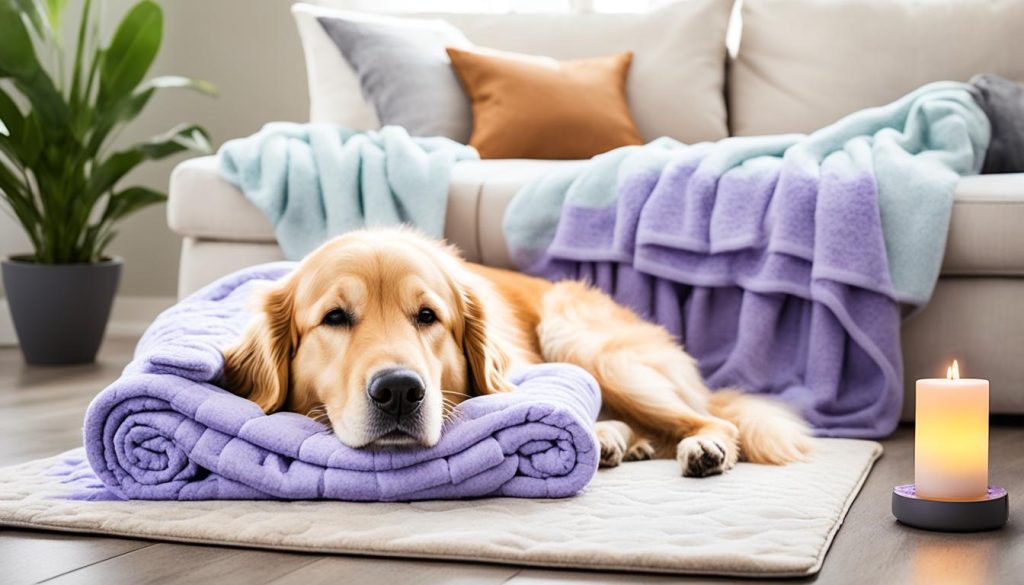
Helping your furry friend relax is easier than you might think. Natural methods can help ease their stress without the need for medication. Massage is a great way to start. Use circular motions on their back and legs to lower their heart rate and help them calm down.
Aromatherapy is also effective for pet anxiety. Using a small amount of lavender essential oil can make a big difference. Just remember to use pet-safe oils and keep them away from your dog. Music therapy can also help. Soft classical music or music made just for dogs can soothe their nerves.
Creating a calm space for your dog is important. Set up a cozy corner with their favorite blanket and toys. This spot gives them a safe place to go when they feel stressed. Remember, being consistent with these techniques is key. With time and effort, you’ll see a big improvement in your pet’s well-being.
Quick Recommendation: Our blog is filled with tips and tricks for training your puppy or dog. If you are seeking a comprehensive training program, we recommend K9 Training Institute.
Desensitization Training: A Step-by-Step Guide
Desensitization training is a key method for helping dogs overcome fears and phobias. It works by slowly exposing your dog to things that scare them. Start with small steps and go at your dog’s pace, helping them feel more confident.
First, figure out what scares your dog the most. Make a list of these things, from least to most frightening. Begin with the least scary one and show it to your dog from a safe distance. Give them treats and praise when they stay calm. Then, gradually get closer or make the trigger stronger as they get used to it.
Being consistent is important in this training. Do short sessions every day, ending on a high note. If your dog gets stressed, slow down. Remember, getting better takes time, but it’s worth it. With patience and effort, your dog will become less anxious and more confident.
Effective Strategies for Managing Separation Anxiety
Separation anxiety can be hard on dogs and their owners. It often leads to destructive behavior when you’re away. Crate training is a good way to start dealing with this issue. It gives your dog a safe spot to relax when you’re not there. Begin by making the crate a positive place with treats and toys.
Gradually leaving your dog alone is important for overcoming separation anxiety. Start with short times away, like a minute, and then increase it slowly. This helps your dog learn that you always come back. It’s also key to make alone time positive. Leave special toys or treats that your dog only gets when you’re away. This makes your leaving a positive thing.
Exercising your dog before you leave can help them relax more when you’re away. A tired dog is less likely to act anxious. Saying goodbye calmly and quietly is also important. Don’t make a big deal when you leave or come back. This keeps your dog’s feelings more stable. With patience and consistency, these methods can really help your dog with separation anxiety.
Using Calming Aids and Products for Anxious Dogs
There are many calming aids for anxious dogs available. These products can really help your furry friend feel better. For example, anxiety wraps, like the ThunderShirt, apply gentle pressure to soothe your dog in stressful situations, such as during thunderstorms or fireworks.
Pheromone diffusers are also great for calming anxious dogs. They release synthetic pheromones that mimic what mother dogs use to calm their puppies. Brands like Adaptil offer plug-in diffusers that can make your home feel more calm, helping your dog relax.
Calming supplements are becoming more popular as a natural way to help anxious pets. They often include ingredients like L-theanine, chamomile, or melatonin. But, it’s important to talk to your vet before starting any supplements. What works for one dog might not work for another, so you might need to try a few options to find what’s best for your dog.
Quick Recommendation: Our blog is filled with tips and tricks for training your puppy or dog. If you are seeking a comprehensive training program, we recommend K9 Training Institute.
BTW: If you are interested in everything from nutritional advice and natural health solutions to stress-relief techniques and overall wellness tips, check out our friends at PawfectlyHealthyPets.com.