

Training your dog is a rewarding journey for you both. In this guide, we’ll share top dog training tips. These will unlock your dog’s potential and help you get to know them better. Knowing what your dog needs and how they act is key to good training. We’ll look at new ways to train that are fun and good for both of you.
Quick Recommendation: Our blog is filled with tips and tricks for training your puppy or dog. If you are seeking a comprehensive training program, we recommend K9 Training Institute.
Understanding Canine Psychology: The Foundation of Dog Training
Getting to know how your dog thinks is key to good training. Knowing the basics of dog behavior can make your dog listen better and help you set smart training goals. Dogs are pack animals, and they follow a leader.
This means you can make training feel more natural to them by acting as the pack leader. This helps a lot.
Instincts play a big part, too. Whether it’s chasing animals or barking at new people, these actions show us how dogs understand the world. By learning about these instincts, we can tailor our training to fit what comes naturally to them.
This builds a solid base for training.
Also, dogs learn by doing things repeatedly, getting rewards, and making connections. Successful training uses these ways of learning. Whether teaching simple commands or fixing problem behaviors, knowing how dogs think makes training work better. This leads to a happier life together.
Positive Reinforcement Methods: Encouraging Good Behavior
Using positive reinforcement with dogs can change the game in training. This approach uses treats, praise, and toys as rewards. It’s a great way to get your dog to do things you like more often. Both you and your pup will find training fun.
Reward-based training is all about immediate rewards. Reward your dog right away when they do something good. This method helps your dog link their behavior to something positive. Use their favorite snacks, happy words, or loved toys as rewards.
But positive reinforcement isn’t just about treats. Giving praise and affection works wonders, too. By always encouraging the behaviors you like, you create a trusting relationship. Your dog will be excited to learn and feel less stressed knowing they’re on the right track.
Positive reinforcement goes beyond teaching obedience. It makes learning a fun and joyful time for your dog. This approach not only makes training sessions something to look forward to but also deepens your connection with your pet.
Essential Dog Training Tips for Beginners
Starting dog training can feel tough at first. But with the right steps, it can be fun and rewarding. Here are simple tips to help you begin on a good note.
Setting a regular schedule is crucial. Dogs like routines. Having a fixed time for training lets them know what to expect. Short, daily sessions work best.
Start with key commands like “sit,” “stay,” and “come.” Use simple words and reward your dog right away. Patience is important. It might start slow, but keep at it for success.
House training is important too. Pick a specific spot for your dog to go to the bathroom. Always praise them when they use the right spot. Understand that accidents happen. They are part of learning.
Keep training fun and positive. Use treats, toys, and a lot of praise to keep your dog interested. Training should be enjoyable for you both. Follow these tips for a well-trained and happy dog.
Woof Wisdom: Insights into Dog Training Techniques
Understanding your dog’s personality is key to good training. Each dog is unique, so tailor-made plans work best. Learning about dog training can make the whole process more fun for you and your pet.
Dog training wisdom often involves knowing how dogs think. Some dogs like certain rewards or cues better, depending on their breed and personality. Adapting your training to fit your dog’s instincts is a smart move.

Using advanced techniques can greatly improve your dog’s obedience and how they get along with others. Clicker training, running through obstacle courses, and tracking scents are a few ways to stimulate your dog’s mind and body. These methods also help strengthen your bond with your dog, showing the true spirit of dog training.
By adding these techniques to your training, you’ll build a better relationship with your dog. It doesn’t matter if you’re just starting or have lots of experience. There’s always something new to learn to keep growing with your dog.
Training Techniques for Obedience: Best Practices
Training your dog goes beyond teaching tricks. It’s about building a respectful, joyful connection. Effective obedience training techniques make your dog a polite companion. Initially, teach essential commands like sit, stay, come, and down.
To succeed in dog obedience best practices, consistency is key. Follow a regular schedule, use identical commands, and praise good behavior. This method helps your dog know what you expect and builds positive habits. Always use treats, praise, and love for motivation.
Integrate training for polite behavior into everyday life. Practice commands during walks, meals, and while playing. Keep training sessions short and fun to keep your dog interested and happy.
Patience is crucial when facing training obstacles. If a command is tough for your dog, simplify it. Make sure you’re not accidentally encouraging bad behavior by watching how you react and reward.
Every dog learns at their own speed. A technique that helps one dog might not help another, so be flexible. Making training enjoyable and rewarding will keep your dog keen on learning and obeying.
Quick Recommendation: Our blog is filled with tips and tricks for training your puppy or dog. If you are seeking a comprehensive training program, we recommend K9 Training Institute.
The Importance of Early Socialization
Early socialization is key for a confident and well-adjusted dog. Introducing puppies to new places, people, and animals lays the groundwork for their future. It helps them develop the social skills they need.
The best time for socializing a puppy is between three to fourteen weeks old. This is when they’re most open to new things. Showing them different sights, sounds, and smells—and making sure those experiences are good—will stop fear and aggression later on.
The value of dog socialization goes beyond just meeting new friends. It lowers anxiety and aggression, making a dog more confident. This can help them handle various situations calmly. By focusing on socialization early, you’re caring for your dog’s emotional health and happiness.
Starting the socialization process is about small steps that grow bigger over time. Let your puppy meet other animals and people and see new places. This teaches them to communicate and build vital social abilities.
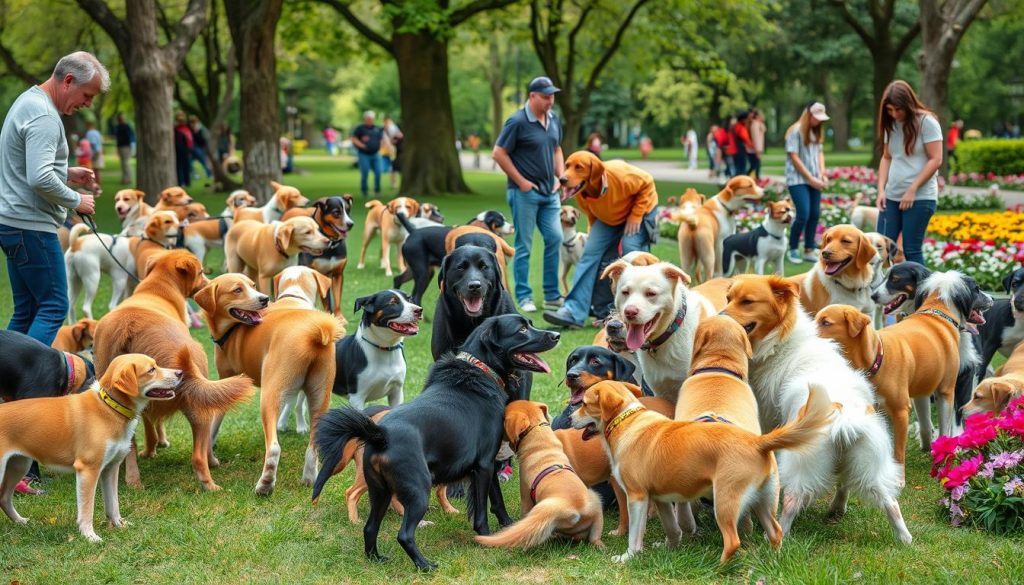
Early socialization has long-term rewards. A well-socialized dog adjusts better, faces fewer behavioral issues, and is generally happier. Make puppy socialization a priority for a well-rounded grown dog.
Communication with Your Dog: Building a Strong Relationship
Effective communication with your dog is key to a strong bond. Learning their signals and body language is essential. For example, a wagging tail usually means they’re happy, but flattened ears might show they’re scared or anxious.
Using clear voice commands also helps in talking to dogs. Praise them in a happy voice when they follow commands. This encourages good behavior. If they’re doing something wrong, a firm yet gentle voice can stop them without fear.
Using hand signals is effective too. Pointing or opening your hands can help in training. These signs are really helpful in loud places where your dog might not hear you.
To sum up, paying attention to your dog’s signals and using voice and hand cues is vital. It builds a strong, respectful relationship. By understanding and reacting properly to your dog, you’ll have a happier and more cooperative friend.
Dealing with Common Behavioral Issues
Many dog owners face the challenge of correcting dog behavioral issues. This can be anything from excessive barking to destructive chewing. Understanding the root causes is essential for effective management.

Excessive barking is one common issue. It can stem from boredom, anxiety, or a need to alert you of danger. To manage this, make sure your dog gets plenty of exercise and mental stimulation. Consistent commands and rewards are also effective in controlling this behavior.
Destructive chewing is another prevalent problem. Dogs often chew on things like furniture or shoes due to boredom, teething, or stress. Providing appropriate chew toys and keeping personal items out of reach can help. Also, using positive reinforcement when your dog chews the right items can encourage good behavior.
Aggression can be due to fear, territory protection, or lack of socialization. Managing aggression involves exposure to new environments and situations in controlled conditions. Calm but firm commands can help reduce aggressive tendencies.
Consistency is vital in these approaches. By regularly applying these strategies and being patient, you can manage your dog’s behavior. This helps in building a strong, harmonious relationship with your furry friend.
Advanced Training Techniques for Experienced Owners
As a seasoned dog owner, you might want to try advanced training techniques. These tasks challenge your dog and bring you closer together. Agility training is a great place to start. You can create a course at home or join a local club. Watch your dog race through tunnels, leap hurdles, and navigate poles, all on your command.
Trick training is another fun way to challenge your dog. Teach them to roll over, play dead, or skateboard. It sharpens their mind and strengthens your bond. For the ultimate test, try achieving off-leash control. Practicing commands in open spaces improves discipline and gives you confidence.
Advanced dog training helps both you and your dog grow. It leads to a smart, obedient, and joyful dog. Everyone will be amazed by their skills and behavior.
Consistency and Patience: Keys to Successful Dog Training
Training a dog goes beyond simple commands. It’s a journey needing steady approaches and a patient hand. Each dog learns differently, setting the pace for their own training. Acknowledging this helps set realistic goals and reduces frustration. For success, keep your training routine consistent.
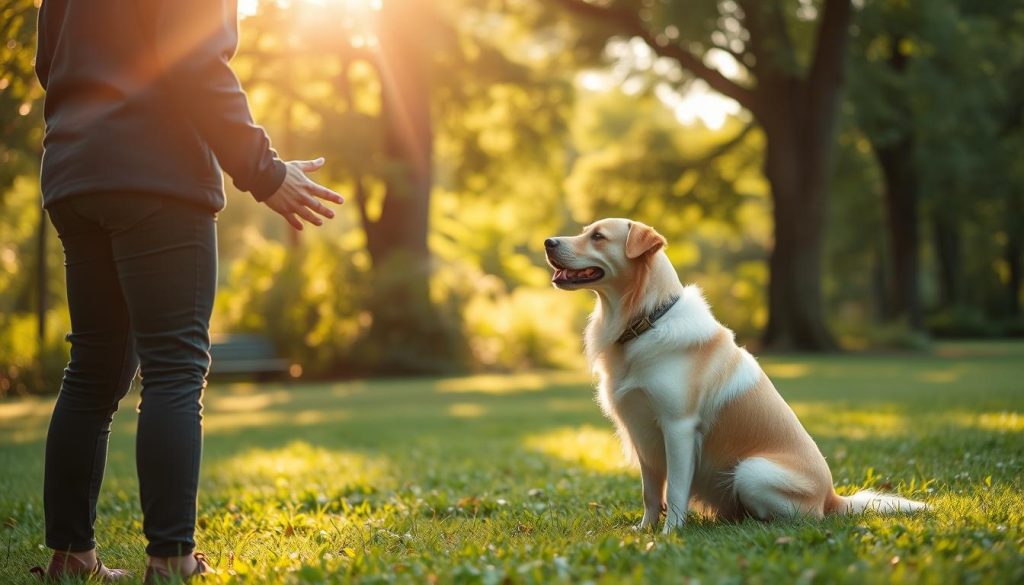
Being patient is crucial too. It’s easy to lose patience, especially when things move slowly. Remember, your dog looks to you for guidance. Keep training sessions brief and positive. This makes learning fun for your dog. Remember, training is more of a marathon than a sprint. Celebrate the small wins to stay motivated.
The heart of great training lies in your commitment and perspective. Being consistent and patient paves the way for a well-trained dog. Stick with it, and with a positive stance, you’ll succeed in training your canine friend.
Conclusion
As we end our detailed guide on dog training, let’s pause to reflect. Think about everything you’ve learned. Knowing how dogs think and using positive methods are key. They help you talk better with your pet and strengthen your bond.
Reflective dog training goes beyond simple commands. It’s about applying what you’ve learned consistently. Remember, starting training early helps your dog adjust well. Good communication means you can solve behavior problems together.
Remember, training your dog is always ongoing. Look back at this guide when you need help. By keeping up with training, you and your dog will enjoy many happy years together.
Quick Recommendation: Our blog is filled with tips and tricks for training your puppy or dog. If you are seeking a comprehensive training program, we recommend K9 Training Institute.
BTW: If you are interested in everything from nutritional advice and natural health solutions to stress-relief techniques and overall wellness tips, check out our friends at PawfectlyHealthyPets.com.