

When it gets colder and snow falls, it’s time to think about your dog’s training. Winter woofs are more than just cold barks. They show the need for special training to keep your dog happy and well-behaved in the cold.
Training your dog in winter has its own challenges and benefits. The cold weather tests your dog’s obedience and adaptability. But with the right approach, you can use these challenges to help your dog grow. Winter offers many chances to improve your dog’s behavior and obedience, from cold walks to snowy adventures.
It’s important to understand the need for winter dog care in training. By adjusting your routine and preparing well, you keep your dog comfortable, safe, and mentally active. This is crucial in the short days and freezing temperatures of winter.
Quick Recommendation: Our blog is filled with tips and tricks for training your puppy or dog. If you are seeking a comprehensive training program, we recommend K9 Training Institute.
Understanding Your Dog’s Cold Tolerance
Preparing dogs for winter means knowing how cold they can handle. Different breeds have different cold tolerance levels. It’s important to know your dog’s limits to keep them safe and warm.
Breeds like Siberian Huskies and Alaskan Malamutes have thick fur and can handle cold better. But smaller breeds like Chihuahuas and Dachshunds need more care because of their short fur and small size. Knowing about cold tolerance is key to winter prep.
Watch for signs your dog is too cold, like shivering or being very tired. If they don’t want to go outside, it might be too cold for them. Adjusting their outdoor time to their health is crucial to avoid cold-related problems.
By paying attention and learning about winter prep, you can keep your dog happy, healthy, and safe in the cold.
Preparing Your Dog for Cold Weather
As the temperature drops, it’s time to get your dog ready for the cold. Start by slowly introducing them to the chilly air. Begin with short outdoor trips and gradually make them longer.
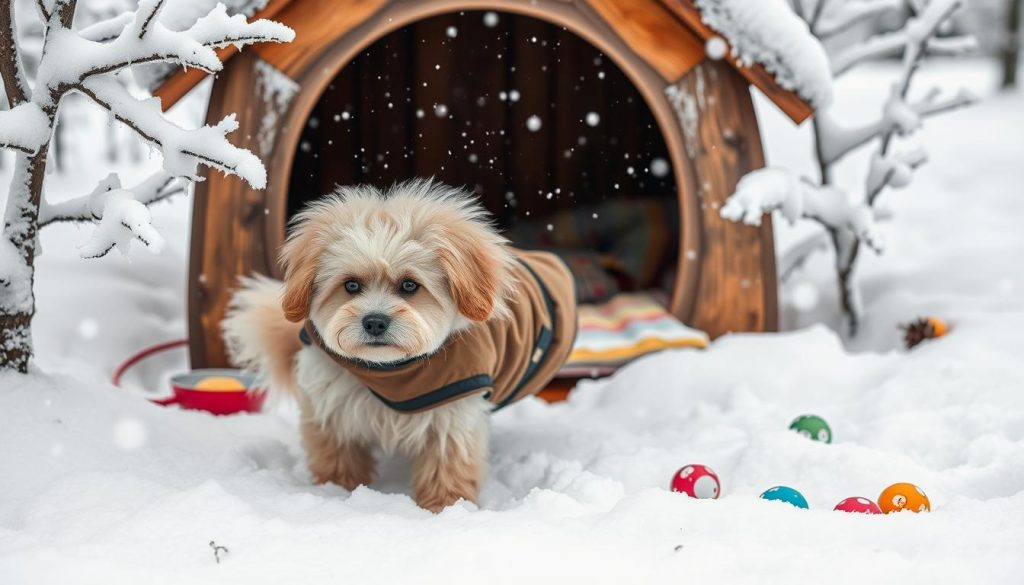
It’s also important to think about their diet. Dogs use more energy when it’s cold to stay warm. Adding extra protein and fat can help. But, always check with your vet to make sure it’s right for your dog.
Getting your dog mentally ready for the cold is key. New things can stress them out. Watch for signs of discomfort or anxiety. A warm spot indoors can help them feel better.
The Right Gear for Cold Weather Dog Training
When it gets cold, it’s key to make sure your dog has the right gear. Getting the best winter dog care essentials is vital. It helps keep your dog warm and safe during outdoor training.
A good coat is a must. Choose one that’s durable and keeps your dog warm. It should also let your dog move freely. Ruffwear and Kurgo have great options for different sizes and breeds.
Booties are also essential. They protect your dog’s paws from ice, salt, and snow. This prevents injuries and frostbite. Look for ones with good grip and insulation. Reflective leads and safety accessories, like LED collars, help keep your dog safe in the dark.
Using these winter dog care essentials makes training fun and safe. It ensures your dog stays warm and protected. This way, you both can enjoy training in the cold.
Training Your Dog for Winter Walks
Walking your dog in winter can be fun, but you need to make some changes. It’s important to learn how to walk your dog on a leash in the snow. This makes walks safe and fun for both of you.
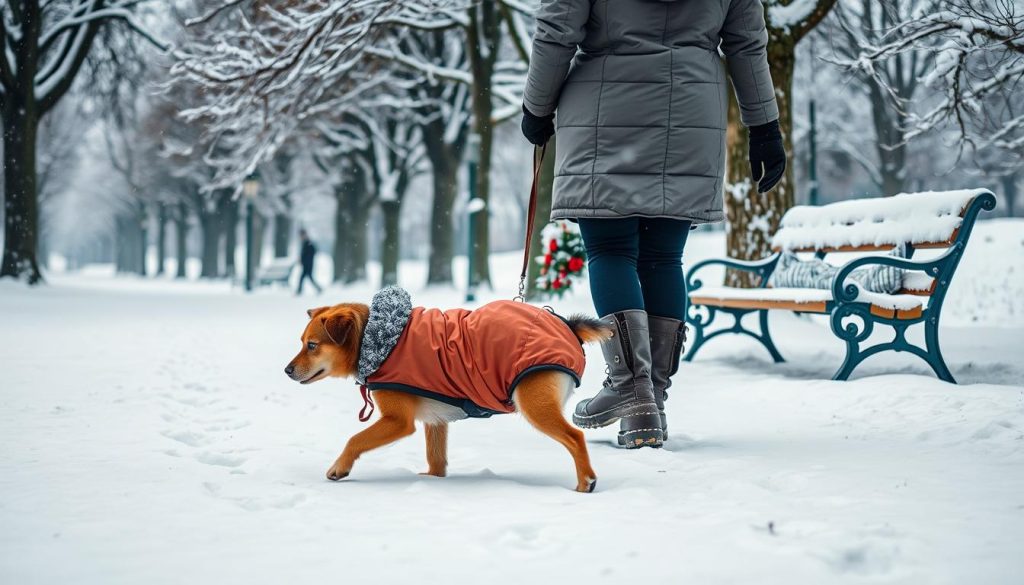
First, think about your dog’s comfort and safety. Make sure they have a warm coat and maybe even booties to keep their paws warm. It’s also key to keep practicing commands like “sit” and “stay” on icy paths. This helps your dog stay focused, even when winter makes things tricky.
Keeping up with regular exercise is crucial for your dog’s health, even when it’s cold. Shorter, more frequent walks are better than long ones to avoid frostbite and hypothermia. Watch for signs like your dog lifting their paws or shivering too much. If you see these signs, it’s time to shorten the walk.
Finally, be careful where you walk. Snow can hide dangers like icy spots and hidden obstacles. By following these tips, you and your dog can keep enjoying walks together safely, even in the cold.
Winter Woofs: Training Your Dog for Cold Weather
Cold weather doesn’t mean you have to stop training your dog. It’s a great chance to make training fun and effective, just like in warmer months. With the right approach, your dog’s winter training can be both fun and rewarding.
Indoor obedience training is a creative way to keep training going. You can set up a special area for commands like sit, stay, and come. Short, positive sessions keep your dog interested and excited.
Adding favorite games to winter training can make it more fun. Hide and seek, for example, helps with recall. Hiding in different rooms and calling your dog keeps them focused and eager to please.
Indoor games that challenge your dog’s mind are key during cold weather. Puzzle toys and interactive feeders keep them mentally active. These are great additions to indoor training, keeping their skills sharp.
Adapting to winter with fun training sessions keeps your dog well-behaved and engaged. Use the cold months to strengthen your bond and improve your dog’s skills in new ways.
Quick Recommendation: Our blog is filled with tips and tricks for training your puppy or dog. If you are seeking a comprehensive training program, we recommend K9 Training Institute.
Safety Tips for Outdoor Winter Training
When training your dog outside in winter, keeping them safe is key. It’s important to take precautions to avoid accidents or health problems. Here are some tips to make your winter training sessions safe and fun.
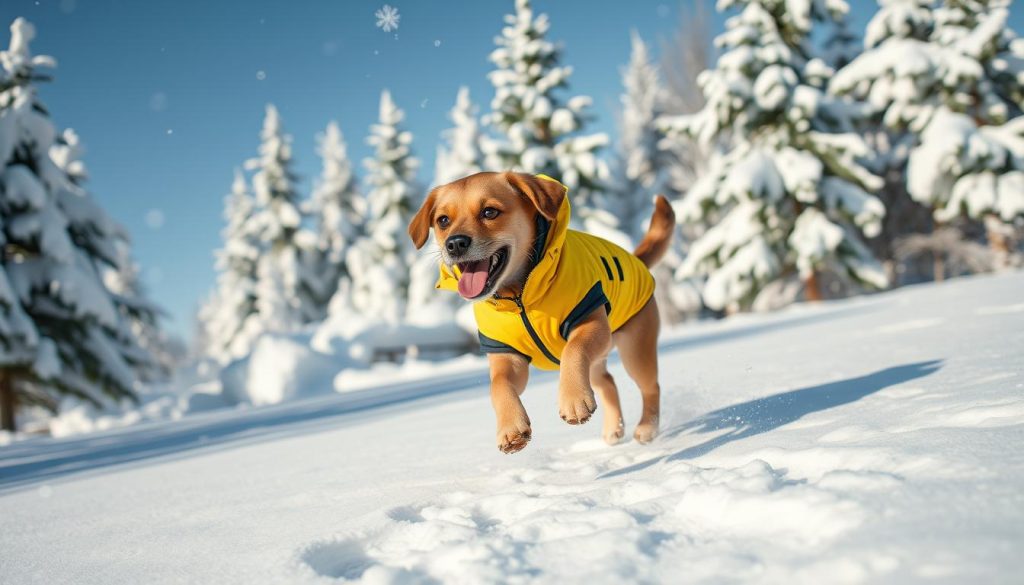
Always check the weather forecast before going out. Extreme cold can lead to frostbite or hypothermia. Watch for signs your dog is too cold, like shivering, being tired, or whining. If you see these signs, go inside right away.
Use doggy sweaters or jackets to keep your dog warm. Also, put booties on their paws to protect them from ice and salt. These steps help prevent injuries in dogs during winter.
Keep outdoor training short. Take breaks indoors to let your dog warm up and avoid too much cold. Remember, your dog still needs water to stay hydrated, just like in summer.
Finally, have a plan for emergencies. Carry a pet first-aid kit with essentials like paw balm and thermal blankets. Knowing where the nearest emergency vet is can save your dog’s life. These steps are crucial for keeping your dog safe during winter training.
Indoor Training Activities During Winter
When it’s cold outside, indoor dog training is a fun way to keep your dog active. Games like hide-and-seek are great for mental stimulation. Hide treats or toys, then let your dog find them.
Teaching your dog new tricks is also a good idea. Tricks like rolling over or high-fiving are fun and keep their mind sharp. Use treats and praise to encourage them.
Scent work is another way to keep your dog’s mind active. Use different scents and let your dog follow the trail. It improves their sense of smell and keeps them engaged.
Interactive toys and puzzles are also great. They challenge your dog’s mind and prevent boredom. These activities can keep your dog busy for a long time.
By trying out these indoor activities, your dog will stay active and mentally sharp. Even when you’re stuck inside, they’ll have fun.
Maintaining Paw Health in Cold Weather
Winter can be tough on your dog’s paws. It’s important to take care of them to keep your furry friend happy and healthy. Cold and icy weather can dry out, crack, and even burn your dog’s paws.
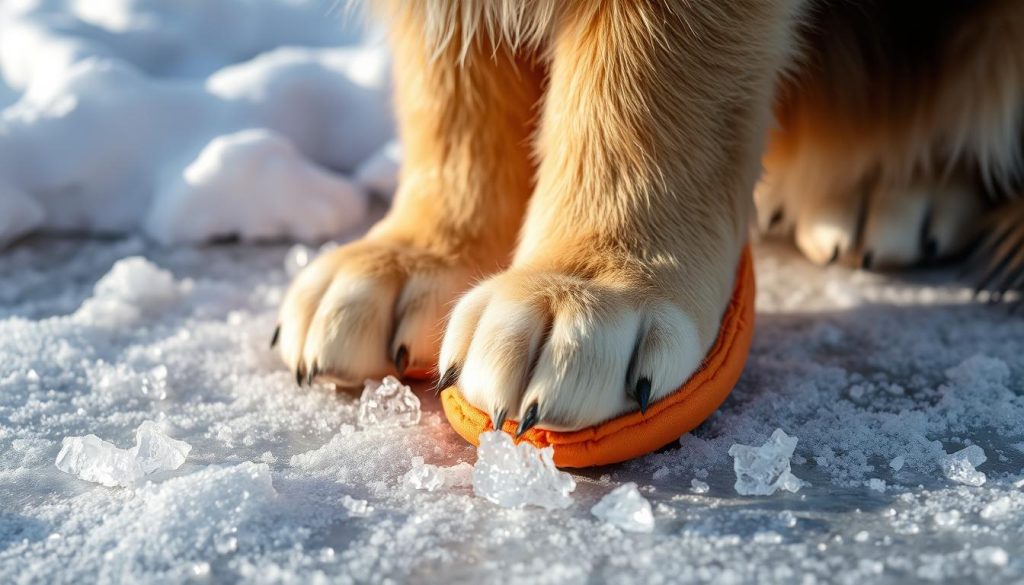
Checking and cleaning your dog’s paws regularly is key. After walks, look for signs of irritation and clean them gently. Use a paw balm to keep the pads moist and protect them from the cold.
Using dog booties is also a good idea. They keep your dog’s paws warm and safe from harmful substances. Booties can prevent injuries and keep your dog’s paws healthy.
Don’t forget to feed your dog well and keep them hydrated. A balanced diet and enough water help keep their skin and paws healthy. By following these steps, you’ll keep your dog’s paws safe and happy all winter.
Building a Strong Immune System for Winter
Winter can be tough on your dog’s health. It’s important to focus on their immune system health. Giving them the right nutrition is key. Quality dietary supplements can provide the vitamins and minerals they need.
Start by adding foods rich in antioxidants like blueberries and spinach. Omega-3 fatty acids in fish oil supplements are also great. These can help keep your dog’s immune system strong during the cold season.
Regular vet check-ups are also crucial. Your vet can give advice tailored to your dog’s needs. Make sure your dog stays hydrated and gets enough rest. These are basic steps for keeping them healthy in winter.
Conclusion
As winter ends, it’s crucial to adjust your dog’s routine for the cold. Training and care are vital for your dog’s health in winter. Knowing your dog’s cold limits, preparing the right gear, and following safety tips are essential.
Remember, indoor training keeps your dog’s body and mind active. Taking care of their paws and boosting their immune system is important all year. This approach keeps your dog healthy and active, no matter the weather.
Your efforts now will make your dog stronger and more resilient. Whether playing outside or having fun indoors, your commitment matters. Stay dedicated, informed, and enjoy the winter with your loyal friend!
Quick Recommendation: Our blog is filled with tips and tricks for training your puppy or dog. If you are seeking a comprehensive training program, we recommend K9 Training Institute.
BTW: If you are interested in everything from nutritional advice and natural health solutions to stress-relief techniques and overall wellness tips, check out our friends at PawfectlyHealthyPets.com.