

Training your dog to behave like a service dog has many benefits. It makes your dog better and strengthens your bond. It takes dedication, but it’s worth it.
By teaching your dog good manners, they become a pleasure to be around. Use consistent training and positive rewards to help them learn. This way, they’ll know what’s expected of them.
Remember, patience and persistence are key when training your dog. Celebrate every small success. Soon, your dog will become a well-behaved companion you can be proud of. With the right approach, your dog will be a great example of a service dog.
Quick Recommendation: Our blog is filled with tips and tricks for training your puppy or dog. If you are seeking a comprehensive training program, we recommend K9 Training Institute.
Understanding Service Dog Requirements
To be a service dog, a dog must meet certain legal standards. The Americans with Disabilities Act (ADA) says a service animal is a dog trained to help someone with a disability. This help can include guiding the blind, alerting the deaf, pulling a wheelchair, or helping during a seizure.
Service dogs must also behave well in public. They should be calm, controlled, and not harm anyone. They shouldn’t bark too much, jump on people, or cause trouble in stores or restaurants.
Teaching a service dog to behave is key. They need to focus on their handler, ignore distractions, and obey commands quickly. They must also learn to handle different situations and move through public areas calmly.
It’s important to know that not all dogs are service dogs. Emotional support animals, therapy dogs, and pets are not the same. They may offer comfort but don’t have the same rights as service dogs under the ADA.
Choosing the Right Dog for Service Training
Choosing a dog for service training is a big decision. You need a breed with the right temperament, physical traits, and trainability. Golden Retrievers, Labrador Retrievers, German Shepherds, and Poodles are top picks. They’re smart, loyal, and eager to please, perfect for service work.
Think about the dog’s age, health, and energy level too. Puppies and young adult dogs are usually the best. They’re more adaptable and easier to train than older dogs. Make sure the dog is healthy and has no genetic issues that could affect their service tasks.
Temperament is crucial when picking a service dog. They should be calm, confident, and friendly. They must handle different environments well and focus on their handler even with distractions. A good breeder or service dog organization can help find the right temperament.
Choosing the right dog for service training sets you up for success. With the right breed, age, health, and temperament, your dog will be a loyal and skilled service partner.
Establishing a Strong Foundation of Obedience
Before starting service dog training, it’s key to build a strong obedience base. Dog obedience training helps your dog behave well and be reliable. Start with basic commands like sit, stay, come, and heel. Use positive methods to teach these.
Training consistency is crucial. Set aside daily time for obedience practice. Keep sessions short, 10-15 minutes, to keep your dog focused. Reward them with treats, praise, and play when they do well.
Once your dog knows basic commands, increase the time and distance of stays and comes. Practice in different places, indoors and outdoors, to help them learn in various settings. A solid obedience foundation makes future service dog training easier.
Patience and positive reinforcement are key in dog training. Celebrate your dog’s progress and never punish them for mistakes. With consistent effort and encouragement, your dog will learn basic commands well. This will prepare them for service dog training.
Socializing Your Service Dog-in-Training
Socializing service dogs is key to their training. It’s important to expose them to many environments, people, and animals early. This helps them become confident and well-adjusted. Without socialization, they might become fearful or reactive in new situations.
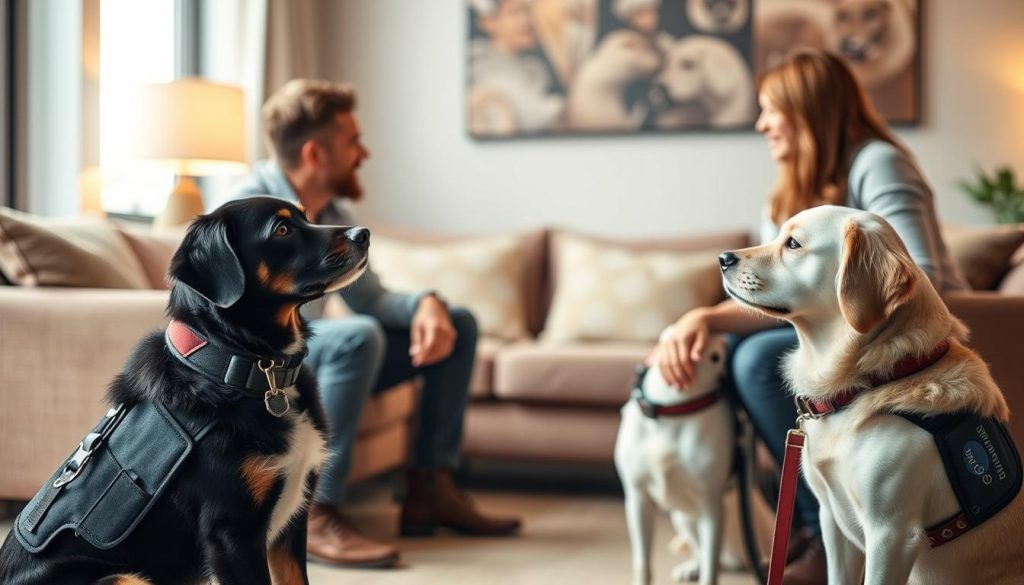
Begin exposure training by introducing your dog to different things slowly. Start with calm places and then move to busier areas. For example, go to a quiet park before a busy mall. Reward calm behavior and give lots of positive feedback.
Teach your service dog to handle distractions and stress well. Practice focusing exercises like keeping eye contact or staying in place despite distractions. Use treats and praise to reinforce good behavior and link new experiences to positive outcomes.
Socialization is a continuous effort. Keep introducing your service dog to new things throughout their training and work life. With patience, consistency, and positive reinforcement, your dog will become a reliable and well-socialized service animal.
Training Your Dog for Specific Tasks
Training your service dog for specific tasks is key. Each handler has unique needs. Service dogs can do many things, like get items, open doors, and help with balance.
First, figure out what tasks your dog needs to do. Then, work with a pro trainer or use a good training program. Break each task into steps and use positive rewards to help your dog learn.
Keep training sessions short and fun. Use lots of praise and rewards for good behavior. Practice in different places to make sure your dog can do tasks anywhere.
Don’t forget to keep up with basic obedience and good behavior. Practice commands like sit, stay, come, and heel often. This will help your service dog do well in all situations.
Quick Recommendation: Our blog is filled with tips and tricks for training your puppy or dog. If you are seeking a comprehensive training program, we recommend K9 Training Institute.
Managing Unwanted Behaviors
Even the best service dogs can sometimes act out. They might bark too much, jump on people, or pull on the leash. As a handler, it’s key to find out why they do this and use the right ways to fix it.
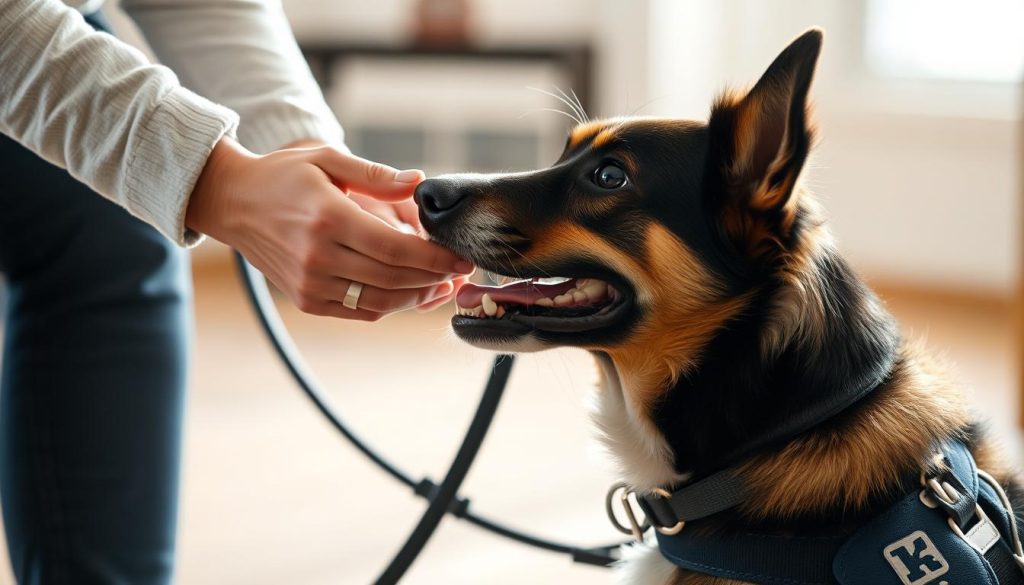
Consistency is crucial in fixing these issues. Set clear rules and stick to them every time. For instance, if your dog jumps, make them sit and stay until they calm down. Give them treats and praise when they behave well to encourage good habits.
If your dog has serious behavior problems, you might need a pro dog trainer. They can create a plan just for your dog’s needs and challenges.
Changing bad behavior takes time and patience. Always stay calm and don’t punish your dog. This can hurt your relationship and trust. With steady training and positive rewards, your service dog can learn to behave better and do their job well.
Maintaining Your Dog’s Training Over Time
Keeping your service dog trained is a long-term effort. It needs consistency, patience, and dedication. To keep your dog well-behaved and ready to follow commands, practice regularly and expose them to real-life situations.
Make time every day to practice what your dog has learned. This includes basic commands, specific tasks, and getting used to different places. Being consistent helps your dog know what’s expected and makes them better at following commands.
Positive reinforcement is key in keeping your dog’s training sharp. Give them treats, praise, and playtime when they do well. This makes them want to keep up good behavior and strengthens your bond.
Also, take your dog to different places to keep their training fresh. Go to stores, restaurants, and public transport. This helps them stay focused and confident in their role as a service dog.
Remember, training your service dog is a lifelong job. By always practicing, training, and exposing them to new situations, you’ll have a reliable and well-behaved companion for many years.
Caring for Your Service Dog’s Physical and Emotional Needs
As a service dog owner, it’s crucial to focus on your dog’s health. This means giving them a balanced diet, regular exercise, and vet visits. Make sure they stay at a healthy weight and get all their shots and treatments.
Grooming is also key. Brushing, bathing, and trimming nails keeps them looking and feeling great. Don’t forget to check their ears, teeth, and paws, as these can get problems if ignored.

It’s also vital to support your service dog’s emotional health. They can get stressed and tired, just like us. Give them time to rest and enjoy calm activities like playing fetch or going for walks.
Building a strong bond with your service dog is essential. Use positive reinforcement and show them love. This helps them feel good and ready to help you. By taking care of their physical and emotional needs, you keep them happy and healthy.
Train Your Dog To Behave Like A Service Dog
Training your dog to act like a service dog needs patience and consistency. Start with basic commands like sit, stay, come, and heel. Use treats and praise to encourage them.
Socialization is key in service dog training. Take your dog to different places and meet new people. This helps them stay calm in any situation.
After your dog learns basic obedience and social skills, teach them specific tasks. This could be getting items, opening doors, or alerting you to health changes. Reward them for each step they complete.
Always be consistent with your commands and expectations. Regular practice and behavior modification keep their skills sharp. With effort and the right methods, your dog can become a helpful service dog.
Navigating Public Spaces with Your Service Dog
As a service dog handler, knowing your rights is key. The Americans with Disabilities Act (ADA) lets service dogs go with their handlers in many places. This includes restaurants, stores, hotels, and public transport.

When you’re out with your service dog, keep them focused and well-behaved. Make sure they stay under control and don’t bother others. Also, they shouldn’t disrupt the business as usual.
People might ask about your service dog. Be ready to explain briefly why they’re with you. You don’t have to share your disability or what your dog does.
You might need to teach others about service dog laws. Carry ADA rules or a service dog info card. If someone refuses service, stay calm and explain your rights. If needed, report the issue to the Department of Justice or get legal help.
Keep your service dog trained and well-behaved. Stand up for your rights confidently. This way, you’ll have a smooth time in public places together.
Building a Strong Bond with Your Service Dog
Creating a strong bond with your service dog is key for a great working partnership. This bond is built on trust, communication, and respect. It’s more than just training; it’s about forming a deep emotional connection.
Positive reinforcement training is a great way to strengthen your bond. Reward your dog with treats, praise, and playtime for good behavior. Regular training sessions help your dog learn and bond with you.
Make time for fun activities with your service dog outside of work. Play fetch, go for walks, or just cuddle. These moments help build trust and strengthen your emotional connection.
Grooming sessions can also be bonding experiences. Brushing their coat or cleaning their ears shows you care. Gentle touch and attention during grooming mean a lot to your dog.
Building a strong bond takes time, patience, and commitment. Focus on positive interactions to create a lasting partnership. With dedication, you and your service dog will have a bond that improves your lives together.
Conclusion
Training a service dog needs dedication, patience, and a strong commitment. You must teach them obedience, socialize them well, and train them for specific tasks. This way, your dog can become a well-behaved companion.
Training a service dog is a long-term effort that requires consistency. You need to keep their skills sharp, manage any bad behaviors, and take care of their physical and emotional health. Being a responsible handler is key.
Creating a strong bond with your service dog is a rewarding journey. The hard work you put in will pay off with a loyal and reliable partner. Together, you can confidently navigate public spaces and make a difference in the world.
Quick Recommendation: Our blog is filled with tips and tricks for training your puppy or dog. If you are seeking a comprehensive training program, we recommend K9 Training Institute.