
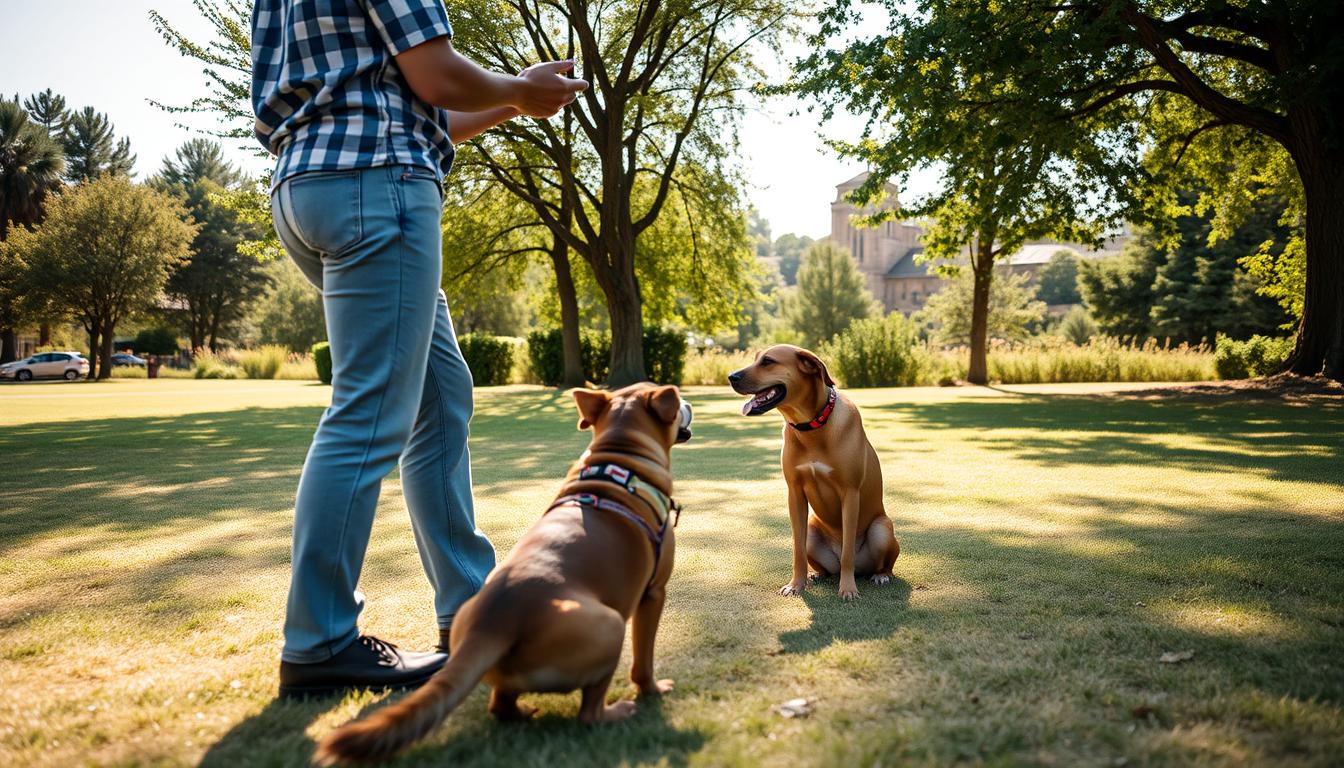
Ever wished your dog could do more than just be by your side? You can teach your dog to help you every day. With the right training, your dog can become a service dog, improving your life.
Teaching your dog basic commands is the first step. This lays the foundation for more complex tasks. Service dogs need to be reliable and focused, no matter where they are. With patience and consistency, your dog can learn these important skills.
Training your dog to be a service dog strengthens your bond. They can help in many ways, like fetching items or offering emotional support. Let’s look at how you can turn your dog into a helpful service dog.
Quick Recommendation: Our blog is filled with tips and tricks for training your puppy or dog. If you are seeking a comprehensive training program, we recommend K9 Training Institute.
Understanding Service Dog Requirements
To be a service dog, certain legal rules must be followed. The Americans with Disabilities Act (ADA) says a service animal is a dog trained to help someone with a disability. These tasks can include guiding the blind, alerting the deaf, or helping someone with a seizure.
Service dogs are not the same as emotional support animals or therapy dogs. Emotional support animals offer comfort but aren’t trained for disability tasks. Therapy dogs give affection but don’t have the ADA protections service dogs do.

Training is key for service dogs. They must be calm and well-behaved. They should not bark a lot, jump on people, or be aggressive. They need to focus on their tasks, even with distractions.
Service dogs also need to be healthy. They must have all vaccinations and not have diseases. Laws say they must be on a leash in public, unless it hinders their work.
If you want to train your dog as a service animal, learn the rules and laws. Proper training ensures your dog is well-behaved and effective.
Choosing the Right Dog for Service Training
When picking a service dog, look at breed traits, temperament, and physical features that fit your needs. Labrador Retrievers, Golden Retrievers, German Shepherds, and Poodles are top choices. They’re smart, easy to train, and stay calm.

A good service dog should be steady, confident, and eager to please. They must be friendly, patient, and not get distracted. It’s key to find a dog that loves being around people and learning.
Physical traits matter too. The dog’s size should fit the tasks they’ll do. Big dogs are great for helping with mobility, while small ones are good at alerting to health issues. Think about the dog’s energy level and if it fits your life and service work needs.
But remember, a dog’s personality is just as important as its breed. Work with a trusted breeder or service dog group to find the perfect dog for you. With the right training and socialization, your dog will be ready to help you in many ways.
Essential Obedience Training for Service Dogs
Training a service dog starts with basic obedience commands. These commands are the foundation for a well-behaved dog. They help your dog assist you in many situations.
Start with commands like sit, stay, come, and heel. Use treats and praise to teach them. Short, regular sessions help your dog learn and remember better.

As you train, make the commands longer and farther away. You want your dog to respond well, even when distracted. Practice in different places, like home, parks, and public areas.
Be patient and consistent in training. Celebrate your dog’s successes and keep training fun. With effort and the right training, your dog will learn the basic commands needed to be a great service dog.
Socializing Your Service Dog
Socializing your service dog is key to keeping them calm and focused. It’s important to expose them to different people, animals, and places early on. This helps build their confidence and adaptability.

Public access training is a big part of socializing your service dog. It teaches them to behave well in places like stores and restaurants. They should stay calm, ignore distractions, and follow your commands.
To practice, start in quiet places and then move to busier ones. Use positive rewards for good behavior. If they get anxious, take a break and try again later.
Being consistent is crucial. Regularly expose your dog to new people and places. With patience and training, they’ll learn to stay calm and do their job well anywhere.
Teaching Specific Service Dog Tasks
Training your dog for service tasks is key to making them a helpful service animal. These tasks help you with your disability. With time and effort, your dog can become a valuable part of your life.
Tasks like retrieving items, opening doors, and providing deep pressure therapy are common. Break these tasks into smaller steps. Use positive reinforcement to help your dog learn.
For example, start by having your dog pick up a toy. Then, make the task harder by increasing the distance and complexity.
Consistency and repetition are crucial in training a service dog. Set aside time each day for training. Practice tasks in different places to help your dog learn in various situations.
Always reward your dog with treats, praise, and playtime. This keeps them motivated and happy during training.
Train Your Dog To Behave Like A Service Dog
To make sure your dog acts like a service dog, you need to use advanced training. This means improving their behavior, how they respond, and their reliability in different situations. With hard work and the right methods, you can keep your service dog’s behavior top-notch.
Teaching your dog more complex commands is a big part of advanced training. This could be tasks like getting items, opening doors, or giving deep pressure therapy. Break these tasks into smaller steps and use positive rewards to help your dog learn these skills.
It’s also important to improve your service dog’s focus and attention. Do exercises that make them concentrate on you, even with distractions around. Give them rewards for keeping their eyes on you and staying focused, even when there are tempting things nearby.
Being consistent is crucial in training your service dog. Set clear rules and stick to them gently but firmly. Also, keep practicing the skills your dog has learned, even if they seem easy. This keeps their behavior sharp and reliable over time.
Remember, keeping your service dog’s behavior in check is a long-term effort. It takes patience, dedication, and a positive outlook. By putting time and effort into advanced training, you can make sure your service dog stays a well-behaved and valuable partner in your life.
Handling Service Dog Etiquette
When you see a service dog out, it’s key to know how to act. Service dogs are not pets but working animals. They help their handlers a lot. If you don’t act right, you might distract them or risk their handler’s safety.
Always remember, service dogs are not for petting or feeding without permission. Don’t try to get their attention with noises or gestures. If you want to talk to a service dog, ask the handler first and do what they say.
When you meet a service dog team, talk to the handler, not the dog. Don’t think they need help without asking. If a service dog comes to you alone, stay calm and don’t talk to it. They might be looking for help for their handler.
By following these rules and teaching others, we can make sure service dogs can do their jobs well. This helps them and their handlers a lot.
Maintaining Your Service Dog’s Training
Keeping your service dog’s training up to date is key. Regular sessions and practice help keep their skills sharp. Even after they’re trained, they still need ongoing education.
Make training a part of your daily life. Practice basic commands like sit and stay. Use treats and praise to reward them for good behavior.
It’s also important to keep their mind active. Try puzzle toys or scent games. These activities keep them engaged and prevent boredom.
Working with a professional trainer is a good idea. They can help improve your dog’s skills and offer tips. Attending refresher courses is also beneficial for both you and your dog.
Remember, training is a lifelong journey. With consistent practice and education, your dog will stay reliable and well-behaved for years.
Conclusion
In this article, we’ve talked about the key steps for training a service dog. Choosing the right dog and teaching them specific tasks are crucial. Remember, being consistent, patient, and dedicated is essential for success.
Socializing your service dog is as important as teaching them commands. Introduce them to different places, people, and situations. This helps them stay calm and focused when needed.
Keeping up with your service dog’s training is vital. Regular practice and reinforcement keep them sharp and reliable. A well-trained service dog offers many benefits to both the handler and the community.
It provides independence and support to the handler. It also helps raise awareness and acceptance of service dogs in public. With the right training, your dog can become a confident and dependable service animal.
Start your service dog training journey and celebrate the bond you’ll create. The hard work will improve your life together. So, keep going and enjoy the loyalty of your service dog!
Quick Recommendation: Our blog is filled with tips and tricks for training your puppy or dog. If you are seeking a comprehensive training program, we recommend K9 Training Institute.