
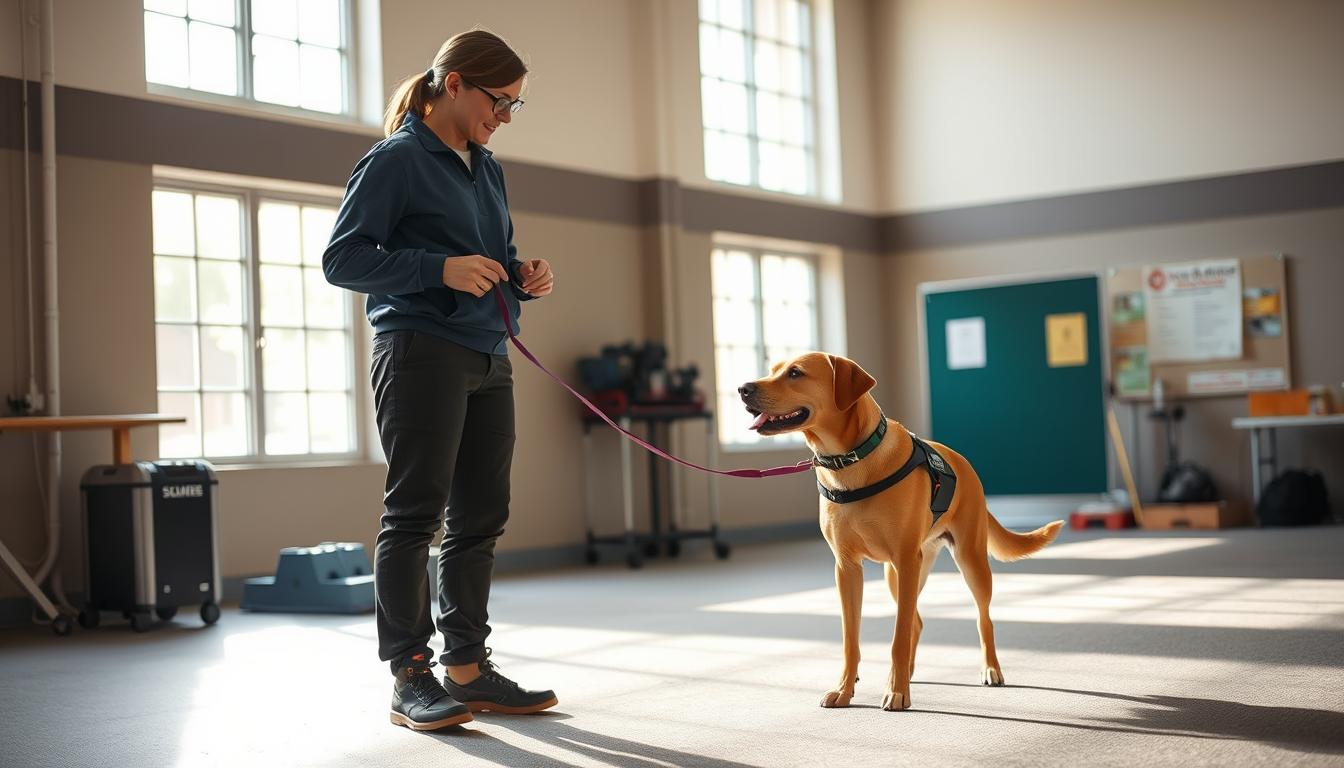
Are you thinking about training your dog to be a certified service animal? Service dogs help people with disabilities live more independently. They need proper training and certification to meet the high standards.
This guide will show you how to train your dog to be a service dog and get certified. You’ll learn about the requirements, choosing the right dog, and basic obedience training. You’ll also discover how to handle your dog in public.
Starting your service dog training journey is rewarding. It strengthens your bond with your dog and helps your community. Get ready to learn how to become a certified service dog handler and unlock your dog’s potential.
Quick Recommendation: Our blog is filled with tips and tricks for training your puppy or dog. If you are seeking a comprehensive training program, we recommend K9 Training Institute.
Understanding Service Dog Requirements
Before starting to train a service dog, it’s key to know the legal rules from the Americans with Disabilities Act (ADA). The ADA says a service animal is a dog trained to help someone with a disability. This can include guiding the blind, alerting the deaf, or helping with mobility.
To be a service dog, the animal must be trained for the handler’s disability. Emotional support animals and therapy dogs don’t count under ADA. Service dogs don’t need a vest or ID, but many wear them for clarity.
The ADA lets service dog handlers take their dogs into places that usually don’t allow animals. This includes restaurants, stores, and buses. The dog must be well-behaved and under control. Owners can ask if the dog is a service animal, but they can’t ask for proof.
Knowing the service dog rules and ADA guidelines helps you prepare for training. We’ll cover how to pick the right dog and the training steps for certification next.
Choosing the Right Dog for Service Training
When picking a service dog, think about a few key things. Make sure the dog fits the job well. Not every dog is right for this tough role.
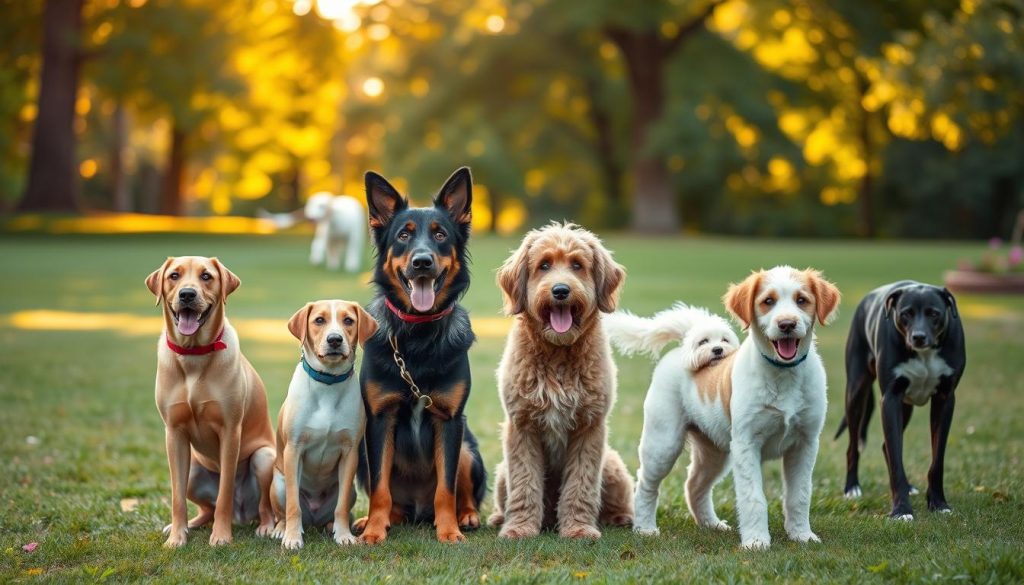
Some breeds, like Labradors, Golden Retrievers, and German Shepherds, are great for service work. They’re smart, easy to train, and friendly. These traits are crucial for a service dog to stay calm and focused everywhere they go.
It’s also vital to check the dog’s personality. Look for one that’s confident, loves to please, and stays focused. A good service dog is friendly and can handle different places and people well.
Don’t forget about the dog’s physical needs. They should be the right size and strong enough for their tasks. They also need to be healthy and free from genetic problems that could stop them from working.
Finding the right dog means looking for the perfect mix of breed, personality, and physical health. Working with a trusted breeder or service dog group can help you find the best match.
Foundational Obedience Training
Obedience training is key for service dogs to do their jobs well. They need to follow basic commands quickly. This helps them move through public places and help their handlers.
Positive training methods, like treats and praise, work best. They teach service dogs the skills they need.
Training your service dog needs to be consistent. Set aside time each day for training. Start with simple commands and add more as your dog gets better.
Always use positive methods. Reward your dog with treats, praise, or play when they do something right.
As you train, your bond with your service dog will grow. This bond is based on trust and clear communication. It’s the base for all the special tasks your dog will learn.
With patience, consistency, and positive reinforcement, you and your dog will become a strong team.
Train Your Dog To Behave Like A Service Dog
To become a certified service dog handler, training your dog is key. You need to teach them to act well in public. This means they should stay calm, focused, and well-behaved in different places.
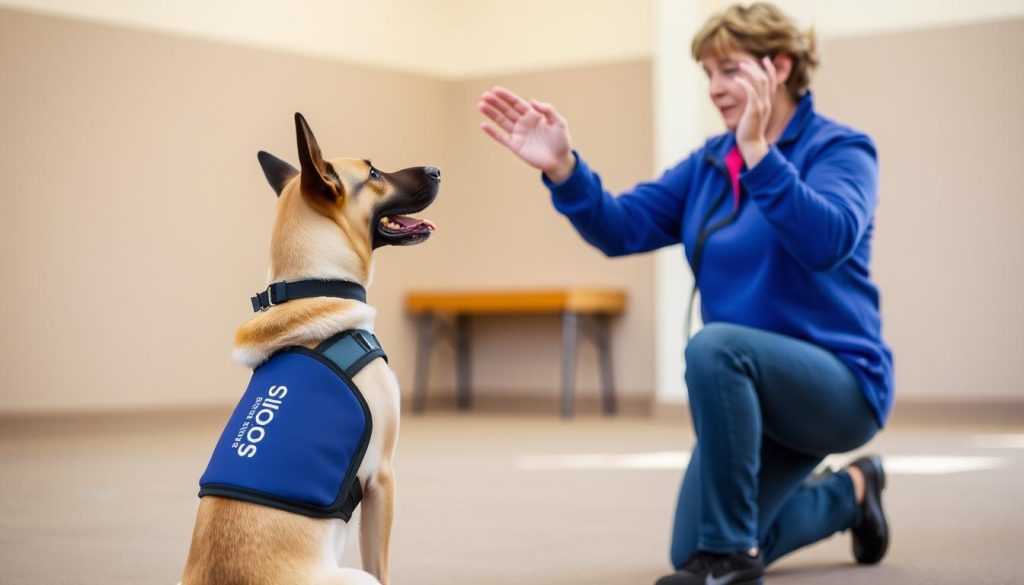
Begin with basic commands like sit, stay, come, and heel. Once they get these, add more distractions and longer tasks. Practice in various spots like parks, stores, and busy streets. This helps them learn in different settings.
Use positive methods to train, like treats and praise. This encourages good behavior in your dog.
Teaching your dog good manners is also important. They should be quiet in public and not bark too much. They should also stay calm and not pull on the leash. Regular practice makes them better at these skills.
As your dog gets better, add tasks related to your disability. This could be picking up items, helping with balance, or alerting you to health issues. With hard work and consistent training, your dog will become a great service animal.
Service Dog Etiquette and Public Access
When you become a certified service dog handler, it’s key to know the etiquette and duties of having your service dog in public. Service dogs have public access rights under the Americans with Disabilities Act (ADA). But, handlers must always keep their dogs well-behaved and under control.
Keeping your dog in check is crucial. Your service dog should be calm, focused on you, and not disturb others. This means no barking, growling, or lunging at people or other animals. Always keep your service dog on a leash or harness unless it hinders their task.
When you go into places like restaurants, stores, or public transport with your service dog, be mindful of your surroundings. Make sure your service dog isn’t blocking aisles, doorways, or paths. If someone is uneasy around dogs, be ready to move to a different spot.
Not everyone knows about service dog public access rights, so be ready to explain calmly and politely. Carry proof of your dog’s certification and explain what tasks your service dog does for you. But, you don’t have to share your disability or show proof of training.
By following the right service dog etiquette and handling your dog well in public, you’ll have a great experience. Your well-behaved and professional service dog will show the important role they play in their handler’s life.
Preparing for Service Dog Certification
As you near the end of your service dog’s training, getting ready for certification is key. You need to document your dog’s training, practice in real-life situations, and keep your dog healthy. This ensures you meet all the service dog certification requirements.
Keeping detailed training logs is vital. These logs should show what your dog has learned and any challenges faced. It proves your dog has been well-trained and helps during evaluations.

It’s also important to expose your dog to various real-world settings. This makes them comfortable in places like restaurants and stores. Practice with your dog in different environments to keep them focused and well-behaved.
Remember, your dog’s health is crucial during this time. Regular vet visits, a healthy diet, and enough exercise are essential. A happy, healthy dog will do better in the certification process.
By thoroughly preparing for service dog certification, you and your dog will succeed. Stay focused on your training, keep accurate records, and care for your dog’s health and happiness. This will help you achieve certified service dog status.
The Service Dog Certification Process
Becoming a certified service dog handler is the final step. The process includes submitting documents and a service dog evaluation. This shows your dog’s skills and behavior in different places. It’s key to choose a reputable certification organization.
In the service dog evaluation, a certified evaluator watches you and your dog in various situations. They check your dog’s obedience and ability to do specific tasks. They also see if you can control your dog and know your rights as a handler.
Once you pass the certification, you get official documents like a service dog registration card and vest. These help when you’re in public spaces and show your dog is a trained service animal. They also help you assert your rights under the Americans with Disabilities Act (ADA).
Even though service dog certification isn’t required by law, it’s reassuring. It shows your dog is well-trained. It also prepares you and your dog to move through public spaces safely and smoothly.
Quick Recommendation: Our blog is filled with tips and tricks for training your puppy or dog. If you are seeking a comprehensive training program, we recommend K9 Training Institute.
Rights and Responsibilities of Service Dog Handlers
As a service dog handler, knowing your rights and duties is key. The Americans with Disabilities Act (ADA) and other laws protect your access to public places. They also make sure you keep your service dog in check and teach others when needed.
The ADA lets service dog handlers bring their dogs into public areas. This includes places like restaurants, stores, and on public transport. Businesses can’t turn you away just because you have a service dog. But, you must make sure your dog is well-behaved, housebroken, and under control.
As a handler, you’re in charge of your dog’s health, cleanliness, and any damage it might cause. This means cleaning up after it, keeping it groomed, and handling any bad behavior. You should also be ready to explain your dog’s role and what it does. Plus, teach others how to properly interact with your service dog team.
By knowing and following these rights and duties, service dog handlers can move through public spaces with confidence. This helps show the important role service animals play in helping people with disabilities.
Maintaining Your Service Dog’s Training and Health
Keeping your service dog trained is key. Regular practice and reinforcing commands are vital. Set aside daily time, even just a few minutes, to work with your dog.
It’s also important to focus on your service dog’s health. Regular vet visits are crucial. They help keep your dog healthy and able to do their job well.
As your service dog gets older, watch for signs they might need to retire. Look for signs like less energy or trouble doing tasks. If you notice these, it’s time to talk to your vet and trainer.
Investing in your service dog’s training and health is a big deal. It ensures they can keep helping you for a long time. By taking care of them, you’re taking care of your partnership and your quality of life.
Conclusion
Becoming a certified service dog handler is a rewarding journey. It needs dedication, patience, and a strong bond with your dog. We’ve covered the basics of training and certifying a service dog. This includes legal requirements, essential obedience skills, and public access etiquette.
The journey of a service dog handler is one of personal growth. You and your dog form a strong partnership. This partnership is built on trust and mutual respect.
Remember, service dogs do more than assist. They offer emotional support, companionship, and independence. Your service dog will be a big part of your life. They will help you feel more confident and independent.
The path to becoming a certified service dog handler has its challenges. But the rewards are huge. By working hard on your service dog partnership, you’ll create a deep connection. You’ll see how much they can change your life.
Embrace the journey and celebrate your milestones. Cherish the bond you share with your service dog. With dedication and love, you’ll unlock the full potential of this life-changing partnership.
Quick Recommendation: Our blog is filled with tips and tricks for training your puppy or dog. If you are seeking a comprehensive training program, we recommend K9 Training Institute.