

Welcome to the ultimate dog whisperer training guide. It’s perfect for both experienced pet parents and new dog owners. This guide gives you expert canine obedience insights. Learn how to talk to your furry friend in a way that works.
We cover everything from basic behaviors to advanced training techniques. Our goal is to help every dog breed. Get ready to improve your training with tips and methods that really work.
Quick Recommendation: Our blog is filled with tips and tricks for training your puppy or dog. If you are seeking a comprehensive training program, we recommend K9 Training Institute.
Understanding Your Dog’s Behavior
Understanding your dog’s actions means getting the hang of how they communicate. Dogs use various behaviors and body language to talk to us. By figuring out these signals, you can connect better with your pet and meet their needs.
For instance, a wagging tail often shows excitement or joy. But if the wag is high and stiff, it could mean your dog feels anxious or alert. Watching their ears, eyes, and posture tells you a lot, too. These cues are key to understanding and responding to how your dog feels.
Situations that happen every day give us chances to read these signals. Maybe your dog barks a lot when guests come over. They could be feeling excited or cautious. Knowing why can help you deal with it effectively.
Really paying attention to your dog’s actions and body language is crucial. This approach makes your bond stronger. It lets you encourage good behavior and lessen stress for you and your dog.
Basic Obedience Training
Welcome to dog training! The journey begins with basic commands. Learning sit, stay, come, and heel is key. These commands lay the foundation of training.
Focus is crucial in the early stages. Give a command and look for a quick response. Reward your dog right away for good behavior. This way, they know they did well.
Being patient is important. Every dog learns at their own speed. Short, regular training works better than long, rare sessions. Your dog might need to hear a command many times.
Use clear words when teaching commands. Say “sit” and gently press their back down if needed. Give a treat when they sit. This rewards their good actions.
Learning to heel is important. It keeps your dog by your side on walks. Hold a treat by your knee to practice. Reward them for staying close.
Consistency is key in training. Have a regular schedule. Your hard work will lead to a better-behaved dog, making life happier for both of you.
Advanced Training Techniques
After your dog knows basic commands, it’s time to learn more advanced training methods. These not only improve their abilities but also keep them mentally and physically active.
Introducing complex commands is a key part of advanced training. It involves teaching your dog to fetch specific items or do complex tricks. Start slowly and make sure your dog is at ease before trying harder tasks.
Using advanced training in everyday life makes learning stick and builds consistency. Reward your dog with treats or praise to encourage them. This makes training fun and successful.
Give your dog challenging activities like puzzle toys or tough agility courses to prevent boredom and keep their minds sharp. Advanced training is more than just commands; it builds a deeper connection between you and your dog.
Breed-Specific Training Tips
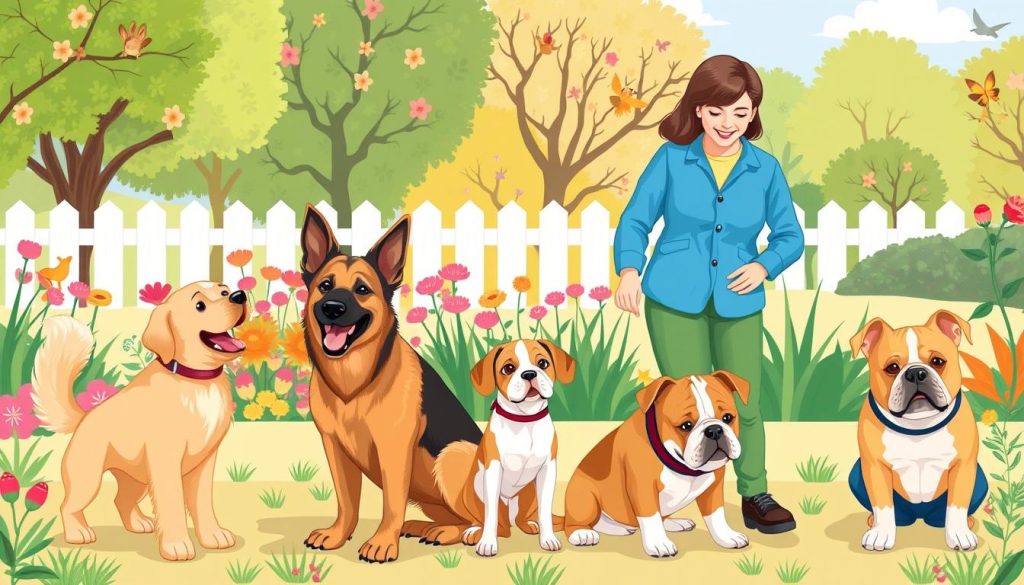
Training dogs means recognizing how special each breed is. Tips tailored for specific breeds boost your success and fun. They account for each breed’s unique traits, temperaments, and genetics that shape how they learn.
Working breeds like Border Collies and German Shepherds love complex tasks. They do well with training that challenges their smarts. Bulldogs and Basset Hounds, though, might need more patience because of their easy-going nature.
To train effectively, match the method to your dog’s natural behavior. Retrievers, bursting with energy, enjoy fetch and swim. Terriers, who like to dig, benefit from play that uses this instinct.
Knowing your breed’s needs helps them learn faster and strengthens your bond. A personal training plan that considers breed traits leads to a well-trained, happy pet.
The Dog Whisperer’s Guide: Training Tips and Tricks for Every Breed
Starting with a comprehensive dog training guide might seem a lot at first. But, the aim is simple: to give every breed the right training they need. These flexible tips ensure your dog becomes a well-mannered family member, no matter the breed.
Understanding your dog’s unique personality is essential. For instance, herding dogs like Border Collies need more brain games. Smaller dogs often do well with rewards for good behavior. Remember, being consistent and patient is vital in training.
In this part of the comprehensive dog training guide, you’ll find techniques made for your dog’s needs. This makes training both successful and fun. So, whether you have a playful Labrador or a headstrong Dachshund, you’ll discover the best approach for them here.
Quick Recommendation: Our blog is filled with tips and tricks for training your puppy or dog. If you are seeking a comprehensive training program, we recommend K9 Training Institute.
Handling Behavioral Issues
Dealing with your dog’s behavioral issues can be tough, but it’s easier with the right approach. Figuring out problems like aggression, barking, and anxiety is key. First, find out the reason for the behavior. Is it boredom or fear causing your dog to bark? Knowing the cause is the first step to fixing the problem.
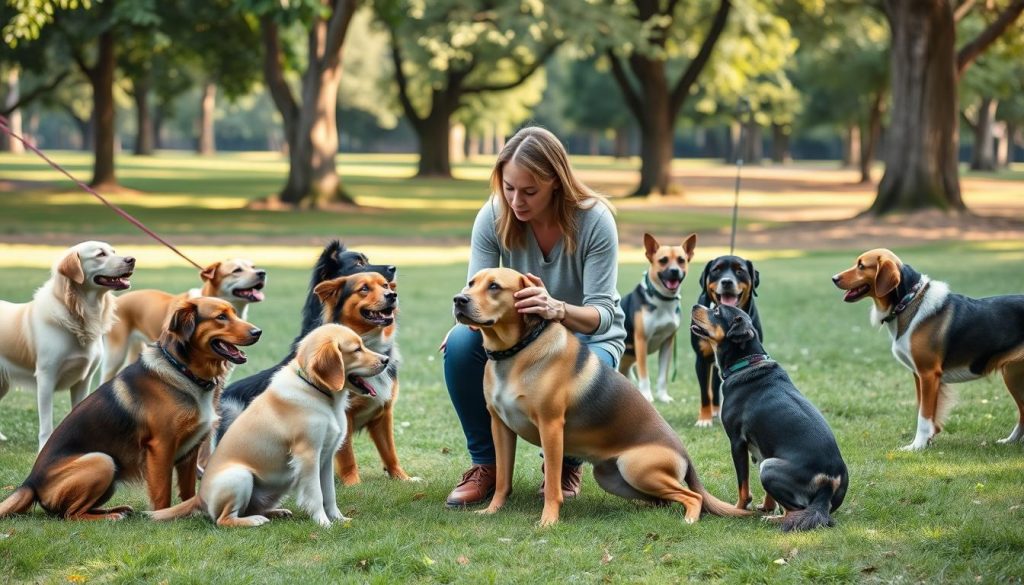
Once you know the issue, apply specific behavior change techniques. If aggression is the problem, try desensitization and counter-conditioning. Slowly get your dog used to the trigger while offering something good, like treats. This can help reduce their aggressive actions.
Excessive barking is another issue. Train your dog to understand the “quiet” command. If they bark, wait for a quiet moment, then reward them for silence. Being consistent with this training can decrease unwanted barking.
Anxiety in dogs can be hard to handle, but it’s not impossible. Make a calm space for them. Use anxiety wraps or calming scents to help. Gradually introducing the source of fear with positive rewards can lead to calmness.
Remember, changing dog behavior takes time and patience. Stick with these methods, and you’ll see better behavior from your dog. This leads to a happier life for both of you.
Using Treats and Rewards Effectively
Rewards are key to teaching good behavior in dog training. A well-used rewards system keeps your pet motivated and keen to learn.
It’s vital to pick the right treats considering your dog’s likes and health needs. Opt for small, soft snacks that they can easily chew and digest during training.
The timing of rewards plays a critical role in training. Give your dog a treat right after they do what you ask. This helps them link the behavior with the reward. Being consistent with your timing is crucial for success.
Mix up your rewards to keep training interesting for your dog. Besides treats, use words of praise, some petting, or a little playtime as other rewards.
The aim of using rewards is to make learning fun for your dog. With dedication and regular practice, you’ll notice big improvements in their manners and obedience.
Incorporating Socialization
Socializing your dog is crucial for their growth into confident and well-rounded pets. They learn to interact with different environments, animals, and people. By introducing your pup to various places, they get to explore new sights, sounds, and smells.
It’s important for your dog to meet other dogs. You can set up playdates with friendly, vaccinated dogs from different breeds and ages. These meetings teach your dog how to play and communicate properly. Learning from older, well-behaved dogs is also beneficial for puppies.
Introducing your dog to new people should be a positive experience. Have friends and family slowly approach and give your dog treats or praise. This helps your dog feel at ease around strangers, reducing fear or aggression.
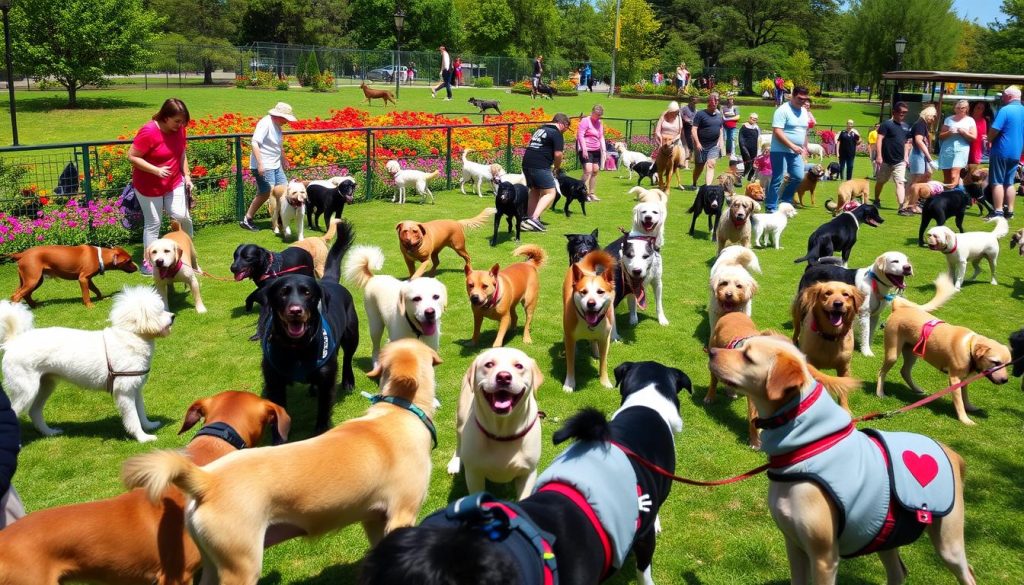
Enrolling your dog in training classes or socialization groups is a good idea too. These places offer safe spaces for your dog to socialize. Remember, being consistent with socialization is important. Keep the sessions short and fun, and slowly add more challenge as your dog improves.
House Training and Crate Training
Training your dog to go outside is vital. It might seem hard, but it’s easier if you break it down. Stick to a schedule and be patient with your dog.
Having a crate gives your pup a safe spot. Make sure it’s the right size for them to move comfortably. It should allow them to stand, turn around, and lie down with ease.
Setting a routine is key for house training. Take your dog out often, like after eating or sleeping. Reward them for going potty in the right place. Consistency will help them learn faster.
Crate training stops bad habits like chewing or indoor accidents. Dogs don’t like to mess where they sleep. So, they’ll try to hold it in while in the crate, which helps with training.
Using these tips well will make housebreaking smoother. Plus, it strengthens the bond with your dog. Remember, being patient and consistent is crucial.
The Importance of Consistency
Consistency is the backbone of effective dog training. A regular schedule and clear rules help your dog learn and respond well. Using the same commands every time is key. It helps your dog know what you expect, just like with kids.
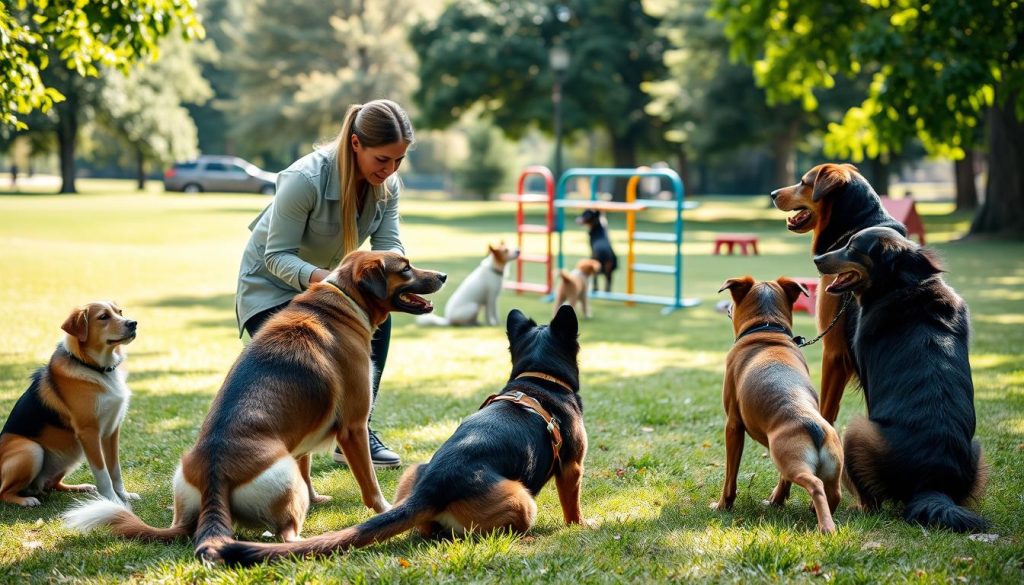
When your dog knows what to expect, training gets better. This makes them feel secure and eager to learn. Keeping training routines the same helps your dog listen and be happier. Your dog will understand and trust you more, making training easier.
It’s important that everyone uses the same commands with the dog. If “sit” is the command, don’t change it to “sit down” or “seat.” Staying consistent helps your dog learn faster. It makes training smooth and effective for everyone.
Conclusion
As we wrap up this guide, we see how key effective dog training is. It makes for a happy, well-behaved dog. Knowing your dog’s behavior is vital. It lets you train them in the best way. With both basic and advanced skills, you can talk better with your pet.
We explored training tips for different dog breeds. Each breed has its own needs. Addressing behavioral problems is crucial, just like using treats right. Socializing your dog helps them get used to new places and faces. House and crate training set up a good living routine. Staying consistent is what makes your training work in the long run.
Keep learning and using these training tips. It helps you build a strong, happy relationship with your dog. A well-trained dog brings joy, trust, and respect into your life. Stick with these training strategies, and you’ll see great results with your furry friend.
Quick Recommendation: Our blog is filled with tips and tricks for training your puppy or dog. If you are seeking a comprehensive training program, we recommend K9 Training Institute.
BTW: If you are interested in everything from nutritional advice and natural health solutions to stress-relief techniques and overall wellness tips, check out our friends at PawfectlyHealthyPets.com.