

Service dog training is key to turning a puppy into a trusted helper. Using positive reinforcement and behavior modification, you can help your dog support people with disabilities every day.
Good service dog training teaches dogs to obey and assist their owners. They can alert to health issues, help with mobility, or offer emotional support. A well-trained service dog can make a big difference in someone’s life.
Starting your service dog training journey is exciting. It’s important to know the basics and best ways to train. In the next parts, we’ll look at the main techniques and strategies for training your pup to be a loyal and skilled service dog.
Quick Recommendation: Our blog is filled with tips and tricks for training your puppy or dog. If you are seeking a comprehensive training program, we recommend K9 Training Institute.
Understanding the Basics of Service Dog Training
Starting to train a service dog means learning the basics first. It’s all about building a strong bond with your dog. This bond is based on trust, respect, and clear communication.
It’s also important to set clear expectations for your dog. They need to know what to do in different situations. For example, staying calm in public or helping you with specific tasks. Being consistent helps your dog learn and remember what you expect.
Positive reinforcement is a great way to train your service dog. This means rewarding them for good behavior, like following commands or staying focused. Treats, praise, or playtime are great rewards that make training fun for both of you.
As you keep training, you’ll learn about behavior shaping techniques. These methods break down big tasks into smaller steps. This way, your dog can learn and do even hard tasks with confidence.
Laying the Foundation: Obedience Training
Obedience training is the first step in training a service dog. Your dog needs to learn basic commands like sit, stay, come, and heel. Training them patiently and consistently is crucial for their understanding and response to these commands.
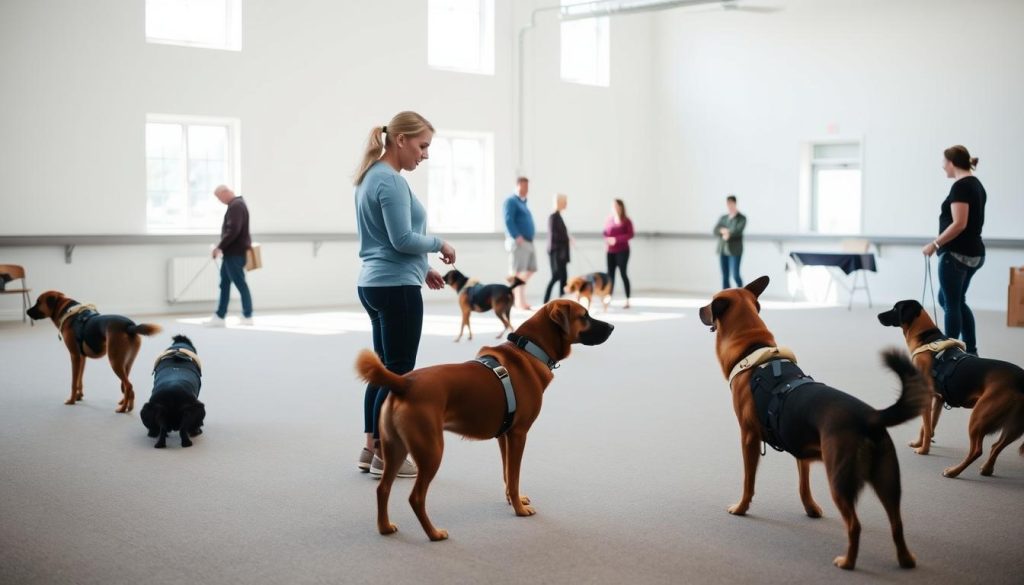
Begin with short, focused training sessions in a quiet place. Use positive methods like treats and praise when they do well. As they get better, make the training longer and more challenging. Also, add distractions to see how well they focus and respond.
Every dog learns differently, so be patient and celebrate their small wins. With consistent effort, your dog will build a strong obedience foundation. This will prepare them for more complex tasks and training.
Positive Reinforcement: The Key to Success
Training your service dog is best done with positive reinforcement. Rewarding your dog for good behavior motivates them to learn and perform tasks with joy. This approach builds a strong bond based on trust and understanding.
Clicker training is a key part of positive reinforcement. It lets you mark the exact moment your dog does something right. The click sound tells them they’ve done well, speeding up their learning.
Timing is everything in positive reinforcement. Reward your dog right after they do what you want. Use treats, praise, and play to make training fun. As they get better, use less treats and more praise and affection.
Every dog learns at their own speed. Be patient and keep training consistently. Celebrate their successes, no matter how small. With positive reinforcement, you’ll unlock your service dog’s full potential and create a strong bond.
Tailoring Training to Specific Service Dog Tasks
Service dog training needs a tailored approach for each task. Whether it’s retrieving items, providing balance, or alerting to emergencies, breaking tasks into steps is crucial.
First, identify the essential skills for each task. This could be picking up items, touching targets, or recognizing scents. Use behavior shaping to build your dog’s skills. For example, start by rewarding your dog for touching an item with their nose. Then, move to picking it up and holding it longer.
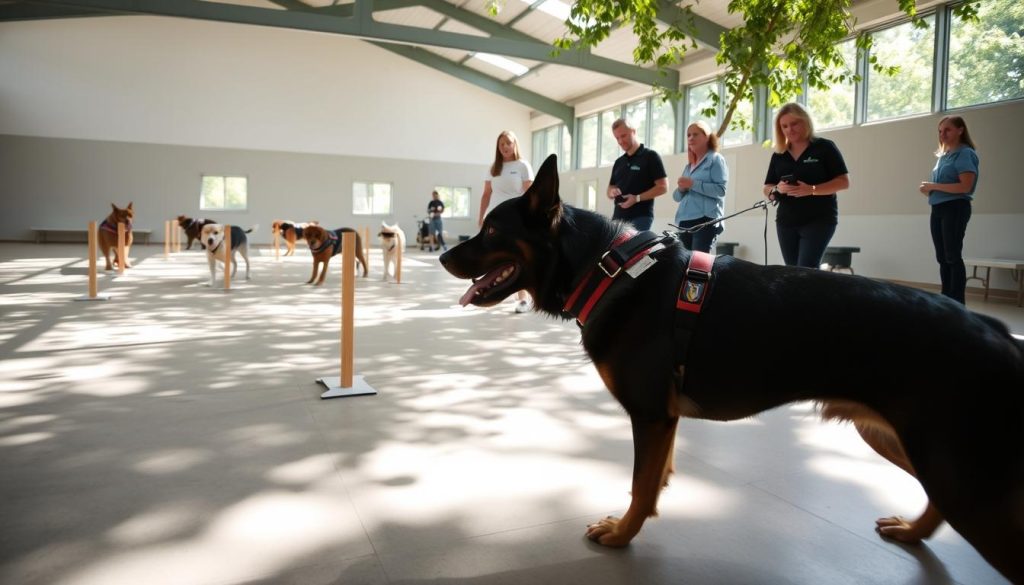
As your dog gets better, add more challenges. Keep training sessions short and positive. Reward your dog for their progress. With patience and consistency, your service dog will learn complex tasks quickly.
Service Dog Training Techniques for Different Disabilities
Service dog training techniques vary based on the disability. Whether it’s for mobility, hearing loss, or psychiatric conditions, the training must match the need. This ensures the dog can assist effectively.
For mobility issues, service dogs learn to pick up items, open doors, and support balance. Dogs for the hearing impaired are trained to alert their handler to sounds. Psychiatric service dogs learn to provide deep pressure, interrupt panic attacks, and remind handlers to take medication.
Positive reinforcement and consistent training are crucial. Break tasks into smaller steps and reward your dog for each success. With patience and dedication, your dog can become a life-changing service dog.
Every dog is unique, and some may need more time or specialized training. Seek help from experienced trainers for valuable insights and support. Tailoring your training to your dog’s abilities and the handler’s needs will help unleash their full potential.
Socialization and Public Access Training
Proper socialization and public access training are key for service dogs. As a handler, you need to keep your dog calm and focused in different places. This helps them get used to real-world situations and still do their job well.
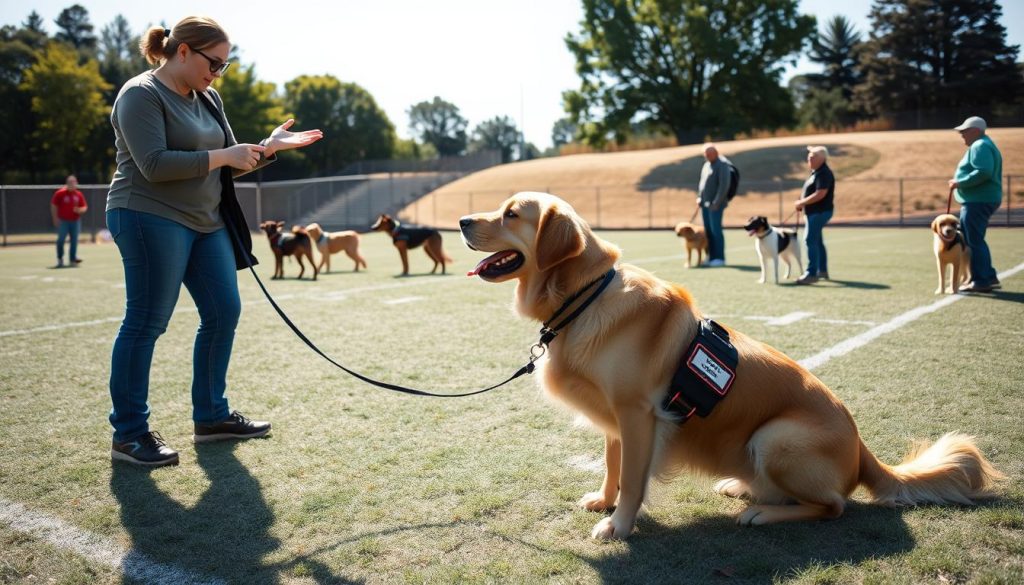
Start by taking your dog to quiet places like parks or less busy streets. Then, move to busier areas like sidewalks or shopping malls. Always reward your dog for staying focused on you and doing their job, even with distractions.
Public access training teaches your dog how to behave in public. They should stay by your side, settle calmly, and only interact with others when told to. Being consistent and patient is important when teaching these skills.
Overcoming Common Training Challenges
Service dog training can be tough, even with the best plans. If your dog resists certain tasks, gets distracted, or does things inconsistently, don’t worry. With patience and positive training, you can help your dog succeed.
When you hit a snag, take a moment to figure out why. Is your dog not getting a task because they don’t know what to do? Or are they distracted by sounds or smells? Knowing the problem helps you change your training.
Try breaking down hard tasks into simpler steps. This helps your dog feel more confident and learn each part before combining them. Use treats, praise, and fun activities to keep your dog excited and focused.
If your dog does things you don’t want, like barking too much or jumping, you can change that. Use techniques to redirect their energy and reward good behavior. It’s crucial that everyone agrees on what’s good and what’s not.
Every dog is different and will face unique challenges. But with patience, positivity, and flexibility, you can help your service dog overcome any obstacle and excel in their role.
Quick Recommendation: Our blog is filled with tips and tricks for training your puppy or dog. If you are seeking a comprehensive training program, we recommend K9 Training Institute.
Maintaining Your Service Dog’s Skills
Congratulations on training your service dog! But, the journey doesn’t stop here. It’s important to keep their skills sharp with ongoing training. Regular obedience training keeps your dog ready to help you anytime.
Set aside time for practice sessions with your service dog. Review basic commands like sit, stay, come, and heel. Also, practice the tasks they’ve been trained for, like getting items or alerting you.
Being consistent is crucial in service dog training. Create a regular training schedule. Short, frequent sessions work better than long, irregular ones. Always use positive reinforcement like treats and praise to keep training fun.
It’s also key to expose your service dog to different places and situations. Take them to stores, restaurants, and parks to practice public access. This helps them stay focused and adaptable. Keep socializing them with new people, animals, and experiences to build their confidence.
Partnering with Professional Service Dog Trainers
Training your own service dog is possible, but working with a pro can be easier and more effective. Professional trainers know how to guide you, offering valuable insights and support. They help make the training smoother.
When choosing a trainer, find one who specializes in service dog training. They should have a good track record. A good trainer will understand your needs and tailor their approach. They can help with dog behavior and public access training.
It’s important to build a strong partnership with your trainer. Share your goals, concerns, and challenges openly. A good trainer will listen and create a training plan just for you.
Training a service dog takes time and effort. Your trainer can guide you, but success depends on your dedication. By working with a trainer and staying committed, you and your dog can achieve great things together.
The Importance of Ongoing Education and Support
Being a service dog handler is a lifelong journey. Your dog’s training doesn’t stop after the basics. It’s key to keep up with new training methods and techniques. This way, your dog stays a trusted and effective partner.
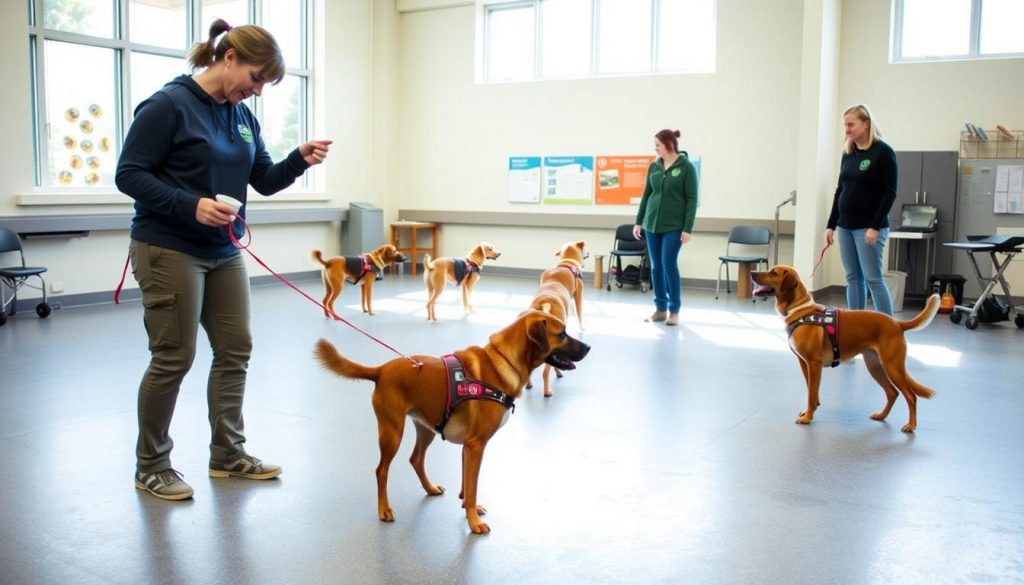
Connecting with other handlers and trainers is a great way to learn. Joining groups online or locally lets you share and learn from others. These communities offer support and encouragement, helping you through the ups and downs of life with a service dog.
Professional trainers can also be a big help. They offer ongoing support and advice. They can help solve problems, adapt training, and use the best positive reinforcement methods for your dog.
Investing in education and support is crucial for a strong bond with your service dog. By staying curious and proactive, you’ll be ready for any challenge. This ensures your service dog remains a loyal and reliable companion for years.
Conclusion
Training your service dog is a rewarding journey. It needs patience, consistency, and a positive approach. Using positive reinforcement and dog behavior modification can help your dog reach their full potential. This builds a strong, reliable partnership.
Start with obedience training and tailor your methods to your dog’s tasks. Socialization and public access training are also key. When you face challenges, keep working through them with understanding and perseverance.
Keeping your service dog’s skills sharp is an ongoing task. It benefits from continued education and support. Working with professional trainers can offer valuable guidance. With dedication and the right training, you and your service dog will overcome any obstacle together.
Quick Recommendation: Our blog is filled with tips and tricks for training your puppy or dog. If you are seeking a comprehensive training program, we recommend K9 Training Institute.