
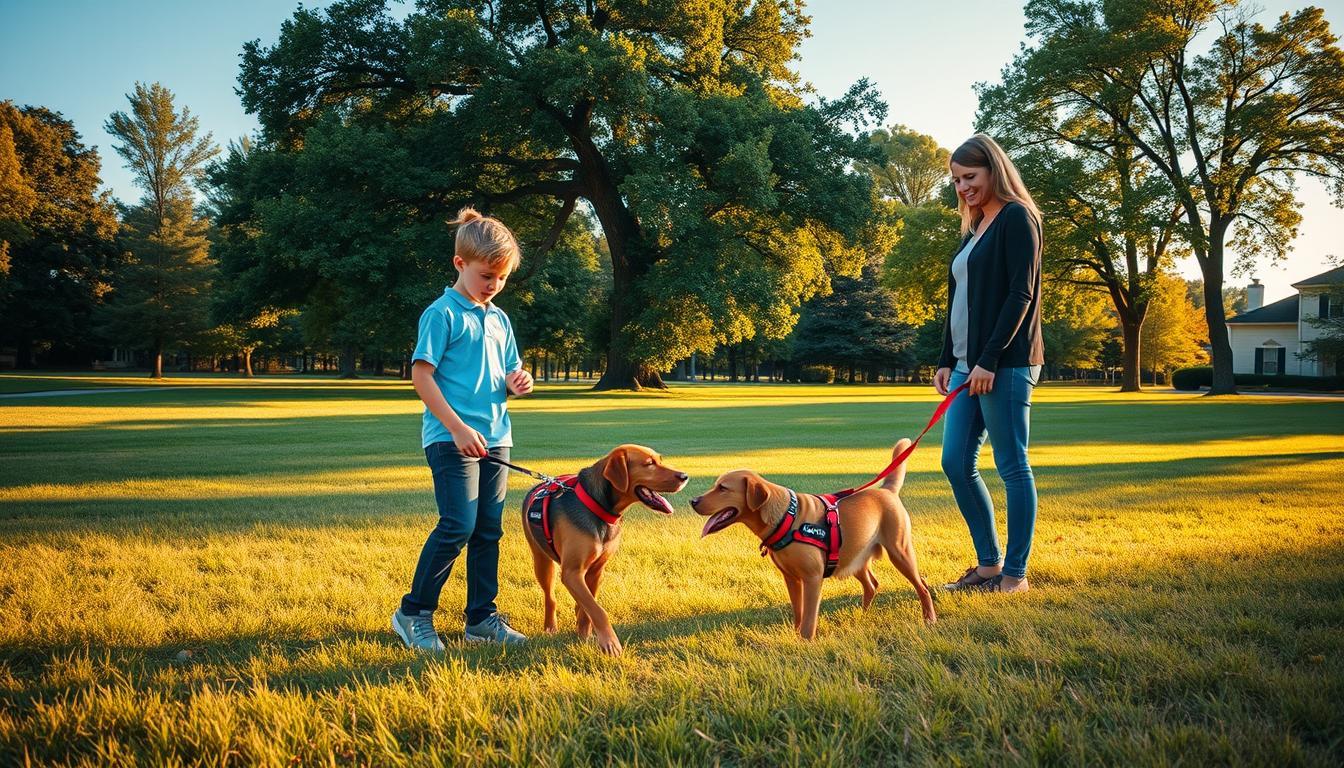
Autism service dog training can change lives. These dogs offer comfort and support. They help people with autism face daily challenges and improve their lives.
If you’re thinking about a service dog for autism, finding experienced trainers is key. They will guide you through the process.
Training a service dog for autism needs special skills. You need to pick the right dog and teach them important commands. Every step requires the help of qualified professionals.
You’ll find trainers who know what individuals with autism need. They can help you get ready for the responsibilities of owning an autism therapy dog.
In this article, we’ll look at the benefits of service dogs for autism. We’ll also cover the training process and what to expect. With the right help, a well-trained autism service dog can be a great companion. They can help with independence, safety, and emotional well-being for years.
Quick Recommendation: Our blog is filled with tips and tricks for training your puppy or dog. If you are seeking a comprehensive training program, we recommend K9 Training Institute.
Understanding Autism and the Benefits of Service Dogs
Autism spectrum disorder (ASD) is a complex condition that affects how people communicate and interact. It also impacts their behavior. A trained service dog can offer crucial support and help in everyday life.
Autism assistance dogs are trained to help with sensory overload, emotional issues, and safety. They provide a calming presence, reducing anxiety and improving well-being.
These dogs are great at helping with sensory issues. People with autism might be very sensitive to sounds, lights, and touch. A service dog can offer deep pressure therapy, which helps reduce stress.
Service dogs for autism also help with emotional regulation. They can recognize when someone is upset and offer comfort. This is especially helpful in social situations or new places.
Moreover, autism service dogs ensure their handlers’ safety. They can prevent wandering, a big concern for families with autistic children. The dog can be tethered to the child, keeping them safe and alerting caregivers if they try to leave.
Having a service dog can also help with social interactions. The dog can act as a conversation starter, making social situations easier. This can help reduce anxiety and make people feel more at ease.
Choosing the Right Service Dog for Autism
Choosing a service dog for autism requires careful thought. The dog’s breed, temperament, and size are key. Working with trusted autism service dog organizations can guide you. They ensure the dog fits the individual’s needs.
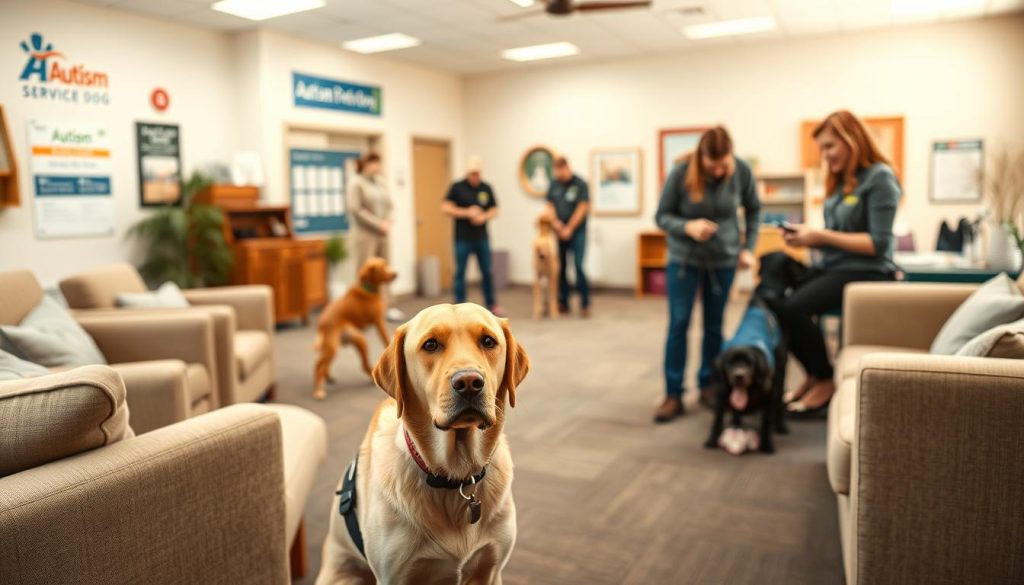
Some breeds are better for autism service work. They are calm, trainable, and adaptable. Labrador Retrievers, Golden Retrievers, and Poodles are favorites. But, the right choice depends on the person’s needs and likes.
The dog’s temperament is very important. It must be patient, gentle, and handle stress well.
Size matters too. The dog should be big enough to help but not too big or small. Autism service dog organizations can help find the right size.
Choosing an autism service dog needs experienced help. Trusted organizations have strict training and guidelines. They prepare each dog for its role as an autism service animal.
Preparing for Service Dog Training
Before starting autism service dog training, it’s key to get ready. First, think about what you need from a service dog. Consider how it can help with daily tasks and emotional support. Work with trusted autism service dog programs to find the right path.
Then, make your home welcoming for your future service dog. Pick a cozy spot for it to sleep and set up a routine for meals and walks. Make sure your home is safe from dangers. It’s also vital to involve your whole family in getting ready.
Teach your family how to interact with the service dog. This helps keep its training strong.
Get the right supplies like a leash, collar, and toys. Look for a skilled trainer who knows how to train service dogs for autism. A solid start will help you and your service dog succeed.
Essential Skills and Commands for Autism Service Dogs
Autism service dogs learn many important skills and commands. They go through tough training to help people with autism. This training makes their lives better.

One key skill is deep pressure therapy. These dogs lay on their handler’s lap or chest. This gives calming pressure that helps with anxiety and sensory overload.
They also learn to stop repetitive behaviors. People with autism might do things over and over. The dogs gently interrupt to help their handlers focus on something else.
Navigation is another important skill. They help their handlers in busy or new places. This makes their handlers feel safer and less anxious.
Training these dogs is ongoing. They need regular practice to keep their skills sharp. This training strengthens the bond between the dog and handler, making their partnership more effective.
Quick Recommendation: Our blog is filled with tips and tricks for training your puppy or dog. If you are seeking a comprehensive training program, we recommend K9 Training Institute.
Finding Qualified Service Dog Trainers
Looking for a service dog trainer
for autism service dog training is key. You need someone with lots of experience in this field. They should have a good track record of training service dogs for people with autism.
Ask local autism support groups, therapy centers, or your child’s healthcare providers for recommendations. They might know of good trainers in your area who are experts in service dog training for autism.
When you find potential trainers, ask about their experience with autism service dogs. Ask for references and consider watching a training session. This will help you understand their methods and how they work with dogs and their handlers.
Make sure the trainer uses positive reinforcement and understands the needs of people with autism. They should be patient, flexible, and dedicated to helping you and your child bond with the service dog.
Check out the Association of Professional Dog Trainers (APDT) and the Certification Council for Professional Dog Trainers (CCPDT) for qualified trainers. A skilled and caring trainer will help you welcome a life-changing companion into your family.
The Service Dog Training Process
Starting service dog training for autism can change lives. It’s a journey for the person with autism and their family. The training has many stages to get the dog ready for its role.
The first step is an assessment. Trainers check if the dog is right for the job. If the dog is a good fit, the real training starts.
Socialization is key in early training. The dog meets different people and places. This prepares them for their future role.
Obedience training is the base of all skills. Your dog will learn basic commands like sit and stay. They’ll also learn advanced commands like “leave it” and “place.”
Task-specific training teaches your dog special skills. They might learn deep pressure therapy or interrupting repetitive behaviors. They’ll also learn to stay calm in public.
During training, your dog works towards getting certified. This shows they meet high standards and are ready to help.
Training never stops. You and your dog keep getting better together. With hard work and patience, you can unlock your dog’s full potential. This opens up new possibilities for independence and happiness.
Challenges and Considerations in Autism Service Dog Training
Training an autism therapy dog is unique. Managing sensory sensitivities is a big challenge. People with autism might react strongly to sounds, smells, or textures. Working closely with your trainer is key to teaching your dog to handle these sensitivities and comfort your child.
Preparing for public interactions is also crucial. Autism assistance dogs go with their owners to places like schools and restaurants. It’s important to train your dog to stay calm in these situations. Your trainer will help you practice and teach your dog the right behaviors.
Remember, your dog’s well-being is top priority. Service dogs work hard and need rest, play, and relaxation. Regular vet visits and a balanced diet and exercise routine keep them healthy and happy.
Always talk openly with your service dog trainer. Share any challenges or successes. Your trainer is there to support you and your dog, helping you build a strong bond and effective working relationship.
Service Dog Training for Autism: Success Stories
Many families have seen big changes thanks to service dogs for autism. These dogs offer comfort, friendship, and help with everyday tasks. They help people with autism deal with challenges and live better lives.

Emily, a 10-year-old girl with autism, got a service dog named Max. Before Max, Emily faced sensory overload, anxiety, and trouble talking. Max, a calm Labrador, was trained to give deep pressure therapy and help Emily feel safe when she’s upset.
“Max has changed our lives,” says Emily’s mom, Sarah. “He keeps Emily calm in tough situations, helps her talk to others, and gives her a sense of safety. We’ve seen big improvements in her social skills and happiness since Max came home.”
The Johnson family also has a heartwarming story. Their son, Aiden, got a service dog named Bella two years ago. Bella, a smart Golden Retriever, keeps Aiden from wandering off and helps him with changes and meltdowns.
“Bella has given us peace of mind and let Aiden see the world in new ways,” says Aiden’s dad, Mark. “She’s more than a service dog; she’s a loved family member who has improved our lives.”
These stories are just a few where service dogs for autism are changing lives. As more people learn about the benefits, more families are getting service dogs. This is helping their loved ones be more independent and happy.
Costs and Financing Options for Autism Service Dogs
Thinking about getting an autism service dog? It’s key to know the costs. The price for a trained dog can be between $15,000 and $30,000 or more. This price includes the dog’s extensive training to help someone with autism.
There are also ongoing costs to think about. These include food, vet bills, grooming, and any special gear the dog might need. It’s important to budget for these to give your dog a great life.
But, there are ways to help pay for an autism service dog. Many organizations offer grants, scholarships, or help with fundraising. They know how much a service dog can change someone’s life and want to make it easier to get one.
Some non-profit programs even have lower fees or prices that change based on how much you can pay. Looking into these in your area can help you find a good deal without sacrificing quality.
Even though getting an autism service dog costs a lot, the benefits are huge. With some planning and looking into financing options, you can make this big investment in your child’s future.
Quick Recommendation: Our blog is filled with tips and tricks for training your puppy or dog. If you are seeking a comprehensive training program, we recommend K9 Training Institute.
Legal Rights and Responsibilities of Autism Service Dog Owners
As an autism service dog owner, knowing your legal rights and duties is key. The Americans with Disabilities Act (ADA) lets you bring your service dog into public places. This includes restaurants, stores, and on public transport. You can’t be turned away or asked to pay extra because of your service dog.
Your dog must be trained to help with your autism to be a service dog. There’s no need for a special certification or registration. But, it’s important to make sure your dog has the right training. Working with a skilled service dog trainer can help you meet these standards.
In housing, the Fair Housing Act requires landlords to make room for service dogs. Even in places that usually don’t allow pets. You might need a doctor’s note to explain why you need the service dog.
You must keep your service dog well-behaved in public. They should always be under your control and not cause trouble. Knowing the rules for service dogs in your area can help you move around with confidence.
Conclusion
Service dog training for autism can change lives. It offers companionship, emotional support, and practical help. This helps people with autism face daily challenges and live better lives.
Choosing the right dog and a qualified trainer is crucial. Spending time and effort in training is also important. This ensures a strong partnership.
Every person with autism is different, with unique needs. Work with your trainer to make the training fit your situation. Be patient as your service dog learns and grows with you.
With the right training and care, your autism service dog will be a great friend and helper. They will be there for you every day.
If you’re
thinking about getting an autism service dog, start now. Look for local organizations, trainers, and support groups. They can help you understand the process and find resources.
With commitment and the right help, you can see the big benefits of a well-trained autism service dog. They can make a huge difference in your life.
Quick Recommendation: Our blog is filled with tips and tricks for training your puppy or dog. If you are seeking a comprehensive training program, we recommend K9 Training Institute.