
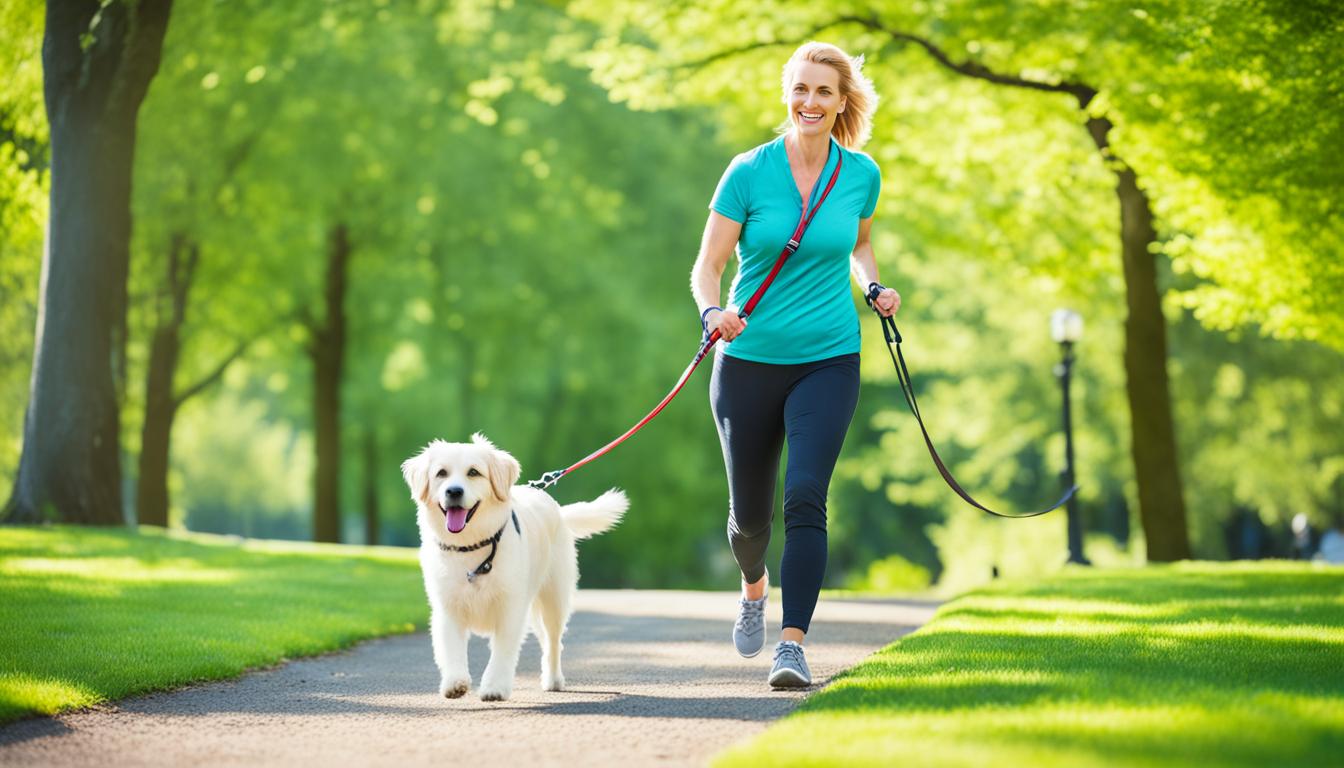
Ever wonder why some dog owners have perfect walks, while others face constant pulling?
Welcome to “Leash Lessons: Mastering the Walk.” Leash training goes beyond control. It’s key to a stronger bond with your furry friend and their safety outdoors. If you’re new or want to improve, follow along for key tips and tricks.
Quick Recommendation: Our blog is filled with tips and tricks for training your puppy or dog. If you are seeking a comprehensive training program, we recommend K9 Training Institute.
Understanding Leash Training Basics
Leash training is vital for bonding with your dog. Understanding your dog’s behaviors is key. Dogs pull on the leash for various reasons like excitement, fear, or instinct.
To teach your dog good leash manners, good communication is vital. Use rewards like treats and praise. Positive methods make training fun for your dog and strengthen trust.
Realistic goals are important for success. Leash training takes time and patience. Every dog learns at its pace. So, keep up with practice and stay positive. This way, walking together will be enjoyable for you both.
Choosing the Right Leash and Collar
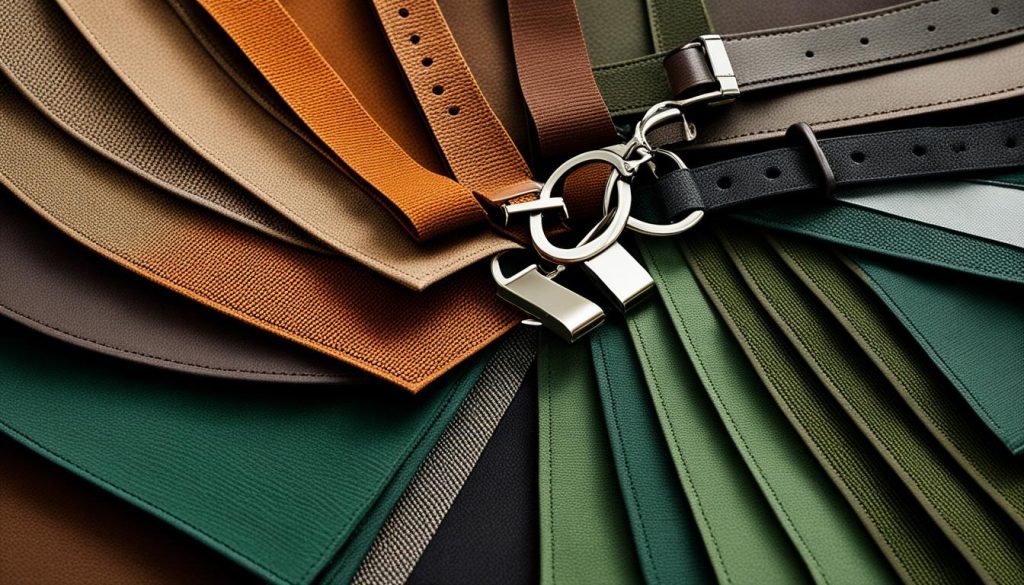
It’s vital to pick the right leash and collar for walking your dog. Start by looking at different leash types. You can use standard leashes every day since they are made of strong materials. If your dog loves to explore, retractable leashes are a great choice. But remember, you’ll need to monitor your dog more when using them. Chain leashes work best for powerful dogs that pull hard because they are chew-proof.
Now, let’s dive into dog collars. Flat collars are the go-to for many dogs. They come in lots of materials and styles, helping your pet stand out. Martingale collars are great for dogs that can slip out, as they provide more control without the choking hazard.
Harnesses can be better for some dogs since they lower strain on their necks. There are lots of types to choose from. For little dogs, back-clip harnesses work well. For big dogs that pull, try a front-clip harness. Dual-clip harnesses offer both options, giving you the best of both worlds.
When picking gear, think about your dog’s size, breed, and habits. For instance, Chihuahuas might prefer back-clip harnesses, while German Shepherds could do well with a martingale collar or a front-clip harness to control their strength.
Choosing the right equipment ensures both you and your dog enjoy walks safely. So, pick what works for you, whether it’s a collar, leash, or a harness. Make sure it fits properly and meets your needs.
Preparing Your Dog for Leash Training
Setting your dog up for leash training success starts with preparation. Spend time making sure your dog is ready and open to learning. Choose a quiet spot in your home for this.
Get your dog used to the leash and the collar or harness step by step. Let them check it out and get used to it slowly. This way, they won’t feel scared or anxious. This helps your dog see the training tools as friendly, not scary.
When your dog is comfortable, try putting the leash and gear on them for short times. Use treats and kind words to make it a good experience. This gentle approach is key for future training success.
Your attitude is important for your dog’s training prep. Dogs pick up on how we feel. So, stay calm and positive. With a steady routine and lots of gentle, upbeat training, your dog will be ready for the leash.
Step-by-Step Guide to Leash Training
Leash training can make you and your dog closer. Start with ‘sit’ and ‘stay’. These are the first things you’ll teach, making those walks more pleasant.
Next, let your dog feel the leash. Attach it gently to their collar. Give them time to adjust to this new feeling.
Then, try walking inside. Keep these early walks brief. Use treats as rewards. Soon, move to a quiet outdoor place. This step helps your dog stay calm while learning to walk on a leash.
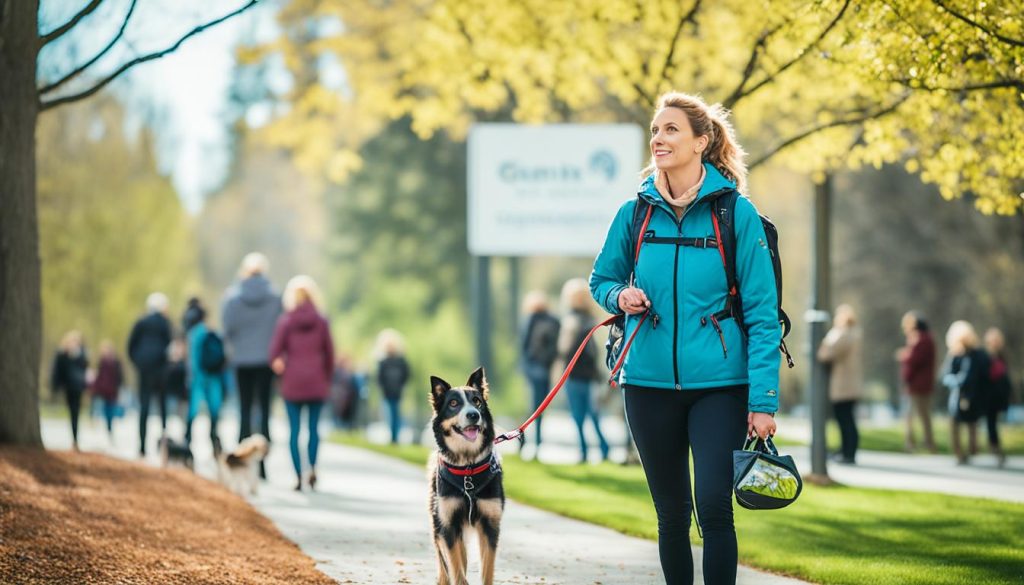
When they’re ready, go outside. Begin in quiet spots only. Be consistent and avoid letting your dog pull too much. Always reward good leash manners.
Over time, walk for longer in new places. Add distractions as they get better. This helps your dog focus while walking.
Remember, leash training is a process. Stay encouraging and patient. Make every training moment fun for your dog and you.
Quick Recommendation: Our blog is filled with tips and tricks for training your puppy or dog. If you are seeking a comprehensive training program, we recommend K9 Training Institute.
Combatting Leash Pulling
Dealing with a dog that pulls on the leash is tough. But, knowing how to deal with it can improve your walks. We’ll look at some helpful ways to train your dog better.
Dogs pull on their leash for many reasons. They might be excited, want to check out something, or just explore. It’s important to recognize these triggers to fix the pulling issue.
Try changing directions a lot during the walk. If your dog pulls, go the other way. This shows them that pulling isn’t the way to get what they want. Doing this often is crucial.
Stopping when your dog pulls is another good strategy. Stand still and wait for them to calm down or come back to you. It teaches them that they only move forward when they’re not pulling.
Consider using a no-pull harness as well. These special harnesses spread the pressure across your dog’s body. They help reduce pulling without hurting your dog.
Include these tips in your daily walks and see a change in your dog’s behavior. Mix and match training methods that fit your dog to stop pulling. This will make your walks enjoyable for both of you.
Harness Training Techniques
Harness training is a great option for your pet. It’s better than using just a collar because it’s more comfortable and gives you more control. Choosing the right size and type for your dog is very important. Just make sure the harness isn’t too tight or too loose. It should fit just right, with enough room for two fingers between it and your dog’s skin. This ensures comfort and safety.
Harnesses spread any pulling force across the chest, keeping your dog safe. They are perfect for dogs with breathing issues or those that might injure their necks with a collar. They also help you manage your pet better, lowering the chances of them running away.
Teaching your dog to walk with a harness takes time. Start at home, letting them wear the harness inside. Use rewards like treats and praise to keep it positive. Then, slowly move to short walks indoors before stepping outside. This way, your dog will gain confidence and enjoy walking with you.
These tips can turn your walks with your dog into a fun activity. It’s all about making sure the harness fits right and training with care. In the end, you’ll both love your time outside together.
Walking on a Leash: Etiquette and Tips
Walking your dog right is key to making walks fun for everyone. Keep your dog close when near people or other pets. This stops them from jumping and makes sure everyone is safe. Always pick up after your pup to keep public areas nice.
Meeting other animals and people can be hard. Make sure your dog stays calm and under control. If another dog comes close and yours gets nervous or angry, move away gently. It helps avoid bad situations for all.
Minding distractions is vital. Things like a squirrel running by might spark your dog’s interest. Keeping their attention on you is important. Commands like “leave it” can help. Work on these at home so your dog listens when outside.
Know the rules of leash walking. Always respect others’ space, especially in busy places. Don’t let your dog greet strangers up close without asking. Not everyone likes dogs, so be considerate. Also, keep your dog out of other people’s yards.
Advanced Leash Training Tips
After your dog learns the basic leash skills, it’s time for some advanced lessons. These lessons are great for improving how both you and your dog enjoy walks.
Keep your leash handling steady as you try more advanced methods. Practice with more than one dog to help them walk together comfortably. Always remember, practice and patience are essential for success.
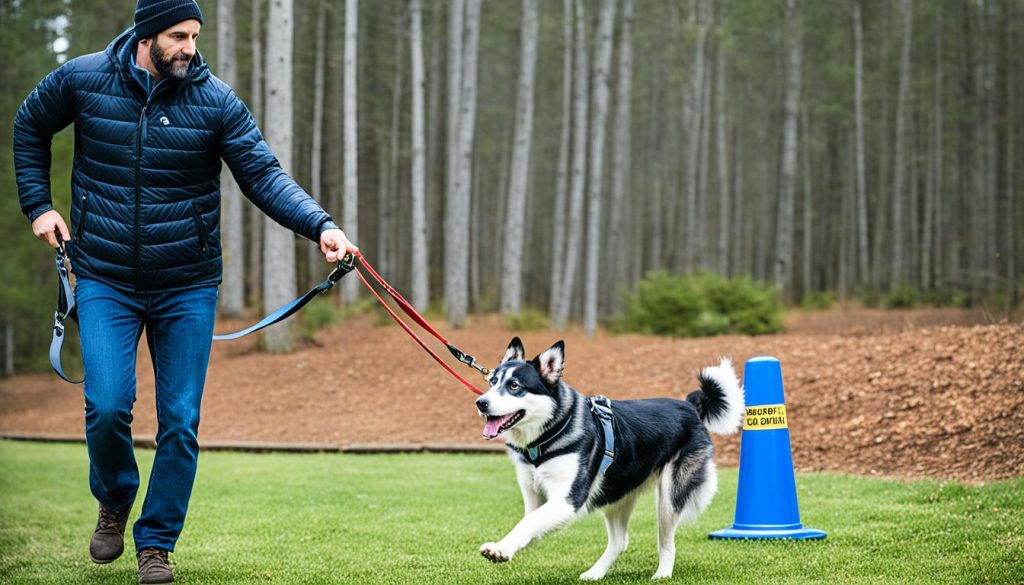
Advanced leash training involves handling crowded spaces well. Introduce your dog to new places gradually to make them braver. Places like parks and busy streets are perfect to practice following commands and walking politely on a leash.
Addressing Common Problems
Leash training can sometimes bring up common leash problems that may look tough at first. Excessive barking is one issue during walks. To solve this, it’s key to remain calm and not overreact. You should try drawing your dog’s attention elsewhere using treats or toys.
Lunging is a problem many dog owners face. It’s often due to excitement or frustration. To handle this, watch out for what can set your dog off and keep a tight hold on the leash. Praise your dog when they walk nicely beside you to encourage this good behavior.
Anxiety on walks can also be a big hurdle. If your dog gets anxious, start with short and simple walks, then gradually make them longer. Always keep the walks positive with plenty of praise and rewards. Being patient and sticking to your routine are also really important.
To solve these issues, you need to hang in there and keep a positive outlook. Remember, dogs learn at their own pace, so cheer on the little improvements. With dedication, you and your dog can look forward to peaceful walks.
Quick Recommendation: Training your dog is just the beginning. Keep them safe an healthy with Pin Paws Pet Care. Our blog provides the training advice, and Pin Paws offers the protection your pet deserves.
Maintaining Consistency
It’s key to be consistent when training your dog on a leash. Doing it often helps set a reliable routine. This makes learning easier and more successful. Walking your dog every day is a good way to teach and recognize good behavior.
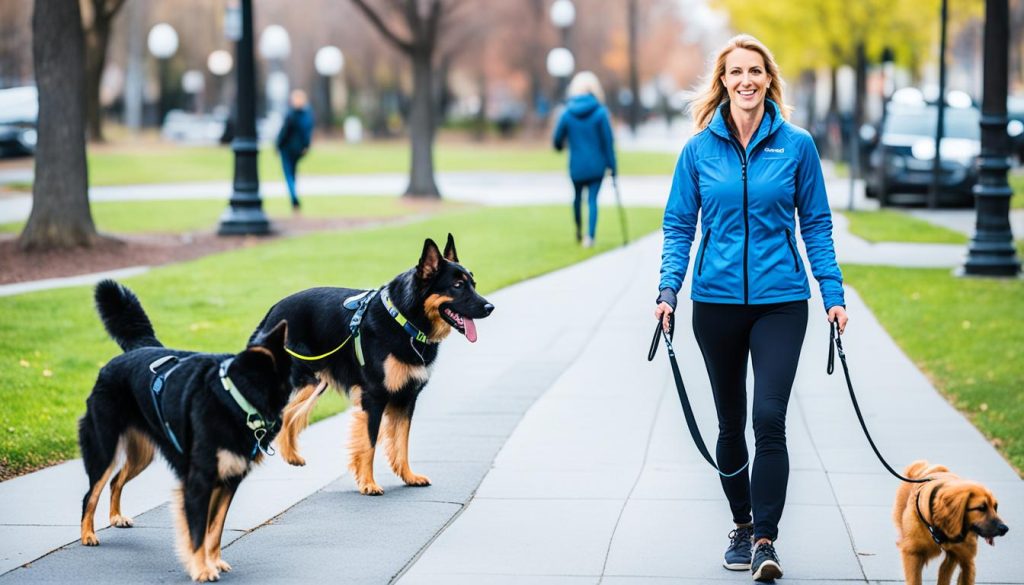
Choose regular times for walking. It’s not only about fitting it into your day. A set schedule helps your dog know what to expect. So, they learn to follow your lead easily. Always use the same training methods during walks. This is how your dog learns right from wrong.
Make sure walks are fun by changing it up. Try new paths and places to keep your dog interested. This way, they pay more attention to you and your commands wherever you go.
Using training techniques during walks is crucial. It helps your dog learn how to behave while on a leash. Remember, being consistent with training is an ongoing responsibility. Yet, it builds a strong bond between you and your pet.
Leash Training for Different Dog Breeds
Leash training can vary a lot depending on the dog’s breed and personality. It’s important to know what makes your dog unique. This helps tailor the training to fit them better.
Breeds that love to work or play a lot, like Border Collies and German Shepherds, have high energy. More exercise before training helps them focus. It’s all about meeting their energy levels.
On the other hand, small dogs need a different approach. Chihuahuas and Pomeranians do well with short, gentle sessions. They need to be treated carefully because of their size and attention span.
Dog temperaments can differ even within the same breed. A training plan should fit your dog’s personality. This could mean using special tactics if your dog is shy or active.
Strong, muscular dogs such as Rottweilers and Pit Bulls need special handling. They might require tougher leashes and clearer commands. This is for everyone’s safety during walks.
By understanding and adapting to each breed’s needs, leash training can be a pleasant experience. It’s a great way to build a strong bond with your pet.
Conclusion
You’ve learned a lot about leash training. You started with the basics and picked the right gear. Then, you got your dog ready and started training sessions. Every step has brought you closer to a successful leash training journey.
You learned more advanced techniques and how to be consistent. This way, you’re not just teaching your dog; you’re getting closer to them. Understanding each breed has helped you find the best approach for your dog.
Now, always remember to be patient and not give up. The more you work on leash training, the easier and more fun walks will be. A well-trained dog behaves better and you’ll feel even closer to your furry friend. Every walk will become a time of joy together.
Quick Recommendation: Our blog is filled with tips and tricks for training your puppy or dog. If you are seeking a comprehensive training program, we recommend K9 Training Institute.
BTW: If you are interested in everything from nutritional advice and natural health solutions to stress-relief techniques and overall wellness tips, check out our friends at PawfectlyHealthyPets.com.