

Bringing home a new puppy is exciting, but housebreaking can be tough. Don’t worry! With the right techniques, you’ll get your puppy potty trained quickly. This guide will show you how to make housebreaking easier for you and your pup.
We’ll cover everything from the basics to proven potty training methods. You’ll learn how to set a schedule, use positive reinforcement, and deal with accidents. By the end, you’ll know how to handle this important part of raising a puppy with confidence.
Quick Recommendation: Our blog is filled with tips and tricks for training your puppy or dog. If you are seeking a comprehensive training program, we recommend K9 Training Institute.
Understanding the Basics of Puppy Housebreaking
Puppy housebreaking is key to raising a well-behaved dog. It requires consistency and patience. Your puppy needs time to learn where it’s okay to go. Look for signs like sniffing, circling, or whining to know when they need to go.
Have realistic expectations during this time. Puppies have small bladders and can’t control themselves yet, so accidents will happen. Start with a regular schedule. Take your pup out in the morning, after meals, naps, and playtime. Young puppies might need to go every 1-2 hours.
It’s important to understand your puppy’s growth and needs for successful housebreaking. As they get older, they can hold it longer. Stay patient and keep training consistent. Positive reinforcement like praise and treats helps a lot. With time and effort, your puppy will learn to go potty where they should.
Creating a Consistent Potty Schedule
Setting a reliable potty schedule is key to successful housebreaking. It teaches your puppy when and where to go. This makes housebreaking easier for you and your pup.
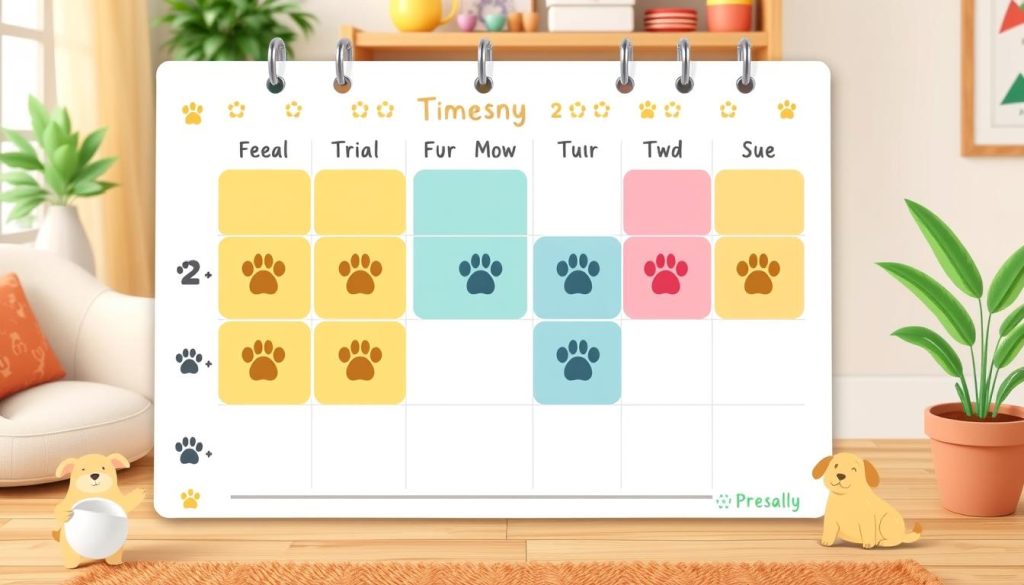
Begin by taking your puppy out in the morning, after meals, naps, and play. Young puppies need to go outside every 1-2 hours. As they get older, they can hold it longer. Remember, puppies have small bladders, so they need frequent breaks.
Being consistent is important in housebreaking. Always use the same spots and commands. This helps your puppy understand what you want. Praise and reward your pup when they go in the right spot. With patience, your puppy will follow your potty schedule.
Adjust your puppy’s schedule based on their age, eating times, and activity. As your pup grows, you can increase the time between breaks. Following these techniques consistently helps your puppy develop lasting good habits.
The Power of Positive Reinforcement in Housebreaking
Positive reinforcement changes the game in housebreaking your puppy. When your puppy goes potty outside, give them lots of praise and treats. This links good behavior with rewards in their mind.
Timing is very important with positive reinforcement. Praise your puppy right after they finish outside. This helps them understand the link between their action and the reward. Always have treats ready during potty breaks to reward them quickly.
Being consistent is crucial in housebreaking. Always use the same praise words and tone when your puppy does well. This makes the good behavior stronger. Positive reinforcement isn’t just about treats. Words of praise, petting, and playtime are also great rewards.
Don’t scold accidents. Focus on praising when your puppy does well. This positive way makes housebreaking fun for you and your puppy. With patience and consistent positive reinforcement, your puppy will get better at housebreaking.
Quick Recommendation: Our blog is filled with tips and tricks for training your puppy or dog. If you are seeking a comprehensive training program, we recommend K9 Training Institute.
Crate Training: Your Secret Weapon
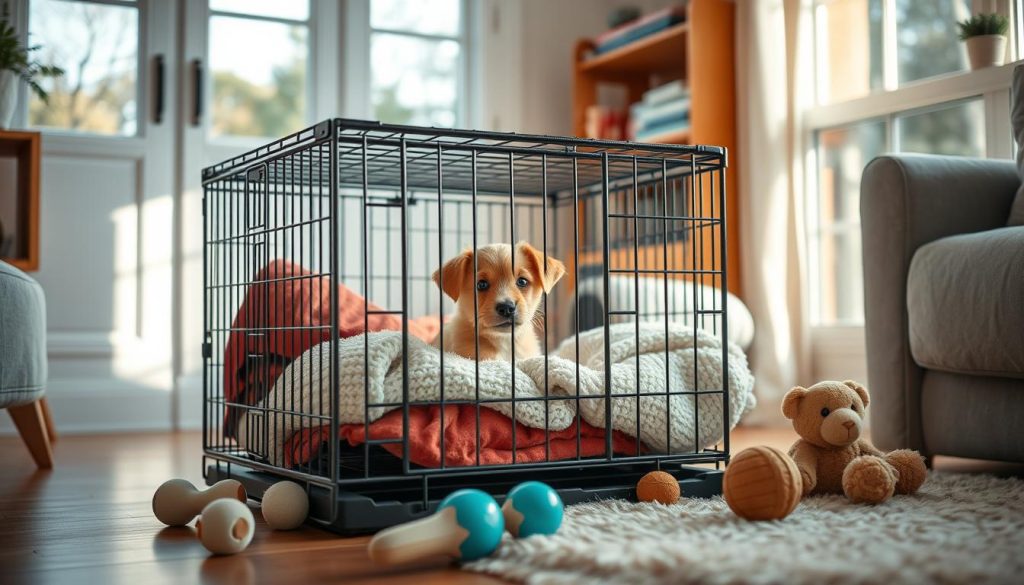
Crate training is a key tool for housebreaking your puppy. It uses your pup’s natural instinct to seek a safe space. This method helps with potty training and can make housebreaking faster and prevent accidents.
Start by picking a crate that fits your puppy well. It should be big enough for them to stand, turn around, and lie down. Introduce the crate slowly, using treats and toys to make it a positive place.
Don’t use the crate as a punishment. It should be where your puppy feels safe and happy.
Crate training works because dogs naturally don’t want to soil their sleeping area. By limiting their space when you’re not watching, you help them learn to go potty outside. Make sure to take your puppy out often, after meals, naps, and play.
Some people think crate training is cruel, but it’s actually a kind and effective way to housebreak your puppy. Begin with short crate sessions and slowly increase the time as your puppy gets used to it. With patience and consistency, crate training can be a big help in preventing accidents.
Puppy Pads: Pros and Cons
Puppy pads can be a great tool for housebreaking your pet. They offer a designated spot for your dog to go potty indoors. They’re perfect for those living in apartments or when you’re away for a long time.
Using puppy pads is convenient. You can put them anywhere in your home, making potty training easier. They’re great during bad weather when going outside is hard. Plus, they protect your floors from accidents, cutting down on cleanup.
But, using too many puppy pads can slow down outdoor housebreaking. Some dogs might find it hard to switch from indoor to outdoor potty habits. There’s also a chance your dog might think other soft surfaces like rugs are okay to pee on.
If you choose to use puppy pads, move them closer to the door over time. This helps your dog learn to go potty outside. Remember, while puppy pads can be useful, they shouldn’t replace regular outdoor training.
Effective Housebreaking Techniques for Quick Results
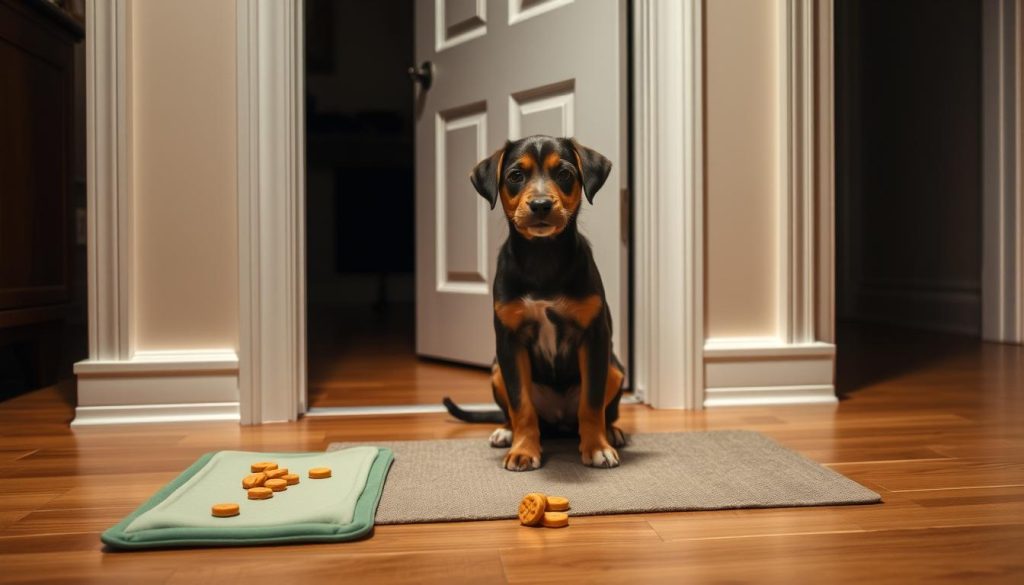
Want to make your puppy’s potty training faster? Try these effective housebreaking techniques for quick results. Begin by setting a strict potty schedule. Take your pup out every hour, after meals, and when they wake up. This routine helps prevent accidents and builds good habits.
Supervision is key in housebreaking. Always watch your puppy for signs they need to go. Look for sniffing, circling, or whining. When you see these signs, quickly take them to their potty spot.
Use a specific phrase like “go potty” when your puppy goes. This helps them link the words with the action. Over time, they’ll learn to go on command, making potty training easier.
Consistency is key for fast housebreaking results. Stick to your routine and reward system, even on busy days. With patience and these tips, you’ll see progress quickly. Remember, every puppy learns at their own pace, so stay positive and celebrate small wins.
Dealing with Accidents: Clean-up and Prevention
Accidents are common when you’re housebreaking a puppy. It’s important to clean up well and stop future messes. Enzyme cleaners are great for this. They break down smells that might make your puppy go back to the same spot.
Start by blotting up as much mess as you can. Then, put a lot of enzyme cleaner on the spot. Let it sit for the time suggested on the cleaner. This lets the enzymes get rid of smells that might draw your puppy back.
Stopping accidents before they happen is key to successful housebreaking. Watch your puppy for signs they need to go out. These signs include sniffing, circling, or whining.
If your puppy keeps having accidents, check your housebreaking plan. Are you taking them out often enough? Are they getting praised for going in the right spot? Being consistent is important in teaching your dog where to go.
With patience and the right steps, you’ll soon have a well-trained pup.
Important Tip: Training your dog is just the beginning. Keep them safe an healthy with Pin Paws Pet Care. Our blog provides the training advice, and Pin Paws offers the protection your pet deserves.
Overcoming Common Housebreaking Challenges
Puppy potty training can be tough. If your puppy seems to forget their training, don’t worry. Just go back to the basics. Take your puppy out more often and praise them when they do their business outside.
Marking behavior is another challenge you might face. Some puppies mark their territory inside. Getting your puppy neutered or spayed can help. Clean up any accidents with special cleaners to remove smells that might make them do it again.
Not seeing consistent results often means your training isn’t consistent. Keep a strict schedule for feeding, potty breaks, and playtime. This helps your puppy know when it’s time to go outside. Remember, getting past housebreaking challenges takes time and effort.
If you’re having trouble with potty training, get help from a professional dog trainer. They can give you specific advice to overcome your housebreaking issues and help your puppy quickly.
Maintaining Consistency and Patience Throughout the Process
Housebreaking needs consistency and patience. Stick to your routine and keep going even when accidents happen. Your puppy learns by repeating things, so stay with the process. Each pup grows at their own speed.
Stay motivated by celebrating small wins. If your puppy goes outside without accidents, praise them! Keep a positive outlook and adjust your expectations. Some days will be better than others. Focus on moving forward, not being perfect.
Patience is key for success. A well-trained puppy means less mess and a happier home. When you feel upset, take a deep breath and think about the goal. Your hard work now will bring joy with your pet for years.
If you’re stuck, don’t be afraid to ask for help. Talk to your vet or a professional trainer for advice. They can give you new ideas on housebreaking that fit your situation. Remember, every puppy is different, and what works for one might not work for another.
Conclusion
You now have a great set of tools for housebreaking your puppy. It’s all about being consistent and patient. Stick to a regular potty schedule and use positive reinforcement to see progress in your puppy’s training.
Crate training and puppy pads can help a lot in housebreaking. If your puppy has an accident, clean it up quickly and change your approach. Remember, every puppy is different, so be ready to adjust your methods as needed.
With these techniques, you’re ready for success in puppy training. Stay committed, and soon you’ll have a well-behaved pet that knows where to go potty. Your hard work will lead to a happy, housebroken pet for many years.
Quick Recommendation: Our blog is filled with tips and tricks for training your puppy or dog. If you are seeking a comprehensive training program, we recommend K9 Training Institute.
BTW: If you are interested in everything from nutritional advice and natural health solutions to stress-relief techniques and overall wellness tips, check out our friends at PawfectlyHealthyPets.com.