
Is your furry friend making your doorway chaotic? You’re not alone. Many pet owners face dogs that rush, jump, or bark at doors. But there’s hope! With the right training, you can make your pup polite at doors.
Learning obedience at doors isn’t just for peace. It makes your home safer and more fun for you and your dog. Let’s start this journey to better door manners together. We’ll see how to make your dog the perfect greeter.
Quick Recommendation: Our blog is filled with tips and tricks for training your puppy or dog. If you are seeking a comprehensive training program, we recommend K9 Training Institute.
Understanding the Importance of Door Manners
Door manners are key to your dog’s safety and your home’s peace. Teaching your dog to behave at entrances is crucial for their safety. If they rush out, they might get hit by a car or lost.
By learning pet etiquette, your dog waits patiently. This reduces stress for both of you.
Good door manners are not just about safety. They show your dog’s obedience and make a good impression on guests. Imagine having visitors without your dog jumping or barking a lot. This control makes life easier and strengthens your bond with your pet.
Teaching your dog good door manners takes time and patience. Begin with simple commands like “sit” and “stay” near the door. Then, add more distractions as they get better. Soon, your dog will stay calm when the doorbell rings or someone knocks. This skill makes your dog’s behavior better and your home more peaceful.
Establishing Basic Obedience Commands
Before teaching your dog door manners, make sure they know basic obedience commands. Start with sit, stay, and come. These commands are the foundation for good behavior at doors and elsewhere.
Teaching “sit” is a great first step in dog training. Use a treat to lure your dog into the sitting position. Then, reward and praise them. After they get it, move on to “stay.” This command takes patience but is key for door manners. Start with short times and increase it as your dog gets better.
The “come” command is vital for calling your dog away from the door. Practice it in a quiet area first, using treats and excitement to get them to come to you. As they get better, add distractions to make it more like real life.
Being consistent is crucial in training. Practice these commands every day in different spots at home. With time and patience, your dog will learn to respond well, leading to polite door behavior. Remember, every dog learns at their own speed. Keep training sessions short and enjoyable to keep them interested.
The Foundation of Positive Reinforcement in Dog Training
Positive reinforcement is a key part of effective dog training. It rewards good behaviors instead of punishing bad ones. This method makes your dog want to do more of the right things.
Rewards are important in positive reinforcement dog training. They can be treats, praise, toys, or playtime. Give something your dog likes right after they do what you want. This helps them link the reward to the action.
Positive reinforcement makes your bond with your dog stronger. Your dog will think of you as someone who gives good things. This makes them more willing to listen and be happy to learn new things. It also boosts their confidence as they learn in a supportive space.
Being consistent is key with positive reinforcement. Everyone in the family should use the same cues and rewards. This makes it clear to your dog what’s expected and helps them learn good behaviors in all situations. With time and effort, positive reinforcement can change your dog’s behavior for the better.
Quick Recommendation: Our blog is filled with tips and tricks for training your puppy or dog. If you are seeking a comprehensive training program, we recommend K9 Training Institute.
Doorway Decorum: Training Your Dog for Polite Door Behavior
Teaching your dog to be polite at doors is key for a well-behaved pet. Begin by teaching them to sit and stay near the door. Do this often, and make the distance between you and your dog bigger over time. Give them treats and praise when they listen, which encourages good behavior.
Then, teach the “wait” command. Open the door a bit and tell your dog to wait. If they stay calm, give them a reward. Gradually make them wait longer and open the door wider. This helps stop your dog from running through doors without permission.
Being consistent is important for teaching door manners. All family members should use the same rules when coming or going. This makes your dog understand polite behavior is always expected, not just during training.
Patience is vital when teaching door manners. Some dogs might learn slower, but with steady training and positive rewards, they’ll learn to wait at doors. This skill makes home life better and keeps your dog safe in different situations.
Step-by-Step Guide to Teaching “Wait” at the Door
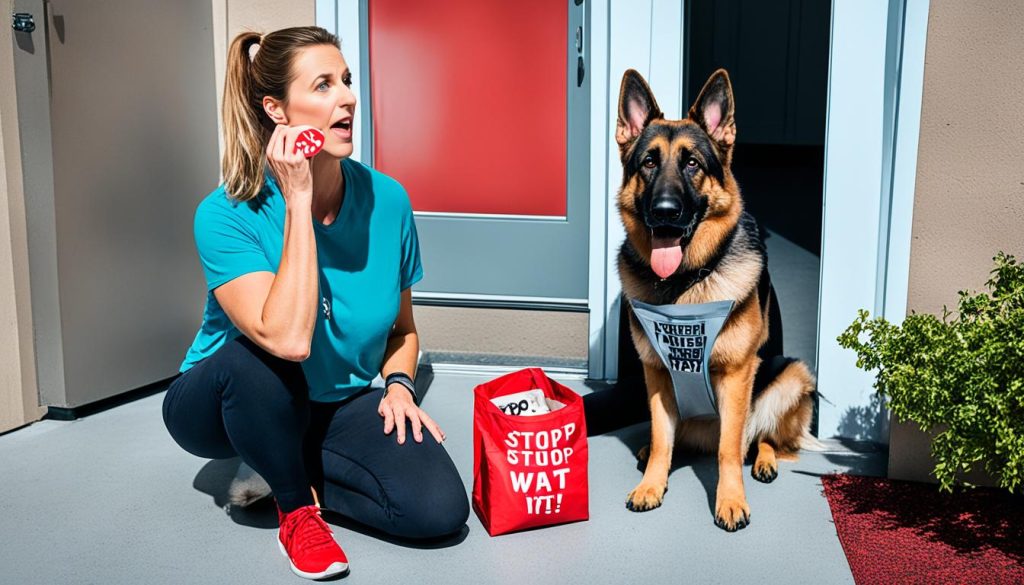
Teaching your dog to wait at the door is key to good obedience. Begin by walking your dog to the door on a leash. When you get close, say “wait” clearly and firmly. If they stop, give them a treat and praise.
If they don’t stop, guide them back to the waiting spot. Do this exercise many times a day. Slowly make them wait longer and be farther away from you.
When they can wait well, start opening the door a bit. If they stay, give them a treat. If they move, shut the door and try again.
As they get better, open the door more and walk through while they wait. Use a command like “okay” or “let’s go” to let them in. This teaches them patience and control. Be consistent and patient, and soon your dog will learn to wait at the door.
Addressing Jumping and Barking at the Door
Jumping on visitors and barking a lot at the door are common issues. They can be annoying for owners and guests. That’s why teaching your dog good manners is important.
To stop your dog from jumping, teach them a new action. When someone rings the doorbell, tell your dog to sit or lie down. Give them treats and praise for staying calm. Do this often to help them remember their good behavior.
To help with barking, make your dog less sensitive to door sounds. Start by playing doorbell or knock sounds softly, then make them louder. Give your dog treats for staying quiet to link the quiet with positive things.
Being consistent is key in teaching your dog good manners. Get everyone in the house and regular visitors to help out. Tell them to ignore the dog until it calms down. This shows that being polite gets you attention and treats.
Remember, changing your dog’s behavior takes time and effort. With patience and regular practice, your dog will learn to behave well at the door. This makes your home more welcoming for everyone.
Important Tip: Training your dog is just the beginning. Keep them safe an healthy with Pin Paws Pet Care. Our blog provides the training advice, and Pin Paws offers the protection your pet deserves.
Incorporating Door Manners into Daily Routines
Make door manners a daily habit for successful house training. Start by practicing pet etiquette every time you go in or out. Ask your dog to sit and wait before opening the door. This simple routine teaches good behavior and shows your dog what’s expected.
Being consistent with pet etiquette is key. Make sure all family members use the same door rules. This approach helps your dog learn faster and avoids confusion. Always reward your dog with treats or praise for good door manners. This positive feedback will make them want to behave well naturally.
Add door manners to other house training habits. For instance, ask your dog to wait before eating. This teaches patience and self-control not just at doors, but in other daily activities too. By doing this, you’ll have a well-mannered pet who respects your home’s rules.
Troubleshooting Common Door Behavior Problems
Training your dog for polite door behavior can be tough. Issues like barking, jumping on visitors, or rushing out the door are common. These problems often come from excitement or anxiety.
To fix barking, teach your dog a “quiet” command and reward calmness. For jumping, ignore your dog when they jump. Only give attention when they have all four paws on the ground.
Rushing out the door is a safety issue. Start by practicing the “wait” command in quiet places. As your dog gets better, make it harder. If they go back to old habits, be patient and go back to basics.
Some dogs have trouble controlling their impulses. Use puzzle toys or games to help them focus and control themselves. This can lead to better door manners. If problems persist, think about getting help from a professional dog trainer. They can offer tailored advice for your situation.
Don’t lose hope if progress is slow. Every dog learns at their own speed. Celebrate small wins and keep training sessions short and fun. With time and patience, you’ll see your dog’s door behavior improve.
Conclusion
Training your dog for polite door behavior changes your home life for the better. It makes your home calmer and safer for everyone. Remember, being consistent is crucial when teaching your dog to wait patiently at doors.
We’ve looked at basic obedience and positive reinforcement as key training methods. Using these methods every day will greatly improve your dog’s behavior at doors. Soon, those chaotic greetings will be a thing of the past.
Every dog learns at their own speed, so be patient. Celebrate the small wins along the way. With time and effort, your dog will become well-mannered. They’ll make you proud every time the doorbell rings or you go for a walk.
Now it’s time to put these tips into action. Start training your dog for polite door behavior today. Enjoy the harmony it brings to your home. Your hard work will make a big difference, making your home more enjoyable for you and your dog.
Quick Recommendation: Our blog is filled with tips and tricks for training your puppy or dog. If you are seeking a comprehensive training program, we recommend K9 Training Institute.
BTW: If you are interested in everything from nutritional advice and natural health solutions to stress-relief techniques and overall wellness tips, check out our friends at PawfectlyHealthyPets.com.