
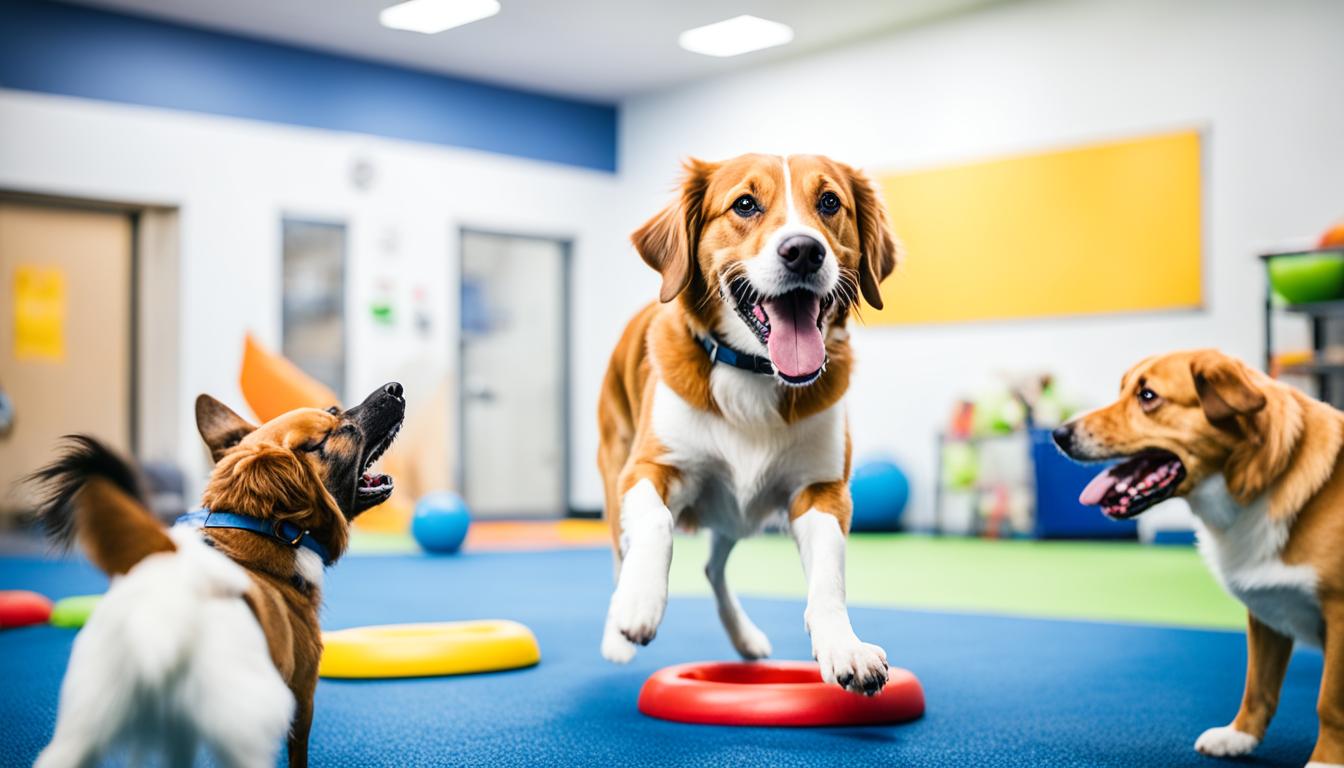
Ever wondered why some dogs do great in daycare while others don’t? Getting your dog ready for daycare is more than just dropping them off. It’s about teaching them the skills they need to play safely with other dogs.
With PackPro’s staff training programs, your dog gets help from pros with over 100 years of dog-care experience. They know how to make dogs social and safe in groups. This is key for daycare training.
It’s important to make daycare feel like home to your dog. This makes them more comfortable and excited to meet other dogs. Think of a place where dogs are happy, well-behaved, and enjoying each other’s company. That’s what good social play training can do.
Dan and Mallory, with 12 years in dog daycare, stress the need to prepare your dog. They work with Ready Pet Education on a training program. It teaches Pet First Aid & CPR to all staff, so they can handle any situation.
Daycare training is more than just about playing with others. It includes learning about Group Management, Dog Body Language, and Customer Service Basics. PackPro’s training, approved by the Professional Animal Care Certification Council (PACCC), keeps staff around 80% less than the average.
Whether it’s solo adventures or group play, making your dog’s daycare experience positive starts with training. By getting your dog ready for daycare, you’re giving them the skills and confidence to do well.
Quick Recommendation: Our blog is filled with tips and tricks for training your puppy or dog. If you are seeking a comprehensive training program, we recommend K9 Training Institute.
Understanding the Importance of Socialization
Dog socialization is like early childhood education for dogs. It shapes how they interact with others for life. It’s key because it teaches dogs to deal with other dogs and people. A dog that’s socialized well is less likely to be aggressive or scared, making it easier to adapt to new things.
Also, socializing dogs keeps them mentally sharp and stops boredom. Playing with other dogs helps them stay active and fit. This keeps them at a healthy weight and boosts their overall fitness.
But, many dog owners struggle to socialize their pets. Busy lives, city living, and limited places to socialize can make it tough. Dogs that are scared or aggressive might need a safe space to learn how to be social.
Dog daycare centers are a great way to help with socialization. They give dogs a chance to meet other dogs and people with trained staff around. This helps them learn important social skills and have fun.
So, socializing dogs has big benefits like less stress and anxiety, keeping their minds sharp, staying fit, and better behavior. Putting your dog in daycare or playgroups means they’ll have a richer, happier life.
Basic Commands Every Dog Should Know
Teaching your dog basic obedience is key for daycare success. Commands like sit, stay, come, down, and leave it make dogs well-behaved and safe. They also build a strong bond with their owners, making them great friends in social settings.
Young dogs learn these commands easily, but older dogs can too with the right training. First, teach your dog its name since they are smart and can learn quickly. Using treats to reward them works well, but don’t give too many to avoid making them rely on treats only.
Commands like “No” or “Leave It” stop dogs from doing bad things. Dogs that know how to sit are easier to manage and stay calm. “Come” is key for when you need your dog to come back fast. “Stay” helps control their movements in different places.
Training a dog to “down” can be tough because it’s a submissive position. It takes patience and trust. Remember, training takes time and should be positive and calm. Using treats is a simple way to teach commands.
For consistent training, always use the same commands to avoid confusion. Training starts at 8 weeks for puppies, and they learn basic commands in 6-8 weeks. Adult dogs might need 8-12 weeks. Training should be 5-10 minutes, 2-3 times a day, for the best results.

Don’t make common mistakes like being inconsistent or impatient, or using punishment. For beginners, tools like clickers, treat pouches, and long leashes are helpful. Simple commands can be trained at home, but see a professional for complex issues.
Introducing Your Dog to Group Play
Starting your dog in group play can be rewarding but needs care. Begin with one-on-one playdates for safe socializing. Then, slowly add more dogs to help your pet get used to group settings.
Ed Frawley, a dog behavior expert, says it’s key to be the pack leader to avoid fights. Dogs naturally have a pecking order, which matters in group play. Setting rules and using crates for safe play helps your dog fit in better.
Watch for signs your dog is stressed or overwhelmed during play. It’s important to know when to step in to stop fights. Frawley suggests using leashes and special collars to help dogs behave better during meet-ups.
Most dog daycares won’t take puppies under four months old because they need shots and must be tested. Making sure your dog likes other dogs is crucial for group play success.
Mastering Daycare Etiquette
Daycare etiquette for dogs is key to making sure they have a safe and happy time. It’s important to teach them polite behaviors to avoid fights and build a friendly community. These include waiting their turn, not fighting over food, sharing toys, and respecting others’ space.

Rules like not jumping on others or barking too much are also vital. Rewarding good behavior with treats or praise helps your dog learn and remember these rules. Practicing basic commands at daycare also helps your dog understand what’s right and wrong. This improves their behavior not just at daycare, but also at home.
Daycare provides both physical and mental fun, which helps dogs behave better. Playing with different dogs helps them become more social, confident, and less scared or aggressive. Following polite dog behaviors and rules makes daycare a better place for your pet.
Managing Unwanted Behaviors
Dealing with dog behaviors like too much barking, jumping, or aggression is key for a peaceful daycare. Both pet owners and daycare workers are vital in spotting triggers and using training methods regularly.
Changing your walk route or timing can help with leash reactivity. This keeps your dog calm in public. Using a gate or covering windows stops your dog from barking at people outside, preventing bad behavior.
In cars, safety tools like seat belts, crates, or calming devices help reduce your dog’s reactivity. This makes for a safer, calmer ride. Also, controlling your dog’s yard access and using training leashes stops them from barking or rushing the fence line.
Some question the use of only positive training in managing dog behavior. They suggest that “balanced” trainers, who use all types of training, might be more effective. However, training without punishment, by taking away something your dog likes, is often advised. This method teaches dogs about their actions without causing pain or fear.
Daycares need clear rules for handling bad behaviors. These rules should explain how to test a dog’s temperament, what kind of play to encourage, and how to report any bad behavior. Having consistent rules keeps the daycare safe and fun, shows a commitment to good service, and prevents bad reviews or legal problems.
Staff should have access to training materials, like books and DVDs, on dog behavior and body language. It’s best to use time-outs for dogs that play too rough. Tools like slip leads and noise makers can help manage aggressive behavior. By knowing what makes for good play, staff can make daycare a positive place for all dogs.
Quick Recommendation: Our blog is filled with tips and tricks for training your puppy or dog. If you are seeking a comprehensive training program, we recommend K9 Training Institute.
The Role of Daycare Staff and Their Training
Dog daycare staff are crucial in keeping dogs safe and happy. They get special training to handle different situations. This training helps them deal with aggressive dogs and give out medicines safely.

Daycare staff also get extra training to improve their skills. They learn through certifications and workshops. This training teaches them first aid, how to read dog body language, and how to manage groups well.
The job is physically demanding. Staff must lift big dogs and stand or walk a lot. They also need to act fast if there are fights or aggressive dogs. Being able to handle strong or big dogs is very important.
Good communication is key at dog daycare. Staff need to listen well and provide great customer service. They also work as a team, sharing info about dogs with each other.
Daycare staff do more than just take care of dogs. They also handle administrative tasks like scheduling and bookkeeping. This makes them true professionals in pet care, able to run the daycare smoothly.
Preparing Your Dog Physically and Mentally
Before taking your dog to daycare, make sure they are ready physically and mentally. Start with regular exercise routines. Activities like walks, playtime, or agility training boost their stamina and health. This is key for them to enjoy daycare activities.
Mental stimulation is also crucial. Use puzzles, teach new tricks, and expose them to new sounds and objects. These activities prepare them for daycare and help reduce stress.
Combining physical and mental exercises makes your dog ready for daycare. Daycares have structured routines that help reduce stress and anxiety. A well-prepared dog will enjoy the social and activity-filled environment of daycare.
Doggy Daycare Training
Starting dog daycare training is key to boosting your dog’s confidence and social skills. The Doggy Daycare Training facility is known as the “Best Training in Los Angeles” since 2009. They offer various programs to meet your dog’s needs, including daily, package, and unlimited rates.
This training center has over 30,000 square feet for dogs to play and run. It includes a 10,000-square-foot indoor park that’s fully air-conditioned. With hundreds of positive reviews, it’s clear that customers love the behavioral training for daycare. This training helps with obedience, solves behavioral problems, and gives dogs mental and social stimulation.
The Day Training Program costs $2995 and lasts 15 days. Dogs over 6 months can join, getting one-on-one training 3 to 5 times a week. The training focuses on commands like heel, sit, stay, come, and leave it. Dogs with reactive or aggressive behaviors get a discounted rate for a second 15-day package.
For ongoing training, the facility offers Structure and Reward Based programs that balance play and rest. Daily Dog Training programs are popular, with lessons five days a week and a weekly private lesson for families. They also have private sessions and group classes, from Basic Puppy Training to Therapy Animal certifications.
Dog Day School is another great choice, available as daycare-only or a Boarding Training Program. It includes initial meetings, weekly lessons for owners, and daily training. Puppy Day School programs focus on socialization, name recognition, household routines, and basic commands.
Whether you’re starting dog daycare preparation or looking for behavioral training, the Doggy Daycare Training facility ensures your pet gets top-notch care and training.
Quick Recommendation: Training your dog is just the beginning. Keep them safe an healthy with Pin Paws Pet Care. Our blog provides the training advice, and Pin Paws offers the protection your pet deserves.
Safety Measures in Group Play
Making sure dogs play safely means taking many steps and watching how they interact. At dog daycare, checking for bad behavior is key to keep safe play. Staff need to know how to leash, walk, and handle dogs safely. They set different rules for big, small, tiny, senior dogs, and young puppies.
Rest times are important to keep dogs from getting too tired. Using commands, timeouts, and walking on leashes helps manage their behavior. It’s also important to know how to stop fights and handle situations that make dogs excited.
Staff must always follow safety rules to keep the place safe. They should watch over dogs closely, especially when there are many. Dogs need to have their shots up to date before coming in.
It’s important to know when dogs are scared, angry, or upset and act fast. Keeping the place clean is also key. Making sure staff are trained and there are enough of them helps the daycare run well. This keeps all dogs safe and happy.
Building Positive Experiences
Creating a positive daycare setting means making it fun and engaging for dogs. By picking playmates that match their temperament and playstyle, dogs can make strong social connections. This helps improve their social skills and lowers the chance of aggression or fear.
Adding variety to play keeps dogs interested and stops them from getting bored. This keeps their minds active and happy.
Positive reinforcement is key to making daycare a good experience. Dogs learn better when they get rewards for good behavior. This leads to better learning and fewer behavioral problems.
About 85% of dogs in daycare feel less stressed and anxious thanks to positive reinforcement. This makes them happier and more relaxed.
Celebrating dogs’ achievements and giving them breaks makes daycare rewarding. It makes them feel safe and loved, which makes pet owners happier. Happy owners keep coming back and tell others about the daycare.
Group activities help dogs behave better, control their impulses, and be patient. “Manners Mondays” is a great example of how this works. It makes daycare a better place for everyone.
Personalized training plans for regular clients can make them more engaged and bring in more money. It also meets their specific needs.

Training all staff in dog behavior and positive reinforcement makes care better. This training builds trust and confidence between dogs and staff. With a 90% increase in trust, daycare becomes safer and more fun for all pets.
Maintaining Ongoing Communication with Daycare Providers
Keeping in touch with daycare staff is key for your dog’s happiness. Regular updates about your dog’s behavior, health, and how they like daycare are important. This helps make the daycare better fit their needs. It also lets you talk about any worries and change your pet’s care plan.
Being proactive in talking to daycare staff is a must. Asking for updates and sharing what you’ve noticed at home helps the staff. This way, they can make sure your dog is happy and stress-free at daycare.
Good communication with daycare providers is about being open and regular. This way, your dog’s comfort and growth are always a top priority. Being involved is key to making sure your dog has a great time at daycare.
Conclusion
Training your dog for daycare is a rewarding journey. It brings big benefits for you and your pet. You learn important commands and teach your dog how to behave in daycare. Working with daycare pros is key to making a healthy place for your dog.
Doggy daycare is more than a place for your pet to hang out. It’s a place where your dog can learn and grow. Being around different dogs helps your pet get better at social skills and feel more confident. It also helps them be less scared and less aggressive.
With regular training and positive rewards, your dog will learn about being part of a pack. They’ll also pick up on good behaviors to follow. This makes them a happier, healthier pet.
Looking after your dog well means they’ll be happy and healthy. Daycare gives them fun activities and things to do. This keeps them busy, keeps them fit, and helps them make friends.
Daycare also has training sessions and special help from experts. This keeps your dog learning and growing. The main aim is to make daycare a great place for your dog. A place where they come home happy after a day of fun and learning.
Quick Recommendation: Our blog is filled with tips and tricks for training your puppy or dog. If you are seeking a comprehensive training program, we recommend K9 Training Institute.
BTW: If you are interested in everything from nutritional advice and natural health solutions to stress-relief techniques and overall wellness tips, check out our friends at PawfectlyHealthyPets.com.