

Welcome to the Dog Training Diaries. This is your guide to making your pet the best they can be. We’ll explore pet training secrets that really work. With patience, understanding, and the right methods, you’ll see amazing results.
In this series, you’ll find tips, strategies, and real success stories. These will show you the strength of great dog training. By the end, you’ll know how to transform your pet’s behavior. You’ll also build a stronger bond with your dog.
Get ready for an amazing journey. The path to a well-behaved pet begins now!
Quick Recommendation: Our blog is filled with tips and tricks for training your puppy or dog. If you are seeking a comprehensive training program, we recommend K9 Training Institute.
The Importance of Early Training for Puppies
Starting training early is key to shaping your dog’s behavior. The first stages of a puppy’s life are vital for setting a good behavior foundation. You get the best chance to teach simple commands and improve their focus during this time.
To train your dog well from a young age, use best practices. One key method is to keep training sessions short and positive. This makes learning fun and helps your puppy remember the lessons.
Socializing your puppy early is also crucial. Exposing them to different places, people, and dogs helps prevent fear and anxiety. This makes your puppy’s life richer and boosts their confidence in new situations.
To make the most of these early years, have a balanced training routine. A set schedule keeps things consistent, which leads to successful training. The effort you put into early training will make your puppy a well-behaved and joyful dog.
Understanding Your Dog’s Behavior
Your dog “talks” through body language. This includes their posture, tail moves, and faces. Understanding these can tell you a lot. It lets you see what they need and feel.

To really get your dog, start with dog behavior basics. They use barks, whines, and even how they position their ears to express feelings. Getting these cues can improve your bond, making it stronger and based on mutual trust.
Exploring dog psychology shows why dogs do certain things. For instance, tail wagging or barking can mean different things. Knowing what these actions mean helps you meet their needs and guide them towards good behavior.
Remember, your dog uses actions to “speak” to you. Noticing these actions is key to unlocking your dog’s true self. It makes training and everyday life better and more fun.
Essential Training Commands
Beginning with obedience training is vital. Start with basic dog commands that every pet needs to know. These commands are the foundation for effective training. They ensure your dog acts right in all situations.
“Sit” is one of the first commands to teach. It’s both simple and crucial for showing you’re in charge. Hold a treat near your dog’s nose and lift your hand. This makes their butt go down. Once they sit, give them the treat and lots of praise. Remember, consistency and repeating are key.
The “Stay” command is also important. Make your dog sit, then signal with your palm and say, “Stay.” Step back slowly, giving them a reward if they stay put. Slowly make the distance longer and keep at it, stressing consistency.
“Come” is vital for keeping your dog safe. To teach it, use a leash and let them explore. Pull gently and say, “Come.” Reward them when they come to you. Use high-value treats to get the best results.
“Heel” helps you control your dog on walks. Have them at your side and use a treat to get their focus. Walk and keep the treat near your thigh. Say “Heel” and reward them for staying close. Like the others, this needs consistency and lots of practice.
Mastering these basic dog commands builds a strong obedience foundation. Good training needs patience, staying consistent, and always being positive. By expertly using these basics, you’ll have a behaved and happy dog.
Positive Reinforcement Techniques
Positive reinforcement in dog training works wonders. It teaches your furry friend new behaviors effectively. Instead of using punishment, which can cause fear and anxiety, it celebrates good behavior. This makes pets happier and strengthens the bond between you and your dog.
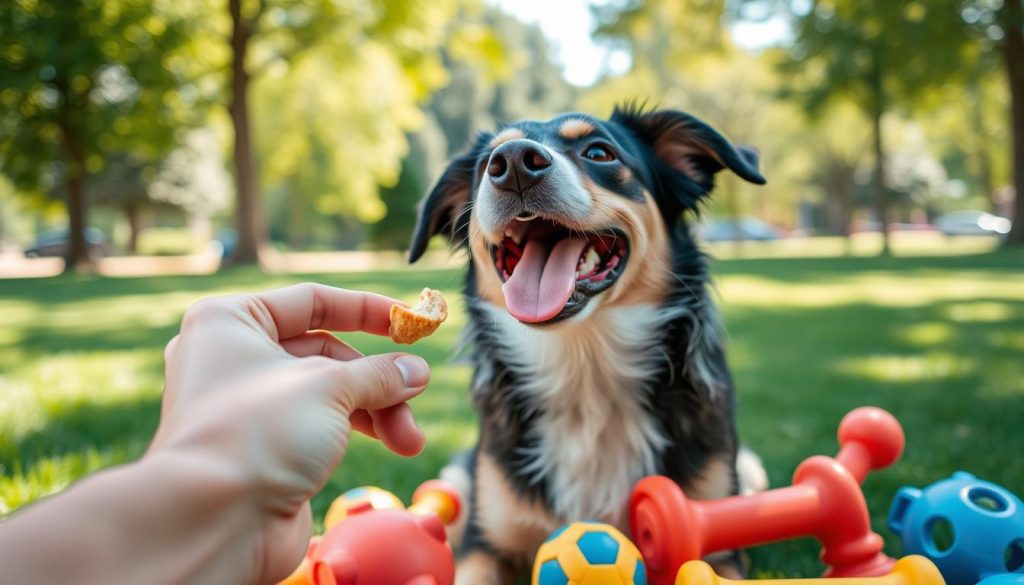
Positive reinforcement includes treats, praise, and playtime. Rewarding your dog right after they do something good helps them understand what to do. This way, your pet will start associating good behavior with enjoyable rewards.
The reason positive reinforcement works is due to its science. When dogs get rewards for good behavior consistently, they learn to repeat those actions. Thus, these actions become more reliable over time.
Using positive reinforcement isn’t just for short-term learning. It also helps with long-term behavior improvement. Choosing reward-based training leads to a well-behaved, joyful, and obedient dog. It enhances the lifelong bond between you two.
The Role of Exercise in Dog Training
Exercise is key to your dog’s health and training success. Adding exercise and training synergy means better focus and listening. It makes them less hyper and sharper mentally.
Active training methods like agility, fetch, or brisk walks are great. They use up energy and reinforce training. It’s important to match the exercise to your dog’s breed and size. For example, a Border Collie needs more activity than a Bulldog.
Keeping your dog fit and obedient is crucial. Exercise makes them more likely to follow commands and behave. Regular workouts help them stay healthy and support their training. This way, it’s easier to teach good habits and stop bad ones.
Quick Recommendation: Our blog is filled with tips and tricks for training your puppy or dog. If you are seeking a comprehensive training program, we recommend K9 Training Institute.
Solving Common Training Challenges
Tackling dog training issues can seem tough, with problems like stubbornness, distractions, and fear. First, it helps to know why your dog acts a certain way. For example, a dog might not listen because it’s scared or doesn’t understand what you want. Start with simple commands then slowly add harder tasks.
Distractions make training tough. To deal with this, create a place where your dog can focus on you. Start with no distractions and slowly add more, rewarding your dog for paying attention. This approach helps your dog learn to focus, even with distractions around.
To change bad behavior, use kind but firm methods. For too much barking, give your dog a command and then a treat for being quiet. Stop chewing problems by giving right toys and saying no to chewing wrong items. With aggression, be positive and reward calmness, avoid harsh punishments to not make things worse.
Being patient and flexible is important. Every dog is different, so adjusting how you train can help a lot. Keep learning and trying, and you can deal with these training issues. With time and effort, you’ll see good results.
Using Training Tools Effectively
The right tools can really help with dog training. Items like clickers, leashes, harnesses, and treat dispensers improve communication with your dog. Knowing how to use these tools the right way is key to successful training.
A clicker is a great tool for signaling good behaviors. Its sound tells your dog they did something right. Combining a clicker with treats helps your dog link the sound to rewards, which boosts the learning process.
Using equipment like leashes and harnesses can help you manage your dog better during walks and exercises. Adjustable harnesses help prevent pulling and make sure the pressure is even on your dog’s body, keeping them comfortable and safe. Make sure they fit well to avoid any pain or harm.
Tools like treat dispensers keep your dog interested in training. Giving treats at just the right time encourages your dog to keep up the good work. But, don’t just use treats. Add in some kind words and pets to keep training well-rounded.
Safety first when using training tools. Watch your dog closely with these aids and check that everything fits right. A bad fit or wrong use of a clicker can make your dog uncomfortable or confused, and that can mess up the training.
Using dog training tools well can make training better and more fun for you both. Watch how your dog reacts and tweak tool use as needed for top results.
Dog Training Diaries: Unleashing the Best in Your Pet
The Dog Training Diaries focus on making a positive bond with your dog. It shows the importance of understanding and valuing your pet during training. This method is more about building a strong relationship than just teaching commands.

Learning advanced dog training goes beyond simple repetition. It looks into your dog’s special characteristics. By doing this, you unlock your dog’s true capabilities. This turns any challenge into a chance for both of you to grow. Make sure to note every progress and difficulty you encounter.
Keeping a Dog Training Diaries is a way to reflect on your journey. It helps you see patterns and celebrate the achievements. By sharing these stories, you connect more with your pet. You also help others who are training their dogs. Aim for a relationship with trust and deep respect.
Training for Specific Behaviors
Training dogs to handle certain behaviors takes effort, but it’s worth it. Dogs jumping on guests is a common problem. Teach them to “sit” when the doorbell rings, using consistent training.
Excessive digging is another issue. You can manage it with the right training. Create spots for your dog to dig in the yard. Reward them for using these spots or for playing with buried toys.
Suffering from separation anxiety is hard on dogs. Begin with leaving them alone for brief periods. Slowly increase this time. Give them toys or items that comfort them to help them adjust.
Leash pulling makes walks tough. Teach your dog to “heel” and reward them for sticking by your side. Focus your training on improving leash manners to solve this problem.
To keep your dog’s mind sharp, teach them new tricks or complex behaviors. Use clickers or verbal cues in your training. This prevents bad behavior caused by boredom.
The Benefits of Professional Dog Training
Getting help from a professional dog trainer can really change things for you and your dog. They have lots of experience and know all the best training tips. These can help with everything from simple commands to big behavioral problems.
Struggling with training your dog? You might need a pro’s help. They offer many services like group classes or personal sessions. This means they can give the right kind of help for your dog’s needs. Whether it’s learning basic manners or cool tricks, an expert can make training easier and more successful.

Many pet owners see big improvements with professional help. This not only makes your dog act better but also deepens your bond. When you trust the experts, training becomes fun instead of stress.
Creating a Training Schedule
It’s important to create a dog training schedule that works. This helps you and your dog succeed together. Look at your daily and weekly routines to find the best training times. Some people like training in the morning, while others prefer the evening. The goal is to pick a time that suits you best and stick to it.
Keeping a consistent training routine is key. Dogs love knowing what to expect, so having a regular schedule helps. You could train for 15 minutes each morning or have a longer session every other day. The important part is to keep it steady. Also, set goals you can actually hit. Don’t cram too much into one go. Instead, break it into smaller parts and enjoy every win.
Using structured training programs is a smart move. They help you stay organized and keep up the motivation. Tools like calendars or apps can track your progress and remind you of training times. These programs also set goals and milestones for you and your dog. This structure benefits both of you, making training more fun.
Training Success Stories
Across the country, there are many heartwarming success stories about dog training. Let’s look at Lucy, a lively Border Collie. By following positive reinforcement, her owner changed a wild puppy into a calm pet. This story shows how patience and steady work can lead to great results.
Max, a challenging Labrador, has another uplifting story. His family introduced structured activities and key commands. Their efforts transformed Max completely. These real-life experiences show the value of our training methods. They prove you can achieve the same success in training your dog, by using the strategies we’ve shared.
Conclusion
Your dog training journey has been rewarding and educational. It has given you many chances to bond and grow with your furry friend. You’ve learned to understand your dog’s behavior and to set up a good training routine.
Through this guide, you’ve discovered the value of patience, consistency, and positive feedback. These are crucial for training success and bringing out the best in your dog. By exercising, using tools right, and facing challenges, you prepare for a happy and obedient pet.
Every dog is different, and success takes its own path. Keep trying new methods and enjoying the training journey. Your effort and love will make your time with your pet more special. As you keep going, your bond with your dog will get even stronger.
Quick Recommendation: Our blog is filled with tips and tricks for training your puppy or dog. If you are seeking a comprehensive training program, we recommend K9 Training Institute.
BTW: If you are interested in everything from nutritional advice and natural health solutions to stress-relief techniques and overall wellness tips, check out our friends at PawfectlyHealthyPets.com.