
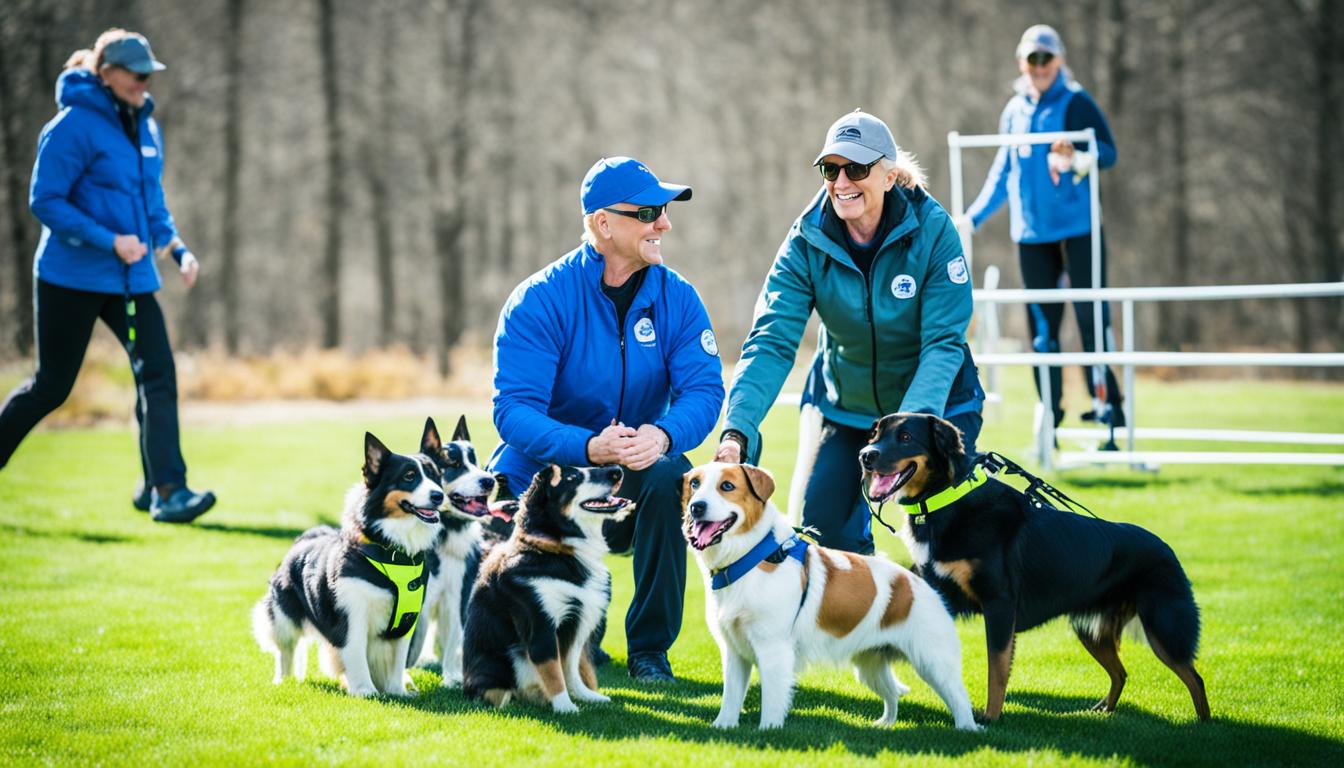
Ever wondered why some dogs seem naturally well-behaved while others are always unruly? This article will reveal the secrets to raising a well-mannered and safe dog. It’s the first step in protecting your pet and ensuring their well-being.
Knowing how your dog communicates is key. Not all dogs know how to swim, even if they seem to. Dogs like Labradors and Golden Retrievers still need watching. If they don’t know how to swim, they might get stressed or act out, making it vital to create a safe learning space.
About 38% of U.S. homes have a dog, showing it’s crucial to keep them safe and happy. Dogs with thin fur can get sunburned, and different waters can be risky. For example, oceans can cause vomiting, while freshwaters might have harmful parasites.
Good dog safety training means understanding their behavior and keeping them in safe places. Let’s explore some specific and useful tips to keep your pet safe and support their well-being.
Quick Recommendation: Our blog is filled with tips and tricks for training your puppy or dog. If you are seeking a comprehensive training program, we recommend K9 Training Institute.
Understanding Canine Body Language
Learning how dogs communicate is key to avoiding bites and having good times with dogs. Dogs mostly talk through body language, so it’s important to know these signs. This knowledge makes being with our dogs safer and more fun.
Dogs show their feelings and plans through body language. For instance, how a dog wags its tail can mean different things. Studies show that a wag to the right often means happiness, like when they see their owner. A wag to the left might mean they’re feeling down.
Also, different breeds have their own ways of showing they’re calm. For example, Chow Chows curl their tails over their backs, and Italian Greyhounds keep their tails low when they’re calm.
When a dog’s hackles rise, it usually means they’re excited or stressed. Seeing a dog do a “play bow” by putting its chest on the ground is a sign they want to play. This is a great way for dogs and people to connect positively.
Yawning in dogs is a way to calm down, says Turid Rugaas in “On Talking Terms With Dogs: Calming Signals.” It can soothe a dog and others, especially when things are tense. Lip-licking might show a dog is anxious or not comfortable in a situation.
Smiling in dogs can mean they’re feeling submissive and happy. They might also show this by having a loose and wiggly posture. Eye contact is important too. Hard eyes can show a dog is upset, while looking away can help calm things down. “Whale eye” means a dog is stressed or uncomfortable.
Many people are better at spotting happy dog body language than fear signs. Owners might miss when their dogs are stressed. How well people understand dog emotions can depend on their experience with dogs. Fearful signs, like crouching and tail tucking, show a dog might not be happy and need attention.
Canine Ambassadors teach people about dog safety and being responsible dog owners. They use programs and resources to help kids and adults understand dog body language. This leads to safer interactions with dogs. Dogs show they’re submissive by avoiding eye contact, yawning, licking their nose, and lowering their ears and head.
Aggressive signals in dogs make them seem bigger, like staring, snarling, and stiffening up. Defensive actions like crouching, tucking their tail, and raising hackles mean they might bite if they feel threatened.
By understanding dog body language, we can improve our time with dogs, making it positive and safe. Learning these signs helps us connect better with our dogs and keeps them happy and healthy.
Essential Emergency Commands
Learning dog emergency commands is key to keeping your pet safe. Training for safety can greatly lower the risks in unexpected situations.
Every dog should know the reliable recall command. It’s vital for their safety and good behavior. It keeps them from wandering into danger, especially off-leash.
British Columbia’s dog-friendly trails show how important a strong recall is. It lets you enjoy the outdoors without worry.
Consistency is crucial in teaching safety skills. Begin training the recall at home with no distractions. Use treats like boiled chicken or cheese to reward them.
Move training to outside as they improve. Start with minimal distractions and use a long line for safety.
The “stay” command is also key. It gives you control and reassurance in dangerous situations. It keeps your dog safe and obedient in crowded places.
Commands like “off,” “leave it,” and “drop it” are also vital. “Off” stops unwanted behaviors like jumping. “Leave it” and “drop it” keep your pet from eating harmful things.
These commands can greatly reduce the risk of pet poisoning and help remove dangers from your pet’s mouth.
Emergency recall and other basic commands are not just about following orders. They are skills that save lives. Practice these commands often to keep them sharp. Spending time on these training methods gives your dog the freedom and safety to explore safely.
Quick Recommendation: Our blog is filled with tips and tricks for training your puppy or dog. If you are seeking a comprehensive training program, we recommend K9 Training Institute.
Safety Tips for Dog Owners
Keeping your dog safe is more than just having a leash and a cozy home. It’s about following pet safety tips to avoid dangers and keep your dog happy and healthy. As a dog owner, it’s important to learn about the risks and how to protect your pet.
Rabies, distemper, and parvo are big threats, so vaccinations are key. Heartworms are common, so check-ups in spring are a must. Knowing the signs of heatstroke, like panting and rapid pulse, is crucial, especially in summer. Dogs with light skin can get sunburned and need sun protection on their ears and nose.
Swimming can be fun for dogs, but watch out for first-timers. Don’t push them too hard in the heat to avoid exhaustion. About 1 in 3 pets get lost, so regular exercise helps keep them from running off. Young dogs might pull on the leash or run away easily, so be careful.
Seeing the vet often is important as dogs can show dental disease by age three. Exercise and mental activities keep older dogs healthy. Not caring for their teeth can cause pain or tooth loss, so make dental care part of your routine. Watch how your dog interacts with things and their surroundings to keep them safe.
Following these safety tips keeps your dog healthy and improves your bond with them. By being responsible, you make a safer, happier life for your dog.
Dog-Proofing Your Home
Creating a safe home for pets means taking steps to dog-proof your space. Start by removing harmful foods like xylitol, chocolate, grapes, and onions from where your dog can get them. These foods can be very dangerous for dogs. Also, keep cleaning supplies and human medicines locked away to stop your pet from getting into them by accident.
In the kitchen, make sure food bags are out of your dog’s reach to prevent them from getting trapped. Be careful with electrical cords, as chewing on them can hurt your puppy. Try to hide or put cords up high where your dog can’t get to them.
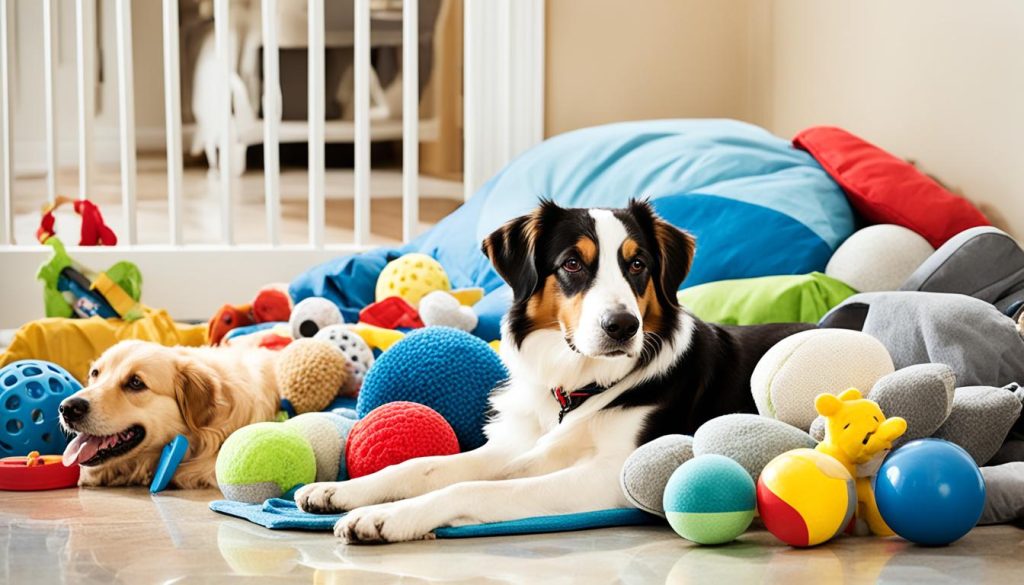
Keep your home safe from pet accidents by removing plants that are bad for dogs, like Sago Palms, Cyclamen, and Autumn Crocus. Also, make sure things like anti-freeze, rodent poison, and de-icers are kept away from your pets.
Watch out for laundry items like socks, underwear, and washcloths that your dog might eat. Make sure your bedroom is free of small items and things that could choke your dog. This keeps your dog safe in their sleeping area.
Outside, make your backyard safe for your dog by using safe plants, keeping lawn equipment locked up, and fixing fences. Make sure pools are fenced off to stop your dog from getting in. By following these steps, you can make a safe place for your dog to play and live.
Dog Safety Around Children
Keeping kids and dogs safe when they meet is key to avoiding bites. Dogs that get used to kids early on are usually okay with them. But, parents should watch these meetings closely to make sure they go well.
Knowing how a dog acts can stop problems before they start. If a dog looks scared, like when it cowers or hides its ears, it might bite. On the other hand, a happy dog will stand tall, wag its tail, and have bright eyes. Spotting these signs lets you step in early.
To make things go smoothly, tell kids to speak softly around dogs and let them have their quiet time. Teach them to touch the dog gently and not to stare at it, as this can scare dogs.
Some activities are best avoided for safety. Don’t let puppies chew on fingers, play chase, or tug-of-war. These games can cause dogs to get confused and might lead to fights.
Teaching kids how to be safe with dogs is crucial. Tell them not to wake sleeping dogs, bother them while they eat, or play with unknown dogs without an adult nearby. They should also not take a dog’s toy or treat without permission.
When introducing dogs to new babies, do it carefully. First, meet the dog without the baby, then let it sniff the baby while you give it calm praise. This slow approach helps prevent bad reactions and creates a safe space.
Lastly, get help right away if you worry about your dog’s health or behavior. Teaching dogs to be friendly, keeping them healthy, and training them well are key to avoiding bites and keeping kids and dogs safe together.
Quick Recommendation: Training your dog is just the beginning. Keep them safe an healthy with Pin Paws Pet Care. Our blog provides the training advice, and Pin Paws offers the protection your pet deserves.
Dog Safety Tips at Family Gatherings
Ensuring your dog’s safety at family events is crucial. About 30% of dogs may feel anxious, especially in crowded places. To help, give your dog at least 30 minutes of exercise before guests come over. This can make them less anxious.
Make a safe spot in your home for your dog to go to when it’s busy. Using pheromone diffusers or sprays on their bed can calm them down. Giving them calming supplements or meds a couple of hours before the event can also help.
Before the event, spend 5-10 minutes training your dog. Simple commands and positive feedback can really help. Check on your dog every 1-2 hours to make sure they’re okay in their safe spot. If they seem calm, a short break outside can be fun, but only if it’s not too loud.
For dogs that like playing with objects, give them 15-20 minutes of playtime. This can keep their minds busy. Remember, some dogs may always be shy around strangers, so be patient with them.
By taking steps to make your dog’s environment safe and comfortable, you can keep everyone happy at your gatherings. Making sure your dog is safe and happy means your events will be great for both humans and pets.
Training for Dog Safety in Public Places
Teaching your dog to behave well in public is key for their safety and others’. Leash training is a big part of this. It helps prevent accidents and keeps your dog safe and under control.
Every year, about 4.7 million Americans get bitten by dogs, with 750,000 needing medical help. Good leash manners are important for public safety. Socializing your dog helps them handle different places and people better.
Also, knowing how to act around dogs can protect people like mail carriers, who get bitten over 3,300 times a year. Programs like the Bark Busters Stand Rite No Bite® Dog Safety Program™ have cut down on dog bites. For instance, Country Energy saved over $1.4 million by using this program, reducing dog attacks from 68 to 1 in three years.
Many public places have leash laws to keep everyone safe. So, teaching your dog to walk on a leash and socializing them is a must. This training lowers the chance of dog incidents. In 2006, most dog injuries were from trying to avoid dog attacks, not bites.
Your hard work in training makes your dog a polite community member. This improves their behavior, builds trust, and makes public places safer and more fun for all.
Quick Recommendation: Our blog is filled with tips and tricks for training your puppy or dog. If you are seeking a comprehensive training program, we recommend K9 Training Institute.
Understanding and Using a Doggie Life Jacket
Keeping your dog safe while swimming starts with the right gear. A doggie life jacket is key. It helps dogs of all sizes, from 12 lbs to 130 lbs, stay afloat. This is vital for small breeds like Yorkshire Terriers and big ones like Newfoundlands.
It’s also crucial for breeds like Bulldogs and Pugs, who can get top-heavy in water. And for Greyhounds, who might not have enough body fat to stay buoyant. Using these devices can really reduce the risk of accidents in the water.
Every year, the U.S. Coast Guard reports cases where dog owners drown trying to save their pets. This shows how important it is to have a life jacket for your dog when you’re out on the water. Boaters, with their 13 million vessels in the U.S., can really benefit from these safety tools for their pets.
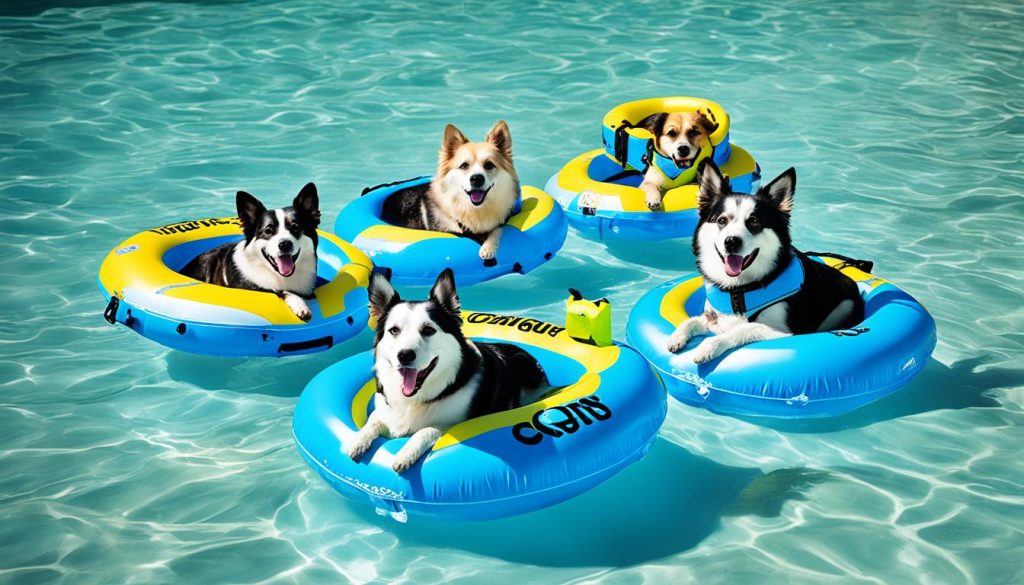
Since the mid-1990s, pet life jackets have evolved a lot. Now, there are many styles and colors to choose from, including float coats and auto-inflatables. For big dogs, there are even ramps or stairs to help them get on and off boats safely.
Smaller jackets often have a handle on the back for easy retrieval from the water. These devices are great for dogs who are new to swimming or aren’t very good at it. They provide support and make your dog feel more secure.
Some dogs, like the Golden Retriever or Border Collie, are great swimmers. But even they can benefit from belly straps that prevent getting tired. For dogs not used to the water, like the Rat Terrier, a life jacket with front floats can be a lifesaver.
It keeps them safe, warm, and prevents hypothermia. Adding these safety steps not only keeps your dog safe while swimming but also gives you peace of mind. Next time you’re heading out to the water, don’t forget to bring the right canine flotation devices for a fun and safe time with your dog.
Preventing and Managing Dog Bites
Understanding how dogs behave is key to preventing dog bites. The CDC reports that about 4.5 million people get bitten by dogs each year in the U.S. Knowing when a dog might become aggressive, like when it growls or shows its teeth, helps prevent bites. Kids are especially at risk, with the AVMA saying around 800,000 need medical help every year from dog bites.
Teaching kids how to safely interact with dogs is crucial for responsible pet handling. This includes learning to recognize and respect a dog’s boundaries.
Training and socializing dogs early can help prevent biting. The NIH study shows that unneutered male dogs bite more often than neutered ones. Spaying or neutering dogs is important for their behavior and safety around people.
Public awareness and responsible dog ownership are key. In 2019, dog bites led to one-third of all homeowner’s insurance claims, costing an average of $44,760 each. This shows how important it is to manage dogs safely.
To prevent bites, it’s important to know what makes dogs aggressive. Fear, protecting their territory, and instincts can lead to bites. The ASPCA says there are about 70-80 million dogs in the U.S., so teaching responsible ownership is vital. Using tools like basket muzzles can also help manage a dog’s behavior safely.
Elderly people are at a higher risk of being seriously hurt or even killed by dogs, as the CDC notes. Building a trusting relationship with your dog through gentle training can lower the chances of aggression. Making sure your dog is well-trained and socialized makes everyone safer.
Safe Water Consumption for Dogs
Keeping your dog hydrated is crucial for their health. They should drink between ½ and 1 ounce of water per pound of body weight each day. This is especially important on hot summer days when clean water is a must.
Puppies need more water than adult dogs because they grow fast and are very active. For example, a 10-pound puppy should get about two-thirds of a 16oz bottle of water every day.
Water from pools, oceans, or standing water can be harmful to dogs. It may have toxins or parasites. Always give them clean water to drink to keep them safe.
Too much water can be dangerous for dogs. Signs include staggering, feeling very tired, nausea, and bloating. In severe cases, dogs can have seizures or even coma. So, it’s important to prevent them from drinking too much water, especially if they like playing in water.
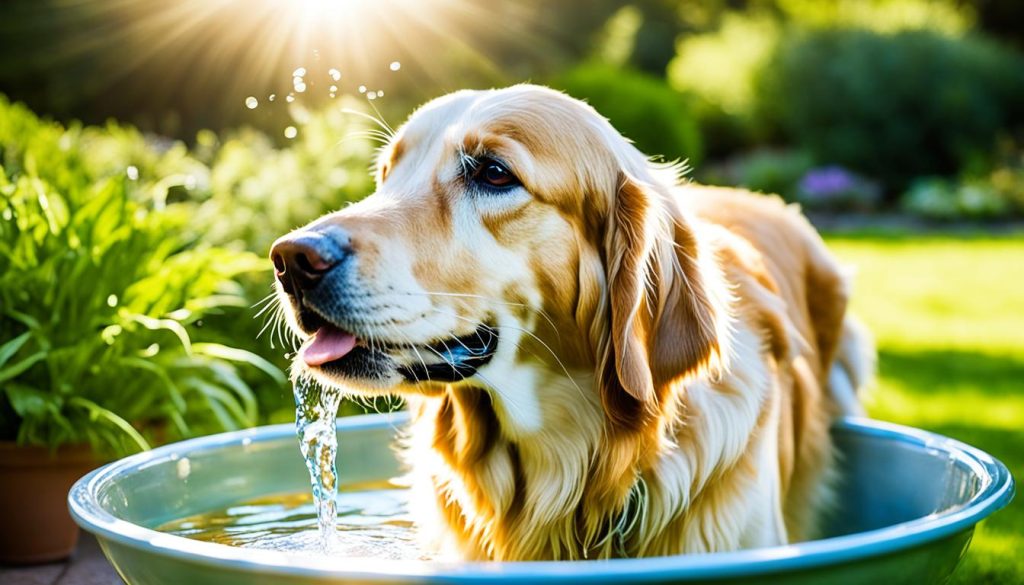
Some health issues can affect how much water a dog drinks. Dogs with pancreatitis, parvovirus, or leptospirosis might drink less. But, dogs with bladder infections, Cushing’s disease, or diabetes might drink too much.
To check if your dog is hydrated, do a skin hydration test. Lift the skin at the back of their neck. If it quickly goes back down, they’re fine. If it stays up or falls slowly, they might be dehydrated.
Hyponatremia, or low sodium in the blood, can happen if dogs drink too much water, like when they swim. Make sure they have fresh water to drink after playing or exercising. Don’t let them drink from the toilet to keep them healthy and clean.
Watch for signs of dehydration or over-hydration in your dog. If you see something worrying, talk to a vet right away. These steps will help keep your dog safe and hydrated.
Dealing with Seasonal Threats
Seasonal canine safety is crucial. In summer, watch out for heat-related problems. Pets can get a fever over 104 degrees, showing signs like heavy panting and trouble breathing.
Many places have laws against leaving pets in cars because of the risk of heat stroke. Some pets, like Pugs and Persian cats, are more at risk. Make sure windows are screened to prevent pets from falling out.
Heat can cause serious problems like seizures and bloody diarrhea. Be careful with summer dangers like chemicals in fertilizers and insecticides. Always read labels to keep pets safe. Keep them away from areas treated with fertilizers.
Cold weather can be just as dangerous. Pets need warm shelters to stay safe from the cold. A vet check early in the season can help spot health issues. Proper shelters keep animals safe from the elements and may help them stay warm.
Keep emergency vet numbers ready. Some foods, like chocolate and onions, can harm pets. They may show signs like depression and vomiting.
Holiday decorations can also be a risk. Make sure pets have a quiet spot during parties. Keep trash away from them and never leave pets alone in cars.
For pets traveling, air travel can be tough for those with short noses. Always talk to a vet before traveling. Make sure you have the right documents for traveling across states or internationally.
Conclusion
This article covered how to keep dogs safe. We looked at reading their body language, learning key commands, and keeping them safe around kids and family events. Making a safe place for pets is key to avoiding accidents and keeping everyone happy.
In 2020, dog bites cost homeowners $853.7 million in liability claims. Taking steps to prevent dog bites and training your dog is very important. Joining National Dog Bite Prevention Week® and using CDC resources can help a lot with your training.
Being a responsible dog owner means making smart choices. Studies from places like The Netherlands, Spain, and Ireland offer valuable advice. These steps help lower the chance of dog aggression and build trust. This leads to a safe and loving home for dogs and their owners.
Quick Recommendation: Our blog is filled with tips and tricks for training your puppy or dog. If you are seeking a comprehensive training program, we recommend K9 Training Institute.
BTW: If you are interested in everything from nutritional advice and natural health solutions to stress-relief techniques and overall wellness tips, check out our friends at PawfectlyHealthyPets.com.