

Ever thought if your furry friend is ready for hiking with you? Taking your dog on hikes makes the adventure better for both of you. It gives you both exercise. Whether your dog loves hiking or needs special training, getting them ready is key for a good trip.
Most trails say dogs must be on a leash. This shows how important it is to train your dog for hiking. Teach them basic obedience and skills like walking on a loose leash. This keeps them safe and respects nature and other hikers.
Start training in quiet places and add distractions little by little. Make sure they focus on the trail. Safety commands like “leave it” and “drop it” are also important. And a good recall can keep your dog safe on hikes.
Don’t take very young or old dogs on hikes as they might not handle it. Make sure they’re okay with other people and animals on the trails. Use treats like peanut butter, chicken, or cheese to teach them commands. Ready to make your hikes an adventure? Let’s learn the basics of training your dog for hiking.
Quick Recommendation: Our blog is filled with tips and tricks for training your puppy or dog. If you are seeking a comprehensive training program, we recommend K9 Training Institute.
Why Hiking with Your Dog Can Be a Great Outdoor Adventure
Going on an outdoor adventure with your dog is a great way to improve fitness and bond. Hiking with dogs helps with heart health and weight management. It also keeps their minds sharp. Dogs like Sylvester, a German Shepherd, can go on hikes of four to eight hours, covering tough terrain.
For beginners, start with short hikes of ninety minutes to two hours. Slowly increase the time to get your pet ready for longer walks. In tough places, dogs should carry a backpack with up to 10% of their body weight. This helps them not get too tired and makes the hike fun for everyone.
When planning hikes, think about the weather, the ground, and your dog’s fitness level. Some dogs, like toy breeds, can’t handle long hikes. German Shepherds and other active breeds are great for long hikes.
It’s important to train your dog for outdoor adventures. Teach them to come back, follow you, and leave things alone. This keeps the environment clean and makes hiking better for everyone. Make sure your dog drinks water often and stays hydrated to avoid dehydration and sickness.
Since the pandemic, more people are enjoying hiking with their dogs. Always check if your dog is ready, train them well, and choose pet-friendly trails. Hiking with dogs is a rewarding experience that strengthens your bond with your pet.
Essential Gear for Hiking with Dogs
Getting the right gear for you and your dog is key for a great hike. The Ruffwear Crag Reflective Dog Leash is great for hiking with dogs. It’s hands-free and has safety features that reflect light. This leash helps you control your dog on tough trails and keeps them safe when it’s hard to see.
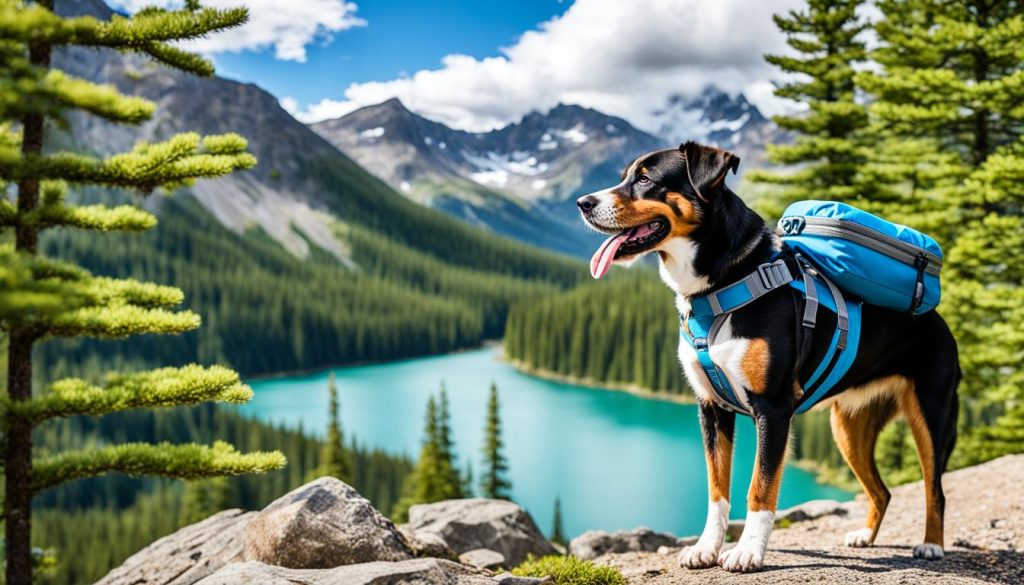
The Mountainsmith K9 Pack lets your dog carry their own gear. It has adjustable harnesses and is water-resistant. Make sure your dog gets used to the pack before big hikes to keep them comfy and safe.
The Nite IZE Rad Dog Collapsible Dog Bowl is a must-have for water and food. It’s small, doesn’t leak, and is perfect for hiking. Also, pack an Adventure Dog Medical Kits Workin’ Dog Kit. It has tools and a guide for dog emergencies on the go.
Protecting your dog from the sun is very important. Epi-Pet K9 Care Sunscreen keeps them safe with 30 SPF protection. It’s water-resistant and easy to apply. The Hurtta Weekend Warrior Harness is also great for hiking. It’s strong, comfy, and has reflective parts for safety.
Don’t forget about your dog’s paws! Ruffwear Grip Trex Dog Boots protect them on rough paths. They keep your dog’s paws comfy and safe from getting hurt. The REI Co-op Nalgene Bottle is also a must-have. It’s a handy waste bag holder that’s easy to use and keeps smells in.
Basic Dog Hiking Training to Get Started
Starting your dog’s hiking journey with the right training is rewarding. It begins with basic skills. Leash Hiking Training is key, teaching your dog to walk calmly on a leash. Basic commands like “sit,” “stay,” and “come” are also vital. These commands help make hiking fun for you and your dog.
To improve recall, use high-value treats to link the command with a reward. Practice in a quiet place first, then add more distractions. This method helps with trail behavior and deals with urban dog issues.
More people are hiking with their dogs, so investing in obedience classes is smart. You can find training resources at libraries, bookstores, pet stores, and online. Positive, reward-based training strengthens your bond and improves obedience.
Consistent rules and routines at home and on the trail are crucial for Dog Hiking Training. Teaching your dog to go to the bathroom on command makes hiking easier. For beginners, group classes at kennel clubs, pet stores, and shelters offer learning and socializing.
Good Leash Hiking Training and obedience keep you and your dog safe and comfortable. Commands like “sit-stay” and “recall” are key for control and safety. E-collars can help with recall, as many dog owners have found. Training your dog also makes trails safer and more fun for everyone.
Quick Recommendation: Training your dog is just the beginning. Keep them safe an healthy with Pin Paws Pet Care. Our blog provides the training advice, and Pin Paws offers the protection your pet deserves.
Canine Conditioning for Hiking: Building Endurance and Strength
Before you start a long hike with your dog, make sure to condition them for hiking. Start by understanding your dog’s limits and slowly increase their stamina. Begin with short hikes and gradually move to tougher routes to help your dog get ready for longer trips.
Check your dog’s fitness level using a body condition scoring system to prevent overdoing it. Use products like Musher’s Secret Pet Paw Protection Wax to shield their paws from rough hiking grounds. Also, include exercises that help strengthen your dog’s legs and core. This will get them ready for the outdoors.
Consider the 4-session Force-Free K9 Fitness Program, costing $135, taught by Gail Hubbard. It’s perfect for those at 41 Edgewood Road Extension, Asheville NC 28803, on Saturdays (July 20, 27, August 17, 24) at 9:30am. Call 828-712-4245 for more information.
This program offers 6-week workout plans with 25 simple exercises that take about 10 minutes daily. You can start training your dog from 9-10 weeks old. These exercises focus on key muscle groups and help prevent injuries. They also improve your dog’s physical abilities, strengthen your bond, and boost their confidence.
Canine conditioning enhances strength, endurance, balance, coordination, and flexibility. These are key for safe and fun hiking. Keeping your dog fit and mentally active prepares them for any hiking adventure you plan.
Focus Work: Training Your Dog to Handle Distractions
Training your dog for the trail is more than just about the leash. Effective Focus Training for Dogs is key. It’s important to know what motivates your dog, like food, toys, or attention. This knowledge helps make your Distraction Training for Dogs better.
Using high-value rewards like chicken breast or fun games can boost their focus in distracting places. This is based on the Premack Principle. For example, letting your dog chase a squirrel after they obey a command can help them learn to focus better.
Start training in a quiet area with small distractions. The “Name Game” and “Look at That” game are great for building focus. These games help your dog learn to ignore distractions and focus on you.
Clicker training with treats works well. Dogs can learn to focus in about five minutes this way. Holding treats near your face also helps them keep their eyes on you longer.
Each dog breed has its own distractions. Beagles follow scents, Terriers chase small animals, and Golden Retrievers like people. Tailoring your training to these traits is helpful. Using high-value treats or fun activities makes training more fun and effective.
Quick Recommendation: Our blog is filled with tips and tricks for training your puppy or dog. If you are seeking a comprehensive training program, we recommend K9 Training Institute.
Pacing Cues for a Smooth Hike
Training your dog to follow pace commands can change your hiking experience. Commands like “easy,” “whoa,” “let’s go,” or “mush” help control their speed. This is super useful on rough trails. It’s all about being consistent and rewarding your dog for keeping up.
Teaching these commands during walks is a great start. You’ll notice your dog gets the hang of it fast.
Hiking pacing training is more than just controlling your dog. It’s about enjoying the hike together. When your dog knows these commands, they won’t pull on the leash or get out of step with you. This training helps them handle tough trails better.
Commands like “watch me” and “touch” keep your dog focused. They’re great for ignoring distractions on the trail. And don’t forget “leave it” and “drop it” to keep your dog away from dangerous things.
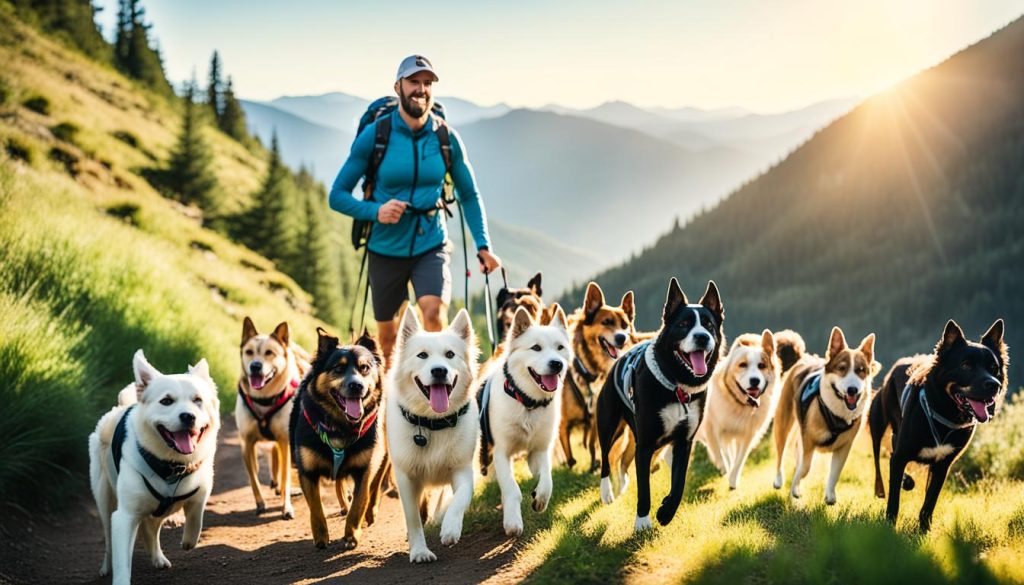
Having a strong recall is key for your dog’s safety, especially if they could slip free. Off-leash hiking means you need solid hike management training. This training lets your dog explore safely and without causing trouble. Long hikes are better when your dog knows how to pace themselves, making the experience safer and more fun for both of you.
Preparing for Off-Leash Hiking with Dogs
Off-Leash Hiking with Dogs can be rewarding if done right. Start training with high-value treats to teach your dog to listen and come back. This training makes hiking more fun and safe for everyone.
The National Park Service’s B.A.R.K. Ranger program teaches good hiking habits for dogs and their owners. It ensures a safe and fun time. Some dog breeds are perfect for off-leash hiking because they’re easy to train and have lots of energy.
These include Australian Shepherds, Border Collies, German Short-Haired Pointers, Vizslas, Labrador Retrievers, and Portuguese Water Dogs. But, dogs bred for hunting or being alone might not listen well. They’re not the best for off-leash hiking.
Before you go, make sure your dog has the right gear. This includes a harness, leash, bags for waste, collapsible bowls, water, treats, and a whistle. Also, update your dog’s microchip and collar tags with your contact info. Always follow leash laws, even if your dog is well-trained, as they can change by location.
Planning is key: bring enough water, about one quart for every three miles. And don’t let your dog carry too much in a pack. Keep it at 10-15% of their body weight to protect their joints and keep them hydrated.
Always be ready for emergencies. Have a first aid kit on hand and know the signs of heatstroke, like heavy panting and throwing up. If your dog eats something poisonous, call the ASPCA pet poison control hotline right away to keep them safe.
Quick Recommendation: Our blog is filled with tips and tricks for training your puppy or dog. If you are seeking a comprehensive training program, we recommend K9 Training Institute.
Dealing with Wildlife and Environmental Hazards
When you’re hiking with your dog, watch out for dangers in the environment. Teaching your dog Wilderness Skills for Dogs and Environmental Hazard Training is key for a safe trip. Start by learning about local plants that are toxic. Teach your dog to “leave it” and “drop it” to keep them safe from harmful plants.
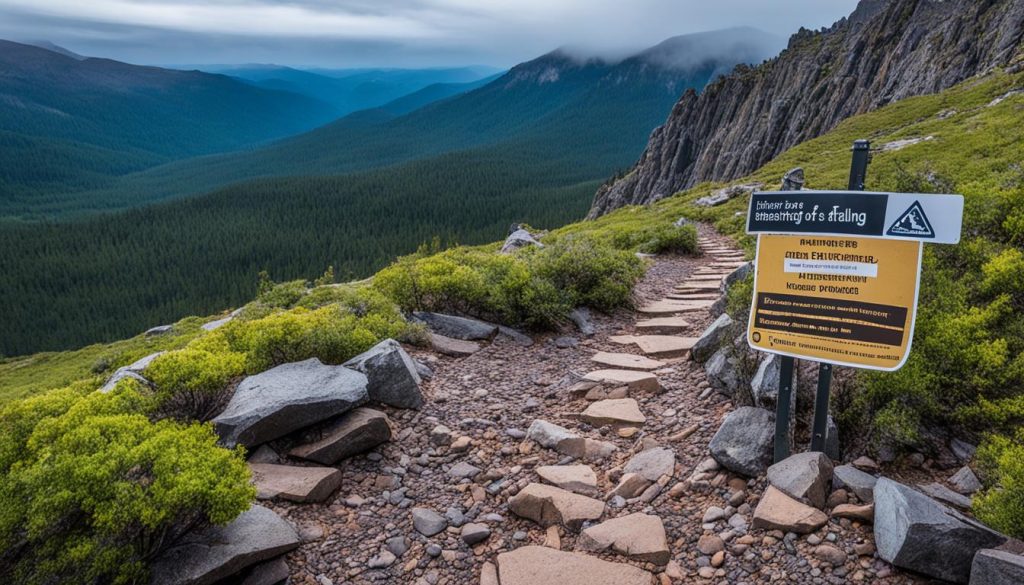
It’s also crucial to train your dog for wildlife encounters. Keep your dog close to you when you meet other hikers or animals to prevent bad reactions. Begin training in a quiet place like your backyard. Then, gradually add more challenging situations.
Rattlesnake training is a must in some parts of the U.S. Knowing how to give first aid, like using Benadryl for a snake bite, is important. Even well-trained dogs can have bad days. Always have a plan B and stay calm if things get stressful to help your dog stay calm too.
Putting time into training and getting ready makes your dog better at Wilderness Skills for Dogs. It also makes hiking safer and more fun for both of you.
Essential Wilderness Skills for Dogs
Getting your dog ready for outdoor adventures is key. Wilderness skills for dogs include more than just basic commands. They cover handling different terrains, reacting to wildlife safely, and staying calm in remote places.
Advanced training for dogs includes classes that teach them to follow commands like “come” even when there’s a lot going on. Success comes from regular training and using treats like freeze-dried lamb or venison to reward good behavior.
Learning to control your dog on a leash is also vital. A 6-foot nylon leash helps control your dog without harming plants or animals. For dogs that pull a lot, a front-hook harness can help reduce pulling and make controlling them easier.
During breaks, give your dog chew toys like bully sticks or rawhides. These keep them busy and quiet. Training your dog to handle leash reactivity is also important to keep them calm on trails.
Feeding and hydrating your dog right is key for hiking. A good rule is that a dog’s pack shouldn’t weigh more than 25% of their body weight. Big dogs need about 0.5 to 1.0 ounces of water per pound each day. Smaller dogs need around 1.5 ounces per pound.
Slowly increase the length of your hikes to match the trail you plan to tackle. Always bury your dog’s waste at least 200 feet away from trails and water. Watch out for ticks and other dangers after the hike. Use cooling collars and take breaks to avoid heatstroke.
By improving these wilderness skills, you make sure your dog is ready and happy for any outdoor trip.
Quick Recommendation: Training your dog is just the beginning. Keep them safe an healthy with Pin Paws Pet Care. Our blog provides the training advice, and Pin Paws offers the protection your pet deserves.
Conclusion
Going on hikes with your dog can be very rewarding and strengthen your bond. By using key hiking tips, getting the right gear, and training your dog, you set up for safe and fun trails. It’s about knowing what your dog needs and keeping them safe during tough activities.
It’s important to teach your dog commands like recall and prepare for wildlife. Being patient and consistent with training is key. Most dog incidents happen when dogs are not watched closely. Training in a safe place first can make recall better by up to 73%.
With good basic skills and wilderness knowledge, you and your dog are ready for the trails. Keep working on your dog’s skills to keep them listening and obedient. With these tips and techniques, your outdoor trips will be amazing and worry-free. You and your dog will make memories that last a lifetime.
Quick Recommendation: Our blog is filled with tips and tricks for training your puppy or dog. If you are seeking a comprehensive training program, we recommend K9 Training Institute.
BTW: If you are interested in everything from nutritional advice and natural health solutions to stress-relief techniques and overall wellness tips, check out our friends at PawfectlyHealthyPets.com.