

Ever thought about what you’d do if your dog faced a life-threatening emergency? Learning canine first aid is key to saving your dog’s life when every second counts.
It’s vital for every dog owner to know about dog health safety. Knowing how to act in emergencies can save your pet’s life. Imagine if your dog ate something harmful or got too hot – you’d know what to do, right? First aid can be a lifesaver, helping your dog until you get to the vet.
Keep important phone numbers handy, like your vet’s and the animal poison hotline (888-426-4235). Also, know the number of a 24-hour emergency vet hospital. And, if your pet is hurt, be careful not to get bitten. A mesh dog muzzle can help keep everyone safe.
Signing up for a certified course, like one approved by AAVSB RACE for 3.00 Veterinary Technician CE Credits, is a smart move. You’ll learn the skills you need. You’ll get PetCPR+ Certification for 2 years and access to great resources.
Adding canine first aid to your routine is essential for any dog owner. Be prepared, learn, and act fast for your pet’s safety.
Quick Recommendation: Our blog is filled with tips and tricks for training your puppy or dog. If you are seeking a comprehensive training program, we recommend K9 Training Institute.
Understanding Canine First Aid
Knowing how to help your dog in an emergency is key. It means giving first aid to an injured or sick dog until a vet can see them. This helps prevent more harm and keeps your pet stable for the trip to the vet.
The “Safety First: Canine First Aid Training for Dog Owners” article highlights the need to spot health issues early. Catching problems early can greatly improve your dog’s health and recovery. You’ll learn to check vital signs like breathing and pulse.

Pet first aid training covers managing emergencies. You’ll learn about wound care, treating fractures, and handling burns or heatstroke. It also includes dealing with poisoning, choking, seizures, and CPR.
The Red Cross Pet First Aid app is a great tool for emergencies. It’s on the App Store, Google Play, and Kindle Fire. The Red Cross also offers courses like Dog First Aid to prepare you for emergencies.
Learning these skills helps keep your pet safe and strengthens your bond. Pet owners who know how to respond to emergencies are ready for anything. This knowledge is a must for any pet owner.
Basic First Aid Techniques
Knowing your dog’s vital signs is key to first aid. It’s important to act fast in emergencies to save lives, ease pain, and prevent long-term harm. Dogs can face many dangers like car accidents, bites, burns, heat stroke, poisoning, and seizures.
Keep your injured dog warm, unless it’s a heat stroke case. Try not to move them too much and call a vet for advice. For smaller dogs, use a carrier; for bigger ones, make a stretcher. Muzzle them, wrap them up, and use a board to keep them calm and safe.
If your dog has breathing or heart problems, act fast. To do canine CPR, press the chest 100-120 times a minute, and breathe for them. Make sure to push the chest down 30-50% deep. If your dog is in shock, look for signs like fast breathing and a high heart rate. Help them by keeping warm and checking their airway, breathing, and heart.
Taking a pet first aid course from groups like the American Red Cross is a smart move. These classes teach you how to check health, prevent problems, and handle emergencies. After finishing, you’ll have a digital certificate showing you’re ready for pet emergencies and keeping your dog safe.
How to Handle Dog Emergencies
Handling dog emergencies right can greatly improve your pet’s health. First, check the scene for dangers and make sure it’s safe for you and your dog. Keep your dog warm and still until you can see a vet. If your dog is hurt, use a makeshift stretcher to keep them from getting more injured.
If your dog is hurt or scared, you might need to hold them back. A muzzle can stop them from biting and make it easier to handle them. Always check up on pet first aid tips to be ready for emergencies. Heatstroke happens when dogs get too hot, like when left in cars or running too much on a hot day.
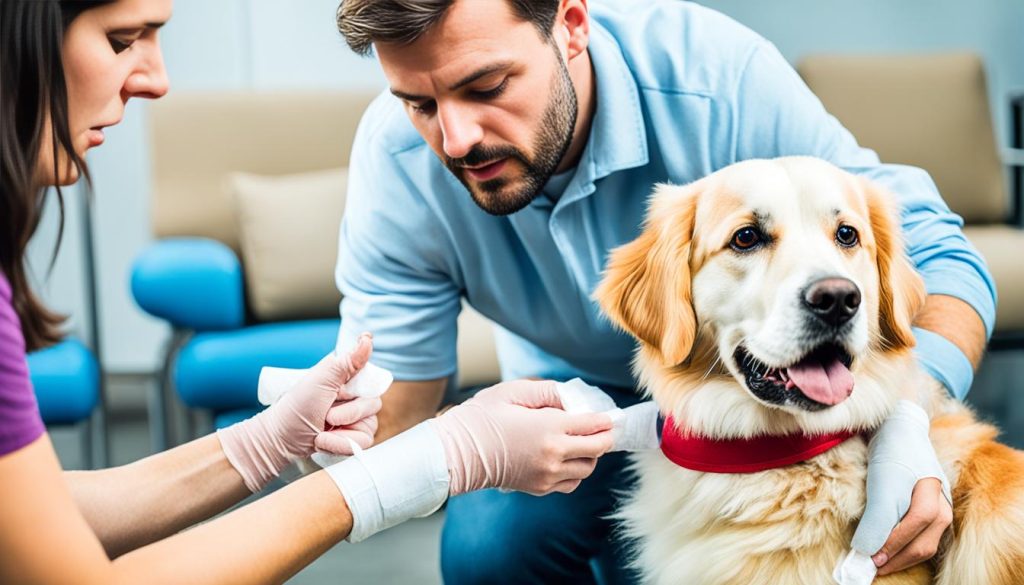
To cool down a dog with heatstroke, use cool water, ice packs, or wet towels. Don’t put them in cold water. Get them to a vet fast. If a dog breaks a bone, look for signs like limping, pain, and swelling. Carry your dog carefully and don’t put medicine on broken bones to help them heal.
If your dog throws up or has diarrhea, it could be serious. Make sure they drink water and call a vet quickly. Knowing what your dog ate helps the vet treat them right. If your dog has a seizure, keep them safe, watch for injuries, and get vet advice fast.
Having a first aid kit for your dog is key. Put in bandages, hydrogen peroxide, antibiotic cream, Benadryl, and emergency numbers (Animal Poison Control, 888-426-4435, and Pet Poison Helpline, 855-764-7661). These things can help your dog until you get to a vet. Stay calm, act fast, and keep learning to be ready for any dog emergency.
Quick Recommendation: Training your dog is just the beginning. Keep them safe an healthy with Pin Paws Pet Care. Our blog provides the training advice, and Pin Paws offers the protection your pet deserves.
Creating a Pet First Aid Kit
Having a well-stocked first aid kit is key for your pet’s safety. In the U.S., 1 in 3 homes has a dog, and over 6 million dogs get hurt each year. Yet, 45% of dog owners lack a dog first aid kit, and 78% don’t know how to help their pets in an emergency.
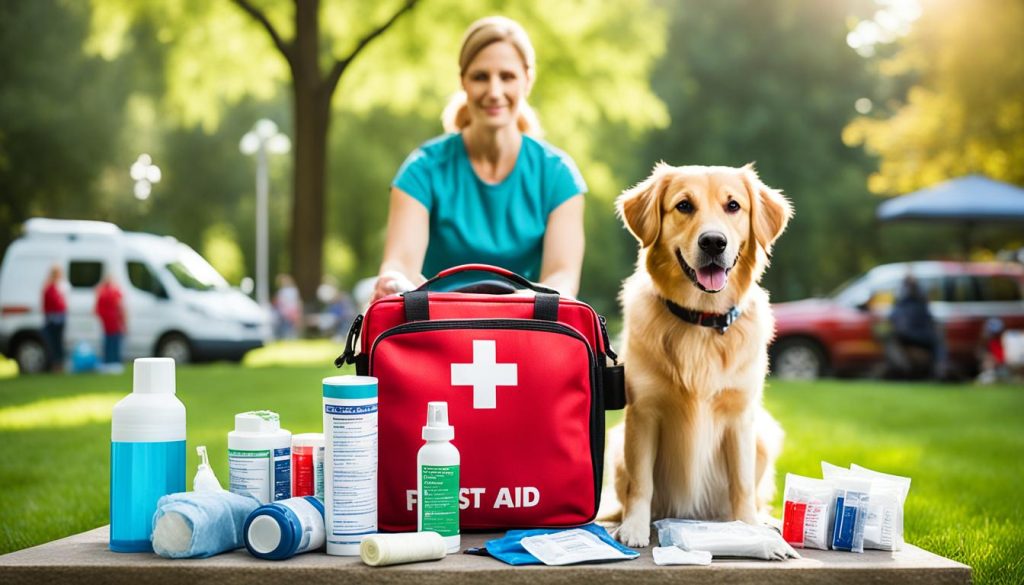
Your dog’s first aid kit should have bandages, wound cleansers, a thermometer, and a muzzle. The American Red Cross suggests keeping gauze pads, medical tape, antiseptic wipes, hydrogen peroxide, and antibiotic ointment ready. Don’t forget to include your pet’s medical records, like vaccination history and health history.
Don’t forget a travel-sized first aid kit for outings. It helps you manage minor injuries and emergencies away from home. With the pet industry hitting $99 billion in sales in 2021, more owners are getting ready for emergencies.
For treating dog wounds, you’ll need items like the Band-Aid Flexible Rolled Gauze, Swan Hydrogen Peroxide, and Vetericyn Plus Antimicrobial Hydrogel Healing Aid Spray. Also, keep the Eco-Fused Self-Adhering Bandage pack, Organic Cotton Balls, and the iProven Pet Thermometer handy.
Make sure your kit has emergency numbers, like your vet’s and the ASPCA Animal Poison Control Center at 1-888-426-4435. A current photo of your pet and their medical records are also crucial in an emergency. Keep your first aid kit ready and stocked to handle emergencies well and treat wounds effectively.
Knowing When to Seek Veterinary Care
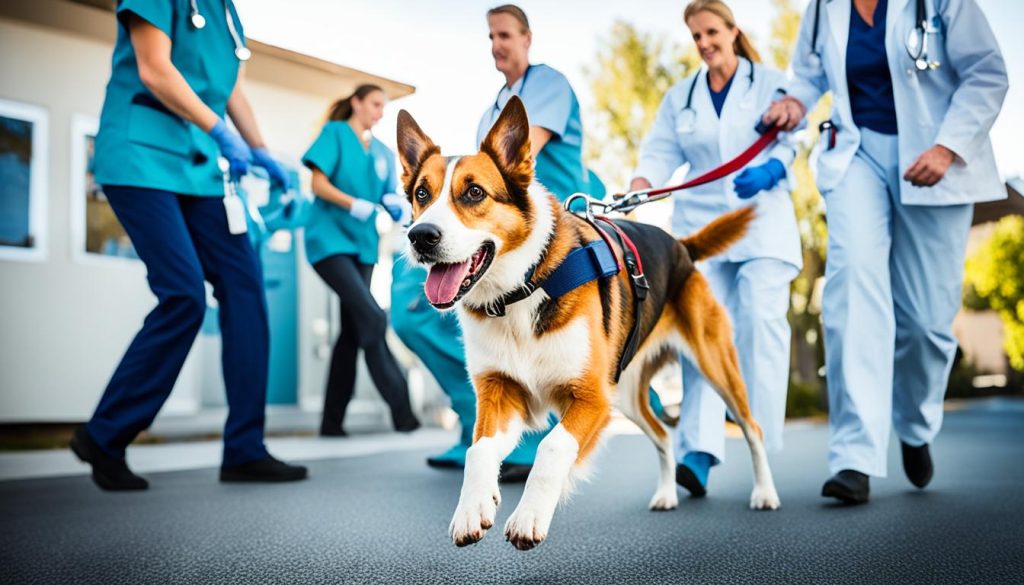
Knowing when to get your dog to the vet can really help their health. If your dog hasn’t eaten in two days, it’s time to call a vet. This could mean there’s a serious issue that needs attention.
Being thirsty for more than a day could mean kidney disease or diabetes. Red or cloudy eyes, unusual discharge, squinting, or pawing at the eyes suggest eye infections or injuries. These signs mean your dog needs urgent vet care.
Vomiting often or with blood, changes in stool, finding worms or blood, mucus, or dark stools in it means you should get vet help right away. Losing 10% of your dog’s weight suddenly is also a warning sign.
Rear-end scooting could mean your dog has health problems. You should talk to a vet about it. Signs like open wounds, broken bones, stopped breathing, seizures, sudden collapse, bleeding, poisoning, bloat, extreme pain, swollen belly, not being able to pee, hard breathing, eating toxins, being disoriented, or having pale gums are emergencies. They need vet care right away.
Animal bites might look minor but can quickly turn serious if not treated. If bleeding doesn’t stop after 10 minutes of pressure, get vet help fast. Cleaning your dog’s wound with water or a safe antiseptic solution can prevent infections.
Emergency animal hospitals are open all the time to help pets in crisis. For example, Veterinary Specialists of the Rockies treats dogs and cats in emergencies.
A 35-minute online course in animal first aid from the Red Cross can teach you basic canine first aid skills. It helps you know when to act in emergencies. Paying attention to changes in your dog’s behavior, like breathing or painful urination, can help you decide when to get vet help. This keeps your pet safe and healthy.
Preventative Care Tips for Dogs
Preventative care is key to keeping your dog healthy and happy. It’s important to check your dog’s health regularly. This ensures their heart rate, breathing, and body temperature are normal.
Keeping your dog safe from diseases starts with vaccinations and flea and tick prevention. Many dogs get sick from ticks every year. Staying on top of these treatments helps prevent these problems.
Dealing with obesity in dogs is also crucial. It’s the top nutritional disease in pets. Proper food and exercise, based on your dog’s breed and size, can help.
Learning pet first aid training is very useful. It teaches you how to check your dog’s health and perform CPR. For small dogs, you’ll learn how to do chest compressions and breathe for them.
This training also covers checking for breathing and a pulse during CPR. It tells you to get vet help right away, even if CPR works.
First aid training will also show you how to take care of your dog every day. This includes checking their paws and eyes. By staying updated on health tips, you can keep your dog healthy and happy for a long time.
Recognizing Signs of Shock and Trauma
Shock in dogs is a serious condition that needs quick action. It’s key to spot the signs early, like fast breathing, a high heart rate, and pale gums. Shock happens when there’s not enough oxygen for the body or when the body can’t use oxygen well. Trauma, like fights, car accidents, or gunshots, is often the main cause.
Other things can also lead to shock, like poisoning, insect stings, losing fluids from vomiting or diarrhea, infections, burns, and heart or airway problems. Spotting shock early is vital because it can quickly become deadly. Look for signs like a fast heart rate and pale gums at first.
As shock gets worse, you might see very pale or blue gums, a weak pulse, feeling cold to the touch, strange breathing, glazed eyes, and a decline in mental state.
For dog emergency care, it’s important to quickly recognize signs, start first aid, and get to a vet fast. Don’t pour water or substances into the dog’s mouth, give meds without a vet’s say-so, make the dog walk, or think it’s not in shock after an accident. Waiting too long to get vet help can make things worse.
Acting fast can really help your dog recover from shock. Keep the dog warm, calm, and still until help comes. Shock is often from not enough oxygen due to low blood volume or pressure. Knowing and spotting the symptoms can save your dog’s life.
Quick Recommendation: Training your dog is just the beginning. Keep them safe an healthy with Pin Paws Pet Care. Our blog provides the training advice, and Pin Paws offers the protection your pet deserves.
Handling Common Canine Injuries
Being ready for common dog injuries like cuts, bites, burns, or breaks is key. First, stop the bleeding with direct pressure. For heavy bleeding, get vet help right away.
For cuts, clean the wound well to prevent infections. About 30% of bite wounds get infected if not cleaned right. Change the dressing every day to fight off infection. If a bite goes deep, see a vet to check for internal damage.
For burns or breaks, keep the injured area still to avoid more harm. Use a leash, shoelace, or belt to keep a scared dog from biting. Only do CPR if really needed and make sure the dog can breathe.
Always wash your hands well after touching any animal, even with gloves on. This helps stop diseases from spreading. For bug bites or bee stings, use Benadryl but don’t give too much to big dogs. Remove ticks quickly with the right tools to stop diseases.
The AVMA says one in four dogs will need emergency care at some point. Hill’s Pet Nutrition suggests keeping a first aid kit at home and in your car. The AVMA also says 60% of dog owners don’t have a first aid kit ready. Being ready can help treat your dog’s injuries quickly and well.
Conclusion
Knowing how to help your dog in an emergency can save lives. Emergencies can happen fast, and acting quickly is key. Not all problems can be fixed at home, so getting your dog to the vet fast is important.
Having a first aid kit for your pet is a must. It helps you handle emergencies well. For small injuries, the right first aid can help your dog feel better and avoid more problems. Regular vet visits and following your vet’s advice are also crucial for your dog’s health.
First aid classes for pets are affordable and easy to find. For example, Dances With Dogs offers both online and in-person classes. These classes give you the skills to act fast in emergencies, saving you money on vet bills. Being prepared means your dog can stay happy and healthy.
Quick Recommendation: Our blog is filled with tips and tricks for training your puppy or dog. If you are seeking a comprehensive training program, we recommend K9 Training Institute.
BTW: If you are interested in everything from nutritional advice and natural health solutions to stress-relief techniques and overall wellness tips, check out our friends at PawfectlyHealthyPets.com.