
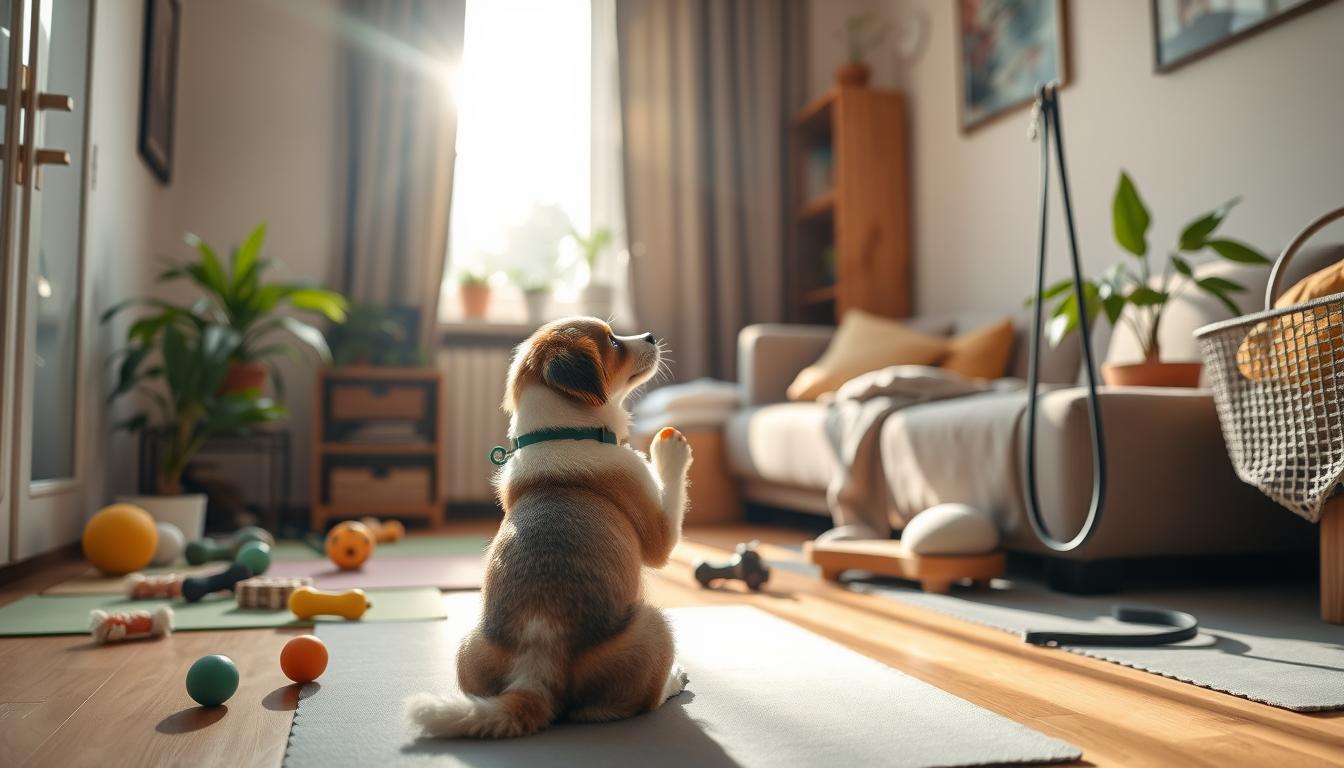
Living in an apartment doesn’t mean you can’t have a happy, well-behaved dog. It comes with challenges like limited space and close neighbors. Apartment Dog Obedience Training is key for a peaceful home. You can adjust your training to fit your small space.
It’s important to understand your dog’s needs in an apartment. Tailored training and Dog Behavior Tips for Apartments are crucial. You can create a peaceful space for both pets and owners, even in small areas.
Quick Recommendation: Our blog is filled with tips and tricks for training your puppy or dog. If you are seeking a comprehensive training program, we recommend K9 Training Institute.
Understanding Your Dog’s Needs in an Apartment
Living in an apartment with a dog needs careful planning. You must meet your dog’s physical, mental, and emotional needs. This is crucial for a happy and healthy pet in a small space.
Managing space is key for small dogs. You should set aside areas for eating, sleeping, and play. This keeps your home tidy and makes your dog feel secure and follow a routine.
Mental stimulation is also important. Use interactive toys, puzzle feeders, and training to keep your dog’s mind active. This is especially true in a small apartment where boredom can easily set in.
It’s important to understand how a small space affects your dog. Make sure they get outside time for walks and play in dog parks. This helps them burn energy and enjoy fresh air, leading to better behavior at home.
Even with limited space, you can meet your dog’s needs with the right planning. A happy dog makes apartment living enjoyable for both of you.
Establishing a Routine
Creating a Dog Daily Routine is key for your pet’s happiness in an apartment. A good routine helps your dog feel less stressed. It also improves their behavior and health.
Begin by making a schedule for feeding, exercise, and sleep. Keeping these times the same every day is important. It helps your dog’s digestion and keeps them full of energy.
Exercise is also vital for your dog’s routine. Plan walks, play, and brain games at the same times. This keeps them active and stops bad behavior from boredom.
Don’t forget to include rest and sleep in the routine. Dogs like knowing what to expect, and a regular sleep schedule makes them happier. Make sure your routine is flexible, so small changes don’t upset your dog.
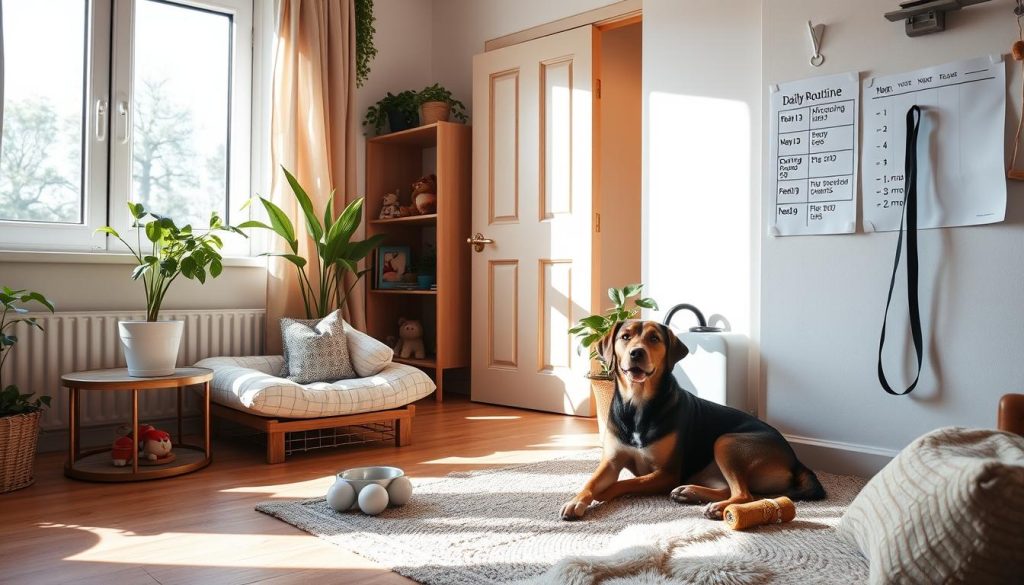
In summary, a well-planned routine makes apartment living better for you and your dog. A balanced routine meets all your dog’s needs every day. This creates a peaceful home for both of you.
Effective Potty Training in Apartments
Potty training in apartments can be tough, but it’s doable with the right steps. Using indoor potty options like puppy pads or artificial grass is a smart move. These options mimic the outdoors, helping dogs learn where to go.
Setting a schedule and rewarding your dog are crucial. Take your dog to the same spot at the same times every day. Give them praise or treats right after they use the right spot. This positive feedback helps solidify good habits.
Accidents will happen, especially when you’re starting out. Clean up thoroughly to remove any smells that might lead to more accidents. Use enzymatic cleaners to get rid of pet odors and stains. Being consistent and patient will help your dog learn to use the potty correctly.
Crates can also help with potty training. They give dogs a safe, cozy space where they’re less likely to have accidents. Make sure the crate is big enough for your dog to move around comfortably. The goal is to make the potty area a positive place for your dog.
Crate Training for Apartments
Crate training is good for you and your dog. It gives your dog a cozy, safe place. It also helps manage their behavior in a small space. Choose Indoor Dog Crates that fit your dog well. This way, they’re comfortable without feeling too small.
It’s not about keeping your dog locked up. It’s about giving them a sense of security and order.
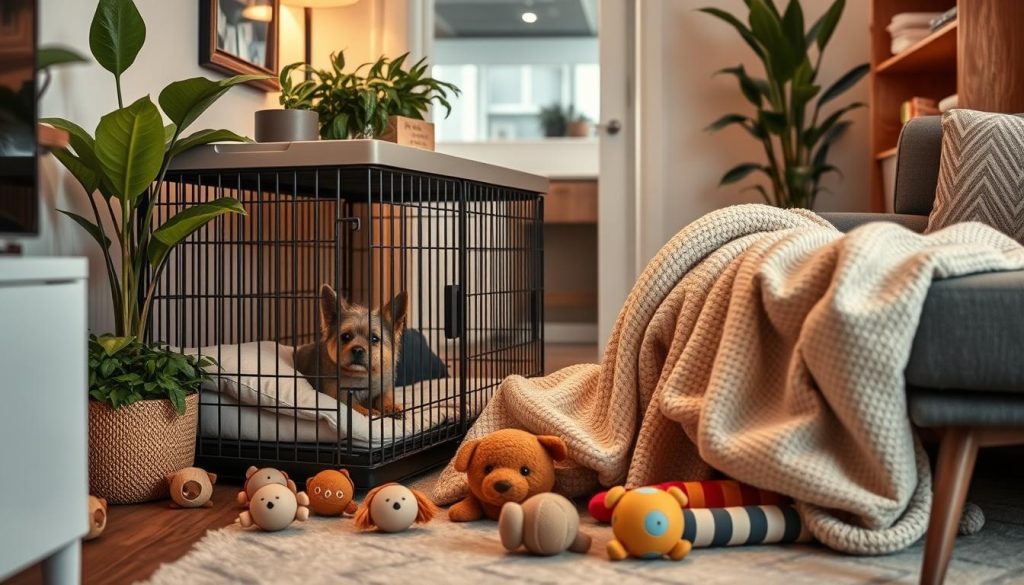
Make the crate a nice place for your dog. Add soft bedding and a favorite toy or treat. This helps your dog see the crate as a good thing, not a bad one.
Training your dog to use the crate helps with potty training too. Dogs usually don’t want to mess where they sleep.
Having a routine is important for crate training in an apartment. Set a schedule that fits your day. Start with short times in the crate and slowly increase it. Make sure your dog always has water and a comfy spot to rest. Crate training can really improve your dog’s life and yours too.
Behavior Modification for Apartment Dogs
Understanding Apartment Dog Behavior is crucial for a peaceful home. First, find out what makes your dog act out, like chewing too much or jumping. Knowing why helps you fix the problem better.
Positive reinforcement is a great way to start. Instead of scolding bad behavior, praise the good. This method boosts obedience and strengthens your bond with your dog.
Using enrichment toys is also smart. They keep your dog’s mind busy and prevent boredom. Toys like puzzle feeders teach your dog that good behavior is rewarded.
At times, you might need expert help. A certified dog behaviorist or training classes can offer custom advice. They know how to use advanced Canine Behavior Adjustment methods.
Use these tips to tackle common issues with your apartment dog. Remember, being consistent and patient is key. With the right approach, you can change your dog’s behavior for the better.
Socialization Techniques for Apartment Dogs
Socializing your dog in an apartment can be tricky, but it’s doable. The right strategies can make your pet happy and well-adjusted. The secret to success is gradual exposure and positive reinforcement.
One good way is to organize Canine Meetups and Playdates. Regular playdates with other dogs help your dog learn social skills. Always watch the interactions to keep them friendly and stress-free.
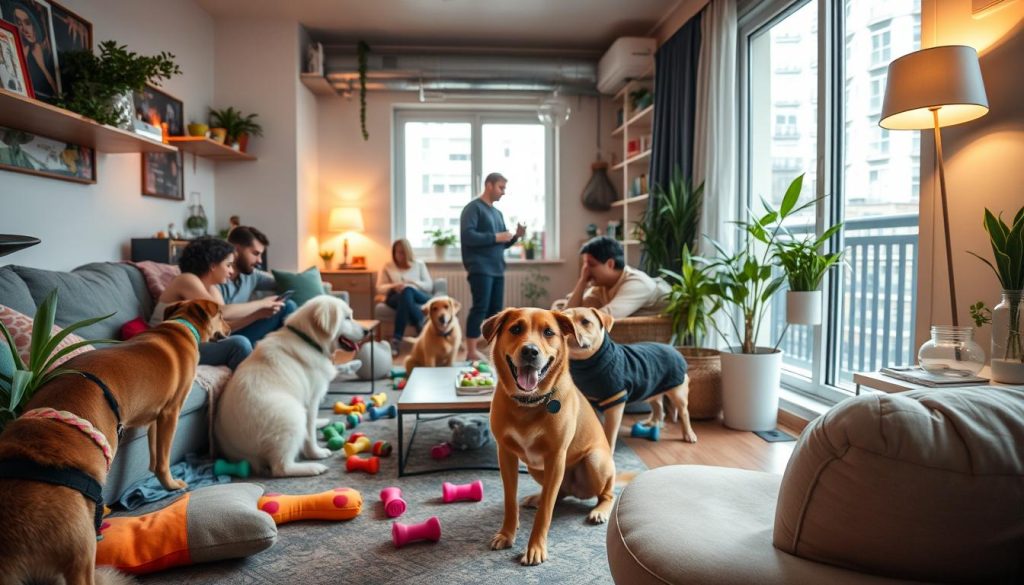
Using public spaces like dog parks is also smart. These places offer a safe space for your dog to meet others. Start with short visits and increase the time as your dog gets more comfortable.
It’s important to expose your dog to different things slowly. Start with quiet places and then move to busier ones. This helps your dog avoid feeling overwhelmed and builds positive experiences.
Also, have friends and family over to help your dog get used to new people. Give treats and praise for calm behavior. This encourages positive experiences during these visits.
Remember, be patient. Every dog is different, so adjust your approach based on your pet’s needs. With consistent effort, your apartment dog can become a well-behaved member of the pet community.
Exercising Dogs in Small Spaces
Keeping your furry friend active in a small space can be tough. But it’s key for their happiness and health. With the right approach, your pet can stay fit and happy. Indoor Dog Activities are a great way to keep them engaged.
Adapting games like fetch or tug-of-war for indoor play is smart. Use soft toys to avoid damage. Obedience training is also a good way to exercise your dog. It keeps them mentally sharp.
Exercise pens are useful when you can’t take your dog outside. Dog treadmills are another option to burn off energy. But, don’t forget the importance of regular walks. They provide fresh air and new smells, boosting your dog’s mood and health.
Quick Recommendation: Our blog is filled with tips and tricks for training your puppy or dog. If you are seeking a comprehensive training program, we recommend K9 Training Institute.
Addressing Barking and Noise Complaints
Living in an apartment means we share spaces with our neighbors. Dog owners often face the challenge of reducing barking. This helps keep the environment peaceful and improves neighbor relations.
Identify why your dog barks. Dogs bark due to boredom, anxiety, or to alert you to sounds outside. Knowing these reasons is key to solving the problem. Training your dog with commands like “quiet” can help a lot.
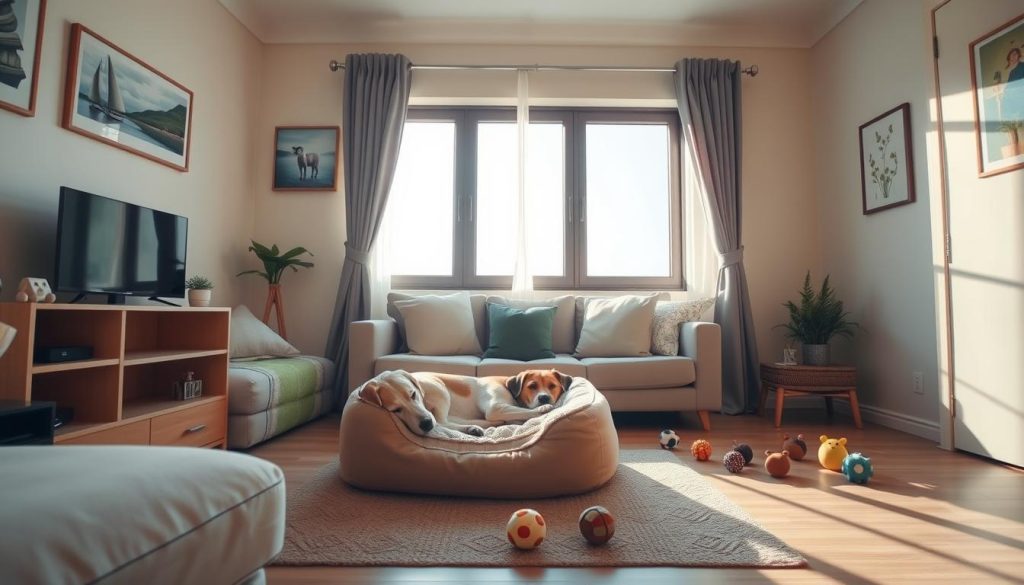
Another good method is noise desensitization. This means getting your dog used to sounds that make them bark. For example, if your dog barks at the elevator, play elevator sounds softly and gradually get louder. This makes the sounds less scary for your dog.
If training and desensitization don’t work, consider special products. Anti-bark collars and calming diffusers can help. Make sure to choose products that a vet recommends to keep your dog safe.
Talking to your neighbors is also important. Let them know you’re working on the problem and thank them for their patience. This can help avoid misunderstandings and build a supportive community. By doing these things, you can solve barking and noise issues, making living together better for everyone.
Apartment Training Tips: Raising a Well-Behaved Dog in Small Spaces
Raising a dog in an apartment needs understanding their special needs. It’s important to create a peaceful living space. Start by setting a regular routine for your dog. This includes fixed times for meals, bathroom breaks, and exercise.
Crate training is a great way to help your dog feel secure. It gives them a personal area, reducing stress and bad behavior. Make sure the crate is the right size for your dog but still fits well in your apartment.
Changing bad behaviors into good ones is key. Reward your dog for good actions and correct bad ones quickly. This helps them learn to behave well in your apartment. Also, socializing your dog is important. Introduce them to new places and people to reduce anxiety and ensure they’re calm in shared spaces.
Lastly, controlling barking and noise is crucial to keep your neighbors happy. Use toys to keep your dog busy and mentally stimulated. This helps them stay quiet when you’re not around.
Conclusion
Putting all these apartment training tips together gives you a complete guide. The secret to success is being patient and consistent with your dog’s training. You’ve learned that setting a routine, potty training, crate training, and socialization are key.
These steps help manage apartment living challenges and meet your dog’s needs. Each one is important for a well-behaved dog in an apartment.
Remember, having a trained dog makes apartment living better for everyone. It makes your home peaceful and happy. Regular exercise and solving problems like barking are key.
By using these strategies, you and your dog can live in harmony. It’s a rewarding journey.
Enjoy the joy and companionship of a well-behaved pet. Your hard work leads to a happy life in your apartment. Cherish every moment with your dog.
Quick Recommendation: Our blog is filled with tips and tricks for training your puppy or dog. If you are seeking a comprehensive training program, we recommend K9 Training Institute.
BTW: If you are interested in everything from nutritional advice and natural health solutions to stress-relief techniques and overall wellness tips, check out our friends at PawfectlyHealthyPets.com.