

Want a well-behaved furry friend? Obedience training is your key to success. It’s more than just teaching tricks; it’s about changing your dog’s behavior for a better life together. With the right methods, you’ll see big improvements in your pup’s actions and mood.
Obedience training strengthens the bond between you and your dog. It makes your pet understand what you want, making everyday life easier. From simple commands to complex tasks, this training improves communication with your pet.
Are you ready to begin this exciting journey? Let’s explore obedience training and see how it can change your dog’s behavior. Your journey to a well-behaved dog starts now!
Quick Recommendation: Our blog is filled with tips and tricks for training your puppy or dog. If you are seeking a comprehensive training program, we recommend K9 Training Institute.
Understanding the Importance of Obedience Training
Obedience training is key to shaping your dog’s behavior. It’s more than just teaching tricks; it’s about building a strong bond with your dog. By training, you’re laying the groundwork for a well-behaved pet who knows the rules and listens to you.
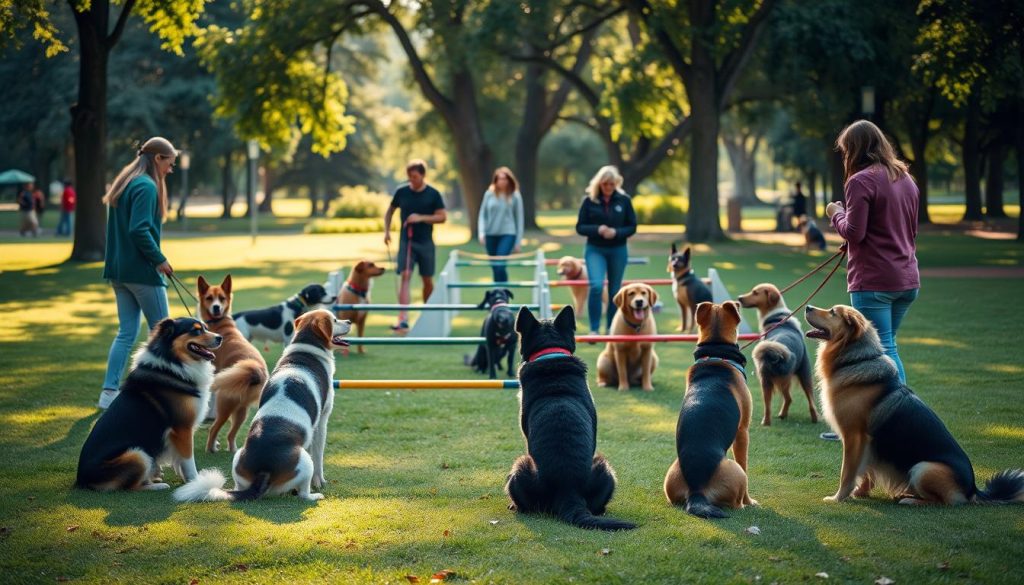
Knowing how dogs think is vital for training them. Dogs see their owners as leaders, naturally. By being consistent in training, you show your dog you’re in charge. This gives them the structure they need, making them less anxious and more secure.
Training helps fix issues like too much barking, jumping up, or chewing things they shouldn’t. It also keeps your dog safe in risky situations. For instance, a trained dog will come when called, avoiding accidents or getting lost. Using positive methods, you’re not just changing behavior. You’re making your dog happier and deepening your bond.
Getting Started with Basic Commands
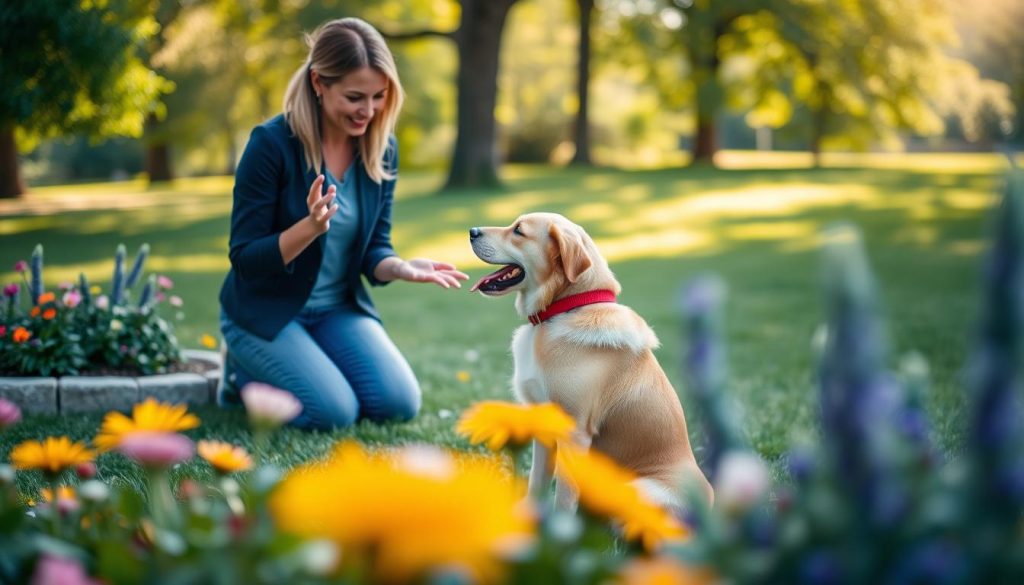
Begin your obedience training with key commands like sit, stay, come, and down. These are the basics for more complex skills. Start with “sit” since it’s usually simple for dogs. Hold a treat near their nose and move it up slowly. This will make them tilt their head and sit down. Say “sit” and give them the treat when they’re in position.
Next, learn “stay.” Have your dog sit, then step back a bit. If they stay seated, give them praise and a treat. Keep adding more distance and time as they get better.
The “come” command is vital for safety. Call your dog by their name and say “come” in a happy voice. When they come to you, praise them a lot and give them a yummy reward.
Teaching “down” might be a bit hard. Begin with your dog sitting. Then, hold a treat near their nose and lower it to the ground. They’ll follow the treat and lie down. Say “down” and reward them when they’re down. Always use positive reinforcement in training. Be patient, consistent, and end sessions on a positive note to keep your dog excited to learn.
Positive Reinforcement: The Key to Successful Training
Positive reinforcement changes the game in dog training. It rewards good behavior instead of punishing bad ones. This method builds a strong bond with your dog and makes learning fun.
Reward-based methods give your dog something they love after they do what you want. This could be treats, praise, or playtime. Your dog learns to link the desired behavior with the reward. They’ll likely do it again because of the reward.
Positive reinforcement is better than other training methods. It builds trust and confidence in your dog. It doesn’t make them fearful or anxious like punishment does. Your dog will look forward to learning more.
To use positive reinforcement well, timing is crucial. Give the reward right after your dog does the action you want. This helps them understand the link between the action and the reward. Be consistent with rewards and keep training fun and short.
Every dog is different. Some like food rewards, while others prefer toys or praise. Try different things to see what your dog likes best. With patience and consistency, positive reinforcement can change your dog’s behavior and strengthen your bond.
Clicker Training: A Powerful Tool for Obedience
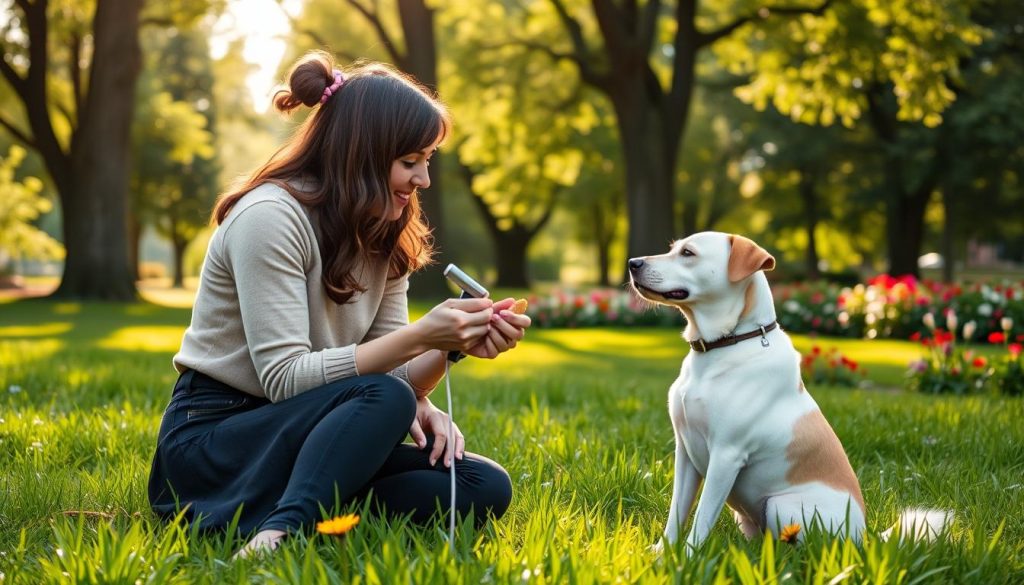
Clicker training is a big step forward in teaching your dog to obey. It uses a small device that makes a clicking sound to mark good behavior. When your dog hears the click, they know they’ve done something right. Then, you give them a treat to make the behavior stronger.
To begin clicker training, let your dog get used to the sound of the clicker. Click and give a treat right after. Do this many times so your dog links the click with a reward. After they get it, you can use the clicker to teach new behaviors.
For instance, to teach “sit,” wait for your dog to sit down on their own. Click and treat the moment their bottom touches the ground. Soon, they’ll sit more often, hoping for that click. Then, you can say “sit” before they sit, making it clearer.
Clicker training is great for many obedience skills. Use it for “stay,” “come,” or even cool tricks. The important part is clicking right when your dog does the action. With time, you’ll see big improvements in your dog’s training.
Quick Recommendation: Our blog is filled with tips and tricks for training your puppy or dog. If you are seeking a comprehensive training program, we recommend K9 Training Institute.
Mastering Leash Training and Loose-Leash Walking
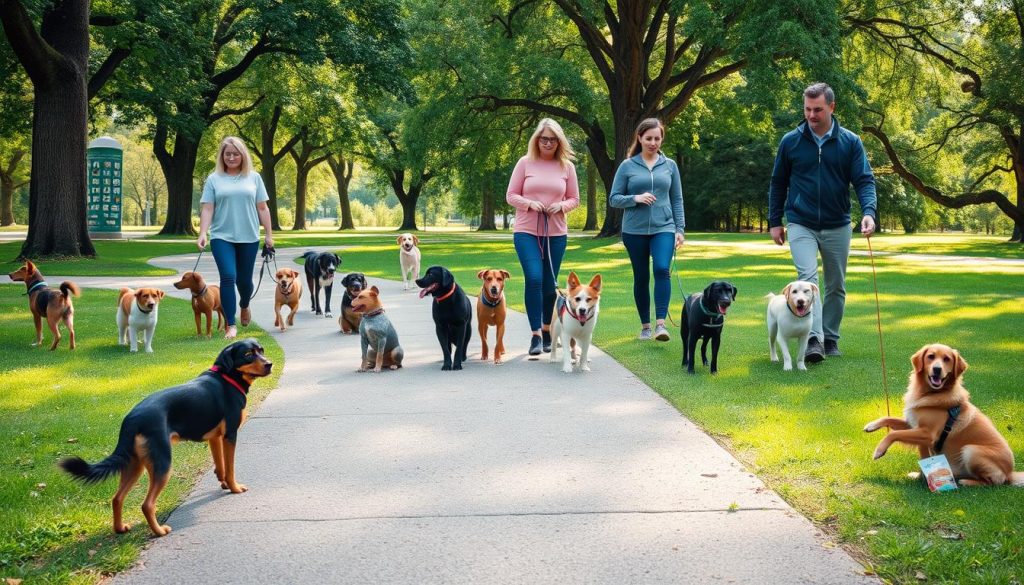
Leash training is key for every dog owner. It’s not just about controlling your dog; it’s about making walks enjoyable for both of you. Start with the right gear. A front-clip harness is great for dogs that pull a lot.
Begin training in a quiet spot with few distractions. Reward your dog for walking by your side calmly. If your dog pulls, stop moving. Start again when the leash is loose. This shows your dog that pulling doesn’t work.
Teaching your dog to control impulses is important for leash training. Do “sit-stay” exercises before walks to set the right mood. When your dog stays calm, praise and reward them a lot. Remember, being consistent is crucial in leash training.
For dogs that get upset on walks, try the “Look at That” game. When your dog sees something that bothers them, ask them to look at you. This helps them focus on you and makes walks better. With time and effort, you’ll have stress-free walks together.
Important Tip: Training your dog is just the beginning. Keep them safe an healthy with Pin Paws Pet Care. Our blog provides the training advice, and Pin Paws offers the protection your pet deserves.
Improving Recall: Teaching Your Dog to Come When Called
A reliable recall command is key in obedience training. It keeps your dog safe and gives you peace of mind. Start by practicing in a quiet room with minimal distractions. Say your dog’s name followed by “come” in an upbeat tone. When they respond, reward them with treats and praise.
Gradually increase the difficulty by moving to different rooms and eventually outdoors. Use a long leash for safety during outdoor training. Make recall fun by turning it into a game. Call your dog, then run in the opposite direction. This encourages them to chase you, reinforcing the recall command.
If your dog struggles with recall, avoid repeating the command. Instead, make yourself more interesting by squeaking a toy or rustling a treat bag. Never punish your dog for coming to you, even if it takes a while. This ensures they associate the recall command with positive experiences.
Consistency is key in obedience training. Practice recall commands daily in various situations. With patience and persistence, your dog will learn to come when called, strengthening your bond and ensuring their safety in any environment.
Socialization: An Essential Part of Obedience Training
Socialization is key to your dog’s behavior. It helps them become confident and adaptable by meeting new people, animals, and places. This is important to avoid fear and aggression later on.
Start socializing your puppy early. Show them different sights, sounds, and textures. Walk them in busy places, play with other dogs, and let friends meet your pup. These activities teach your dog how to act around others and make them less anxious in new places.
For adult dogs, socializing can be harder but it’s still crucial. Move at your dog’s speed and reward them for trying new things. If your dog seems scared or aggressive, talk to a professional trainer for advice on how to socialize safely.
Socialization doesn’t stop. Keeping your dog exposed to new things keeps their social skills sharp. Adding socialization to your obedience training makes your dog happier and more obedient.
Conclusion
Obedience training changes how your dog behaves. By teaching basic commands and using positive reinforcement, you help your dog become well-mannered. Remember, being consistent is important for your dog’s actions.
Clicker training and leash work are great for training. They help you and your dog bond and make them more responsive. As you keep training, focus on perfecting recall. It’s key for your dog’s safety.
Don’t overlook the role of socialization in your training. Introducing your dog to different people, animals, and places makes them confident and adaptable. With patience and hard work, you’ll see big changes in your dog’s behavior. This leads to a happier life for both of you.
Quick Recommendation: Our blog is filled with tips and tricks for training your puppy or dog. If you are seeking a comprehensive training program, we recommend K9 Training Institute.
BTW: If you are interested in everything from nutritional advice and natural health solutions to stress-relief techniques and overall wellness tips, check out our friends at PawfectlyHealthyPets.com.