

Want to make your furry friend behave better? A dog training schedule is the key. With a consistent routine, you’ll see big improvements quickly. Let’s explore positive reinforcement techniques and how to tailor a plan for your dog.
It doesn’t matter if you have a playful puppy or an older dog. A good training schedule is essential. We’ll look at how to understand your dog’s needs, set achievable goals, and pick the best methods. Get ready to turn daily walks and playtime into learning adventures!
Quick Recommendation: Our blog is filled with tips and tricks for training your puppy or dog. If you are seeking a comprehensive training program, we recommend K9 Training Institute.
Understanding the Importance of a Dog Training Schedule
A well-structured dog training routine is crucial for changing your dog’s behavior. It sets a clear plan for your dog to learn and improve. This routine helps make good behaviors stronger and bad ones weaker.
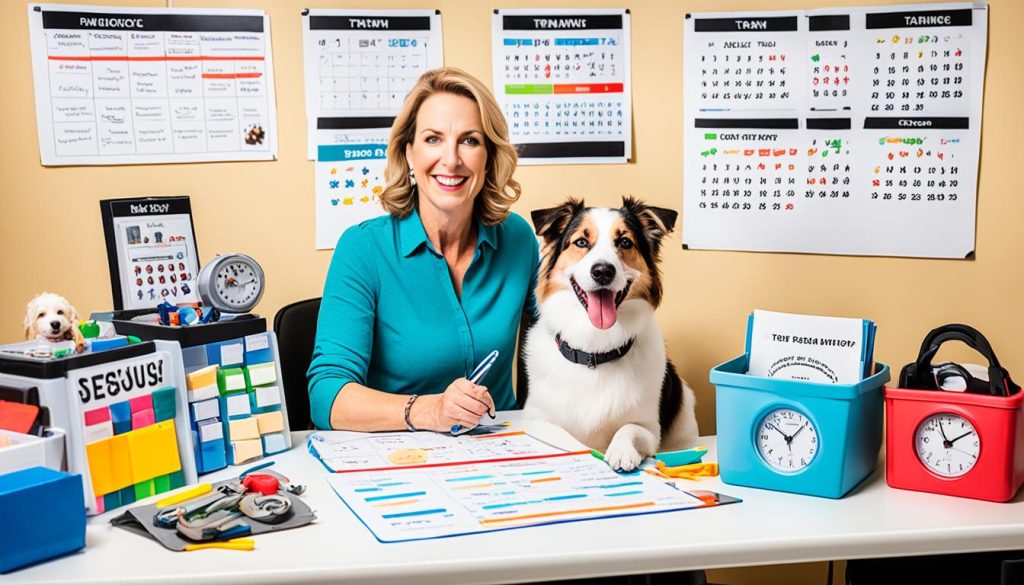
Being consistent is key in dog training. A regular schedule helps your dog know when it’s time to learn. This makes learning new things easier and builds their confidence.
A good training plan does more than teach tricks. It also makes your bond with your pet stronger. Training together means spending quality time, helping you understand your dog better. This makes training easier and more fun for both of you.
Sticking to a consistent training plan leads to success in changing your dog’s behavior. A well-thought-out schedule covers all training areas, from basic obedience to advanced skills. This approach results in a well-behaved dog and a peaceful home.
Assessing Your Dog’s Training Needs
Before starting obedience training, take time to look at your dog’s specific needs. Every dog is different, shaped by their age, breed, and personality. For example, a Chihuahua might need different training than a Great Dane. Watch how your dog acts in different situations. Does your dog have trouble with simple commands? Are there specific problems like too much barking or pulling on the leash?
Think about your dog’s energy level and how long they can focus when making a training schedule. High-energy dogs might need shorter, more frequent training sessions. Calmer dogs might do better with longer, focused sessions. Also, consider your dog’s age. Puppies learn differently than adult dogs, which affects how fast and what they can learn.
Focus on training areas that your dog needs most and your household goals. If your dog has trouble with house training, make that a priority. For dogs with anxiety, focus on building their confidence. A good training plan should cover obedience and behavior issues. By making your training fit your dog’s needs, you’ll make training successful and fun for both of you.
Establishing Clear Training Goals
Starting a dog training plan begins with clear goals. Knowing what you want to achieve helps you succeed. Think about the behaviors you want your dog to learn. Do you aim for basic obedience or more complex skills?
Break your big goals into smaller steps. For instance, if you want a well-behaved dog in public, begin with basic commands at home. This makes training easier and more doable.
Specific goals help you see progress and stay motivated. Aim for something like “teach my dog to sit and stay for 30 seconds.” This way, you can track your progress and tweak your training as needed.
Positive reinforcement is key in dog training. When setting goals, think about how you’ll reward your dog. Treats, praise, or playtime can motivate your pup. With clear goals and positive methods, you’ll make a training plan that works for you and your dog.
Choosing the Right Training Methods
Choosing the right training methods is key for your dog’s success. Positive reinforcement techniques are popular because they work well. They make learning fun for your dog by focusing on rewarding good behavior.
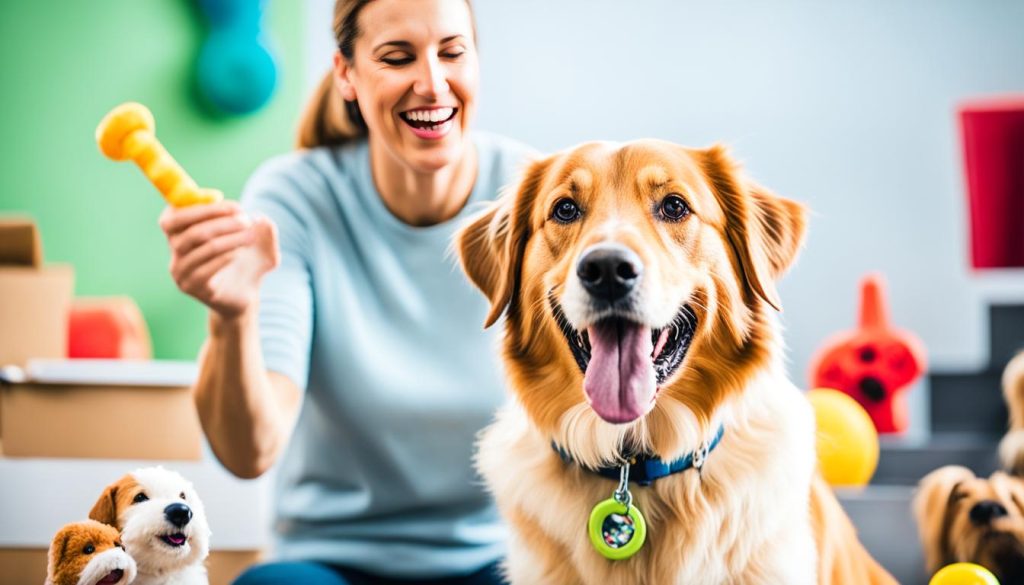
Reward-based training uses treats, toys, or praise to encourage good behavior. This way, your dog learns to do things because they get a reward. It also makes your dog want to join in on training.
Canine behavior modification is also important. It’s about changing bad behaviors into good ones. This takes time and consistency but can make a big difference in your dog’s behavior.
When planning your training, mix in different methods. Use positive reinforcement to teach new things and reward-based techniques to keep up the good work. Every dog is different, so be ready to change your approach as needed.
Quick Recommendation: Our blog is filled with tips and tricks for training your puppy or dog. If you are seeking a comprehensive training program, we recommend K9 Training Institute.
Plan to Succeed: Creating a Dog Training Schedule That Works
Creating a dog training schedule is crucial for obedience success. Start by setting aside specific times each day for training. Short, frequent sessions are better than long, infrequent ones. This keeps your dog focused and avoids burnout.
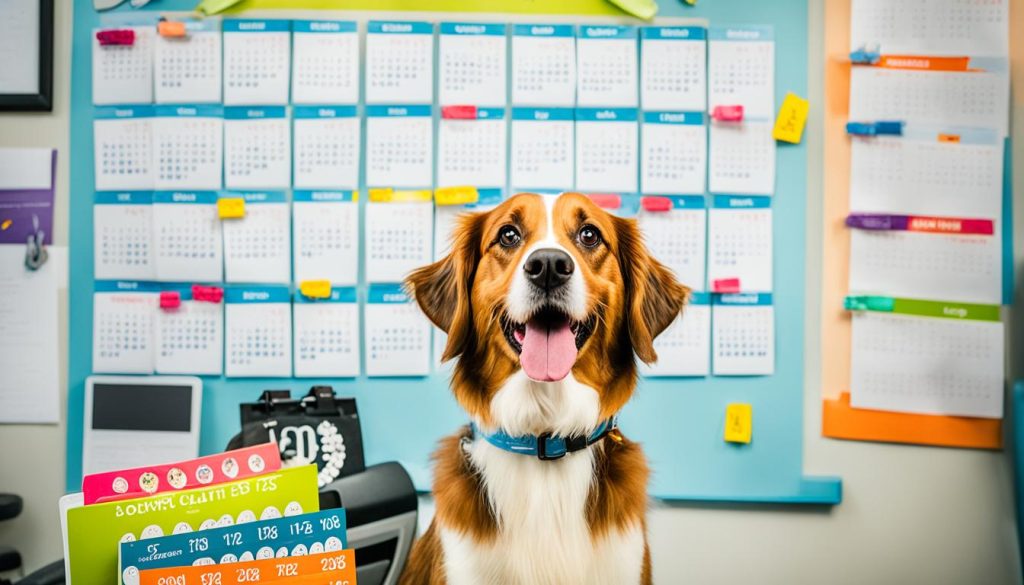
Make training part of your daily routine. Use meal times to practice commands like “sit” or “stay.” During walks, work on leash manners and recall. These small moments help reinforce good behavior all day.
Consistency is key in dog training. Make sure all family members use the same rules and commands. This avoids confusion and speeds up learning. Keep a log of training sessions to track progress and focus on areas needing more work.
Flexibility is vital when making a dog training schedule. Be ready to change your plan based on your dog’s progress and energy. With patience and consistent training, you’ll see positive changes in your dog’s behavior.
Important Tip: Training your dog is just the beginning. Keep them safe an healthy with Pin Paws Pet Care. Our blog provides the training advice, and Pin Paws offers the protection your pet deserves.
Implementing Positive Reinforcement Techniques
Positive reinforcement techniques are essential for successful obedience training. They focus on rewarding good behavior with treats, toys, or praise. When your dog does something right, give them a reward immediately. This helps them understand what they did to earn the reward.
Timing is key in reward-based training. Give the reward right after the desired behavior. Use high-value treats for new or hard tasks, then lower-value rewards as they get better. This keeps them excited to learn more.
When your dog knows a command well, start using praise or playtime instead of treats. This helps them keep doing the behavior even without food rewards. Remember, positive reinforcement works best with consistency and patience. Celebrate their small wins and keep training fun and short.
Integrating Socialization into Your Training Schedule
Puppy socialization is crucial for any dog training plan. It makes your pet well-adjusted and confident in different situations. Begin by exposing your pup to various people, animals, and places in a safe way. Take short trips to parks, pet-friendly stores, or quiet streets to introduce new sights and sounds.
For adult dogs, you might need to change their behavior. Start with small steps and reward them for new experiences. This way, your dog will link new situations with positive outcomes. Make sure to include socialization in your daily training to keep your pet learning and engaged.
Adjust your socialization based on your dog’s age and personality. Puppies are more open during their early development, while adult dogs might need more time. By adding socialization to your training, you’ll help your pet become a confident and well-rounded friend.
Tracking Progress and Adjusting Your Schedule
Creating a dog training schedule is just the start. To track your pup’s progress, keep an eye on their learning. Look for both small and big achievements in your training routine. Write down notes after each session to see patterns in their learning.
Your dog training schedule can change as your dog grows and learns. Be ready to adjust your approach. If a method isn’t working, try something new or spend more time on it. Every dog learns at their own speed, so be patient for success.
Regular check-ins are key for a successful dog training schedule. Set aside time each week to review progress and plan for the future. This keeps you on track and ensures your training keeps up with your dog’s skills. By staying attentive and adaptable, you’ll create a dog training schedule that works well for you and your dog.
Quick Recommendation: Our blog is filled with tips and tricks for training your puppy or dog. If you are seeking a comprehensive training program, we recommend K9 Training Institute.
BTW: If you are interested in everything from nutritional advice and natural health solutions to stress-relief techniques and overall wellness tips, check out our friends at PawfectlyHealthyPets.com.