

Are you tired of your furry friend keeping you awake all night? It’s time to establish a bedtime routine for your dog. Dogs, like humans, do well with structure and consistency. A good dog sleep schedule can help both you and your pet.
A well-planned bedtime routine helps your dog relax, signals it’s time to sleep, and improves sleep quality. With a consistent pattern, your nights will become more peaceful and your days more energetic. Let’s explore canine sleep habits and how to create the perfect bedtime ritual for your furry friend.
Quick Recommendation: Our blog is filled with tips and tricks for training your puppy or dog. If you are seeking a comprehensive training program, we recommend K9 Training Institute.
The Importance of a Dog Sleep Schedule
A consistent dog sleep schedule is key to your pet’s health and happiness. Dogs, like humans, do best with routine. Regular sleep habits help your pup succeed in many areas of life.
Dogs that sleep well are more alert and energetic during the day. This means more fun times for both of you! A well-rested dog is also easier to train and less likely to have behavioral problems. A steady sleep schedule keeps your pet balanced and happy.
Studies say dogs need 12 to 14 hours of sleep each day. Most of this is at night, with short naps during the day. By following their natural sleep cycles, you support their physical and mental health. A good night’s sleep helps their body repair itself and process the day’s events.
Every dog is different. Watch your pet’s needs when setting their sleep routine. With patience and consistency, you’ll see how a solid sleep schedule improves your dog’s life.
Understanding Your Dog’s Natural Sleep Patterns

Dogs sleep differently than humans. They follow a polyphasic sleep schedule, sleeping in short periods all day and night. This lets them stay alert and ready for action.
A dog sleeps about 12 to 14 hours daily. Puppies and older dogs might sleep even more. They go through light and deep sleep, including REM sleep, where they might twitch or make sounds.
Many things affect a dog’s sleep habits. These include their age, breed, how active they are, and their health. Working dogs and active pets sleep differently than those who are less active. Knowing these patterns helps you create a good sleep routine for your dog.
By watching your dog and adjusting their sleep schedule, you can make sure they rest well. This knowledge helps you set a consistent sleep schedule for your dog. It supports their health and happiness.
Creating the Perfect Sleeping Environment for Your Pooch
Your dog’s sleeping space is crucial for their rest. A comfy bed is essential for your pup’s sleep. Choose a bed that matches your dog’s size and how they like to sleep. Some dogs curl up, while others stretch out. Ensure the bed is in a quiet spot away from busy areas in your home.
The right temperature is key for your dog’s sleep. Dogs sleep best in a cool room, between 65-70°F. Use a fan or air conditioner in summer to keep it cool. In winter, a cozy blanket can add warmth. Dim lighting is important for a calm sleeping environment. Use curtains or blinds to block out bright light, especially if your dog sleeps during the day.
Noise can disrupt your dog’s sleep. Try to keep the area quiet. If outside noise is a problem, a white noise machine can help. Some dogs find soft music soothing. These pet relaxation techniques can lead to better sleep. A calm environment helps your dog feel safe and relaxed, leading to deeper, more restful sleep.
Pre-Bedtime Activities to Tire Out Your Dog
Starting a good bedtime routine for your dog means tiring them out first. Playing fetch in the backyard or going for a walk can help. These activities make your dog tired and strengthen your bond.
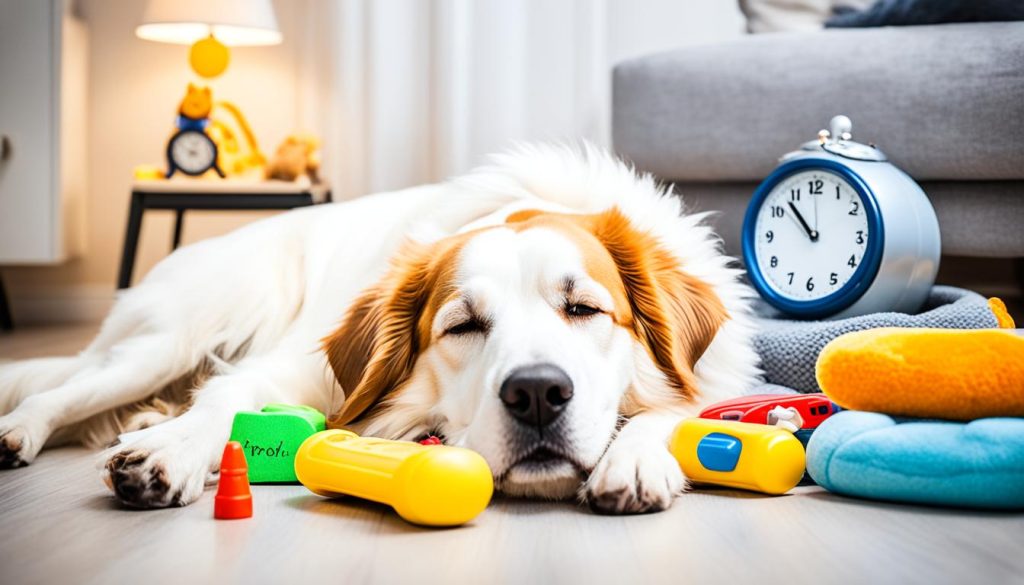
It’s also important to give your dog mental challenges. Try hiding treats around the house for them to find. This game uses their sense of smell and keeps their mind sharp. Puzzle toys filled with treats can also keep them busy and mentally tired.
Creating a calm atmosphere is key. Avoid playing high-energy games right before bed. Instead, go for gentle play or training. Teaching new tricks or practicing old ones can calm your dog down. These quiet activities help your dog get ready for sleep, making sure you both have a good night.
Quick Recommendation: Our blog is filled with tips and tricks for training your puppy or dog. If you are seeking a comprehensive training program, we recommend K9 Training Institute.
Incorporating Calming Dog Activities into Your Routine
Adding relaxation techniques to your dog’s bedtime routine can greatly improve their sleep. Massage is a fantastic way to help them relax. Gently rub their ears, back, and paws in circles to ease tension and encourage calmness.
Soft, calming music can make a peaceful setting for your dog. Try playing classical music or music made just for dogs. This music can calm their nerves and tell them it’s time to sleep. Playing it softly in the background at bedtime can become a comforting habit for them.
Aromatherapy is also a great way to calm your dog. Scents like lavender, chamomile, and vanilla are known for their calming effects. Use a diffuser with pet-safe essential oils in their sleeping area for a peaceful space. But, introduce new scents slowly and watch for any bad reactions.
By adding these relaxation techniques to your nightly routine, you’ll help your dog easily move from being awake to sleeping. Being consistent is important, so try to do these activities at the same time every night for the best effects.
Establishing Consistent Feeding and Potty Times

A regular feeding and potty routine is important for your dog’s sleep. Set meal times about 3 hours before bedtime. This helps your pup digest food and avoids accidents at night. Stick to these times every day to help your dog’s body clock adjust.
Plan the last potty break right before bed for nighttime dog care. Take your furry friend out for a quick walk or visit the backyard. This lowers the chance of midnight wake-ups for bathroom needs. Remember, puppies and senior dogs might need more frequent potty breaks.
Consistency is key for a smooth dog sleep schedule. Feed your pet at the same times every day, even on weekends. This keeps their digestive system and energy levels in check. For water, keep it available all day but limit access an hour before bedtime to prevent accidents at night.
By following these tips, you’ll set a solid foundation for your dog’s sleep routine. This structure supports better rest for both you and your dog. It leads to happier, healthier days together.
Sweet Dreams: Establishing a Bedtime Routine for Your Dog
Creating a bedtime routine for your dog is crucial for their sleep quality. Start by setting a consistent bedtime and wake-up time. This helps your dog’s internal clock get in sync, making it easier for them to relax at night.
Start your dog’s bedtime rituals an hour before sleep time. Take them for a short walk or play lightly. This helps them burn off extra energy and get ready to relax. Then, do a calm activity like gentle brushing or a short massage to help them unwind.
Next, lead your dog to their sleeping spot. Make sure it’s comfy, quiet, and dark. If your dog likes a special toy or blanket, include those too. Stick to this routine every night, and your dog will learn to associate these actions with bedtime.
Remember, patience is important when setting a bedtime routine for your dog. It might take a few weeks for them to adjust. Stay consistent, and you’ll soon have a well-rested, happy pup looking forward to their nightly routine.
Dealing with Common Nighttime Dog Behaviors
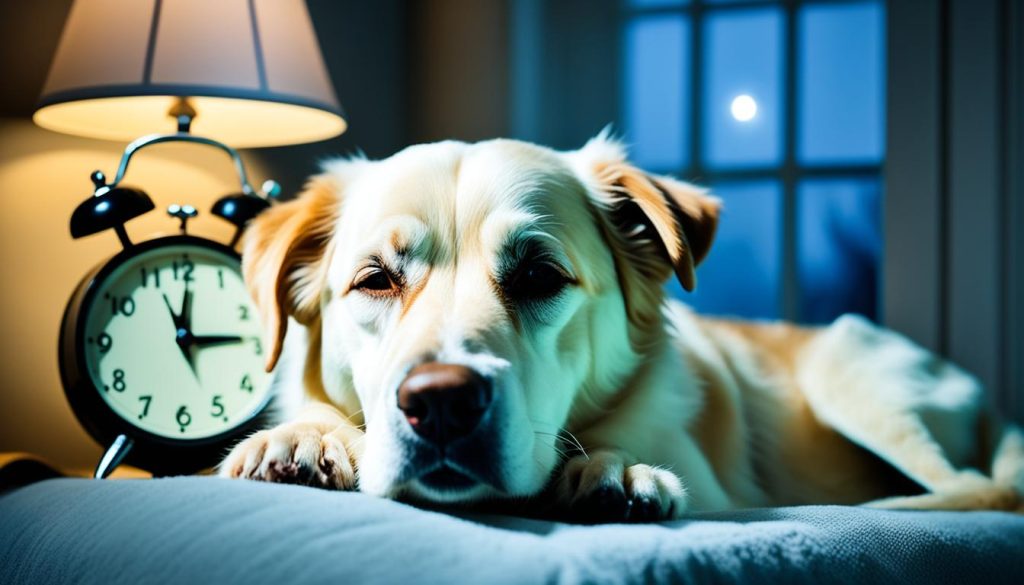
Dogs can sometimes act out at night. It’s important to understand and fix these issues for their sleep. If your dog has trouble sleeping, try making the room calm. Dim the lights, play soft music, or use a white noise machine to help them relax.
If your dog wakes up a lot at night, create a bedtime routine. This could mean a last potty break before bed and less water in the evening. For dogs sensitive to noise, earplugs or a quieter spot for their bed might help.
Some dogs get the “zoomies” at night, being very active. To stop this, make sure they get enough exercise and fun during the day. Puzzle toys or a long walk before bed can help them relax. Remember, be patient with your dog as they learn to sleep better. With time and the right training, they can sleep well.
Important Tip: Training your dog is just the beginning. Keep them safe an healthy with Pin Paws Pet Care. Our blog provides the training advice, and Pin Paws offers the protection your pet deserves.
The Role of Exercise in Improving Dog Sleep Quality
Exercise is key to your dog’s good sleep. It helps wear them out, making it easier for them to sleep well. A dog that gets enough exercise is more likely to have a regular sleep schedule. This leads to better health and behavior.
The right exercise depends on your dog’s breed, age, and health. For example, high-energy breeds like Border Collies or Labrador Retrievers need more activity. Smaller or older dogs might do well with gentle walks. Try to give your dog at least 30 minutes to an hour of exercise daily, adjusting as needed.
Include both physical and mental activities in your dog’s routine. Walking, playing fetch, and agility training are good for burning energy. Puzzle toys and training sessions can calm your dog before bed. Make sure to do the intense activities early in the day, so your dog can relax before night.
By mixing exercise with rest, you help your dog keep a healthy sleep cycle. A tired, happy dog sleeps better at night. Try different activities to see what’s best for your dog’s sleep.
Conclusion
Creating a bedtime routine for your dog is essential for sweet dreams for you and your pet. This article has given you tips to make a calming night routine. It helps improve your dog’s sleep quality.
It’s important to know your dog’s sleep patterns and make their sleeping area comfy. Use calming activities before bed to help them relax. Also, keep their feeding and potty times regular for better sleep.
With time and consistency, your dog’s sleep will get better. A well-rested dog is happy and healthy, ready for each day with energy. Sweet dreams are ahead as you start this journey for your dog’s bedtime routine.
Quick Recommendation: Our blog is filled with tips and tricks for training your puppy or dog. If you are seeking a comprehensive training program, we recommend K9 Training Institute.
BTW: If you are interested in everything from nutritional advice and natural health solutions to stress-relief techniques and overall wellness tips, check out our friends at PawfectlyHealthyPets.com.