

Ever thought about making your furry friend a swimming star? Dog Swimming Lessons do more than just offer fun. They help dogs feel safe in the water and get exercise that’s easy on their joints. But how can you make sure your dog stays safe and has a good time?
Certified trainers guide dogs through 3 to 5 sessions to learn swimming. They focus on Dog Pool Safety and building Canine Water Confidence. With patience, practice, and rewards, your shy dog can become a water lover. Let’s explore how to make your dog a happy swimmer while keeping safety first.
Quick Recommendation: Our blog is filled with tips and tricks for training your puppy or dog. If you are seeking a comprehensive training program, we recommend K9 Training Institute.
Introducing Your Dog to Water
Starting your dog with swimming needs a calm and welcoming space. Begin by slowly introducing them to the water, making sure their first times are good and easy. Puppy swim classes use slow steps and positive rewards to help your dog feel okay in the water. In these classes, teaching basic commands like ‘Sit’ and ‘Wait’ is key. This helps your dog stay calm before getting into the water.
When starting Canine Aquatic Training, using a life jacket helps your dog feel more secure. Dogs like the Labrador Retriever and the Portuguese Water Dog are great swimmers. But, it’s best to use flotation devices for all dogs. Pool chemicals like chlorine can bother a dog’s skin and eyes, so watch how they react.
Make your dog’s first swims fun with toys and lots of praise. Help them get used to moving from shallow to deeper water. Teach them how to get out safely. Pet Swimming Instruction often uses games and toys to make learning fun and build positive water experiences.
Always watch your dog while they swim and take safety steps as needed. Look out for signs of cold or getting tired, especially in dogs that can get hypothermia. By doing this, you can make introducing your pet to water safe and fun.
Choosing the Right Swim Gear
Choosing the right swim gear for your dog is key for safety and comfort. The right gear can greatly improve their swimming experience. A high-quality dog life jacket is a must-have.
Life jackets are crucial for beginners or dogs that don’t naturally float well. They help Greyhounds, Bulldogs, and Pugs stay afloat. These jackets also keep them warm in cold water and have handles for easy retrieval.
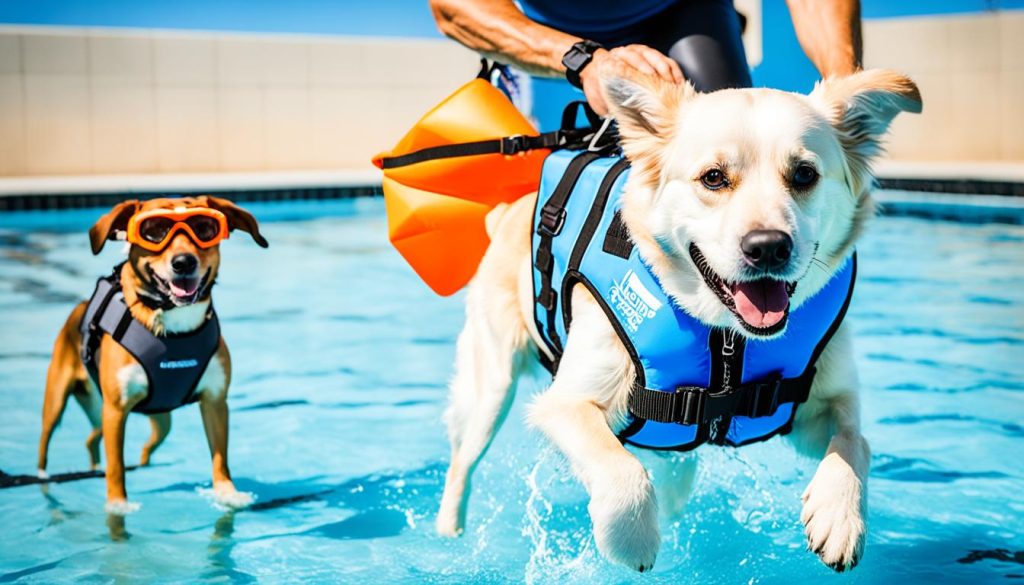
For smaller breeds like Yorkshire Terriers or older dogs, life jackets make swimming easier. Disposable dog shoes and boots with solid soles are great for swimming. They protect your dog’s paws and let them move freely.
There are hidden dangers in the water. Life jackets can save your dog in emergencies, like finding hidden obstacles or having a seizure. Their bright colors make them easy to spot, ensuring a fun and safe swim.
Having the right gear boosts your dog’s confidence and yours too. From life vests to boots, the right equipment prepares your dog for any swim. This makes your training sessions safer and more fun for all.
Benefits of Dog Swimming Lessons
Putting your pet in dog swimming lessons is a great idea. It’s a super efficient way to exercise, with just one minute of swimming equaling four minutes of running. Plus, it’s easy on the joints, perfect for dogs with arthritis or dysplasia.
Swimming is also a great way to burn calories. It’s safe for overweight dogs because the water supports most of their weight. This helps with weight control and is good for dogs with certain health issues.
Canine aquatic training is great for the heart too. It boosts endurance and fitness and keeps the mind sharp. It can also help reduce anxiety and stop destructive behaviors.
Heated pools are perfect for pet rehab and offer a warm place for muscles to relax. They improve blood flow and help with movement. These pools are great for therapy and hydrotherapy, helping dogs recover faster and feel less pain.
For working dogs like rescue or police dogs, swimming is key for their health and happiness. It’s important to introduce them to water slowly and keep an eye on them. Using a dog life jacket is a good idea for dogs that aren’t good swimmers.
Overall, dog swimming lessons offer huge health and mental benefits. They’re definitely something pet owners should consider.
Step-by-Step Guide for Beginner Swimmers
Starting your dog on the path to swimming can be rewarding for both of you. Follow this step-by-step guide for a smooth start with your puppy or adult dog.
Begin with Puppy Swim Classes or introductory sessions at places like The Bone Adventure. These classes start by teaching your dog how to safely exit the water. Make sure your pup is fully vaccinated before introducing them to water, usually around 16 weeks old.
Start with beach-style entries, which are less scary for new dogs. Gradually move to deeper waters as your dog gets more comfortable. Remember, be patient and use positive reinforcement like treats and kind words. Dogs may take three to four sessions to feel comfortable swimming, and some might need up to five.
It’s important to have the right gear for your dog. A life jacket, like the Safe Life Jacket 2.0, provides better support and stability. Keep water toys, treats, and a towel ready to make the sessions fun and rewarding. Always stay by the water to guide and ensure your dog’s safety.

For the first few sessions, choose quiet lakes, ponds, or shallow river banks with clean water. It’s important to watch your dog closely and check the water quality to avoid dangers. Let your dog explore at their own pace to keep the experience fun.
As your dog gets better, increase the swim challenges gradually. Short training sessions help with learning and prevent your dog from getting tired. For older dogs, make sure the swimming routine is gentle to avoid the discomfort of cold water.
The main goal of these Doggy Paddling Lessons is to make your dog love water activities in a safe and fun way. By following this guide, you can help your dog become a confident swimmer. This will let them enjoy the health benefits of swimming.
Safety Precautions for Swimming Dogs
When your dog is in the water, making sure they stay safe is key. Watch out for health risks like ear, skin, and urinary tract infections. Always rinse your dog off after swimming to remove chlorine and other chemicals. Drying their ears is also important to prevent infections.
Keeping your dog hydrated is crucial. Never let them drink pool water, as it may have harmful chemicals. Offer fresh water often to stop them from drinking something dangerous. Using a life jacket is a good idea, especially for young, big, or older dogs. It helps keep them safe while they swim.
Always watch your dog closely while they swim. Look for signs of getting tired, like a droopy tail or trouble staying afloat. Dogs can breathe in water, which can be dangerous. If your dog has stomach issues after swimming, watch them closely and seek help if needed.
Don’t feed your dog right before swimming. Wait at least an hour after meals to prevent stomach problems. Dogs can get hypothermia just like people, so they need to warm up if they get out of the water.
Not all dogs are good swimmers. Some may paddle but still struggle. That’s why swimming lessons for pets are important. They help your dog feel more confident and safe in the water. Regular vet visits also keep your dog healthy for swimming.
Quick Recommendation: Our blog is filled with tips and tricks for training your puppy or dog. If you are seeking a comprehensive training program, we recommend K9 Training Institute.
Understanding Pool Conditioning for Dogs
Pool Conditioning for Dogs is key to making your pet feel comfortable in the water. It involves getting your dog used to different water depths, dive docks, and fun water features like fountains. Heated saltwater pools keep the water warm all year, staying between 80-82 degrees.
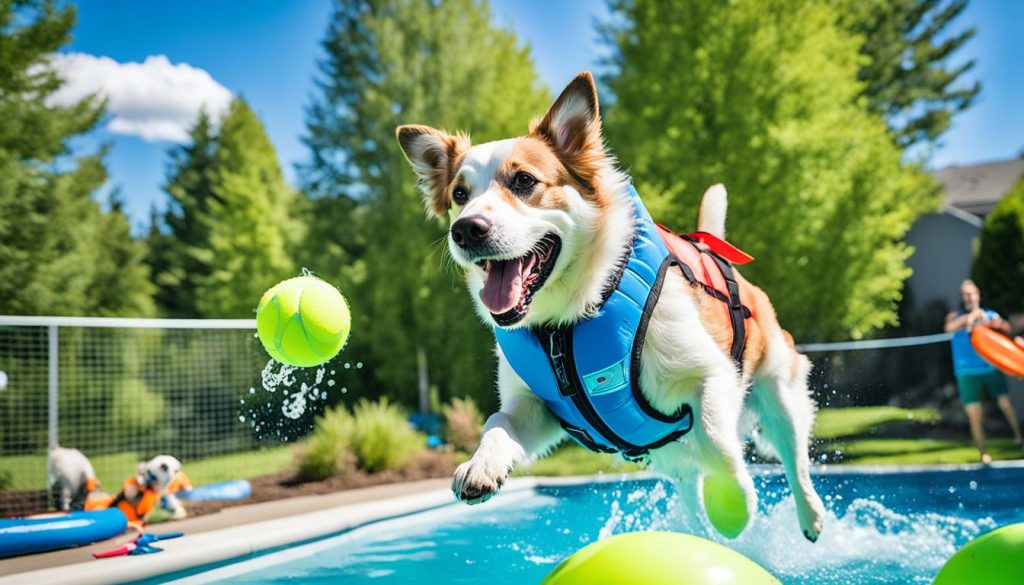
Introducing your dog to swimming at 4-6 months old helps them adjust quickly. But dogs of any age can learn to swim. Some dogs pick it up in weeks, while others might take more time.
Building Canine Water Confidence comes from positive rewards and gradually longer swims. Start with short swims and give breaks to avoid tiring them out. Swimming is great for muscle health and can help prevent obesity and other health issues.
Keeping your dog safe in the pool is crucial. One session can teach them to find the stairs and get out safely. Secure fencing and alarm systems can prevent unsupervised access, adding safety. This training aims to make your dog love the water, creating a safe space for fun and exercise.
Dealing with Water-Related Fears
Helping your dog get over water fears takes time and patience. In Santa Monica, many dogs get upset when they see people swimming or going into a pool. This shows how common it is for dogs to be afraid of water. Hunter, a Chow Cocker Spaniel mix, was one such dog. He got really upset by the sound of pool activities.
Hunter was scared of the pool cover opening, splashing, the filter’s suction sound, and the hot tub bubbling. To help him, trainers used a method called desensitization and counter conditioning. They gave him treats like bully sticks or a lick mat with peanut butter. This made him associate the scary sounds with good things.
To help Hunter get used to the pool sounds, they did many practice sessions a day. They also made sure he didn’t see people going into the pool. This helped him not get scared by what he saw.
Before training, it’s good to exercise your dog. A walk during pool time can make it a better place for your dog to learn. Swim lessons for scared dogs start with small steps, like getting used to shallow water. These lessons help your dog feel safe in the water and learn how to swim safely.
Using life vests for swimming makes your dog feel safe in the water. Dog Hydrotherapy is a great way to make water experiences positive for your dog. With regular practice and the right instruction, your dog can learn to enjoy swimming and stay safe in the water.
Quick Recommendation: Training your dog is just the beginning. Keep them safe an healthy with Pin Paws Pet Care. Our blog provides the training advice, and Pin Paws offers the protection your pet deserves.
The Role of Canine Hydrotherapy
Dog Hydrotherapy is key to their health, offering many benefits. It helps dogs recover from surgery or injuries with special water exercises. These exercises make dogs move better, lessen pain, and heal faster without harming their joints.
Dogs can start Canine Aquatic Training at just one year old. It’s a gentle way to build muscle, improve heart health, and increase energy. Sessions last from 10 minutes to half an hour, fitting easily into any schedule.
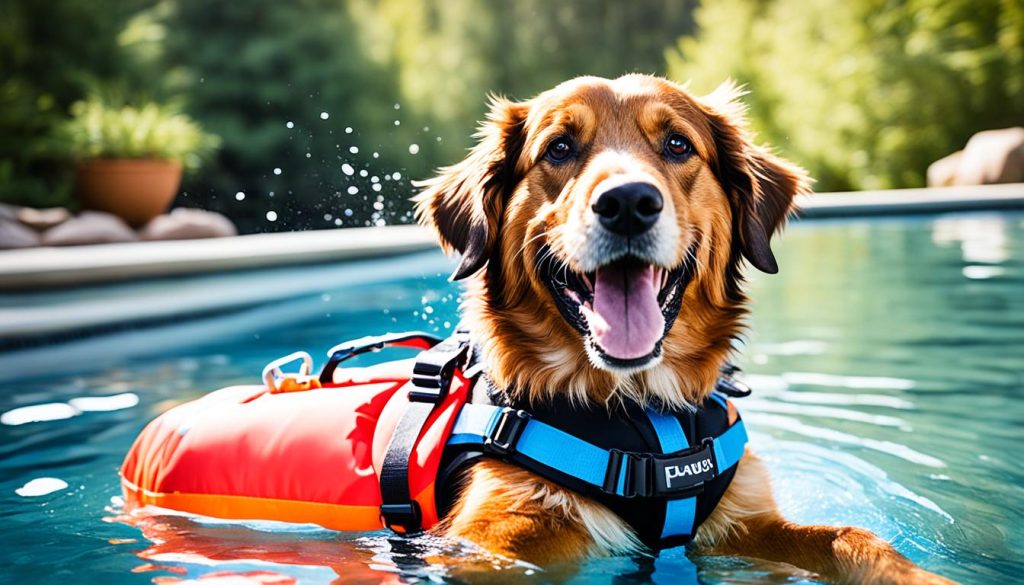
It’s crucial to watch dogs during these sessions to avoid problems like ear infections, skin issues, or getting too tired. Keeping pools clean with chlorine and UV systems makes them safe for dogs and people. You can adjust workouts with an underwater treadmill to meet each dog’s needs.
Hydrotherapy is great for dogs with arthritis, muscle loss, or being overweight. It helps with physical issues and keeps their minds sharp, boosting their overall health. For active dogs, it builds endurance, stamina, and muscle, making them ready for sports while lowering injury risks.
Finding the Right Dog Swimming Lessons
Finding the best Dog Swimming Lessons for your pet involves looking at several important factors. These include the trainer’s skills, the condition of the facility, and the class structure. Dip’n Dogs and Rocky’s Retreat are two top choices that meet these criteria well.
Dip’n Dogs offers swim lessons that fit your dog’s unique needs and abilities. They have fitness swimming for heart health and hydrotherapy for joint pain and mobility. The place is clean and safe for all dogs.
Rocky’s Retreat provides various Pet Swimming Instruction options. Their swim lessons last from 30 to 60 minutes and help dogs feel comfortable in the water. They also have hydrotherapy for health issues like obesity and joint pain. The pool is at the right temperature, and the staff is trained for safety.
It’s good to think about what you want for your dog from swimming lessons. Whether it’s just to be safe, to get over water fears, or to train for sports, picking the right place is key. Rocky’s Retreat has great Doggy Paddling Lessons for dogs with physical issues.
Consider visiting a place like Rocky’s Retreat in person before signing up. This way, you can see the pool and services for yourself. It helps you make sure your dog will be happy and benefit a lot from swimming.
Conclusion
Teaching your dog to swim safely is a rewarding journey. It needs patience, consistency, and the right place. Not all dogs are natural swimmers but many can learn with the right help. Some dogs might be scared of water at first.
Using treats, toys, and praise can help build their confidence. Positive reinforcement is key. Flotation devices can help those who are still learning or not confident yet.
Guide them through basic swimming steps, slowly giving them less help as they get more confident. Make swimming fun with praise and play. Always watch your dog in the water to keep them safe.
With the right training and safety steps, swimming can make your dog healthier and happier. Places like Unleashed offer great spaces for Puppy Swim Classes. They also have professional grooming services. Making sure your dog is safe in the pool while teaching them to swim is important.
After swimming, rinse your dog with fresh water to keep their coat healthy. This helps their well-being a lot.
Quick Recommendation: Our blog is filled with tips and tricks for training your puppy or dog. If you are seeking a comprehensive training program, we recommend K9 Training Institute.
BTW: If you are interested in everything from nutritional advice and natural health solutions to stress-relief techniques and overall wellness tips, check out our friends at PawfectlyHealthyPets.com.