

Ever wondered what makes some dog training successful? The key might be in the right dog training aids and training tools for dogs.
Tools for training dogs are key to successful training and a positive learning journey. They can be simple like leashes and collars or more complex like clickers and interactive toys.
Good training gear supports many training methods. It helps with commands and makes your dog more obedient. Using these tools the right way can greatly improve your dog training results.
Quick Recommendation: Our blog is filled with tips and tricks for training your puppy or dog. If you are seeking a comprehensive training program, we recommend K9 Training Institute.
Clickers: The Efficient Training Signal
Clicker training uses a small device that makes a distinct sound to mark good actions. It’s based on positive reinforcement, making it clear and effective. The clicker’s sound is consistent, helping your dog learn what actions are right.
Other training methods use signals like whistles or words. But clickers are more noticeable and easier to learn than some other signals. They work well with many animals, including dogs, cats, and even small pets like hamsters.
Clickers work well because they directly affect the brain’s emotional center, making them powerful for training. Studies show that dogs learn faster with clicker training than other methods. It’s important to use the click quickly after the action to get the best results.
About 85% of professional dog trainers use clicker training. This method strengthens the bond between you and your pet by up to 70%. It can also cut training time in half, making it a great way to train your dog.
Treat Pouches: Convenience on the Go
Treat pouches are a must-have for dog trainers and owners. They offer quick and easy access to treats, which is key for effective rewards-based training. These pouches help keep training sessions smooth and productive by ensuring consistent rewards.
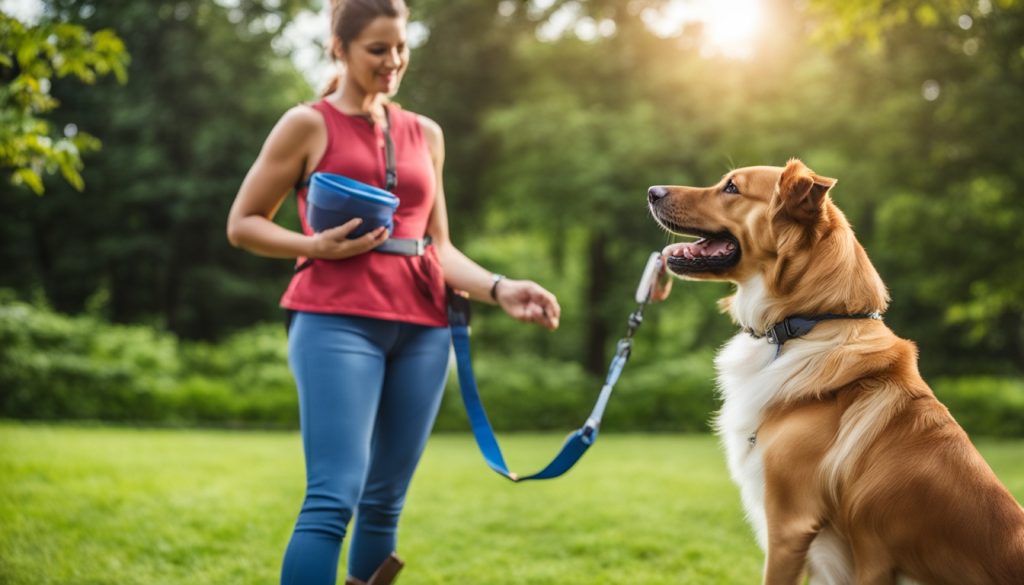
The Wildebeest Alamo Dog Treat Pouch is a top choice. It’s compact but has plenty of room for treats and other items. The magnetic closure is easy to use and keeps treats secure, preventing spills. Many users love how easy it is to clean and its durability.
The Trainer’s Pouch was the first silicone treat pouch for pets, launched in 2017. It’s designed by professional animal trainers in Australia and is made from BPA-free silicone. It’s waterproof and safe for the freezer and dishwasher, perfect for all types of treats. The Original size can hold up to 4 cups of food, and the Pocket version fits 2 cups.
For those who like style, the OllyDog Backcountry Day Bag comes in 15 colors. The JimmyCocoa Dog Treat Pouch offers 20 patterns and colors. The AUWUD Silicone Dog Treat Pouch and Doog Good Dog Treat & Training Pouch also have many options. The Chuckit Treat Tote for Dogs is a budget-friendly choice with two sizes under $10. Each option is designed to be both convenient and stylish.
Whether you’re a professional trainer or a pet owner, dog treat bags can make training better. They come with strong construction, easy-to-clean materials, and stylish designs. Users worldwide praise these pouches for their role in successful rewards-based training.
Training Apps: Digital Aids for Modern Training
Today, training technology has changed how we train dogs. Modern dog training now uses apps that offer custom plans for each dog and owner. These apps have features like personalized training, tracking progress, and tips and videos.
Using dog training apps makes training more efficient and tailored. Apps like Edmodo, with over 34 million users, show how interactive training can work for dogs too. They offer fun and engaging ways to learn.
Training tech also gives trainers instant feedback, like Formative does for students. This quick feedback helps your dog learn faster. You can train anywhere, anytime, making it easy to add to your routine.
Also, these digital tools are affordable. Many apps are free or cost less than $10 a year. This makes high-quality training accessible to more people, without spending a lot.
Leashes and Collars: The Basics of Dog Training
Dog training needs the right tools. Leashes and collars are key for guiding and controlling your dog. There are many leash types, like standard, nylon, leather, and chain. A six-foot nylon leash is great for medium and large dogs, and smaller dogs use a one-quarter inch one.
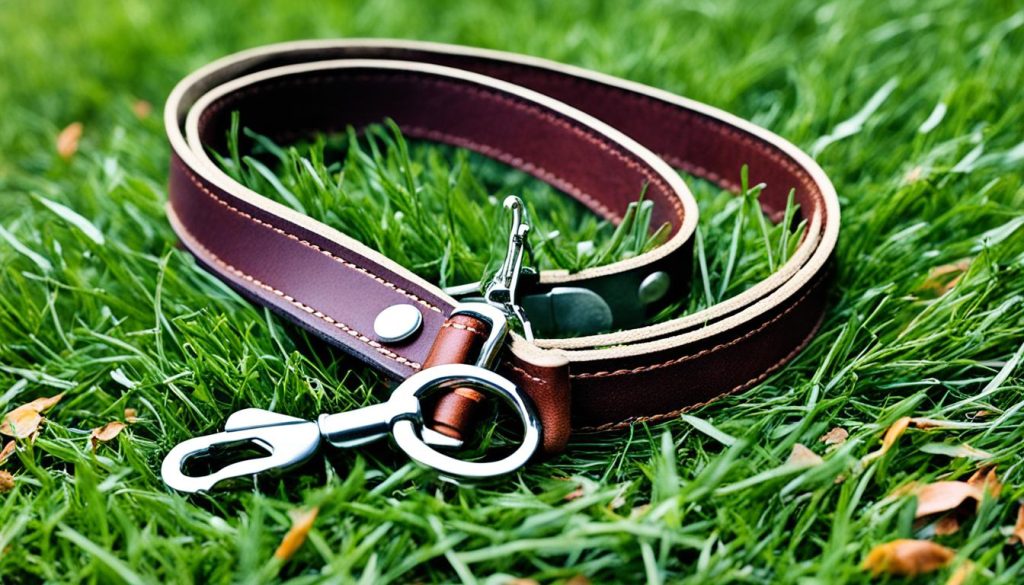
But, retractable leashes aren’t good for training. They lack tension and can hurt an untrained dog. Traditional leashes are made of cotton web, nylon, leather, and chains. But, chain leashes are heavy and uncomfortable.
Choosing the right training collar is crucial for a strong training base. The nylon snap-around collar is best, placed high on the neck. Handcraft Collars has over 40 years of experience making high-quality collars. Electric and shock collars are pricey but not recommended because they can scare dogs.
Other great collars include the Gentle Leader and the limited slip martingale. The Gentle Leader stops leash pulling and helps with commands. The limited slip martingale is good for dogs that don’t like head halters. But, avoid harnesses and flat buckle collars during training to protect the dog’s neck.
Picking the right leashes and collars is key to mastering training and keeping your dog safe and learning well.
Training Tools: Essential Equipment for Every Trainer
Every pro dog trainer knows the importance of having the right gear. Tools like agility equipment, behavior shaping devices, and training dummies are key. They’re vital for teaching new skills and managing bad behaviors.
Buying top-notch dog training gear means you’re investing in your dog’s learning and happiness. Agility tools help your dog get stronger, more coordinated, and focused. Devices like muzzles and training dummies are great for controlling and changing a dog’s actions.
Also, the right training aids make training smoother. They help you create a complete training plan that covers your dog’s physical and behavioral needs. With the right gear, you’re ready for any training situation. This makes your training sessions more effective and fun.
The right dog training equipment really changes how successful your training is. By getting these key tools, you’re helping your dog become more disciplined, well-behaved, and joyful.
Quick Recommendation: Our blog is filled with tips and tricks for training your puppy or dog. If you are seeking a comprehensive training program, we recommend K9 Training Institute.
Harnesses: Safe and Secure Training
Dog harnesses are a safer choice than collars for dogs that pull or have breathing issues. They’re key for training your dog safely. They spread the force out over your dog’s body, easing the strain on their neck.

Using harnesses for training keeps your dog more comfortable and effective during walks. Many harnesses have front attachments for the leash. This stops your dog from pulling and helps them walk better. They come in various styles to fit different needs and likes, making training safer and more effective.
Vets recommend harnesses for dogs as young as eight weeks old. As your dog grows, these harnesses can change to fit them, keeping them safe and comfy. From simple to fancy, the quality and materials like flame-resistant Kevlar make them last a long time.
Cleaning your dog’s harness is easy, keeping it fresh and long-lasting. The right harness boosts safety in training and strengthens your bond with your dog.
Interactive Toys: Engaging Your Dog While Training
Interactive dog toys are key for any training plan. They give your dog’s mind a workout and make training fun. Puzzle toys, for instance, are great for keeping your dog’s brain sharp.
These toys keep dogs busy and happy, giving you a break. Using puzzle toys for meals turns feeding time into a game. The Kong Wobbler is perfect for slow eaters and keeps your dog’s mind active.
Lure course toy sets are great for building endurance and fun activities. Flirt poles are perfect for high-energy play and training. For a challenge, try activity boards or hide-and-seek plush toys.
Snuffle mats provide fun and sensory stimulation, helping dogs eat slower or lose weight. Interactive balls with treat holes make playtime rewarding. These activities also strengthen your bond by training through play.
Teaching your dog to look at you can release oxytocin, a bonding hormone. Changing your walk routine grabs your dog’s full attention, making training better.
Interactive toys are more than just fun; they’re essential for complete dog training. Using snuffle mats or playing hide and seek uses your dog’s natural instincts. Mixing up the toys keeps training fun and mentally stimulating for your dog.
Crates: Creating a Safe Training Space
Dog crates are key for keeping your dog safe during training. They’re not just for punishment but are crucial for your dog’s health. Starting crate training early helps ease stress from big changes for both you and your dog.
The Association of Professional Dog Trainers says picking the right crate size is important. Your dog should be able to stand up, turn around, and stretch out in it. Using positive reinforcement is key, starting with short crate times and slowly adding more.
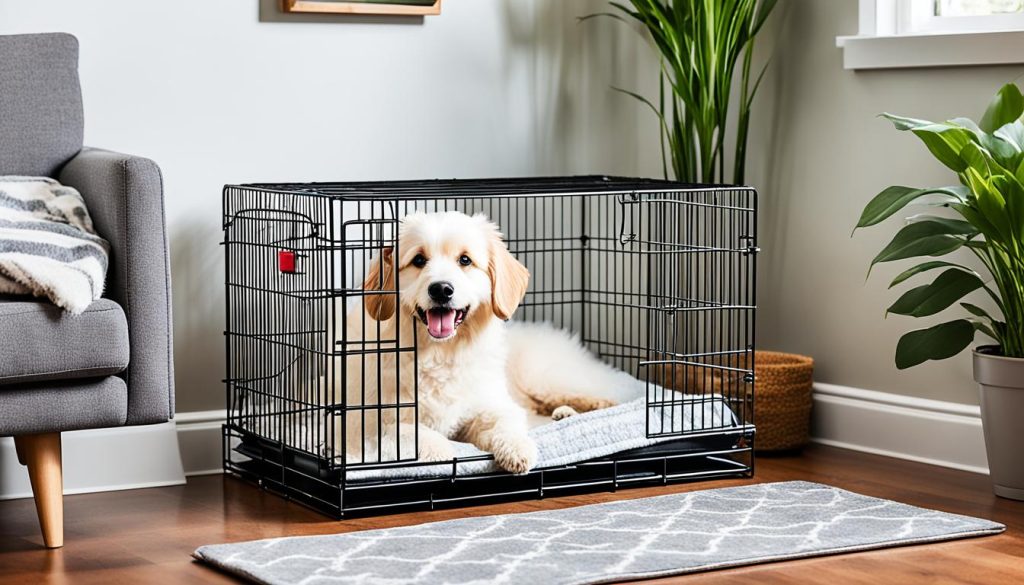
Crate training has many benefits. It helps prevent accidents and stops bad behaviors like chewing and digging. It keeps puppies in a safe space, stopping them from peeing or pooping inside. Plus, crates make traveling easier and less stressful for your dog.
For dogs recovering from injuries or illnesses, crates are a lifesaver. Wire crates are strong and let in air, while fabric crates are easy to move. Plastic kennels are best for flying because they’re tough.
To make crate training work, focus on positive reinforcement and avoid making your dog feel bad. Place the crate in a quiet spot to keep your dog calm. Treats and praise make your dog feel good about being in the crate.
In the end, dog crates give your dog a safe place to relax and feel secure. By picking the right crate and training well, you can make a happy and safe space for your dog.
Choosing the Right Crate Size
Finding the right dog crate size is key for your dog’s comfort and health. The ideal crate gives your dog enough room to sit, stand, and lie down easily. When picking appropriate crate sizing, add 3 to 4 inches to your dog’s height and length for a good fit.
For toy breed puppies, an 18” x 12” x 14” crate is perfect, fitting dogs up to 6 pounds and 10 inches tall. For bigger pups like Chihuahuas or Pomeranians, a 22” x 14” x 16” crate is ideal, suitable for dogs up to 12 pounds and 16 inches long.
Medium-sized dogs, such as Shih Tzus and Bichon Frises, do well in a 24” x 18” x 20” crate. This size fits dogs weighing 13 to 25 pounds. French Bulldogs and Boston Terriers need a 30” x 20” x 23” crate, fitting dogs up to 24 inches long and 26 to 40 pounds.
Larger dogs like English Bulldogs or Australian Cattle Dogs should have a 36” x 24” x 26” crate. This size is for dogs weighing 41 to 70 pounds. For even bigger breeds, like Bernese Mountain Dogs or Rottweilers, a 48” x 30” x 32” crate is best, suitable for dogs weighing 90 to 110 pounds.
Choosing the right crate material is also important. Metal crates are strong and well-ventilated, perfect for dogs that chew. Plastic crates are comfy and great for travel. Wooden crates are heavy but can be furniture, and fabric crates are portable but less durable.
Adding a cozy, machine-washable bed or mat makes your dog more comfortable in the crate. Proper crate training creates a safe space for your dog. Tools like the Wyze pet camera can help you keep an eye on your dog, making crate time stress-free.
Quick Recommendation: Training your dog is just the beginning. Keep them safe an healthy with Pin Paws Pet Care. Our blog provides the training advice, and Pin Paws offers the protection your pet deserves.
Introducing Your Dog to the Crate
Introducing crates to your dog should be a step-by-step and positive process. Start by placing the crate in a spot where your dog hangs out a lot. This makes the crate a familiar part of their world, sparking curiosity without making them scared.
One key tip for crate training is to link the crate with good times. Begin by feeding your dog inside the crate. If they seem unsure, place the bowl just inside the crate, moving it further in with each meal. This approach helps make the crate a positive place.
Always give your dog treats or their favorite toys when they go into the crate on their own. This teaches them that the crate is a safe and fun spot. Also, make sure the crate is big enough for your dog to stand up and turn around in comfortably.
For puppies under 6 months, don’t keep them in a crate for more than three or four hours. Slowly increase the crate time as they get used to it. Using these crate training tips can help make introducing crates a good experience for you and your dog.
Books and Online Courses: Expanding Your Training Knowledge
Books and online courses are great for learning more about dog training. They let you explore topics like canine psychology and advanced training. These resources help you grow your skills and keep you up-to-date with new methods.
Online resources offer a lot of learning opportunities. You can find e-books, video courses, or webinars easily. This wealth of information can really improve your training skills.
By learning continuously, you stay updated with the best and kindest training methods. Keeping your knowledge fresh means you can train dogs better. This leads to happier and more obedient dogs.
Conclusion
As we conclude this article, it’s clear that your path to successful dog training is linked to the tools and strategies you use. Choosing the right aids, like clickers, treat pouches, or apps, greatly affects your training’s success. These tools help you communicate better with your dog.
Every tool, from simple leashes to special harnesses and crates, is crucial for effective training. They make sure your dog is safe and comfortable. They also make training more fun and positive. Knowing how to use these tools well adds consistency and structure to your training.
Learning more through books and online courses also helps you. These resources give you new techniques and insights. They prepare you for any training challenge. By using these aids, you improve your dog’s behavior and strengthen your bond. This makes your training journey more rewarding.
Quick Recommendation: Our blog is filled with tips and tricks for training your puppy or dog. If you are seeking a comprehensive training program, we recommend K9 Training Institute.
BTW: If you are interested in everything from nutritional advice and natural health solutions to stress-relief techniques and overall wellness tips, check out our friends at PawfectlyHealthyPets.com.