
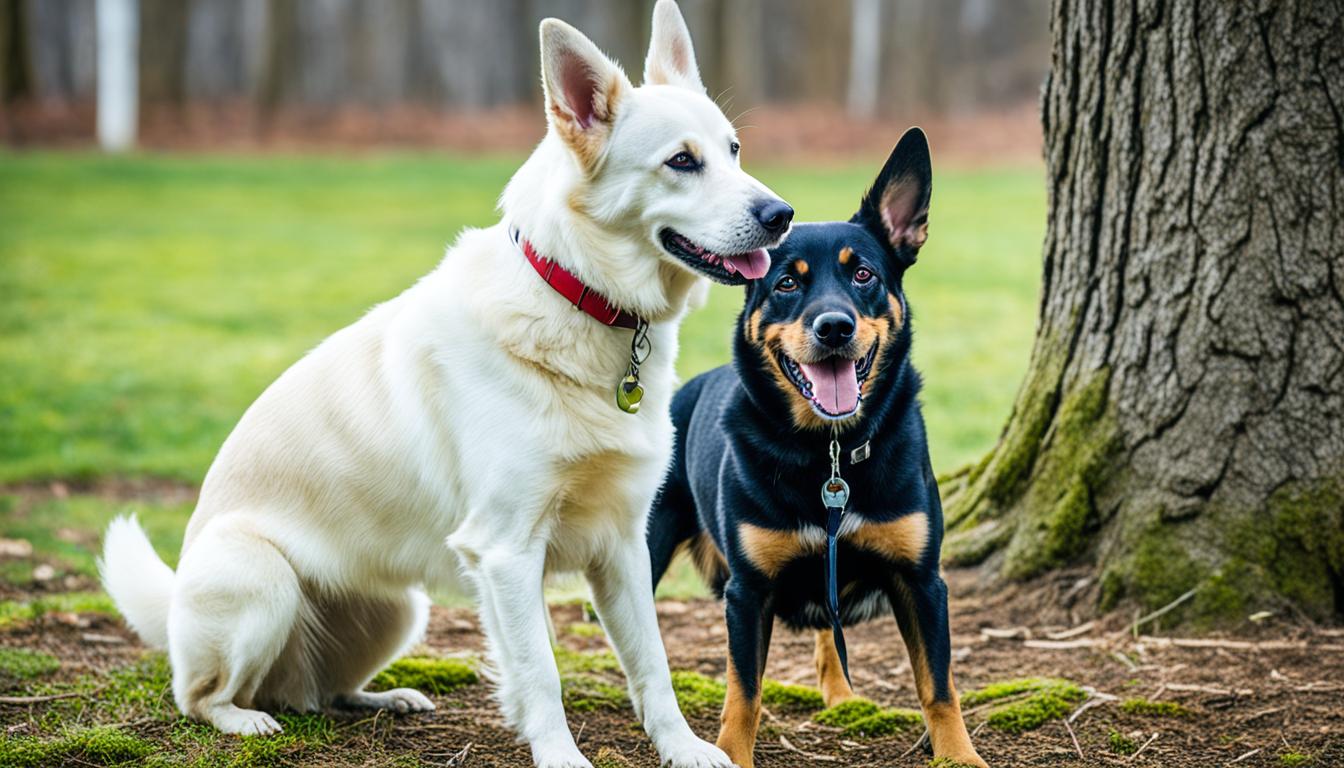
Could it be that your furry friend’s strange behavior is really about what you don’t get? When it comes to dogs, knowing how they communicate can change everything. They use body language, sounds, and even smells to talk to us. Did you know that 90% of how dogs communicate is through body language and smells?
Yet, 70% of dog owners don’t get what their dogs are trying to say, which can lead to risky situations. So, how well do you really know your pet?
Learning about dog behavior can make your bond with your pet stronger and keep them safe. This is where understanding your pet really matters. Let’s start learning how dogs communicate and make sure you’re on the right track.
Quick Recommendation: Our blog is filled with tips and tricks for training your puppy or dog. If you are seeking a comprehensive training program, we recommend K9 Training Institute.
Introduction to Dog Communication
Understanding how dogs communicate is key to a strong bond with your pet. Dogs use visual, auditory, olfactory, and tactile cues to show their feelings. Knowing these cues helps improve how we talk to our pets.
Experts often lack deep knowledge in dog communication. This shows there’s a big gap in understanding even among pros. Owners often feel pressured to make their dogs fit human expectations, leading to miscommunication.
Positive reward training is popular, but it’s also important to learn about dog communication basics. Paying attention to your dog’s signals like posture, tail position, and eye expressions can strengthen your bond. Studies show that eye contact, body posture, and vocalizations are key to understanding dogs.
It’s important to watch and understand non-verbal cues too. Tail movements, ear positions, and body posture show if your dog is happy, stressed, or excited. Knowing these signs helps you react better, keeping your dog emotionally well.
There are many ways to learn about these signals. Whether you’re new to dogs or have been an owner for years, taking the time to learn about dog communication can lead to better interactions. It can also prevent negative situations.
Reading Dog Body Language
It’s key to know how dogs show feelings through their body language. By understanding what their postures mean, you can connect better with your dog.
A calm dog often shows signs like ears in their natural spot and soft eyes. Their mouth might be a bit open, and their tail wags widely.
An alert dog looks different. You’ll see their ears up and eyes wide on something interesting. Their tail sticks out from their body too.
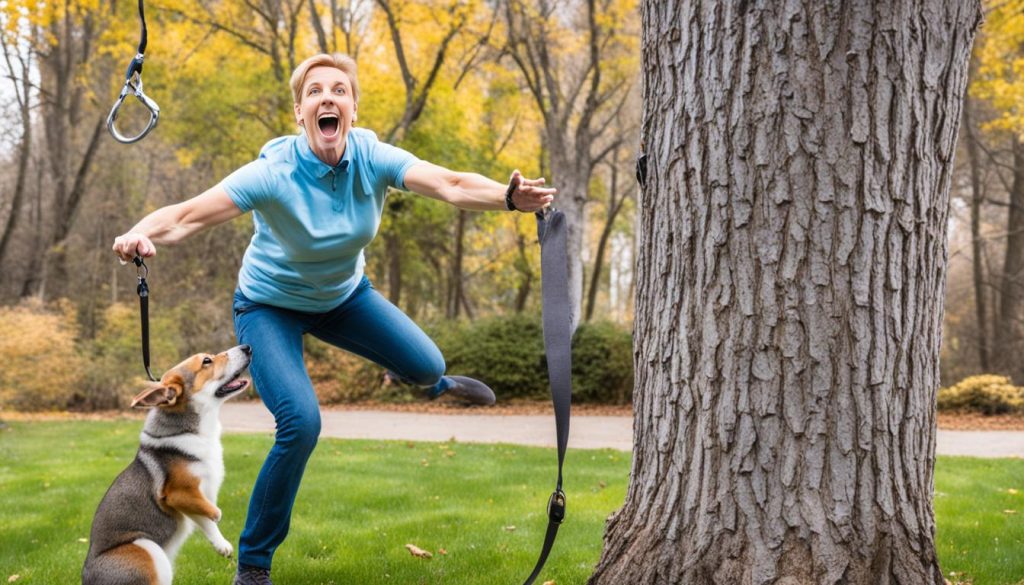
Stress in dogs can show in many ways. They might turn away, move slowly, yawn, or lick their lips. Turid Rugaas, in “On Talking Terms With Dogs: Calming Signals,” says yawning is a stress sign in dogs.
Fearful dogs have their own signs. Look for tucked back ears, eyes showing a lot of white, and a tight mouth. Their tail is often tucked in too.
When a dog’s fur stands up along its back, it’s called piloerection. This means the dog is excited, stressed, or very interested.
Knowing how dogs greet or play is also important. A play bow is when a dog stretches its front legs and leans down. It’s a sign they want to play.
Aggressive dogs show signs like staring hard, forehead wrinkles, and a tense mouth. Their tail might twitch a lot, and hackles could rise.
But, tail wagging can mean different things. Wagging to the right usually means happiness, while wagging to the left might mean something’s bothering them.
Understanding dog signals helps you talk better with your dog. It makes your relationship stronger and more open.
Decoding Vocalizations: Barks, Growls, and Whines
Understanding how dogs communicate through sounds is crucial for a stronger bond with your pet. Dogs bark for many reasons, like alerting you, inviting play, or showing frustration. Studies show humans can guess what a dog is trying to say with its bark quite well.
Growling in dogs can mean different things depending on the situation. It could be a sign of aggression, fear, or playful excitement. Dogs are quick to recognize growls about guarding food, but slower to react to growls from strangers. People are good at telling when a growl is playful, about guarding food, or threatening.
Research finds that dog owners and women are better at understanding growls, especially in threatening situations. Calling a growl a “play growl” or “talky growl” helps us understand it better. Using terms like “dog talk” for friendly growls and “dog laugh” for happy sounds adds depth to how we see dog communication.
Different breeds of dogs may have their own ways of making sounds. Whining can mean a dog needs to go out, wants attention, or is excited. Howling can be about marking territory, getting attention, or showing feelings. Some dogs even purr, which means they’re happy. Learning to understand these sounds helps us know more about our pets’ feelings and needs.
Dog Signals for Conflict and Stress
It’s important to know when dogs are stressed or in conflict. Dogs show stress through actions like yawning, lip licking, avoiding others, and changes in eating or sleeping. These signs are subtle but tell us they’re stressed.
When dogs feel conflicted, they might act differently. They could show signs like a raised paw, a certain look in their eye, or make sounds like growls. It’s important to notice these signs to help them.
Canines may also show they’re uncomfortable with direct stares, stiff bodies, growling, or a curled lip. If ignored, these signs can turn into more serious stress behaviors. Spotting these early signs helps reduce stress and stops aggression.
Each dog reacts to stress in its own way, based on past experiences and personality. Learning to spot these signs can stop things from getting worse. It also lets you give your dog the comfort or space they need to stay safe. Recognizing and acting on these signs early is key to a happy dog.
Appeasement and Submissive Signals in Dogs
Understanding submissive dog behavior is key. Dogs show submission through actions like yawning, lip licking, and scratching. These actions, known as “calming signals,” help them feel better when they’re stressed or scared.
These gestures are crucial for keeping peace in dog packs. Avoiding eye contact can mean a dog wants to avoid a fight. Lip licking or yawning might show they’re really stressed and need to calm down.
It’s important to know the difference between true submission and normal dog behavior. Actions like crouching low or rolling over show a dog’s desire for peace, not guilt.
When a dog feels threatened, they use these behaviors to calm things down. It’s a way to avoid conflict.
It’s key to respond to these signals with kindness and calmness. By understanding and reacting to these behaviors, you can prevent fights and dog bites. This makes your relationship with your dog safer and more peaceful.
The Misconception of Guilt in Dogs
Have you ever seen your dog act “guilty” by tucking their tail or avoiding your gaze? It’s often misread. Dogs don’t understand guilt like humans do. They act out because they think they might get in trouble, not because they feel guilty.
A 2009 study by Dr. Alexandra Horowitz found dogs show the same behaviors whether they did something wrong or not. These actions, seen as guilt, are really a reaction to their owner’s signals. This can lead to confusion and poor communication with your pet.
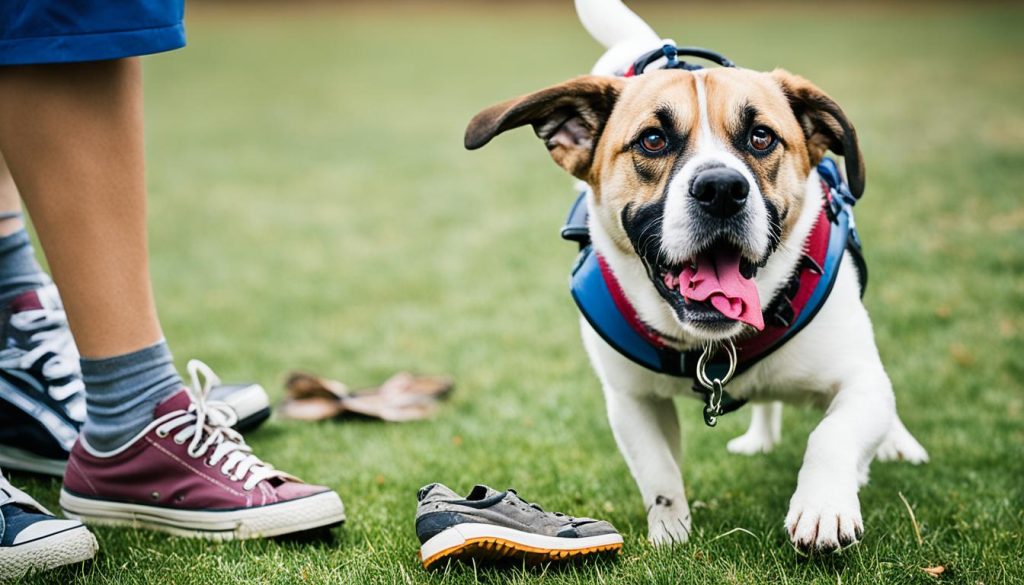
Scared dogs might yawn to show they’re uncomfortable, as a study by the University of Guelph and the University of Pennsylvania found. Licking their lips can also mean they’re uneasy, not hungry. These actions are ways for dogs to ask for peace, not to say they did something wrong.
Knowing this is key to a good relationship with your dog. It stops us from giving them human feelings they don’t have. This way, your dog feels safe and understood, helping avoid negative reactions and leading to a better life together.
Quick Recommendation: Our blog is filled with tips and tricks for training your puppy or dog. If you are seeking a comprehensive training program, we recommend K9 Training Institute.
Assertive, Aggressive, and Distance-Increasing Signals
Learning how your dog shows aggression is key to avoiding problems. Scott and Fuller (1965) say aggressive dogs may bark, growl, bite, run away, or roll over and yelp. Spotting these signs early can change how you handle your pet.
Richardson (1998) says aggression is when a dog shows harm towards someone, with clear intent. Beaver (1999) agrees, saying it’s about the dog making itself bigger to push someone else down. This is a normal way dogs show they want more space.
Watch for a direct stare as a sign of aggression. It can lead to more obvious signs like lip pulling back and snarling. Raised hackles and a stiff body also mean your dog is getting upset.
Lindsay (2001) stresses the importance of knowing an ethogram. An ethogram lists important behaviors and patterns. This helps spot assertive signals from your dog. Knowing these signs is key to handling your dog’s behavior, as Aloff (2002) points out.
Early socialization is also vital. Lindsey (2001 & 2002) says early social experiences shape how dogs act with other animals. By 12 weeks old, dogs usually know their place in a group, affecting their aggression levels.
Keep an eye on your dog’s body language. A vertical tail can mean aggression, while horizontal ears up show alertness or aggression. Teeth showing by pulling back lips and wrinkling the muzzle are clear aggression signs. Knowing these signs helps you react right and keep a good relationship with your dog.
Canine Communication in Training and Socialization
Elle Bee is a pro dog trainer and AKC certified Canine Good Citizen Evaluator. She believes in positive training methods. She uses treats, toys, and praise to reward good behavior. This helps dogs link actions with positive feelings.
Socializing dogs in groups is key to their training. Playing with other dogs helps them learn good manners and stop bad habits like jumping and barking too much. By understanding how dogs behave, trainers can use kinder and more effective methods to improve their behavior.
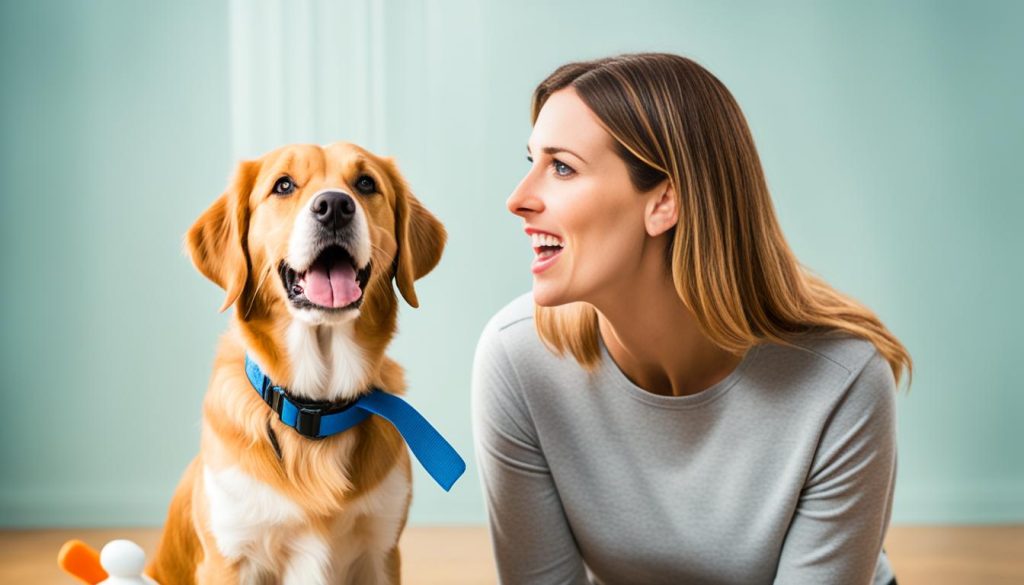
The Canine Communication Certification program at New Skills Academy is great for learning about dog training. It covers important topics like reading dog body language and understanding their sounds. Students get to practice what they learn through exercises and tests.
Elle Bee says eye contact is very important in training dogs. It helps with obedience and changing bad behaviors into good ones. To get better at this, taking classes and joining dog clubs can really help. It makes dogs happier and more social.
Quick Recommendation: Training your dog is just the beginning. Keep them safe an healthy with Pin Paws Pet Care. Our blog provides the training advice, and Pin Paws offers the protection your pet deserves.
Interpreting Mixed Signals in Dogs
Understanding mixed signals from dogs can be tough. They often show both assertive and submissive signs. You need to look at body language, facial expressions, ear positions, and more. For example, a wide wag of the tail means they’re happy. But a slow wag with the tail down shows they’re feeling unsure.
Looking at your dog’s eyes and ears is also key. Soft eyes mean they’re calm, but a hard stare can mean they’re aggressive. Forward ears show they’re interested, but flat ears mean they’re scared or aggressive. A relaxed face usually means they’re happy, but a tense face might show stress or anger.
Body language is important too. A relaxed body shows they’re comfortable, but a stiff body might mean they’re alert or aggressive. Crouching down often means they’re scared or submissive. Different sounds they make, like barking or growling, also tell you a lot. Barking can mean many things, whining shows they’re uncomfortable, and growling can be fear or aggression.
It’s important to understand that dogs act differently in different situations. Play bows are happy invitations to play, but circling can mean they’re excited or a bit nervous. If they growl because they’re scared, it’s key to be kind and help them feel safe.
Remember, any dog can bite if they feel scared or threatened. Knowing how complex dogs can be helps avoid misunderstandings and manage their behavior better. Getting what dogs are trying to say is key to a good relationship with your dog.
Conclusion
Understanding how dogs communicate is key to a strong bond with your pet. It’s important to know the signs they use, like tail wagging, ear position, and eye contact. Also, knowing what their barks, growls, and whines mean can make your relationship better.
Dogs are amazing at understanding human communication. They even do better than chimpanzees in some tasks, like following directions. They can tell if a cue is intentional or not, showing they’re very aware of what we mean.
Learning more about how your dog communicates can make things run smoother. It can stop misunderstandings and make your dog happier. For example, what looks like guilt might actually be something else. Getting better at reading your dog helps build trust and cooperation. Every dog is different, so keep learning about theirs to have a great friendship.
Quick Recommendation: Our blog is filled with tips and tricks for training your puppy or dog. If you are seeking a comprehensive training program, we recommend K9 Training Institute.
BTW: If you are interested in everything from nutritional advice and natural health solutions to stress-relief techniques and overall wellness tips, check out our friends at PawfectlyHealthyPets.com.