
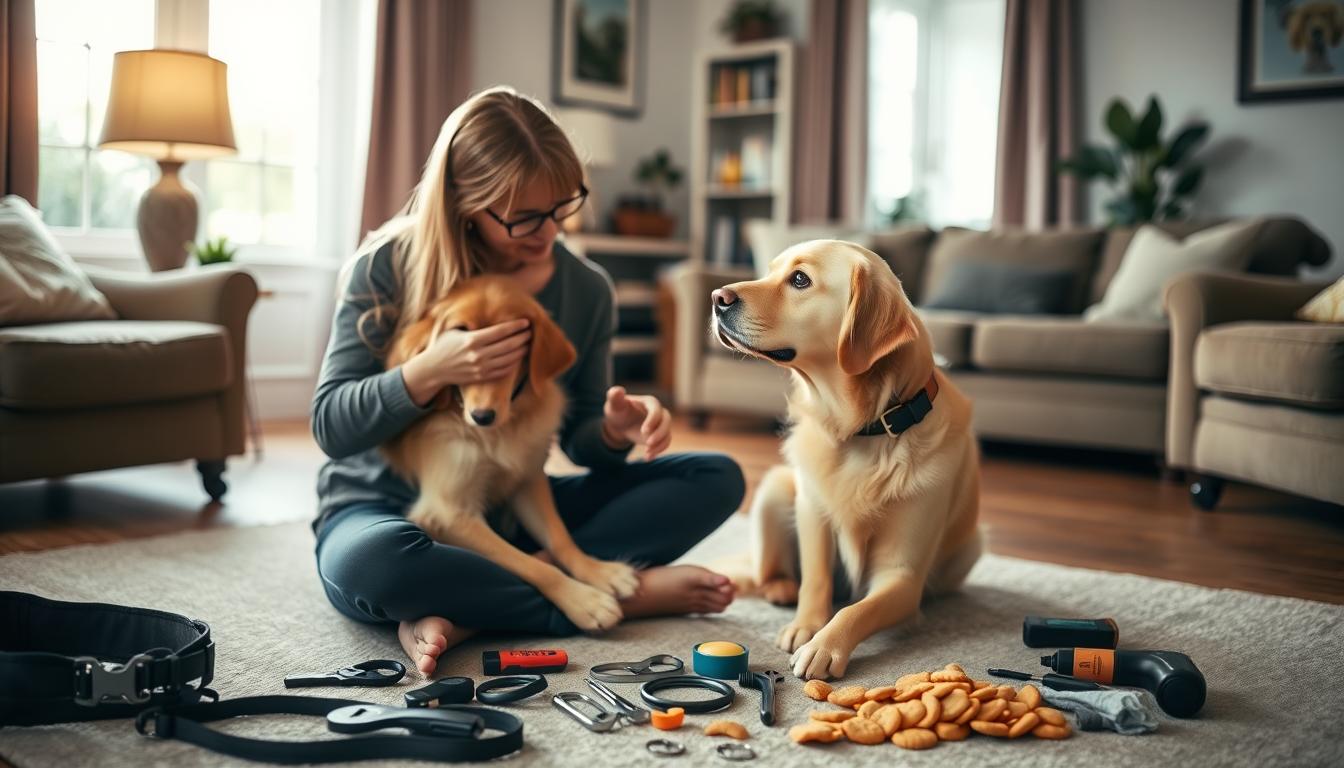
Training a service dog at home is rewarding and saves money. It’s a great way to teach your dog to help with tasks and offer emotional support. This method helps you bond with your dog and tailor training to your needs.
In this article, we’ll cover the basics of training a service dog at home. You’ll learn how to pick the right dog, prepare your home, and set up a training schedule. We’ll also discuss important commands, task training, socialization, and how to handle common problems. By the end, you’ll be ready to train your service dog at home.
Service dogs must meet ADA requirements. They need to be well-behaved, trained for tasks related to your disability, and allowed in public. With patience and consistency, you can meet these goals through in-home training.
Training your own service dog is both challenging and rewarding. It helps you understand your dog better and builds a strong bond. Let’s explore how to train your service dog at home.
Quick Recommendation: Our blog is filled with tips and tricks for training your puppy or dog. If you are seeking a comprehensive training program, we recommend K9 Training Institute.
Understanding Service Dog Training Basics
Before starting your service dog training at home, it’s key to know the basics. A service dog is trained to help people with disabilities. They assist with tasks and help navigate daily life.
Service dogs can help with many disabilities, like physical, sensory, and mental health issues. The Americans with Disabilities Act (ADA) says service dogs must be trained for specific tasks related to their handler’s disability. Training at home is possible, but a professional can ensure your dog meets legal standards.
When thinking about training at home, learn about the process. A professional trainer offers guidance and support. They help create a training plan, teach techniques, and solve problems.
Training a service dog is a big commitment. It needs dedication, patience, and consistency. With the basics and a professional’s help, you can train your dog at home successfully.
Choosing the Right Dog for Service Training
Starting service dog training at home means picking the right dog is key. Many breeds can be great service dogs, but some are better than others. Labrador Retrievers, Golden Retrievers, and German Shepherds are top picks because they’re smart, easy to train, and calm.
It’s not just about the breed. You also need to think about your dog’s personality and body type. Look for a dog that’s confident, loves to please, and wants to work hard. A good service dog should also be able to do the tasks you need, like helping with balance or fetching things.

Puppies are great for service dog training because you can shape their behavior early. But, adult dogs with the right personality can also be trained well. It’s important to pick a dog that’s healthy, has strong joints, and doesn’t have genetic problems that could affect its work.
Think about your lifestyle and what tasks you need the dog to do. A dog that fits well in your home and meets your needs will likely do well in service dog training.
Preparing Your Home for Service Dog Training
Before starting service dog training at home, make your space safe and welcoming. Choose specific areas for training, like a quiet room or a fenced yard. These spots should be free from distractions and dangers.
Get all the training tools you need, such as a comfy harness, leash, treats, and any special tools your trainer suggests. Having the right equipment ensures consistent and effective training.
Creating a routine is crucial for service dog training. Set aside time each day for training and keep a regular schedule for meals, potty breaks, and rest. This routine helps your dog feel secure and understand their new role.
It’s vital to work with a certified service dog trainer at home. They can teach you the right techniques and help with any problems. Their knowledge is key to successfully training your service dog at home.
Establishing a Training Routine
Creating a consistent training routine is key for successful service dog training at home. Set aside dedicated time each day for training. Keep sessions short but frequent to keep your dog focused and enthusiastic. Aim for 15-20 minute sessions, 2-3 times a day.
Structure your training to include basic obedience, task-specific training, and socialization. Start each session with a quick review of what they’ve learned before. Then, introduce new skills or reinforce what they already know. Use positive reinforcement like treats and praise to encourage them and strengthen your bond.
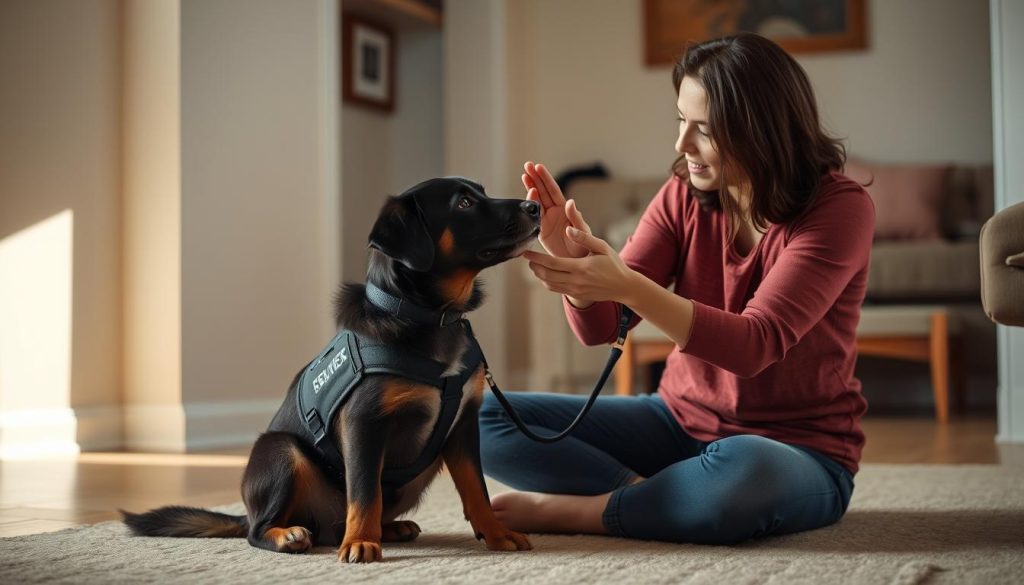
When setting up your routine, tailor it to your specific needs and goals. Focus on tasks that will help you in your daily life, like retrieving items or opening doors. As your dog gets better, add more complex tasks to their routine.
Don’t forget to include socialization in your routine. Expose your dog to different environments, people, and animals. This helps them stay calm and focused in various situations. It ensures they can perform their tasks well when needed.
Teaching Basic Obedience Commands
Teaching basic obedience commands is key for any service dog. Whether you’re working with a pro or doing remote training, it’s important. Commands like sit, stay, come, and heel are the basics. Here are some tips to get you started.
Start with short training sessions in a quiet spot. Use treats and praise to reward your dog for good behavior. For the “sit” command, hold a treat near their nose and move it up and back.
This action will make them look up and sit down. The “stay” command needs patience and consistency. First, have your dog sit, then hold your hand out and say “stay.”
Take a step back and wait a bit. If they stay, reward them. Gradually increase the distance and time as they get better. Remote training is great for this, as you can practice from different spots.
To teach “come,” start with a leash. Get their attention, then say “come” while pulling gently on the leash. When they reach you, give them a treat and praise. Practice off-leash in a safe area, increasing the distance.
Consistency is crucial in teaching these commands. Practice often, keep sessions short, and always end on a positive note. With patience and effort, your service dog will learn the basics. This will prepare them for more advanced training.
Introducing Task-Specific Training
After your service dog learns basic commands, it’s time for task-specific training. This is where virtual training at home shines. Online resources provide guides and videos for tasks like fetching items, opening doors, or giving deep pressure therapy.
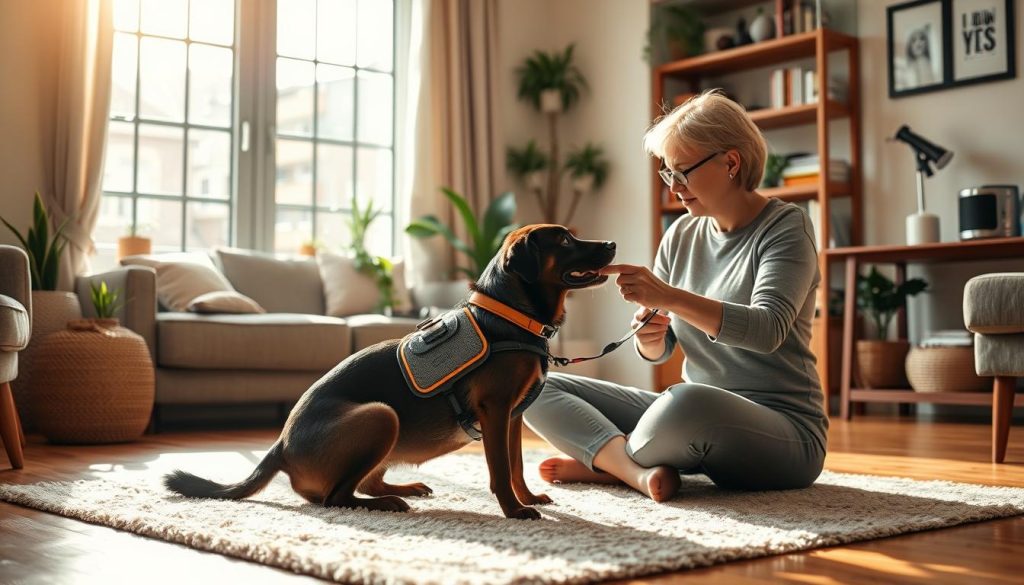
Breaking down complex tasks into smaller steps is key. For example, teach your dog to pick up an item first. Then, increase the distance and time. Always reward them with treats and praise.
Virtual training resources can help your in-person sessions. You’ll find expert advice, tips, and support from others. Use online communities to ask questions, share your progress, and celebrate your dog’s achievements.
Be patient and consistent with your training. Some tasks may take weeks or months. Stay positive, keep sessions short and fun, and seek help if needed. With dedication and the right resources, you can train your service dog at home.
Socializing Your Service Dog in Training
Socialization is key in service dog training at home. It helps your dog get used to different people, places, and situations. This is vital for a service dog to stay calm and focused in public.
To socialize your dog safely, plan controlled meetings with friends and family. Begin with one-on-one sessions in places your dog knows well, like your home or backyard. Then, slowly add more people and new places, like a quiet park or pet-friendly store.
While socializing, keep your dog calm and focused on you. Give them treats and praise for good behavior. If they seem stressed or anxious, take a break and try again with something easier. Being consistent and patient is crucial.
The aim of socialization is to make your dog comfortable and confident everywhere. By focusing on this part of training, you’re preparing them for their role as a reliable service animal.
Quick Recommendation: Our blog is filled with tips and tricks for training your puppy or dog. If you are seeking a comprehensive training program, we recommend K9 Training Institute.
Troubleshooting Common Training Challenges
Starting in-home service dog training can come with its own set of challenges. You might face distractions, slow progress, and behavioral issues. But, with patience and the right strategies, you can overcome these obstacles.
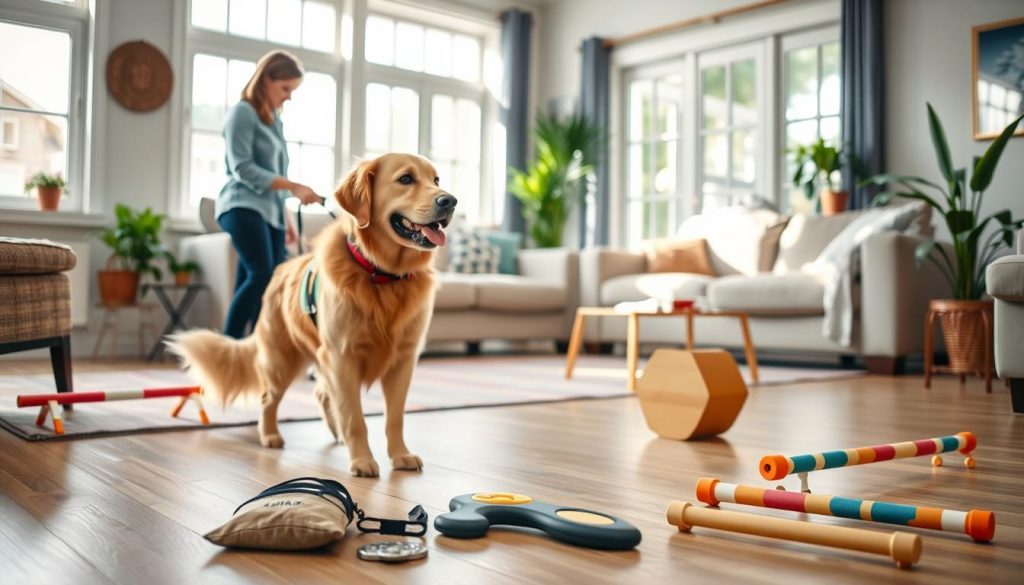
Breaking down complex tasks into smaller steps is a great way to tackle challenges. This makes it easier for your dog to learn and helps you focus on areas needing more work. Remember, consistency is key. Stick to a regular training schedule and reward good behavior with praise and treats.
If you’re struggling with a specific part of training, don’t be afraid to ask for help. Professional trainers can offer personalized advice and insights into your dog’s needs. Working with a pro can help you create a training plan that fits your dog’s unique learning style and your goals.
Maintaining Your Service Dog’s Skills
Congratulations on training your service dog at home! But, the work doesn’t end there. It’s important to keep their skills sharp with ongoing training and practice.
One great way to keep your dog’s skills sharp is by adding training to your daily routine. Set aside time each day for obedience commands and specific tasks. This helps keep their training consistent.
At-home service dog training programs can also help. They offer structured lessons, video tutorials, and support from trainers. These programs are flexible, making it easy to fit training into your busy life.
Remember, your service dog is a working animal. Their skills help you in daily life. By spending time and effort on their training, you’ll have a strong, reliable partner. This enhances your independence and quality of life. Keeping your service dog’s skills sharp is rewarding and enjoyable for both you and your dog.
Conclusion
Training your own service dog at home is a rewarding journey. It needs dedication, patience, and the right approach. By learning the basics, picking the right dog, and preparing your home, you can train a service dog.
Teaching obedience and task-specific skills is key. This way, your service dog will be a great helper and friend.
Don’t forget to socialize your service dog in different places. Also, be ready to solve any training problems that come up. Keeping up with regular practice and reinforcement is important.
This ensures your dog stays reliable and well-behaved.
Starting your service dog training at home? You’re not alone. There are many resources like online communities, professional trainers, and support groups to help you. With commitment and love, you and your service dog will create a strong bond. This bond will make your lives better for many years.
Quick Recommendation: Our blog is filled with tips and tricks for training your puppy or dog. If you are seeking a comprehensive training program, we recommend K9 Training Institute.