

As your dog gets older, their needs change. This means you need to adjust how you train them. It’s important to understand what older dogs need to stay happy and healthy.
Older dogs can’t keep up with the same training as younger ones. Their bodies and minds change with age. So, it’s crucial to adapt training to meet their new needs.
Senior dogs face physical and mental changes that impact their daily life. By noticing these changes, you can tailor training to suit them better. This makes training sessions more fun and effective for your pet.
We’ll look at how to adjust training to improve your senior dog’s life. This way, you can ensure they enjoy their golden years.
Quick Recommendation: Our blog is filled with tips and tricks for training your puppy or dog. If you are seeking a comprehensive training program, we recommend K9 Training Institute.
Understanding Your Senior Dog’s Needs
As your dog gets older, it’s important to understand their changing needs. Aging affects their hearing, sight, and how they move. This means they need extra care and attention.
Senior dogs often face arthritis, which makes moving hard and lowers their activity. Adding gentle exercises to their day helps keep them flexible and happy. You might notice their hearing or sight isn’t as good as before. Making sure their space is safe and clear of things they could trip over is key to avoiding accidents.
Cognitive dysfunction, or canine dementia, can also happen as dogs age. It changes how they act. Spotting these changes early and keeping their mind active with puzzles and games is helpful. It keeps their mind sharp and engaged.
To help your senior dog, create a calm and comfortable home. Make sure their bed is comfy, provide ramps for easy access, and stick to a routine. Being flexible with training helps keep learning fun for them.
Training an older dog needs patience and a special approach. They might not learn as fast as younger dogs. But with the right adjustments, your dog can still live a happy and fulfilling life.
Positive Reinforcement Training Techniques
Training your senior dog with positive reinforcement is a game-changer. This method uses treats, praise, or play to reward good behavior. It keeps your dog’s mind active and strengthens your bond without any physical strain.
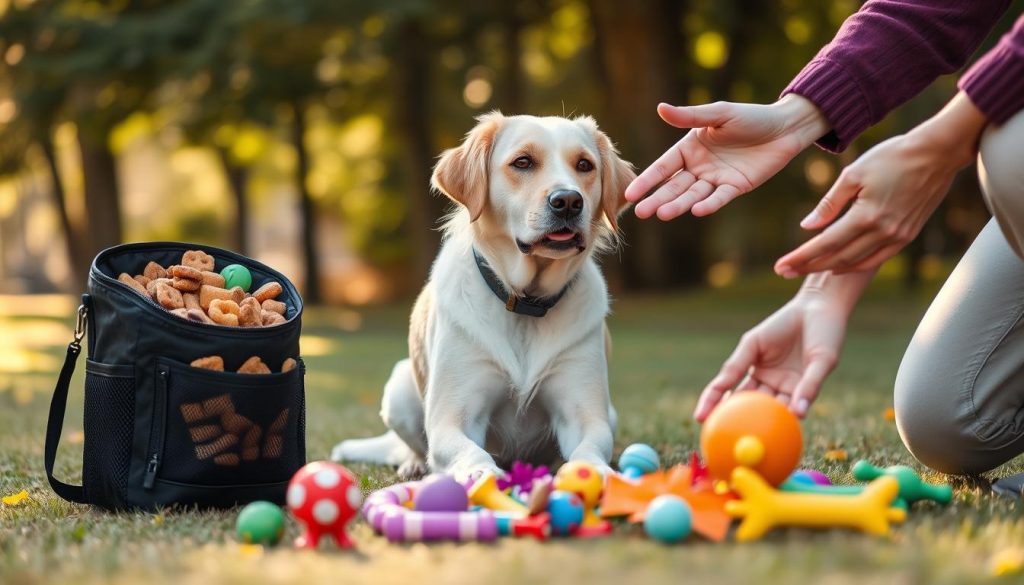
Positive reinforcement is great for encouraging your senior dog. It builds trust and clear communication, unlike punishment which can cause fear. This approach makes your dog more confident and eager to learn.
For example, if your dog does something right, give them a treat or praise. This consistency helps them understand what you want. It makes training fun and clear for both of you.
Low-Impact Training Techniques
As your dog ages, it’s important to change their training to fit their needs. Low-impact training is great for senior dogs, keeping them active without too much effort. Start with leisurely walks on flat, soft surfaces to ease their joints.
Keep the pace slow and let them take breaks when needed. This helps them stay comfortable and happy.
Playing with soft toys is also good for them. It keeps their mind active and entertained without straining their body. Try simple commands like sit, stay, and gentle fetch. These exercises keep their mind sharp and their body relaxed.
To keep exercises low-impact, modify them to fit your dog’s abilities. Instead of high-energy play, try indoor activities or slow games of hide and seek. Watch for signs of too much effort like panting, limping, or not wanting to move.
Adjust the activities as needed to keep your senior dog happy and healthy. This way, you can train them effectively while respecting their unique needs.
Cognitive Enrichment for Geriatric Dogs
As your furry friend gets older, it’s key to keep their mind sharp. Activities that boost their brain health are vital. They help slow down mental decline in older dogs.
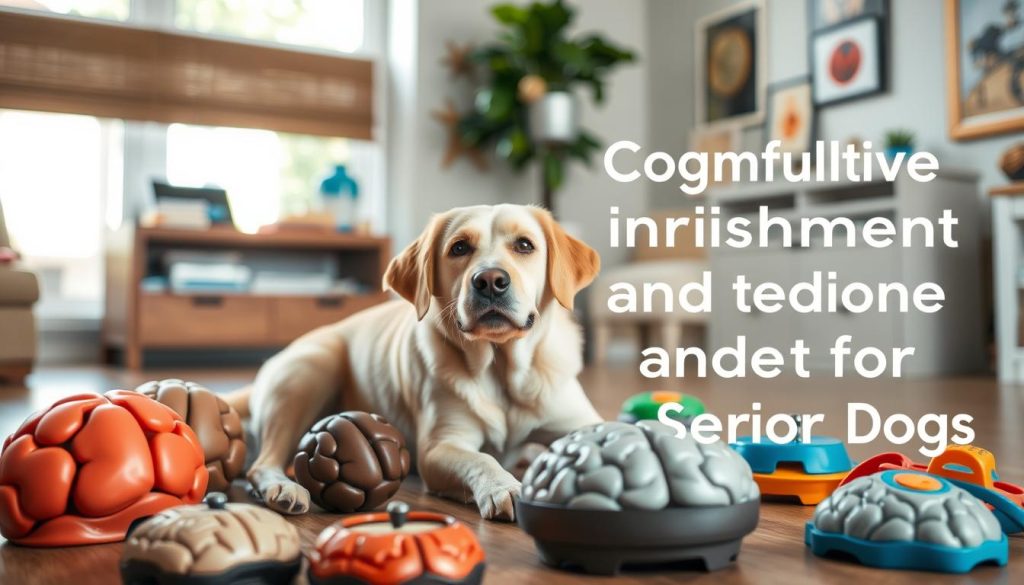
Interactive toys are great for keeping your dog’s mind active. Treat-dispensing puzzles and snuffle mats are perfect. They challenge your dog’s senses and keep their brain busy.
Teaching your dog new tricks is also beneficial. Simple commands like “paw” or “spin” are easy but stimulating. They provide the mental challenge your dog needs.
Brain games are another excellent way to improve your dog’s brain health. Hiding treats around the house for them to find is fun and mentally stimulating. Changing these activities regularly keeps your dog engaged and challenged.
It’s important to notice if your dog’s behavior changes. Look for signs like disorientation, altered sleep, or less interest in activities. If you see these signs, increase the focus on mental stimulation.
Keeping your dog’s mind sharp is good for their overall health. It strengthens your bond and ensures they enjoy their golden years. Always check with your vet to make sure the activities are right for your dog.
Age-Appropriate Exercises for Senior Dogs
Keeping senior dogs fit is key for their health. Even if they’re not as energetic as before, they still need to stay active. Age-appropriate exercises are essential for their well-being.
Swimming is a great way to keep them strong without harming their joints. It’s a full-body workout that also helps manage their weight. Adding therapeutic massage to their routine can relax them and improve blood flow.
It’s important to keep exercises short and regular for senior dogs. Aim for 15 to 20 minutes, two or three times a day. This keeps them active without overdoing it. Light walks and simple play can also make them happy and engaged.
Every dog is different, so watch how they feel during exercise. Adjust their routine to keep them healthy and happy in their golden years.
Quick Recommendation: Our blog is filled with tips and tricks for training your puppy or dog. If you are seeking a comprehensive training program, we recommend K9 Training Institute.
Addressing Senior Dog Behavior Modification
As your dog gets older, you might see changes in their behavior. It’s important to modify their behavior to keep them happy and you at ease. Senior dogs can get anxious, aggressive, or confused due to health issues or changes in their environment. It’s crucial to understand these changes and handle them patiently and consistently.
Adjusting their behavior means finding out why they’re acting differently. For example, anxiety could be caused by poor sight or hearing. Making their environment simpler and reducing stressors is key in older dog training.
Training them requires patience and consistency. Use positive reinforcement to encourage good behavior. Senior dogs do well with calm, consistent training. Redirecting bad behavior with rewards and positive interactions is also effective.
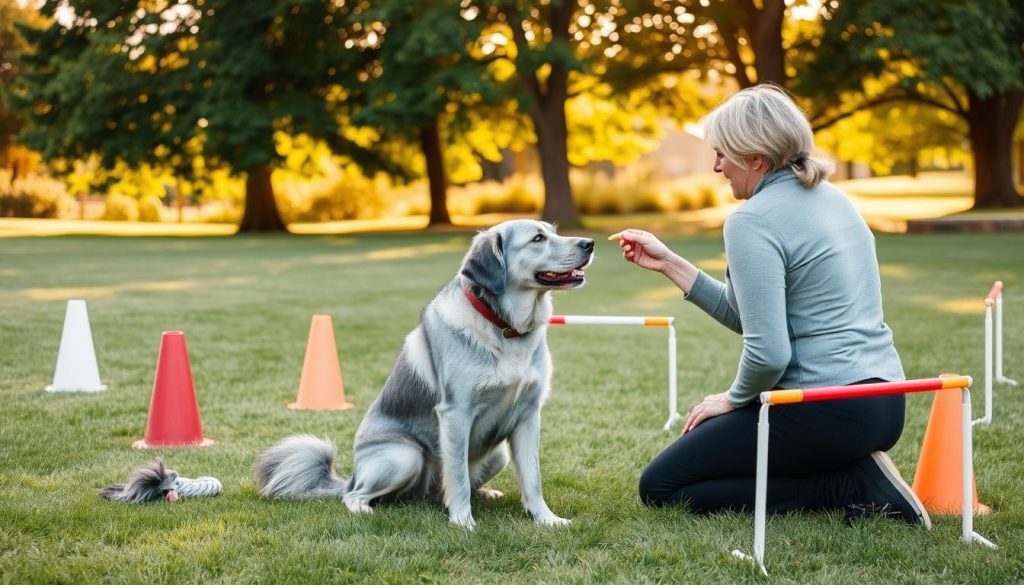
Also, training sessions should be shorter but more frequent for older dogs. It’s vital to respect their physical limits and adapt training accordingly. Gentle exercises and mental games can help manage their behavior adjustments.
Incorporating Canine Enrichment Activities
As your furry friend ages, it’s key to keep them mentally and physically active. Adding canine enrichment activities to their day can boost their happiness and health. These stimulating activities for dogs ensure they stay engaged and joyful.
Try sensory enrichment activities. Introduce new smells, tastes, and textures to excite their senses. Hiding treats around the house can really spark their interest and energy.
Physical activities don’t have to be hard. Gentle play with toys or short walks in new places are great. These activities help keep their joints and muscles strong, which is good for older dogs.
Don’t forget about social activities. Meeting other dogs or people can be very exciting for seniors. A good social life adds happiness and excitement to their years.
Cognitive activities are also important for their mind. Puzzle toys and training sessions keep their brain sharp. These activities are fun and prevent boredom-related problems.
By mixing these enrichment activities, your older dog can stay full of life. Prioritizing enrichment for older dogs ensures they live their best life.
Patience Training for Owners
Training an older dog needs patience and understanding. It’s important to be patient with your senior dog. They might take longer to learn new things.
It’s key to care for your dog with compassion. They have special needs that require empathy. Celebrate small wins and use positive reinforcement.
Patience is not just for the dog; it’s for you too. Senior dogs learn at their own pace. So, keep things calm and set achievable goals.
Patience helps create a peaceful space for your senior dog. It shows you understand their aging process. This strengthens your bond with your dog.
Support Networks and Resources for Senior Dog Training
Training and caring for a senior dog can be tough, but you’re not alone. Joining senior dog support networks is key to happiness for you and your pet. Many places offer special training classes for aging dogs. These classes help you adjust training to fit your dog’s changing needs.
Online forums are great for connecting with other pet owners. They have lots of training tips and advice. Just a few clicks can lead to expert advice and support from dog lovers.
Getting advice from your vet is also important. They can tell you what activities are safe and good for your dog. They might suggest exercises and training methods that help your dog age well. Plus, vets often know about support groups or can connect you with them.
Support groups, online or offline, are a place to share and learn. They offer emotional support and practical tips. This makes caring for your senior dog easier.
Conclusion
Looking back, the bond with your senior dog is truly special. You’ve learned what they need to be happy and healthy. This knowledge is the start of a training plan that suits them perfectly.
Using positive reinforcement and gentle training is crucial. These methods strengthen your bond and meet your dog’s needs as they age. Adding fun, age-friendly activities keeps their mind and body active.
Keep enjoying this journey with your loyal friend. Remember, patience is essential. Every effort you make is rewarded with their love and loyalty. This journey is about celebrating your bond and the memories you’ve shared.
Quick Recommendation: Our blog is filled with tips and tricks for training your puppy or dog. If you are seeking a comprehensive training program, we recommend K9 Training Institute.
BTW: If you are interested in everything from nutritional advice and natural health solutions to stress-relief techniques and overall wellness tips, check out our friends at PawfectlyHealthyPets.com.