

Welcome to Pawsome Training, your guide to a well-behaved dog. Learning about dog training and using the right techniques can change your dog’s behavior. It also improves your bond with them. Whether you face common issues or want better obedience, you’re in the right spot.
Research shows that good training can cut down on dog behavior problems. Experts say the secret is being consistent, using positive reinforcement, and knowing how dogs behave. In this article, we’ll share many tips and tricks to make your dog a great companion.
Quick Recommendation: Our blog is filled with tips and tricks for training your puppy or dog. If you are seeking a comprehensive training program, we recommend K9 Training Institute.
Understanding Your Dog’s Behavior
To truly connect with your furry friend, it’s crucial to delve into dog psychology. Knowing how your dog thinks and feels changes how you train and interact with them. By learning about behavior patterns, you can see what makes your dog act certain ways.
Canine body language speaks volumes. A wagging tail or a raised hackle tells a story about your dog’s emotional state. Dogs use these non-verbal cues to talk to humans and other animals. Learning to read these signals helps you meet your pet’s needs better.
Vocalizations are another key aspect of behavior patterns. Barks, whines, and growls each have distinct meanings. By paying attention to these sounds and body language, you get a deep look into your dog’s mind. Studies show dogs have complex emotions, just like humans. Understanding this helps you create a supportive and loving home for them.
Positive Reinforcement Techniques
Training your dog with positive reinforcement can change their behavior for the better. It’s more effective than using punishment. Reward-based training makes your dog want to repeat good actions, leading to a happier pet.
Studies by the American Veterinary Society of Animal Behavior show positive reinforcement works best. Dogs trained this way improve their behavior more than those punished.
Positive reinforcement rewards your dog for good actions. This could be with treats, praise, or playtime. It makes dogs eager to learn and obey, strengthening your bond.
For instance, when your dog sits on command, give them a treat right away. Over time, they’ll link the action to a positive reward. This makes them more likely to sit when asked.
Using positive reinforcement keeps your dog motivated and excited to learn. It’s rewarding for both your dog and you as a pet owner.
Getting Started with Obedience Training
Starting obedience training with your dog is rewarding. Begin with basic commands like ‘sit’, ‘stay’, ‘come’, and ‘heel’. These commands are key to a well-behaved dog.
When starting, choose a calm place without distractions. Begin with the ‘sit’ command. Hold a treat near your dog’s nose and move it up. This will make them sit.
Once they sit, say ‘sit’ and give them the treat. Share some love too.
For ‘stay’, start with your dog sitting. Show them your open palm and say ‘stay’. Then, take a few steps back.
If they stay, return and reward them. Gradually increase the steps before rewarding them. Keep sessions short and consistent.
The ‘come’ command is vital for their safety. Use a leash and let them wander a bit. Say ‘come’ while gently pulling the leash.
When they come, give treats and affection. This positive reinforcement is important.
The ‘heel’ command makes walks enjoyable. Hold the leash short so they stay by your side. Walk forward and stop if they pull.
Use treats and praise for good behavior. This will help them learn.
Consistency and patience are crucial. Regular sessions with positive reinforcement will help. With time, your dog will be well-behaved and happy to follow your commands.
Puppy Training Basics
Starting your puppy training journey is exciting. You need to know the right techniques and ensure proper socialization. The early years are crucial for your puppy’s learning. It’s the best time to teach them good habits.
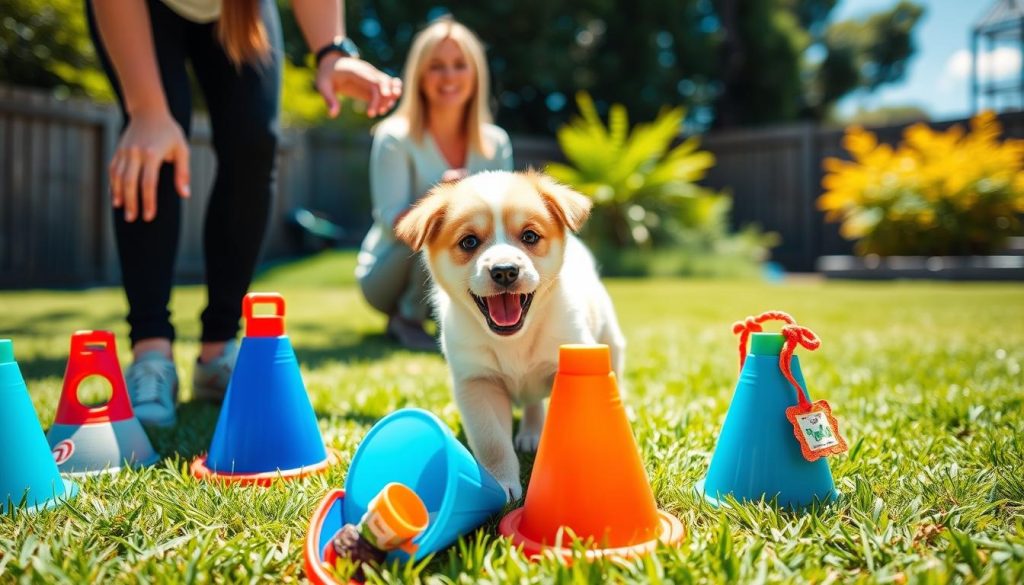
Training your puppy means being consistent and using positive reinforcement. When you reward good behavior, your puppy learns to do it again. Use treats, praise, or playtime to motivate them. Socialization is also key to raising a well-adjusted dog.
Exposing your puppy to different people, places, and animals helps them feel confident. This early socialization can prevent behavioral problems later on. Regular training sessions help your puppy learn commands and strengthen your bond.
House Training Your Dog
House training your dog can be easier than you think with the right strategies. Consistency and patience are key. Start by setting a regular feeding schedule. This makes potty training smoother because your dog’s needs are predictable.
Using a crate is another good method. Dogs don’t like to soil their sleeping area. So, a crate helps with house training. Make the crate a cozy, welcoming space, not a punishment.
Take your dog outside often, especially after meals, naps, and play. This teaches them where to go. Praise or give treats when they go outside correctly. This positive feedback helps them learn.
Most dogs learn to use the bathroom outside in 4-6 months. But, every dog is different. Some might learn faster, while others take longer. Using a crate along with potty training helps your dog learn faster.
Quick Recommendation: Our blog is filled with tips and tricks for training your puppy or dog. If you are seeking a comprehensive training program, we recommend K9 Training Institute.
Effective Leash Training
Leash training is key for safe and fun dog walks. Start with the basics and add new challenges as your dog gets more confident.
First, let your dog get used to the leash and collar indoors. Then, take short walks in a safe place like your backyard. This helps manage pulling and lessens leash anxiety.
Positive reinforcement is a great way to train. Give treats or praise when your dog walks calmly by your side. This makes them want to behave well and walk nicely.
Experts recommend the “stop and go” method. If your dog pulls, stop and wait for them to come back. Then, praise and reward them. This teaches them pulling doesn’t get them where they want to go.

A front-clip harness can also help. It keeps your dog focused on you and stops pulling. Also, make walks interesting to keep your dog from getting bored and pulling.
Be patient with leash training. Dogs take time to get used to it. Regular practice, positive rewards, and consistent training make walks better and more successful.
Crate Training Tips
Crate training gives your dog a safe space. A regular training schedule makes it easy. It stops bad behavior and makes your dog feel secure.
One big plus of crate training is a safe space for your pet. It makes your dog see the crate as their own place, not a jail. This leads to a calm and well-behaved pet.
Creating a good training schedule is key. Begin by letting your dog get used to the crate with the door open. Then, increase the time they spend in it, rewarding them with treats and praise. Being consistent and patient helps make the crate a good thing.
Vets often recommend crate training for pets. The American Veterinary Medical Association says it helps with house training and handling stress, like vet visits.
In the end, crate training has many benefits. With a good training schedule and a safe space, your dog gets the emotional and behavioral support they need to do well.
Behavior Modification Strategies
Dealing with unwanted behaviors in dogs can be tough. But, using the right behavior modification techniques can really help. First, figure out why your dog is acting out. Is it boredom, anxiety, or lack of training? Knowing the cause helps you tackle the problem better.
One simple way to fix behavior is positive reinforcement. This means giving your dog a treat or praise when they behave well. This encourages them to keep doing it. Don’t use punishment, as it can make things worse.
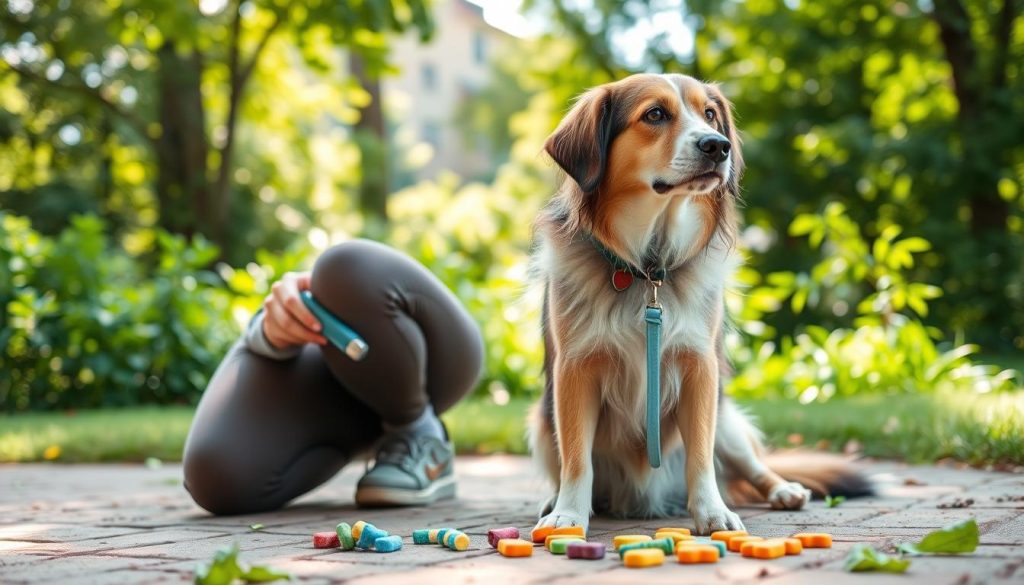
For some issues, you might need professional help. A certified dog trainer or vet behaviorist can create a plan just for your dog. They use methods backed by science to help your dog.
For example, counter-conditioning is a method used by pros. It changes how your dog feels about something. If your dog is scared of the vacuum, they learn to see it as a good thing, like when they get treats.
Timing is everything when teaching your dog. Reward them right away so they connect the reward with their good behavior. Everyone in the house should do this consistently to help your dog learn faster.
The main aim of behavior modification is to make your dog’s life better and your bond stronger. By figuring out the problem, using positive methods, and knowing when to get help, you can fix unwanted behaviors.
Clicker Training Guide
Clicker training is a fun way to teach your dog new tricks. It uses a “click” sound to mark when your dog does something right. This sound is followed by a treat or praise, which helps your dog learn.
To begin, you’ll need a clicker device, available at most pet stores. Click the device and then give your dog a reward right away. This teaches your dog that the sound means good things are coming. Keep practicing until your dog knows the click means they did well.
Marker training works well with clicker training. It uses specific sounds or words to show your dog what actions are good. The clicker marks the exact moment your dog does something right, making it easier for them to understand.
Being consistent is key in clicker training. Always give a reward after the click to show your dog they did well. As you get better, you can teach your dog more complex tricks. Experts like Karen Pryor recommend clicker training for its clear and effective way of teaching.
Clicker training creates a positive learning space and strengthens your bond with your dog. It also improves how you communicate with each other. By using marker training and being consistent with rewards, every training session can be fun and rewarding for both you and your dog.
Maintaining Consistent Training
To keep your dog well-behaved, it’s key to train them regularly. Having a set training schedule is crucial. This way, your dog learns and follows commands well.
Using rewards like treats and praise helps keep your dog interested. It motivates them to behave as you want. Be patient and keep training up, so your dog gets better and better.
Make sure to train your dog at the same time every day. Even short sessions are helpful if they’re regular. This keeps your dog sharp and ready to listen.

It’s important for everyone in your home to use the same commands. This avoids confusing your dog. When everyone agrees on how to train, your dog learns faster.
Consistent training makes life easier for you and your dog. You’ll see big improvements in their behavior and how well they listen. Your hard work in training will pay off.
Common Mistakes to Avoid
It’s important to avoid training mistakes to help your dog learn well. Yelling or physical punishment is not the way. It can make your dog scared and anxious. Instead, use positive methods like praising and rewarding good behavior.
Being consistent in training is also key. If you’re not consistent, your dog might get confused. Make sure everyone in the family uses the same commands and routines. Also, timing is crucial when giving rewards or corrections. Immediate feedback helps your dog understand what they did right or wrong.
Don’t forget about socialization. A dog that doesn’t meet new people and animals can have behavioral problems. Gradually introducing your dog to different situations helps them become well-adjusted and happy.
Conclusion
Training your dog is a journey that needs patience and dedication. It’s about understanding your dog and using positive methods to teach them. Starting with basic training like house and leash training helps build trust and respect.
Improving your dog’s behavior takes time. It’s important to keep training up and avoid mistakes. Using tools like clicker training and planning for behavior changes can help. Every dog is different, so learning together is key.
Good dog training strengthens your bond with your pet. It makes for a happy and fulfilling life together. Keep up the good work, celebrate small wins, and enjoy the journey. Your efforts will lead to a happy, well-adjusted dog who brings joy for years.
Quick Recommendation: Our blog is filled with tips and tricks for training your puppy or dog. If you are seeking a comprehensive training program, we recommend K9 Training Institute.
BTW: If you are interested in everything from nutritional advice and natural health solutions to stress-relief techniques and overall wellness tips, check out our friends at PawfectlyHealthyPets.com.