
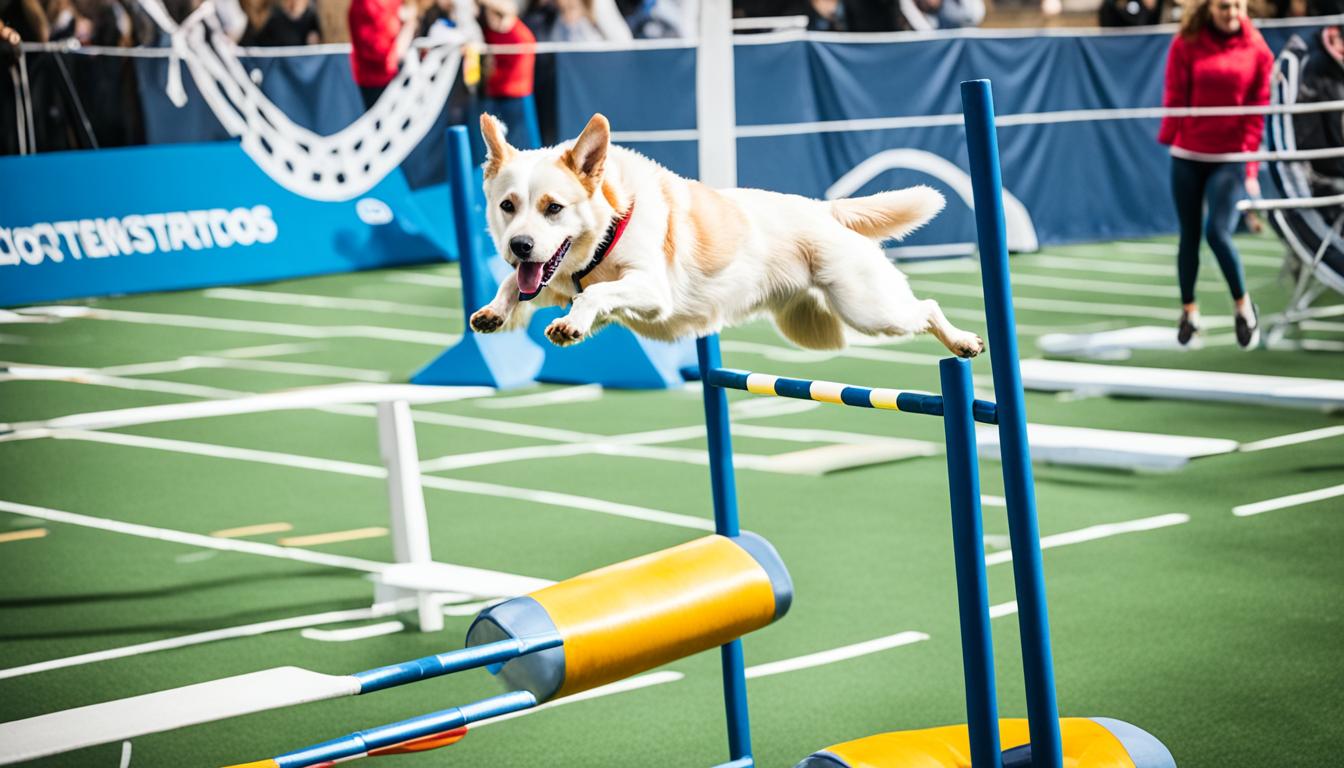
Ever thought about trying agility training with your dog? It could bring a lot of fun and energy to both of your lives.
Agility sports are a top choice for many dogs and their owners. They mix physical activity with brain work for your pet. This mix is very good for your dog. It uses up their extra energy and makes your friendship stronger. Working together and sharing signals is big in agility activities. When you start with the basics, you and your dog will head on a journey of fun and respect.
You ready to jump into this world of dog sports? It’s all about fun and partnership with your furry friend. Let’s make a great and thrilling start!
Quick Recommendation: Our blog is filled with tips and tricks for training your puppy or dog. If you are seeking a comprehensive training program, we recommend K9 Training Institute.
Understanding Agility Training
Agility training is a lively sport where you guide your dog through an obstacle course. This happens in a quick race. Your dog faces tunnels, jumps, and weave poles. It tests both their body and mind. The sport began in the 1970s in England and now is popular around the world.
The sport uses different obstacles like A-frames, teeter-totters, and tire jumps. These challenge your dog’s speed, coordination, and accuracy. This training improves your dog’s health and discipline. It also makes them more confident. Plus, it helps you and your dog grow closer. This is good for competing in dog sports.
The benefits of agility training go beyond just physical and mental exercise. It’s a fun way to bond with your dog. It’s also great to teach them commands and reward good behavior. This happens in an exciting, lively setting. By doing agility exercises regularly, your dog will be happy and well-behaved. These exercises prepare them for many challenges.
Selecting the Right Equipment
Choosing the right agility equipment is key when getting into training. You should start with hurdles, tunnels, weave poles, and see-saws. Each item is important for your dog’s agility training.
Adjustable jumps are a must-have, including bar jumps, tire jumps, and broad jumps. Make sure they can fit your dog’s size and abilities. All jumps must be safe to avoid any injuries.
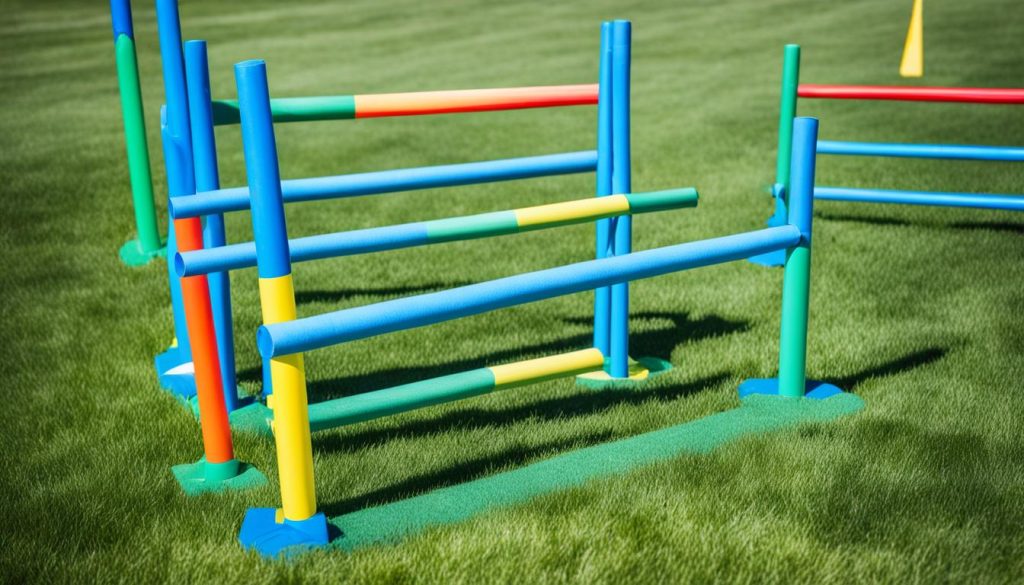
Tunnels are great for boosting a dog’s confidence and agility in tight spaces. Pick collapsible ones for easy storage. Weave poles are for precision and coordination. Begin with six and add more as your dog improves.
For balance, a see-saw or teeter-totter is very helpful. It should be low and steady for new learners. Brands like Trixie and PawHut offer good choices for home. You can also make your own equipment using basic materials if you like building things.
Creating an agility area at home is easy. A flat yard with no debris is all you need. With the right equipment, your dog’s training can be fun and effective.
Choosing the Best Agility Courses
Finding the right agility courses for your dog is key. You should pick a course that fits your dog’s skill level. This applies whether you’re making a course at home or looking at professional options.
DIY courses work great for newbies. You can begin with easy jumps, tunnels, and poles. You can buy these or make them yourself. They’re perfect for getting your dog started on agility without stress.
Training for competitions? Then professional courses are for you. They offer challenges like those in real contests. Make sure they have solid, safe features and can be adjusted as your dog improves.
Want the best agility courses? Check out local clubs or events. They show what real competitions are like. Also, online groups often have tips on good brands and creative DIY plans.
Your aim is fun plus growth. Choose a course that keeps your dog interested and helps them advance. It should prepare them well for training for competitions.
Quick Recommendation: Training your dog is just the beginning. Keep them safe an healthy with Pin Paws Pet Care. Our blog provides the training advice, and Pin Paws offers the protection your pet deserves.
Preparing Your Dog Mentally and Physically
To get your dog ready for agility, you need to focus on its body and mind. First, have your vet check if your dog can handle the training. This is an important first step.

Helping your dog build focus and stamina means regular exercise. Daily walks and fun playtime boost their health. This makes them ready for tougher agility exercises. Teach them basic commands first, like sit and stay.
Before training, warm-ups are vital to avoid injuries. A short run or some gentle stretches can prep your dog’s muscles. This helps with their mental readiness too, making training go more smoothly.
Basic Agility Drills to Get Started
Starting dog agility drills is fun for you and your dog. The secret to success is focusing on basic agility commands. Let’s look at some key exercises for agility training.
Tunnel Runs: To begin, encourage your dog to run through short tunnels. Use treats and praise. As they get better, increase the tunnel’s length and add curves.
Simple Jumps: Start with low jumps to boost your dog’s confidence. Use the “jump” command and guide them over. As they improve, you can make the jumps higher. Always ensure they land safely and cheer them on.
Weave Poles Introduction: Put up poles and guide your dog through with a treat or toy. The goal is to have them weave in and out. Start at a slow pace and then speed up. Use clear commands as you go.
Training should be short, positive, and engaging. Be patient as your dog picks up these new skills. With regular practice, they will get better over time.
Start with these basic drills as a path to harder challenges. Your dog will progress towards more complex agility courses.
Quick Recommendation: Our blog is filled with tips and tricks for training your puppy or dog. If you are seeking a comprehensive training program, we recommend K9 Training Institute.
Advanced Training for Competitions
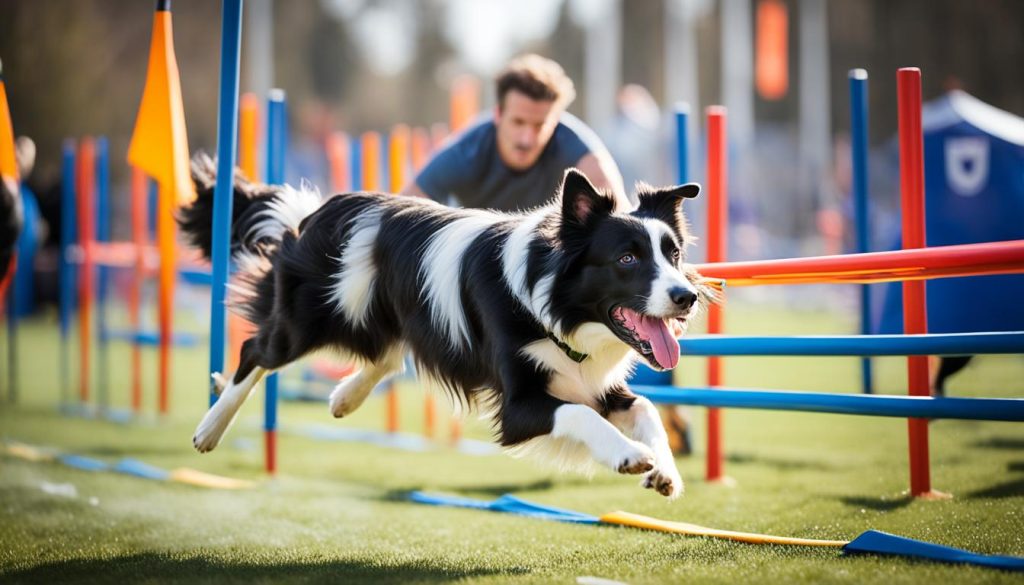
To step up your dog’s agility training, concentrate on competition-level skills. Before agility trials, it’s key to focus on speed, precision, and how well you guide your dog. Making sure your dog moves through the course quickly and with accuracy is vital for better performance in dog sports.
Spending time on advanced drills will sharpen your dog’s agility. Activities like fast pole weaving, turning sharply, and moving quickly over various obstacles are crucial. You must also improve how you and your dog communicate. This step helps in making your handling smoother.
Getting a pro agility coach can offer tailored advice. They can tweak your training to fit your dog’s special abilities and areas for growth. Being part of a serious training group also helps. It ups the training intensity and lets you and your dog learn from others who are great at this.
For top-notch dog sports success, keep practicing and setting higher goals. Being persistent and devoted to advancing in competition-level agility training opens doors to doing well in competitions.
Tips for Maintaining Motivation
Agility training can be tough to keep your dog interested in, but it’s important. To keep them motivated, change up your routines often. Dogs love new challenges and it keeps them excited.
Add some fun into the training. If your dog enjoys agility, they’ll put more effort into it. Play with them to make training feel like a game. Toys and playtime as rewards will make them keep trying hard.
Using treats right can make a big difference. Choose treats they really love but use them sparingly. This makes your dog always want to do more. Combining treats with praise works wonders for their motivation.
Watch how your dog feels during practice. Signs of tiredness or not wanting to do something can show in their body language. Give them breaks when needed. Make sure they’re always ready and happy to continue.
Always finish training with a win. Celebrate any progress, no matter how small. This keeps the fun and success in your training. It makes you and your dog happy about learning and growing together.
Common Mistakes to Avoid
Starting agility training can be exciting, but it’s tricky. Knowing the top mistakes helps avoid frustration. One mistake is pushing your dog too much. It’s easy to overdo it, but remember, every dog learns at their own pace. Too much training can tire them out and hurt their well-being.
Skipping the basics is another big mistake. Your dog must know the fundamental skills for agility to go smoothly. Make sure your dog is good with basic commands and easy exercises before moving to harder tasks.

Bad communication is a serious problem too. Clear communication between you and your dog is key. Inconsistent orders can confuse your dog and slow down training. Use the same cues and signs always to help them understand well.
Keeping track of your dog’s health is vital. Agility should be joyful, not overwhelming. If your dog seems anxious or tired, it’s time to rethink how you’re training. Early attention to these issues makes for a better and healthier journey in agility for both of you.
Tracking Progress and Celebrating Achievements
Keeping up with your dog’s agility progress is key for improvement. A detailed training log is a great tool. Document each session, including performance and areas for growth. Setting goals that are clear and reachable keeps you and your dog driven.
Boosting your pet’s confidence and fun is important. Celebrate achievements with a special treat or more playtime. Also, join friendly events or shows for agility. They help see how your dog’s skills compare and offer valuable lessons.
Consistently tracking progress and celebrating wins is more than just fun. It’s a cycle that reinforces positive behavior. Plus, it enhances your dog’s well-being and strengthens your bond. Remember, every step forward with your dog is a success that deserves applause.
Conclusion
Your adventure into dog agility training is an exciting one. You and your dog can grow a lot. This guide has shown you the important steps. You’ve learned how to start, what tools you need, and what drills to do.
To get from basic to hard drills, you need patience, consistency, and positivity. These three things are key. They help you reach your goals and make your bond stronger. Make sure your dog is both ready and eager to train to avoid mistakes.
Every step in agility training matters. With the right advice and hard work, you’ll see progress. Keep at it and enjoy making your dog happier and healthier. This journey will be fun and strengthen the amazing bond you both share.
Quick Recommendation: Our blog is filled with tips and tricks for training your puppy or dog. If you are seeking a comprehensive training program, we recommend K9 Training Institute.
BTW: If you are interested in everything from nutritional advice and natural health solutions to stress-relief techniques and overall wellness tips, check out our friends at PawfectlyHealthyPets.com.