
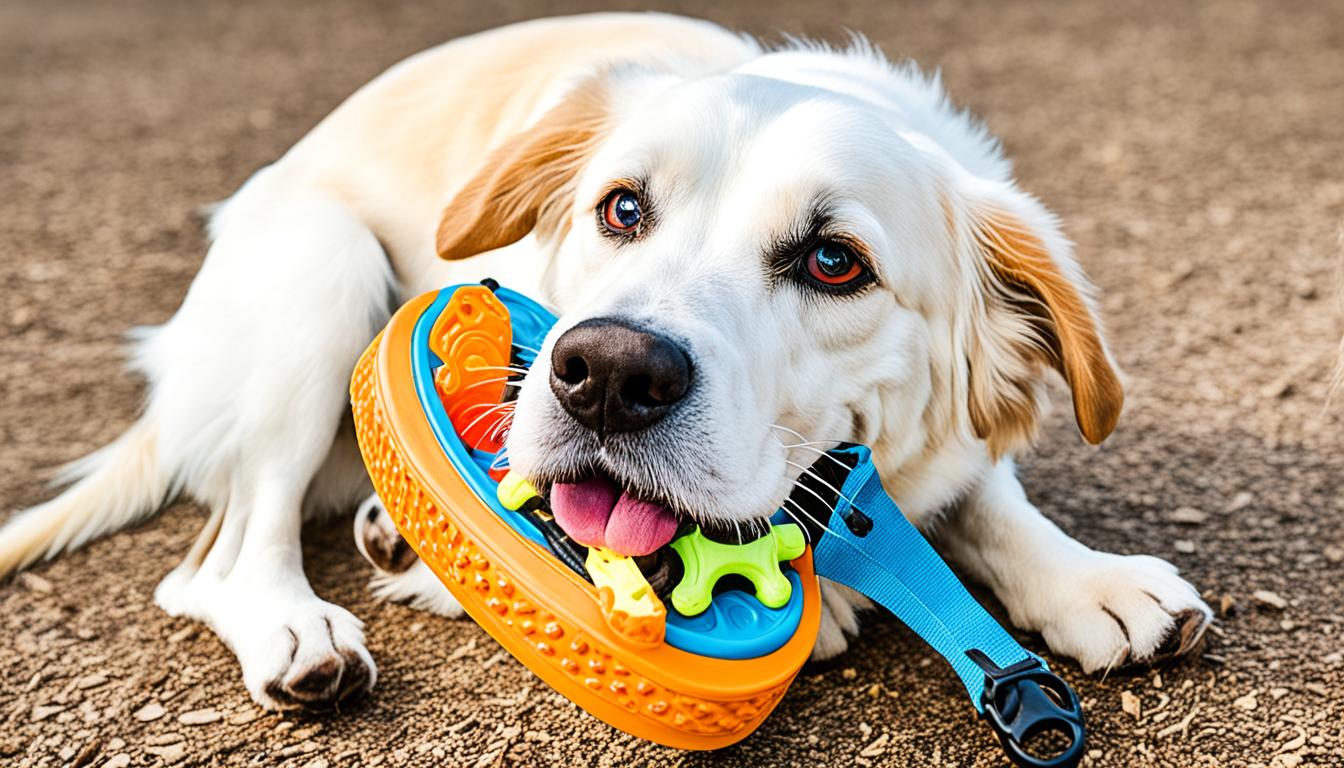
Inappropriate chewing is a common issue for many dog owners. It can damage your belongings and be harmful to your pet. It’s important to understand and redirect this behavior for a peaceful home. With the right training, you can stop your dog from chewing on things they shouldn’t.
Using positive reinforcement and patience is key to solving this problem. Let’s look at why dogs chew on things they shouldn’t and how to redirect their chewing to better behaviors.
Quick Recommendation: Our blog is filled with tips and tricks for training your puppy or dog. If you are seeking a comprehensive training program, we recommend K9 Training Institute.
Understanding Why Dogs Chew
Dogs chew for many natural and healthy reasons that are key to their health. One main reason is teething in puppies. Just like human babies, puppies have a teething phase where chewing eases gum pain.
Dogs also naturally explore their world by chewing. This habit is part of who they are. Chewing helps them learn about their environment.
Chewing is a way for dogs to relax and deal with stress. It helps them with anxiety, boredom, or separation anxiety. Knowing this can help you find good ways to stop your dog from chewing on things you don’t want them to.

Chewing is also good for your dog’s teeth. It cleans teeth, cuts down on plaque, and keeps their mouth healthy. Giving your dog the right chew toys and treats can keep them busy and happy. This makes it easier to change their chewing habits to something better.
Understanding why dogs chew helps you tell normal chewing from bad habits. Knowing the reasons behind their chewing helps you find the best ways to stop it. This makes life better for you and your dog.
Common Items Dogs Tend to Chew
Dogs love to chew, and many household items become their targets. Shoes, especially leather ones, are often chewed because they smell like their owners. This makes them feel close to their humans.
Chair legs and sofa corners are also common chew spots. This can cause a lot of damage and lead to expensive repairs. To stop this, it’s key to know what your dog likes to chew.
Children’s toys are also on the list of chewed items. They’re often made of plastic or rubber, making them tempting to dogs. But, this can be dangerous, as it may lead to choking or swallowing harmful things. To keep your dog safe and your belongings intact, you need to stop them from chewing on these items.

Other items like remote controls, pillows, and electrical cords are also chewed. This not only damages things but can also harm your dog, like causing electrical shocks or blockages in their intestines. Always watch what your dog can get to and use dog chewing solutions to manage their chewing.
Identifying the Root Causes of Inappropriate Chewing
Before you start fixing your dog’s chewing problem, it’s key to know why it’s happening. One big reason is separation anxiety. Dogs left alone can get anxious and chew as a way to calm down. To fix this, make your dog feel safe when you’re away.
Boredom is another reason dogs chew things they shouldn’t. Dogs are curious and need to stay active. Without enough fun or exercise, they chew to keep themselves busy. Try giving them toys, playing fetch, or agility training to keep their minds and bodies busy.
Not getting enough exercise also makes dogs chew more. A dog with too much energy will chew on anything it can find. Make sure your dog gets enough exercise. Evening walks, playtime in the yard, or dog parks can help.
Not enough training is another issue. Dogs need to learn what they can and can’t chew. Training can help set clear rules. Use treats and praise when your dog chews on the right toys.
Understanding why your dog chews is the first step to stopping it. Once you know the reasons, you can use the right strategies to change their behavior.
Quick Recommendation: Our blog is filled with tips and tricks for training your puppy or dog. If you are seeking a comprehensive training program, we recommend K9 Training Institute.
Chew on This: Redirecting Inappropriate Chewing
Supervision is key when you’re trying to stop your dog from chewing on things they shouldn’t. Always watch your pup closely, especially if they love to chew on things they shouldn’t. This way, you can stop them quickly when they start chewing on something they shouldn’t.
When correcting your dog, be gentle but firm. Use a simple command like “No” to stop the behavior. Then, show them what they should chew on instead. This teaches them that it’s not the act of chewing that’s the problem, but what they chew.
It’s important to offer your dog safe chew toys to redirect their chewing. Keep a variety of chew toys on hand to keep them busy. Changing the toys around keeps things interesting and stops them from getting bored, which can lead to chewing on things they shouldn’t.
Positive reinforcement works well too. When your dog picks a toy over your favorite shoes, praise them a lot. Giving them treats and affection makes them want to keep doing that good behavior.
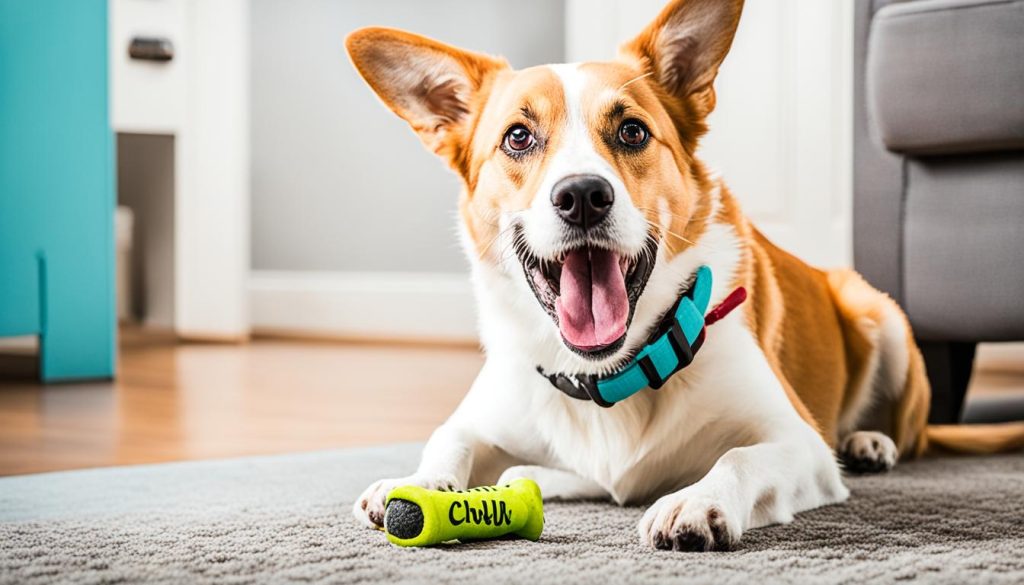
Using these tips can really change your pet’s behavior. Being consistent is key; it helps your dog learn and remember what you want. So, be patient and keep using these tips to see great results over time.
Effective Training Tips to Redirect Chewing Behavior
Positive reinforcement training is crucial for stopping your dog from chewing on things they shouldn’t. Start by giving them chew toys as a better option. When they pick these toys over your shoes, give them treats and praise. This teaches them what’s okay to chew.
Make your home safe for your dog by keeping things like shoes and remotes away. Put chew toys everywhere to encourage them to chew on those instead. This helps them learn good habits.
Being consistent is key in training your dog. Set a regular schedule for meals, play, and walks. Dogs like knowing what to expect, which helps them feel secure and less likely to chew on things they shouldn’t.
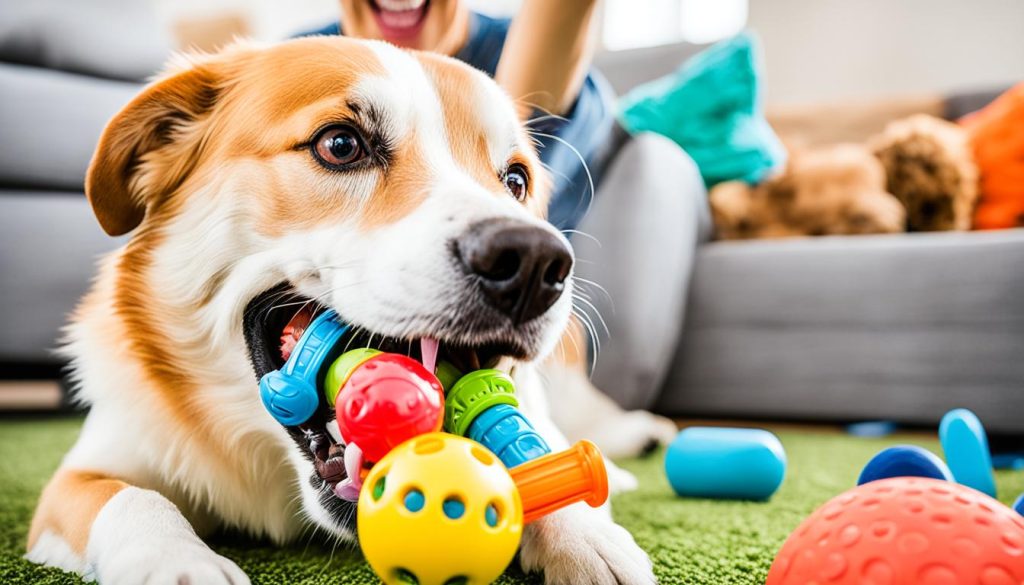
Pay attention to when your dog tends to chew more, like when you’re away. Knowing these times lets you prepare. Give them toys or puzzles to keep them busy during these moments.
Using these tips and positive reinforcement will help your dog behave better. The aim is to build good habits and make a safe space for them. This way, they won’t chew on your things.
Preventing Future Chewing Habits
Stopping chewing habits early is key to a peaceful home. Catching your dog in the act helps a lot. Use a firm but gentle “No” to stop them from chewing on things they shouldn’t.
Be consistent with this, so your dog learns what’s okay and what’s not.
Choosing the right chew toys is also important. Toys from brands like Nylabone or Kong are great. They satisfy your dog’s need to chew and keep their teeth healthy.
Offer different textures and sizes to keep them interested.
Obedience training is a must for stopping chewing habits. Teach commands like “Leave it” and “Drop it” to stop chewing early. Training also makes your bond stronger, improving communication.
Make sure your dog gets enough physical and mental activity. Activities like fetching or long walks help burn off energy. Puzzle toys and games keep their mind sharp.
Use these tips daily to stop dog chewing and make your home happier and healthier for your pet.
Important Tip: Training your dog is just the beginning. Keep them safe an healthy with Pin Paws Pet Care. Our blog provides the training advice, and Pin Paws offers the protection your pet deserves.
When to Seek Professional Help
Knowing when to get help for your dog’s chewing habits is key. If you’ve tried to stop them but the problem gets worse, it’s time to ask for expert advice. This could be from a vet or a certified dog trainer.
If your dog keeps chewing even after trying different solutions, there might be a health issue. This could be dental pain or stomach problems. It’s important to see a vet to check for any health problems.
Behavioral issues also mean you should get professional help. If your dog is aggressive, anxious, or chewing things they shouldn’t, a dog trainer can help. They can teach you how to stop the bad chewing with methods that fit your dog.
Getting professional help is important for your dog’s health and your peace of mind. It makes sure any health or behavior problems are fixed quickly and well.
Alternative Solutions for Persistent Chewers
If your furry friend keeps chewing on things they shouldn’t, don’t worry. There are other ways to stop this. First, try using deterrent sprays. These make objects taste bad, so your dog won’t chew them.
Another good idea is to dog-proof your home. This means arranging things so your dog can’t get to things they shouldn’t chew. Keep items out of reach to stop them from getting chewed by accident.
Give your dog safe things to chew on too. There are toys and treats made just for chewing. These can keep your dog busy and away from your shoes and furniture. Change out toys often to keep things interesting for your dog.
Think about training sessions to help your dog behave better. Being consistent and positive can really help stop bad chewing habits.
Conclusion
Stopping your dog from chewing things they shouldn’t is key to a peaceful home. Knowing why dogs chew helps you find the right training tips. Giving them the right chew toys and making sure they are active and mentally sharp can really help.
Preventing chewing habits is also crucial. Use consistent training, give them lots of exercise, and keep their minds busy. If chewing persists, getting professional help can provide more advice and support.
Changing bad chewing habits isn’t just about discipline. It’s about caring for your dog and building a stronger bond with patience and training. With love, consistency, and the right methods, you can teach your dog better chewing habits. This makes for a happier and well-behaved pet.
Quick Recommendation: Our blog is filled with tips and tricks for training your puppy or dog. If you are seeking a comprehensive training program, we recommend K9 Training Institute.
BTW: If you are interested in everything from nutritional advice and natural health solutions to stress-relief techniques and overall wellness tips, check out our friends at PawfectlyHealthyPets.com.