

Ever noticed how some dogs easily make friends, while others find it tough? It’s all about pet socialization. It’s key for your dog’s happiness and health. Let’s explore how to help your dog make better friends.
Prepare for a journey filled with effective tips and advice. These will help your dog become more social and confident. Join us at “Social Paws” to improve your dog’s life, one social skill at a time.
Quick Recommendation: Our blog is filled with tips and tricks for training your puppy or dog. If you are seeking a comprehensive training program, we recommend K9 Training Institute.
Understanding the Importance of Dog Socialization
Dog socialization is key to making your pet well-adjusted and happy. It exposes your dog to various people, animals, and places. This helps prevent anxiety and aggression later.
Adding dog training to socialization builds a strong foundation for your pet’s mental health. It makes sure your pet stays mentally healthy and balanced.
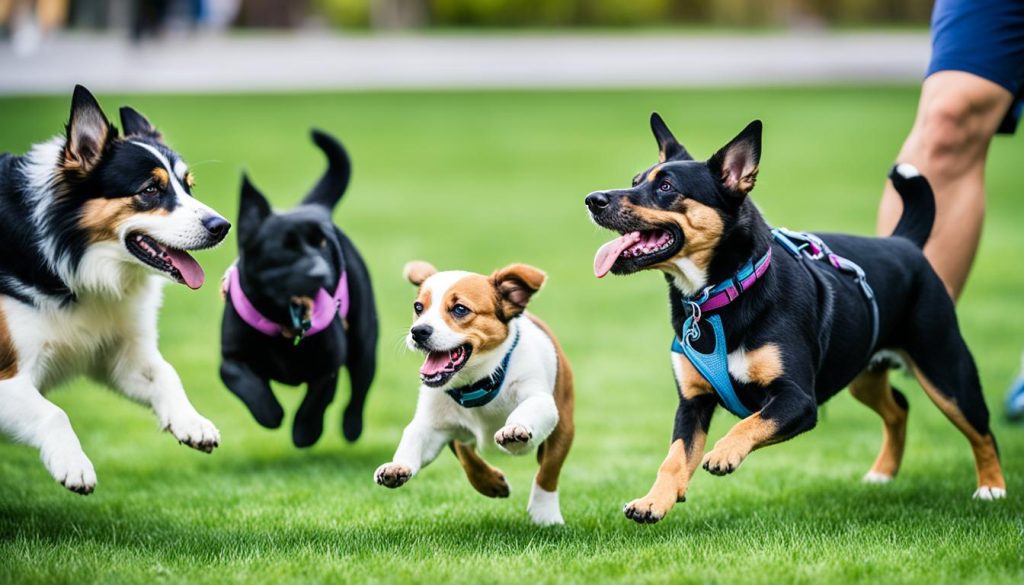
Socializing your dog has many benefits. It makes interactions with others better and boosts your dog’s mental health. Regular social activities teach your dog to handle new situations well.
This adaptability is very important during your dog’s early development. It helps them grow into a well-adjusted adult.
Regular socialization keeps your pet confident and calm in different situations. It helps them stay emotionally stable and lowers the chance of fear or aggression. By focusing on socializing and training, you help your dog live a happy life.
Basic Techniques for Socializing Your Dog
Starting with gentle exposure is key in socializing your dog. Introduce them to different places, sounds, and sights slowly. Let them watch and explore without feeling too much stress.
Positive reinforcement is a must for puppy socialization. Give your dog treats, praise, or playtime when they act calm and positive in new situations. This teaches them that new things can be good.
It’s important to know how your dog feels. Watch for signs of stress like yawning, lip licking, or tail tucking. If you see these, take them away from the situation to keep them safe.
If your dog is shy around other dogs, try controlled interactions at a distance. Slowly get closer over time. Being consistent and patient helps your dog feel safe and confident.
These basic techniques help your dog learn social skills from an early age or later. Gentle exposure, positive reinforcement, and watching their body language make a sociable dog.
Puppy Socialization: The Early Years
When you bring home a new puppy, it’s key to start socializing them right away. The best time for this is between 3 to 14 weeks old. This period is when they are most open to new things, shaping their future behavior.
Enrolling your puppy in puppy socialization classes is a great way to socialize them. These classes offer a safe space for puppies to meet other dogs and people. They teach your puppy how to act in different situations, helping avoid future behavior problems.
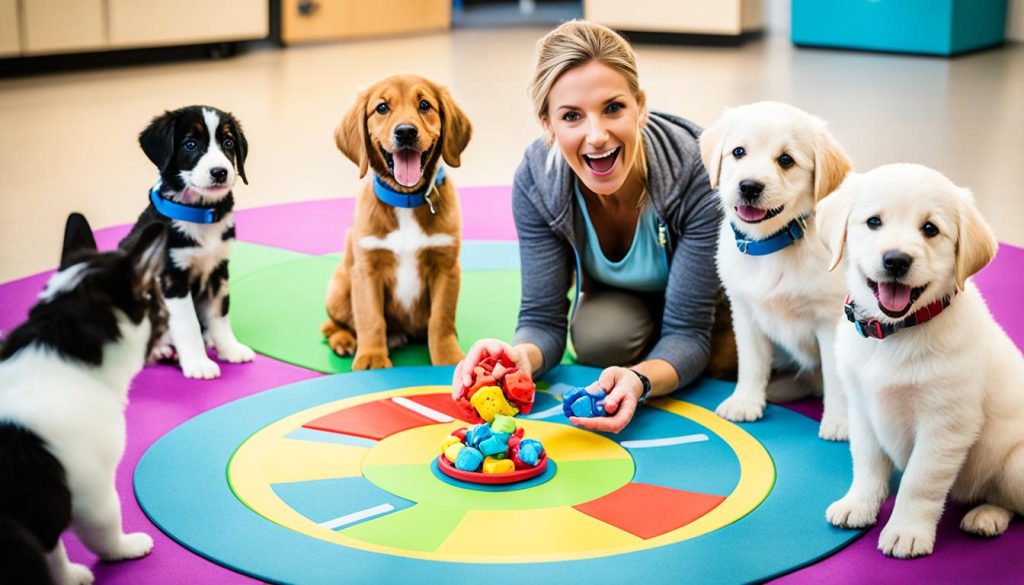
Playdates with other puppies and adult dogs are also good. They help your puppy learn important social skills. Starting pet training early helps your puppy adjust to new places and situations.
It’s important to expose your puppy to many new things during the critical socialization period. Take them on car rides, show them different sounds and surfaces, and introduce them to people of all ages. These experiences make your puppy well-adjusted and confident.
Quick Recommendation: Our blog is filled with tips and tricks for training your puppy or dog. If you are seeking a comprehensive training program, we recommend K9 Training Institute.
Socializing Adult Dogs
Socializing older dogs can be a bit harder than with puppies. But, with the right approach, you can help your older dog learn new social skills. It’s key to understand how adult dogs behave to make a good social plan.
Start by noticing any behaviors that worry you. Older dogs might be scared or anxious because of past events. To help them, slowly introduce them to new social situations. Use positive rewards and be patient.

Creating a safe, positive space for your dog to learn is crucial. Arrange play dates with other friendly dogs to make it fun. This way, your dog can learn social skills in a safe setting, feeling secure.
Think about enrolling your dog in special training classes for older dogs. These classes focus on the unique challenges older dogs face. With regular practice, your dog can become more social and adaptable.
Using Dog Parks Effectively
Dog parks are great for improving your dog’s social skills. Choose a park that fits your dog’s size and personality. It’s important to watch how dogs play to make sure they’re having fun and staying safe.
Start by introducing your dog slowly to the park. Begin with short visits when it’s not too crowded. This helps your dog get used to the new place and other dogs. Watching how your dog acts with others tells you about their social skills and how they feel.
Always keep an eye on your dog during off-leash play. Watch for signs that they might be getting too rough or upset. If things get too intense, step in to stop it. This helps your dog learn how to play nicely with others.
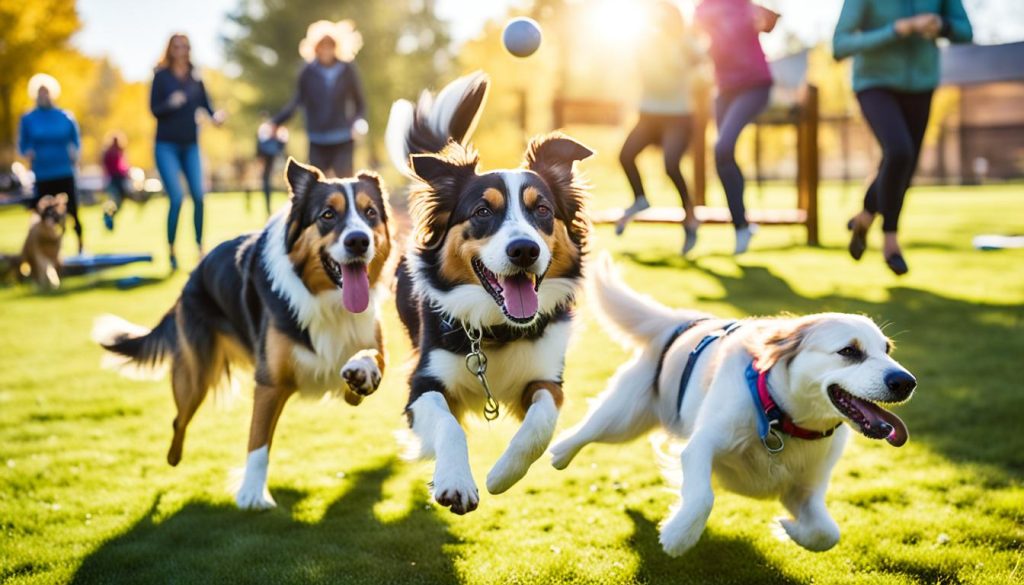
Every dog is different, so their park experiences will vary. Be patient and consistent to help your dog get the most out of dog parks. With the right approach, you can help your dog develop good play habits and have a great time.
Incorporating Training into Socialization
Adding dog obedience training to your pet’s social plan is key for well-behaved, confident dogs. Socialization and training go hand in hand; they’re both vital for a balanced dog’s education. When your dog meets new people and dogs, training helps them act well and feel less anxious.
Positive training methods make your dog more confident in social situations. Give treats or praise when they act calm around new folks and other dogs. This teaches them that being social is a good thing.
While out and about, practice commands like “sit,” “stay,” and “come.” These commands keep your dog safe and under control. Mixing obedience training with social time helps your dog learn in real life.
Training in social settings also tackles issues like leash pulling or being too aggressive. Working on these issues in real life makes your dog more flexible and friendly. With regular practice, your dog will get better at following commands and handling social situations.
Common Socialization Mistakes to Avoid
Boosting your dog’s social skills is crucial. Knowing common mistakes can help a lot. Many owners rush the socialization process, exposing their dogs to too much too soon. This can make dogs stressed and anxious, leading to fear or aggression in social situations.
It’s important to watch for signs of stress in your dog, like heavy panting, drooling, or a tucked tail. Paying attention to these signs helps you adjust how you socialize your dog. Also, fixing bad social habits in dogs is key. If your dog acts aggressive, it’s important to address it right away and keep working on it.
Being inconsistent in socializing your dog is another mistake. It’s important to be consistent and patient. Make sure your dog meets different people and places regularly, but do it at a pace they’re okay with. This way, you can fix bad social habits and help your dog behave better socially.
Lastly, some owners forget the power of positive reinforcement in social situations. Celebrating small wins can really boost your dog’s confidence. This simple tip can greatly improve your dog’s social life.
Important Tip: Training your dog is just the beginning. Keep them safe an healthy with Pin Paws Pet Care. Our blog provides the training advice, and Pin Paws offers the protection your pet deserves.
Monitoring and Adjusting Socialization Strategies
Watching your dog’s socialization closely is key. It helps you see if they’re doing well or if you need to change things. Look for any signs of stress or discomfort during social times. This helps you adjust how you socialize your dog to fit their needs better.
You might need to make changes like spending more time socializing or introducing new places slowly. Being open to changing your approach is important. For instance, if your dog gets anxious in crowded places, start with quieter spots to help them feel more secure.
If you’re not sure what to do next, getting advice from a dog behaviorist can be helpful. They can give you specific advice to make sure your dog is well-supported. By keeping an eye on your dog’s behavior and making changes as needed, you can help them become more confident and well-adjusted.
Conclusion
This article covered the key parts of successful dog socialization. It showed how important it is for a happy life with your pet. We looked at why it matters and how to do it right.
We began by explaining why socializing your dog is key. It’s good for your dog and makes life better for you too. Then, we gave you tips and tools to help your dog do well in social situations.
Socializing your puppy sets the stage, but it’s important for adult dogs too. Places like dog parks and training classes help a lot. But, watch out for mistakes and change your approach if needed to keep it fun and effective.
Getting your dog to be social takes time, patience, and love. By using what we talked about, you’re on the right path to a happy, social pet. A well-socialized dog makes your life and your pet’s life better. Keep up the good work, and you’ll see your dog grow more confident and joyful.
Quick Recommendation: Our blog is filled with tips and tricks for training your puppy or dog. If you are seeking a comprehensive training program, we recommend K9 Training Institute.
BTW: If you are interested in everything from nutritional advice and natural health solutions to stress-relief techniques and overall wellness tips, check out our friends at PawfectlyHealthyPets.com.