

Training your dog to act like a service dog can greatly benefit you and your pet. It teaches them important skills and behavior. This makes your pet well-behaved and obedient, bringing joy and comfort to your life.
Service dog training focuses on discipline, impulse control, and specific tasks. These skills help them assist their owners.
In this article, we’ll cover the essential steps to train your dog like a service dog. We’ll start with a strong foundation and basic obedience. Then, we’ll move on to socialization and learning specific tasks.
By putting in the time and effort, you’ll strengthen your bond with your dog. This creates a harmonious relationship based on trust and understanding.
Whether you want your dog to be a certified service animal or just a well-behaved pet, this article will help. Let’s start this rewarding journey together. Discover how to train your dog to be a loyal and dependable companion.
Quick Recommendation: Our blog is filled with tips and tricks for training your puppy or dog. If you are seeking a comprehensive training program, we recommend K9 Training Institute.
Understanding Service Dog Behavior
Before starting service dog training, it’s key to know what’s expected of a service dog. They should be focused, obedient, and in control. These traits help them do their job well and safely.
Service dogs need to stay calm and focused, even when things get busy or stressful. They must ignore distractions like people, animals, or sounds. This focus helps them respond quickly to their handler’s needs.
Obedience is a big part of a service dog’s job. They should listen and follow commands everywhere. Training includes basic commands like “sit,” “stay,” and “come.” They also learn specific commands for their role.
Impulse control is also crucial. Service dogs must resist temptations like food or other animals. They should wait for their handler’s instructions. This self-control keeps them from acting out while working.
Knowing these important traits helps set goals for your service dog training. With patience, consistency, and positive feedback, your dog can become a reliable service dog. They’ll learn to focus, obey, and control their impulses.
Establishing a Strong Foundation
Training your dog starts with a strong foundation. This means building a positive bond, setting clear rules, and sticking to a routine. These steps are key to successful dog behavior training.
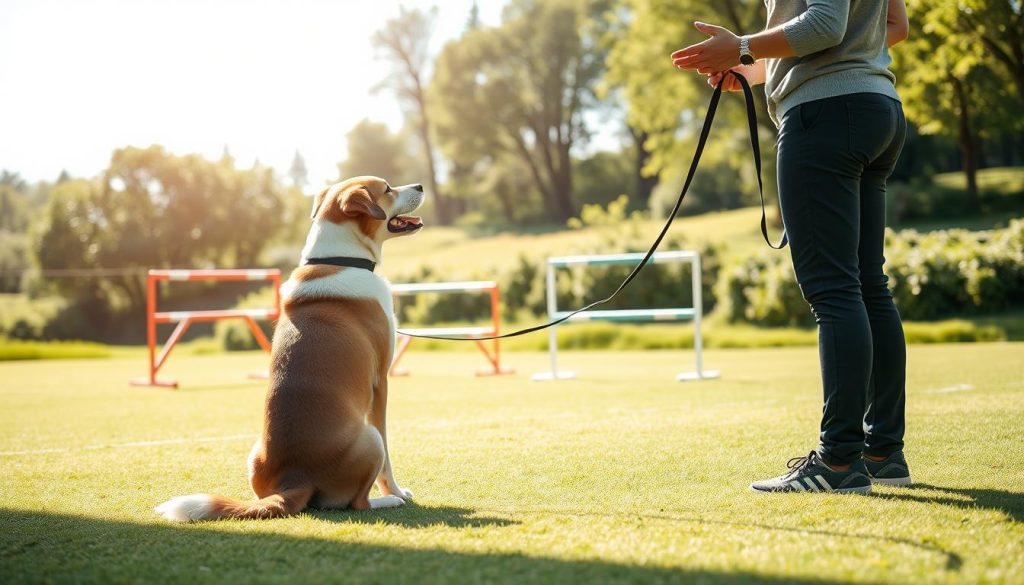
Begin by building a loving bond with your dog. Spend time playing, exercising, and showing affection. A strong bond makes your dog more open to training and happy to please you. Keep a regular schedule for meals, potty breaks, and training.
It’s important to set clear rules and boundaries early on. Let your dog know what’s okay and what’s not. Be firm but kind, using positive rewards for good behavior. Treats, praise, and playtime motivate your dog to behave well.
Having a consistent training routine is crucial. Set aside time each day for training, even if it’s just a few minutes. Focus on one skill at a time, breaking it down into easy steps. With patience, persistence, and rewards, your dog will learn good behavior.
Basic Obedience Training
Training your dog in basic obedience is the first step towards advanced service dog training. Start with key commands like sit, stay, come, and heel. These commands are the base of service dog training and strengthen your bond with your dog.
Begin training in a quiet place, like your backyard or living room. Use positive methods, rewarding your dog with treats and praise for correct commands. Keep each session short, about 10-15 minutes, to keep your dog interested.
Once your dog knows the basics, add distractions and practice in various spots. This makes their obedience stronger and prepares them for everyday challenges. Always be patient and consistent, as every dog learns differently.
Spending time on basic obedience training prepares your dog for being a helpful companion. This foundation will help with more complex tasks in service dog training later on.
Socialization and Desensitization
Training your dog to behave like a service dog is a big task. Socialization and desensitization are key parts of this process. They help your dog stay calm and focused in any situation.
This is very important for service dogs. They need to work well in many different places without getting distracted or overwhelmed.
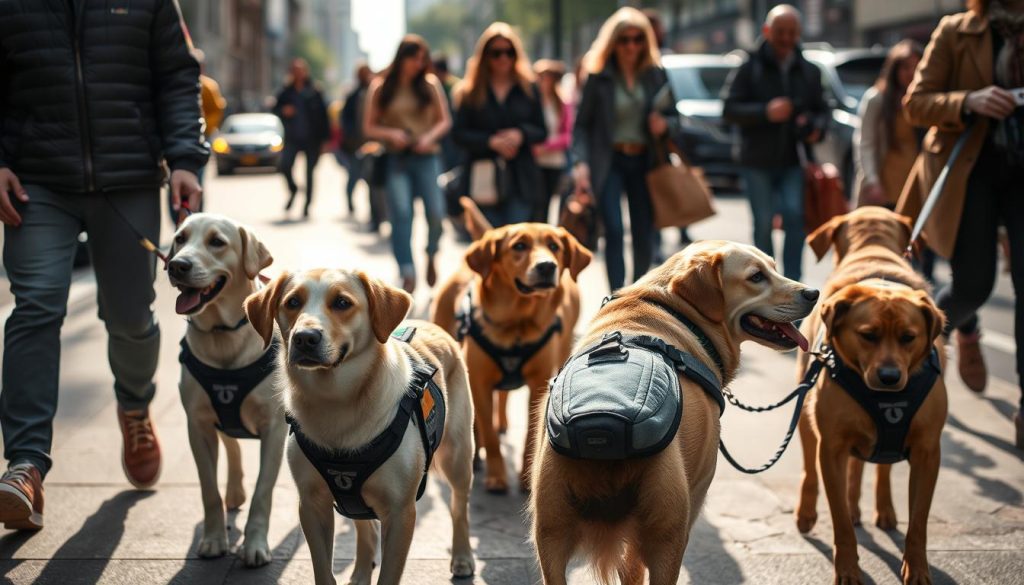
Begin by exposing your dog to different sights, sounds, and textures in a positive way. Take them to busy streets, parks, and public places. Reward them for staying calm.
As your dog gets more comfortable, you can make things more challenging. But always keep it positive and fun for your pup. Use lots of treats and praise to encourage good behavior.
Desensitization is also crucial in service dog training. It involves getting your dog used to things they might see while working, like wheelchairs or medical equipment. Start by introducing these items slowly and positively.
This way, your dog will stay calm when they see them in real life. Be patient and consistent. It takes time for your dog to adjust to new things.
Teaching Impulse Control
Teaching your dog to control their impulses is crucial for service dog training. Dogs with good impulse control can ignore distractions, wait patiently, and stay calm. Here are some ways to teach your dog impulse control:
Begin with simple commands like “sit,” “stay,” and “wait.” Have your dog sit and stay while you place a treat on the floor. Make them wait for your release command before they can take the treat. Increase the wait time to build their patience and self-control.
Practice impulse control in different situations. This includes waiting at doorways, ignoring food on walks, and staying calm when people or animals approach. Use positive reinforcement and rewards for good behavior.
Teach your dog to focus on you, even with distractions. Start in a quiet place and then add distractions like toys, sounds, or people. Reward them for staying focused on you and ignoring distractions. This skill is vital for service dogs to stay attentive to their handlers.
Consistency and patience are essential in teaching impulse control. Regular practice in various settings will strengthen these skills. Always use positive reinforcement and celebrate your dog’s progress.
Training for Public Access
Teaching your dog to act like a service dog is crucial. They must stay calm and focused in many places, from quiet offices to busy streets. With consistent training, your dog will learn to move through public areas with confidence.
Begin by practicing basic commands like sit, stay, and heel in quiet spots. Once your dog gets these, add more distractions and complex places. Take them to parks, malls, and other public spots to get used to different sights and sounds.
Teach your dog to ignore other dogs and people and keep their focus on you. Use positive rewards for staying close and not pulling on the leash. Practice having them sit or lie down calmly in places like restaurants or on public transport.
It’s also key to train your dog to be quiet in public. Service dogs shouldn’t bark a lot or whine, as it can disturb others. If your dog barks or whines, teach them the “quiet” command and reward them for being silent in various settings.
Training your dog for public access needs time and patience. Be consistent and gradually make the training harder as your dog improves. With effort and the right training, your dog will move through public areas like a true service dog.
Teaching Specific Tasks
Teaching your dog to do specific tasks is key when training them as a service dog. These tasks can vary based on your needs, like retrieving items or opening doors. Begin by breaking each task into smaller steps that your dog can learn and do well.
For instance, to teach your dog to retrieve items, start with them picking up and holding something in their mouth. Once they get this, increase the distance and ask them to bring it back to you. With time and consistent training, they’ll learn to retrieve items on command.
Teaching your dog to open doors is also important, especially if you have mobility issues. Begin by attaching a rope or handle to the door and teach them to pull it open with their mouth. As they get more comfortable, remove the rope or handle and have them use their paw or nose to open the door.
Always use positive reinforcement when training your service dog. Give them treats, praise, and affection when they do a task right. This way, they’ll learn to associate the behavior with good things, making them more likely to do it again.
Maintaining Training and Reinforcement
Consistency is key in keeping your dog’s service dog behavior up. Even after they learn the basics, keep practicing and rewarding them. This helps keep their skills sharp.
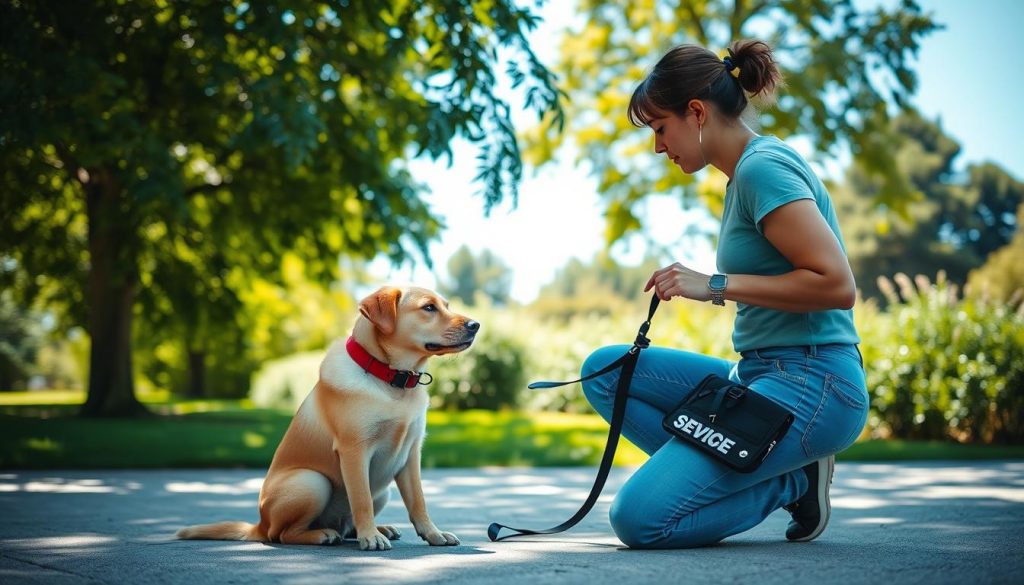
Make time each day for training sessions. Keep them short and fun. Focus on praising and rewarding your dog for good behavior. Remember, training a service dog is a lifelong journey!
Practice skills in your daily routine too. Ask your dog to do tasks before meals or during walks. This helps them learn to respond well in different situations.
If your dog starts to forget some behaviors, go back to basics. Use positive reinforcement to retrain them. With patience and effort, your dog can keep up their excellent service dog behavior for years.
Quick Recommendation: Our blog is filled with tips and tricks for training your puppy or dog. If you are seeking a comprehensive training program, we recommend K9 Training Institute.
Preparing for Real-World Scenarios
Training your dog to act like a service dog means getting them ready for real-life situations. This includes exposing them to different places, people, and scenarios they might face as a service dog.
Begin by taking your dog to quiet spots like parks or small stores during less busy times. As they get more comfortable, introduce more distractions and activity. Always reward them for staying focused and calm.
Practice walking through crowds, using public transport, and visiting busy places like malls or restaurants. Make sure your dog behaves well and listens to you, even with distractions around.
Also, get your dog used to tough environments like slippery floors, tight spaces, or elevators. Start with small steps and reward them for staying calm and following you.
Consistency is crucial when training your dog for real-world situations. Regularly expose them to different places and situations. This will help them become a reliable service dog in any setting.
Train Your Dog To Behave Like A Service Dog
Training your dog to act like a service dog takes patience, consistency, and dedication. Start with basic obedience to lay a strong foundation. This helps your dog learn the skills and temperament needed for service dog work.
Socialization and desensitization are crucial. They help your dog stay calm and focused in different places.
Teach your dog to control impulses and perform specific tasks for you. Reinforce these skills often. Then, introduce them to real-world situations to prepare them for service dog challenges.
Training your dog to be a service dog is a continuous journey. It needs ongoing learning and growth. With the right approach and consistent training, your dog can provide valuable assistance and support in your daily life.
Continuous Learning and Growth
As you move forward in service dog training, remember that learning never stops. By always striving to improve, you and your dog can reach new heights. This will lead to greater success in your partnership.
Seeking out more resources and support is key to continuous learning. You can attend workshops, join online groups, or work with seasoned trainers. This way, you can expand your knowledge and skills in service dog training. By staying curious and open, your dog can become a well-behaved and highly-trained service animal.
Keeping a positive attitude and celebrating your progress is also crucial. Dog behavior training can be tough, but focusing on small wins keeps you motivated. Always praise your dog for their hard work and take pride in your strong bond.
Trust in the learning and growth process and believe in your training abilities. With patience, persistence, and a commitment to excellence, you and your dog can achieve amazing things. So, keep learning, growing, and enjoy every moment of this incredible journey.
Conclusion
Training your dog to act like a service dog is a rewarding journey. It strengthens your bond with your furry friend. You start by teaching basic obedience and socialization.
Then, you move on to more advanced training. This includes public access and specific tasks. Remember to be patient and consistent. This helps your dog learn to behave like a service dog.
The journey requires dedication and effort, but the rewards are huge. You’ll have a loyal and well-behaved dog. You’ll also experience a deeper connection and trust. Enjoy the journey of training your dog to be a service dog.
Quick Recommendation: Our blog is filled with tips and tricks for training your puppy or dog. If you are seeking a comprehensive training program, we recommend K9 Training Institute.